Block is a common San Diego residential pick. Wood is often lower upfront and shorter-lived. Poured concrete is the engineered answer on many steep lots. Those are tendencies, not a published lifespan table. City IB 220 and County PDS 083 set permit height from the top of the footing. See retaining wall permit San Diego.
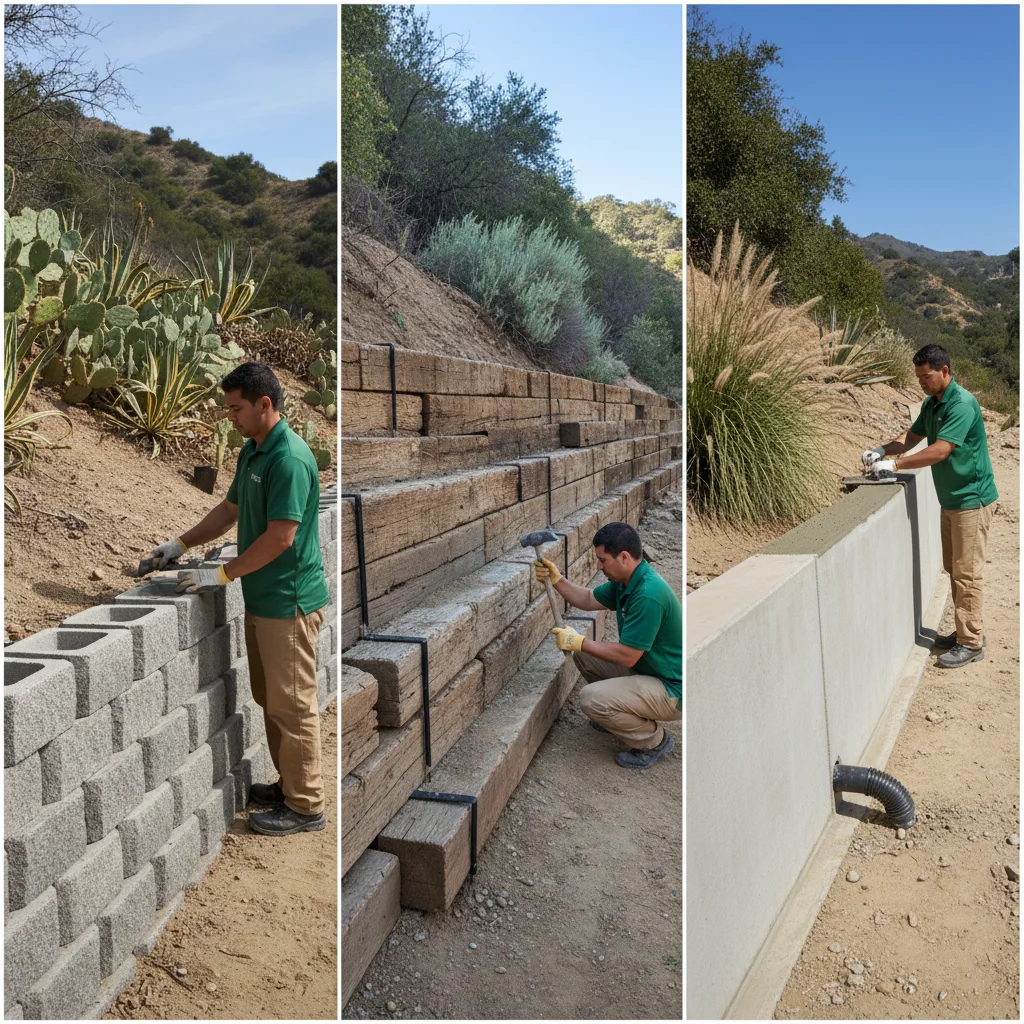
Why material choice matters for San Diego’s canyons and hillsides
In San Diego County, a retaining wall isn’t just a decorative garden border. It’s a structural element fighting a constant battle against gravity and our unique environmental conditions. The material you choose has to be up for the job.
Our region’s expansive clay soils are a primary concern. During our dry summers, the soil shrinks. When the winter rains finally arrive, it swells with immense force. This constant expansion and contraction puts incredible hydrostatic pressure on a retaining wall. A poorly chosen material or improper installation can lead to bowing, cracking, or complete failure.
Drainage is the other half of the equation. A properly built wall must allow water to escape from behind it. Some materials and systems handle this better than others. We also have to consider our intense sun, which can bake and degrade materials like untreated wood over time. And we can’t forget about termites, which see a wood retaining wall as a potential feast.
Ultimately, selecting the right retaining wall materials in San Diego is about finding the perfect balance between strength, durability for our specific climate, aesthetics that match your home, and your overall project budget. Each option has its place, but one is likely the best fit for your specific hillside.
Comparing costs: concrete block vs. timber vs. poured concrete
The final price tag of a retaining wall is a combination of material costs and labor intensity. Here’s how the three main options generally stack up for San Diego properties.
Wood Timber Walls
Pressure-treated timber is typically the most budget-friendly option upfront. The materials themselves are less expensive than concrete products, and installation can be faster for shorter, simpler walls. However, the true cost is measured over its lifespan. While it’s cheaper now, it will likely need to be replaced sooner than a concrete or block alternative, potentially making it more expensive in the long run.
Concrete Block Walls
This is often the sweet spot for many homeowners. This category includes both standard Concrete Masonry Units (CMUs) and more decorative Segmental Retaining Wall (SRW) systems. The material cost for retaining wall blocks in San Diego is moderate, but the real variable is labor. SRW systems are engineered to fit together efficiently, which can sometimes reduce installation time compared to mortared CMU walls. The vast range of available styles, from simple gray blocks to high-end textured faces, means the price can vary significantly.
Poured Concrete Walls
Poured concrete is usually the most expensive choice. The process is labor-intensive, requiring extensive formwork to be built, steel rebar to be placed for reinforcement, and a concrete truck to pour the final product. While the raw material cost of concrete isn’t extreme, the labor, prep work, and required engineering for taller walls drive the price up. Its incredible strength and sleek, modern look are what you’re paying for.
For a detailed breakdown of labor and material expenses, check out our guide to retaining wall costs on San Diego slopes.
Lifespan and maintenance needs for each material in our climate
Lifespan and upkeep differ a lot in San Diego’s sunny, dry climate.
Wood Timber
A pressure-treated wood wall has the shortest lifespan, typically 15 to 20 years. Even with treatment, our relentless sun can cause the wood to dry, crack, and warp. Termites and moisture-induced rot remain a constant threat, especially at the ground level. To maximize its life, a timber wall needs regular maintenance, including cleaning and the application of a water-repellent sealant every few years.
Concrete Blocks
Concrete block walls are built for the long haul, with a lifespan of 50 to 100 years or more. They are impervious to termites, rot, and sun damage. Maintenance is minimal, usually just occasional pressure washing to remove dirt or efflorescence (a harmless salty deposit). The most common point of failure for a block wall isn’t the material itself but improper installation, specifically poor drainage and a weak foundation.
Poured Concrete
Like block walls, poured concrete walls are exceptionally durable, easily lasting 50 to 100+ years. They are virtually maintenance-free. Over many decades, minor hairline cracks may appear due to ground settlement or seismic shifts, but these are typically cosmetic and don’t compromise the wall’s structural integrity. This is the “build it once, build it right” option. The concrete vs. wood retaining wall San Diego debate often comes down to this long-term durability.
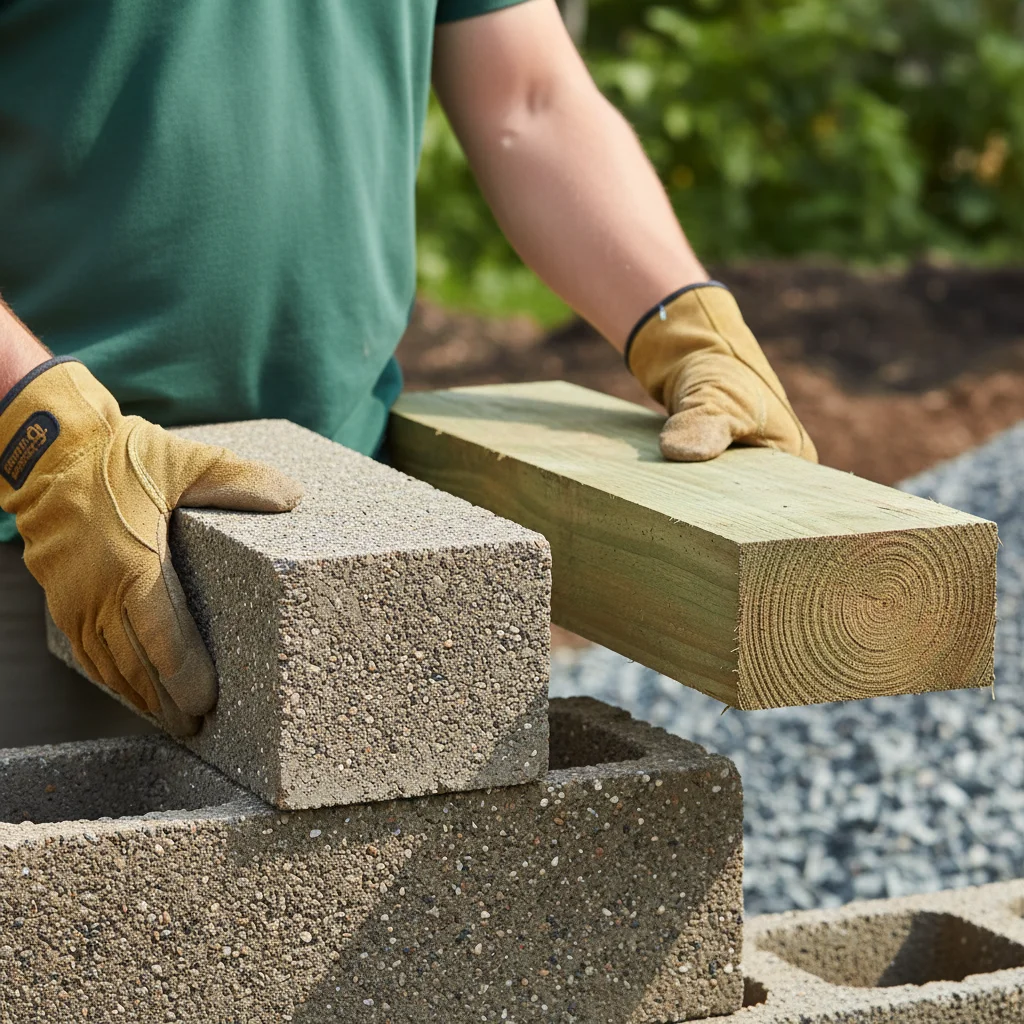
Which materials are best for slope stabilization?
While all three materials can hold back soil, they are not created equal when it comes to serious engineering and stabilizing steep San Diego hillsides.
Poured Concrete
For the most demanding jobs, very tall walls, steep slopes, or walls supporting heavy loads like a driveway or patio, poured concrete is the undisputed champion. Reinforced with a carefully engineered grid of steel rebar, a poured concrete wall acts as a single, monolithic structure with immense shear strength. It offers the least “give” and is the top choice for engineers in critical situations where failure is not an option.
Concrete Blocks
Modern Segmental Retaining Wall (SRW) systems are an engineering marvel and the go-to solution for most residential slope challenges. These blocks are designed to interlock, and for taller walls, they are installed with layers of geogrid fabric that extend back into the hillside. This creates a reinforced soil mass, effectively making the hill itself part of the wall structure. This makes SRWs the best retaining wall material for a hillside in a wide range of applications, combining strength with cost-effectiveness.
Wood Timber
Timber walls are best reserved for smaller, decorative, or non-critical applications. They suit garden terraces that are not holding a driveway, house pad, or steep backfill. Their flexibility and susceptibility to degradation over time make them a poor choice for long-term slope stabilization.
Aesthetic differences: matching your home’s style
A retaining wall is a dominant feature in your landscape. Its material should complement your home’s architecture and your desired garden style.
Wood Timber
Wood offers a warm, natural, and rustic aesthetic. It blends naturally into landscapes with a woodsy, traditional, or Craftsman feel. The linear nature of timbers creates strong horizontal lines that can feel very grounded. It pairs beautifully with lush, informal plantings and natural stone paths.
Concrete Blocks
This is the chameleon of retaining wall materials. The sheer variety of available retaining wall blocks in San Diego is staggering. You can find smooth-faced blocks for a clean, contemporary look, split-face or tumbled blocks for a more rugged, quarried-stone appearance, and a wide palette of earth-tone colors to match your home’s stucco or existing pavers. This versatility makes block walls suitable for almost any architectural style, from Spanish Revival to modern.
Poured Concrete
Nothing says “modern” quite like poured concrete. It provides a clean, smooth, and minimalist look that is highly sought after in contemporary home design. The concrete can be left raw for an industrial-chic vibe, stained to add a hint of color, or even board-formed to give it the texture of wood grain. It’s the perfect backdrop for architectural plants like agaves and succulents.
Choosing a material is a key part of the overall landscape design process, ensuring the wall complements your home and garden.
Permitting considerations for different wall types in San Diego County
Navigating building codes is a critical step for any significant retaining wall project. In the City of San Diego, Information Bulletin 220 requires a building permit when height exceeds 3 feet, measured from the top of the footing to the highest point on the wall. Unincorporated county form PDS 083 uses the same 3-foot measurement and still requires a permit if the wall supports surcharge. Other cities confirm their own counters.
A shorter visible face does not settle it. Surcharge (driveway, walkway, footing, fence), steep backfill, and listed tiered-wall conditions also trigger a City permit. The full list and what belongs in a quote are on our retaining wall permit in San Diego page.
The material you choose doesn’t typically affect whether you need a permit, but it heavily influences the engineering plans you must submit to get one. An engineered plan will specify the required footing depth, the amount and placement of steel rebar (for concrete), the type of block and geogrid reinforcement needed, and the crucial drainage system.
Permit review and a licensed crew sit on retaining wall and hardscaping. Bloom Pro SD matches you with that crew. We do not build the wall.
Frequently asked questions
What retaining wall material is best for a San Diego slope?
It depends on wall height and drainage more than looks. Segmental concrete block is the most common residential choice because it is engineered, modular and handles the geogrid reinforcement taller walls need. Natural stone and poured concrete cost more. Wood is the cheapest and the shortest-lived in our climate. Whatever you pick, the drainage detail behind the wall matters more to its lifespan than the face material.
When does a retaining wall need a permit in San Diego?
In the City of San Diego, Information Bulletin 220 requires a building permit when height exceeds 3 feet from the top of the footing, or when surcharge, steep backfill, or listed tiered-wall conditions apply. Unincorporated county form PDS 083 uses the same 3-foot measurement and still requires a permit if the wall supports surcharge. Other cities confirm their own counters. The full trigger list is on our retaining wall permit in San Diego page.
What is the best retaining wall for a sloped backyard?
On a genuinely sloped yard, a series of shorter terraced walls usually beats one tall wall. Terracing reduces the load on any single wall and creates usable flat planting areas instead of one steep face. It does not skip a permit by itself. City IB 220 still triggers on surcharge, steep backfill, and listed tiered-wall conditions even when each visible face is short.
When to call us
Deciding on the right material is a big first step, but a retaining wall’s success depends entirely on its design and construction. Any wall that is holding back a significant slope, is over three feet tall, or is near a property line should be built by an experienced professional. The contractors we match you with handle the engineering, permitting, and construction so the wall is safe and built for the pressures San Diego soil puts on it.
Call us at (760) 400-6355 to get matched. The independent professional quotes the work.