Lawn fertilizer service across San Diego County.
Yellowing or thin turf can come from irrigation, mowing, pests, disease, compaction, soil conditions, or nutrition. A pro should identify the grass and diagnose the site before recommending a fertilizer product, rate, timing, or repeat program.
Last reviewed
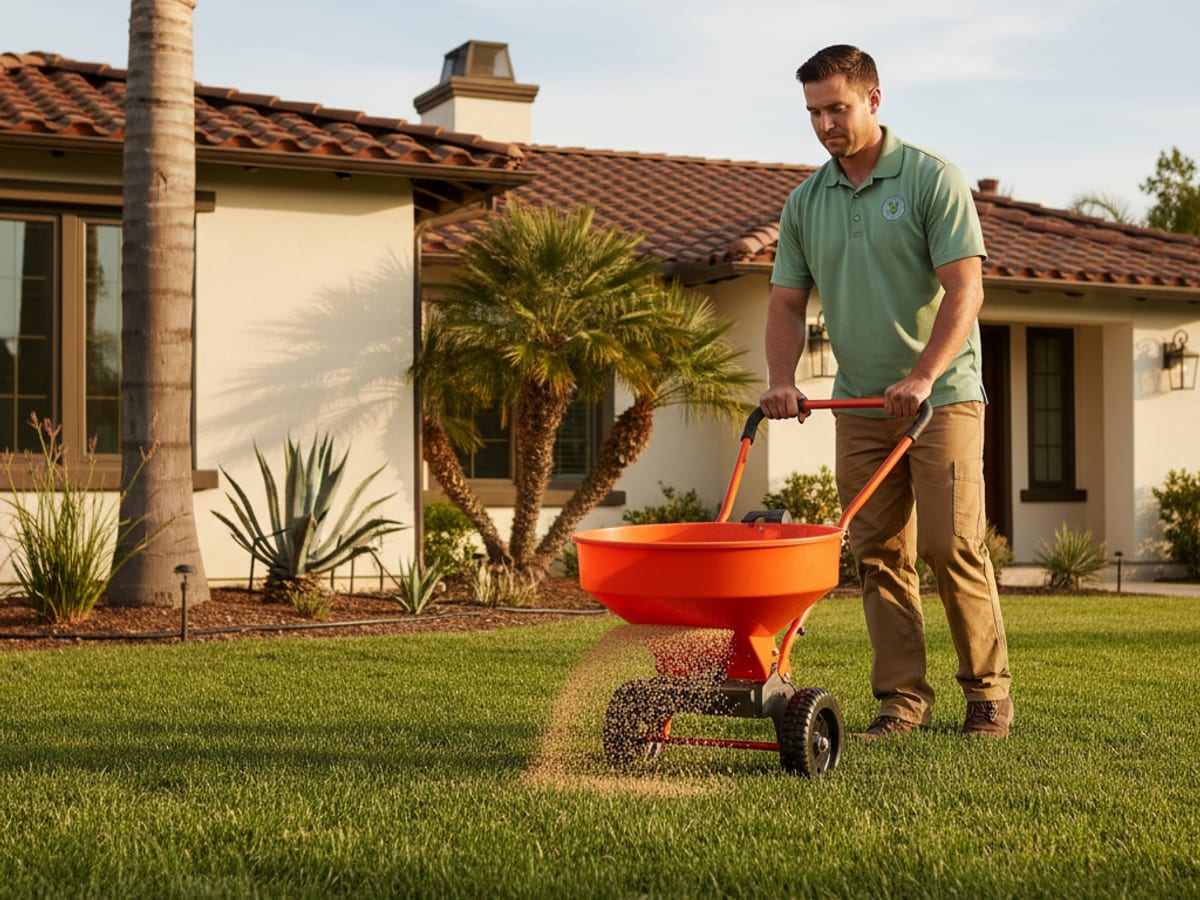
What should a quote for lawn fertilization cover in San Diego?
Confirm which tasks, materials, and cleanup are included in your contractor agreement.
- Identify the grass and inspect irrigation, mowing, roots, compaction, pests, and disease symptoms
- Use a soil or tissue test when the diagnosis or product choice calls for one
- Select a labeled product and rate for the grass, site, season, and measured area
- Calibrate application equipment and keep material out of drains and hardscape
- Provide watering, mowing, access, and reentry instructions for the exact application
- Reassess the lawn before scheduling another feeding or adding weed control
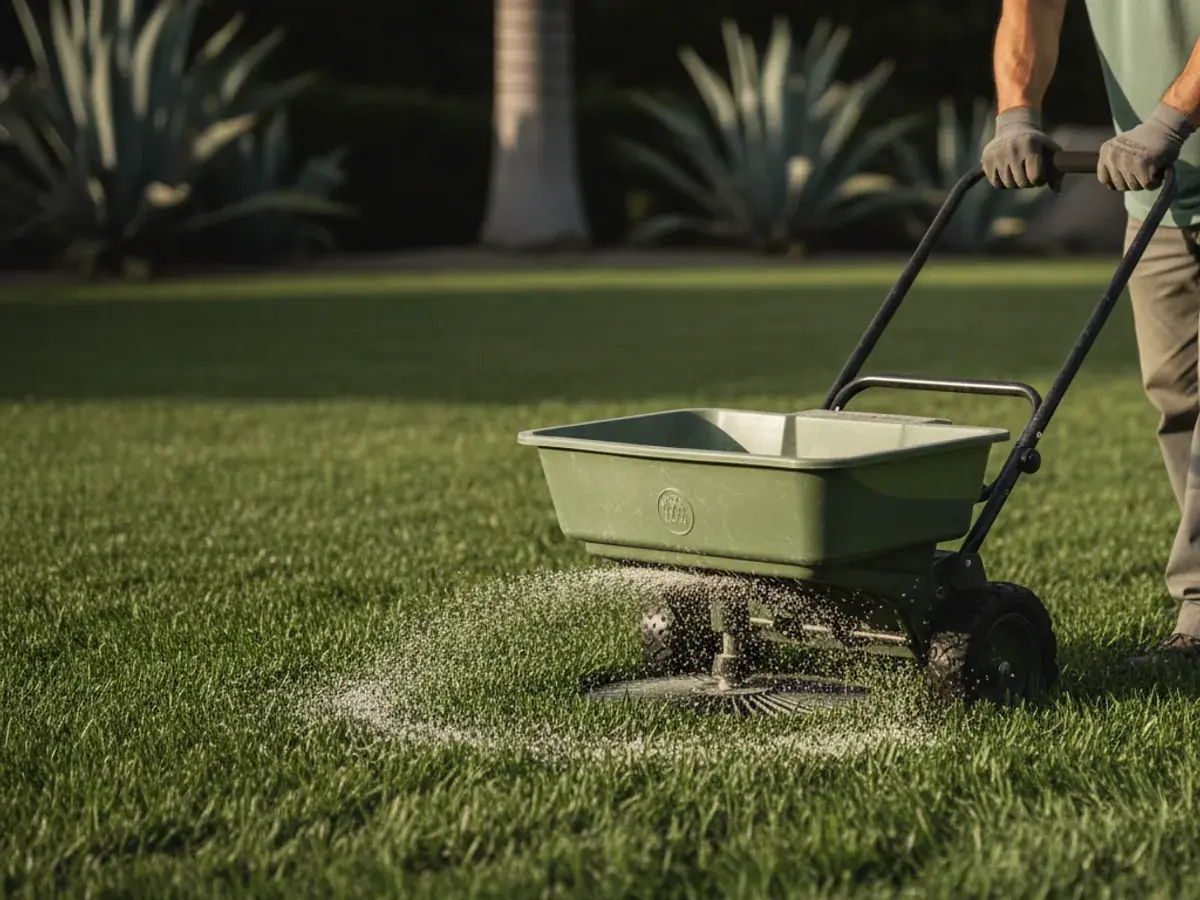
When do you need lawn fertilization in San Diego County?
- Lawn color is yellow-green or light green despite regular watering
- Thin patches and bare spots that do not recover after mowing
- Spring green-up is late compared to the neighbors
- Iron deficiency (yellow stripe down the leaf blade on St. Augustine)
- High-nitrogen lawn use (dog area, heavy traffic) burning out spots
- Organic program for households with kids and pets on the lawn
What do homeowners ask about lawn fertilization?
What does a lawn fertilizer service in San Diego include?
The pro should identify the grass, measure the treated area, check irrigation and symptoms, and state the product, rate, application method, watering instructions, and follow-up in writing. Testing is useful when site conditions or symptoms cannot be diagnosed reliably by inspection alone.
How often should I fertilize my SD lawn?
There is no safe countywide visit count. Frequency depends on the identified grass, growth, soil, irrigation, clippings, prior applications, weather, and the exact product label. Ask for the reason behind each proposed application and reassess before repeating it.
What about organic fertilizer?
Products marketed as organic vary in nutrients, release rate, handling, odor, and label directions. Compare the measured nutrient need and exact product rather than assuming an organic program needs a fixed number of visits or produces a result on a set timeline.
Can I combine fertilization with weed control?
Sometimes, but the lawn may not need fertilizer and weed treatment at the same time. Identify the weed and nutrient need separately, then follow every applicable label. Ask the provider why a combined or separate application fits the site.
Is a soil test really necessary?
A test is useful when symptoms, history, or site conditions do not give a reliable diagnosis, and it should measure factors relevant to the proposed treatment. It is not a substitute for checking irrigation, mowing, roots, pests, disease, compaction, and the grass itself.
How long until I see results?
Response depends on the cause of the symptoms, grass, product, rate, soil, irrigation, weather, and mowing. The quote should avoid a guaranteed green-up date and state when the provider will reassess if the lawn does not respond as expected.
Where do we offer lawn fertilization in San Diego County?
We help you seek an independent pro for lawn fertilization in San Diego County. Pick your community for local conditions to discuss with the contractor.
See lawn fertilization in all 67 cities
Need lawn fertilization in San Diego County?
Call and we'll match you with a local pro.