Lawn soil testing makes sense when recurring lawn trouble remains after you document watering and visible site conditions. It gives you a report to discuss, but the exact measurements depend on the laboratory and test panel. Confirm the included measurements and sampling instructions before collecting anything.
Symptoms that point to soil, not watering
No lawn symptom proves that soil is the cause. Brown grass, thin growth, bare spots, and uneven color can appear beside irrigation problems, pests, traffic, or other site conditions. Treat lawn care soil testing as one diagnostic step, not a verdict.
Start by mapping what you can see. Note whether the problem follows sprinkler coverage, a walkway, a slope, or one isolated corner. Compare the troubled area with nearby grass that looks healthier. Photos taken from the same position can help you track whether the pattern moves or stays fixed.
Check visible irrigation conditions before blaming the soil. Look for blocked heads, damaged components, overspray, runoff, or water missing the affected grass. Record when the lawn receives water and whether that schedule recently changed. If the property is within the City of San Diego Public Utilities service area, remember that permanent restrictions allow potable landscape watering only before 10 a.m. or after 6 p.m. Watering is also prohibited during and within 48 hours after measurable rainfall.
Our guide to causes of brown lawn patches in San Diego can help organize the visible clues. It shouldn’t replace an on-site assessment.
Testing becomes more useful when the same area keeps struggling after obvious watering issues have been addressed. It also makes sense before a contractor recommends repeated fertilizer applications without current soil information. The goal isn’t to prove one theory. It’s to replace guesswork with a report tied to a defined part of your lawn.
What a basic lawn soil test can measure
There isn’t one universal definition of a basic soil test in the approved research for this site. Laboratories choose their own panels, methods, reporting units, and recommendations. Don’t assume that two services will examine the same things because both use the word “basic.”
Ask the testing provider exactly what its lawn panel reports. Questions may include whether the report covers pH, named nutrients, salts, organic matter, or soil texture. These are scope questions, not promises about what every laboratory measures. Get the provider’s answer before sending a sample.
Also ask whether its recommendations are written for turf. A report intended for another use may not answer your lawn care questions. Tell the provider which grass you have if you know it. If you don’t, photograph the blades, runners, and overall growth pattern for discussion with a local professional.
Request a sample report before ordering. Check whether it provides only measurements or also includes interpretation. Ask which values come from direct testing and which comments are general guidance. If any term or category is unclear, have the laboratory explain it rather than interpreting it from an unrelated online chart.
No verified lawn soil testing price appears in this site’s approved claims ledger. The testing provider sets its own price and panel scope. Confirm both directly before paying.
For local horticultural resources, you can also start with the UC Master Gardener Program of San Diego County. Confirm its current services, instructions, and referral options through the program itself.
How sampling mistakes can distort the result
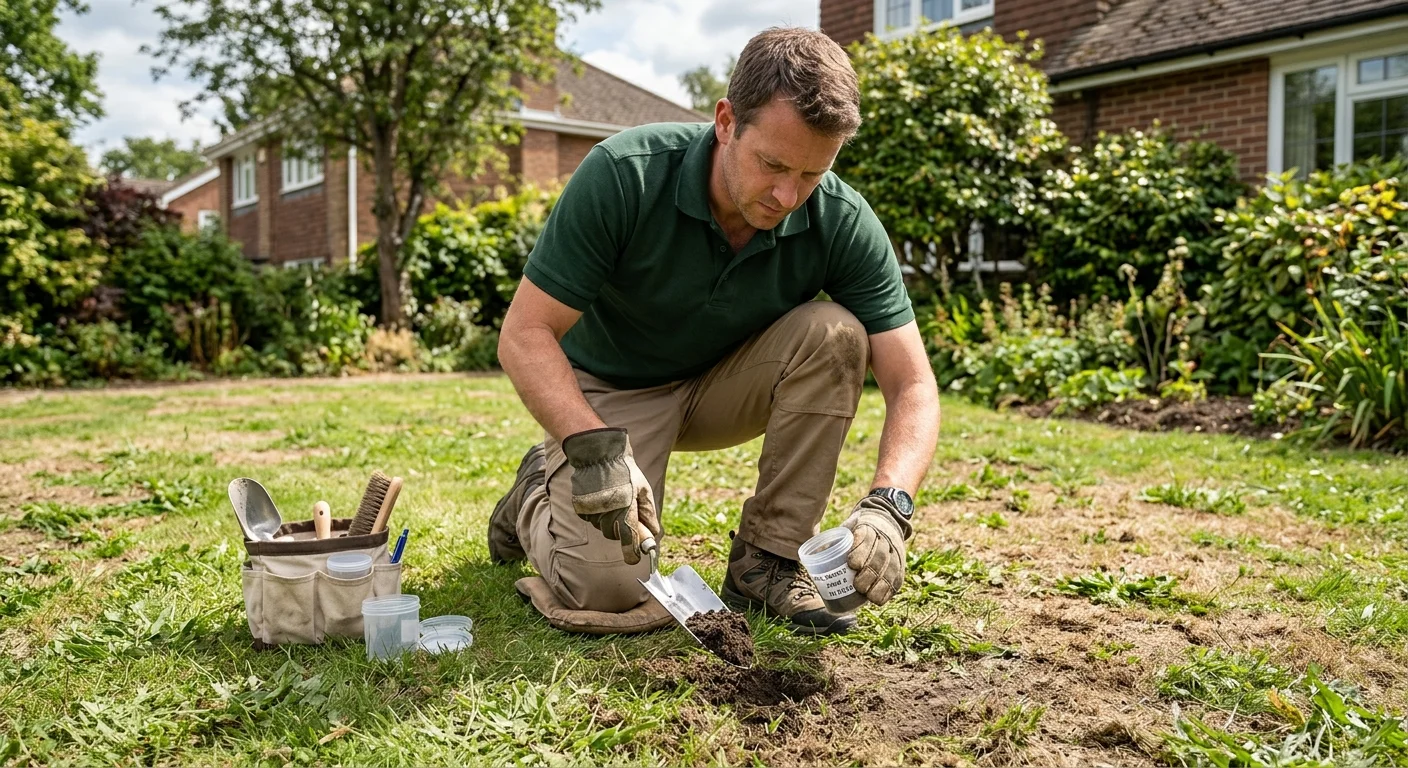
A soil report can only describe the material sent to the laboratory. If your container combines visibly different lawn areas, you may not know which area the final report represents. Define the question first, then follow the selected laboratory’s directions exactly.
Suppose the front lawn looks healthy but a shaded side yard remains thin. Mixing both areas into one container erases that distinction. The same issue appears when a low spot gets combined with a raised, drier section. Separate areas may need separate samples when the laboratory recommends that approach.
Don’t choose a sampling depth from memory. Don’t decide how many collection points are enough based on a general article. The approved claims ledger doesn’t confirm a universal depth or sample count for San Diego lawns. Ask the laboratory for its current written instructions.
Before collecting, confirm these details with the provider:
- The required sampling depth
- The number and placement of collection points
- Whether problem and healthy areas should stay separate
- The acceptable tools and container
- Whether grass, roots, mulch, or surface debris should be removed
- The amount of soil required
- Packaging, labeling, storage, and delivery directions
- Any waiting period after watering, fertilizing, or applying another lawn product
Use labels that connect each container to a precise location. “Back lawn” may be too broad. “Back lawn beside west fence” gives you a clearer reference when discussing the report. Mark that location on a simple property sketch and take a photo.
Keep notes about visible conditions on collection day. Include recent lawn work and any products you know were applied. Don’t guess about an unknown product or application date. Write “not confirmed” and tell the laboratory or contractor what you do know.
If the laboratory’s instructions conflict with general advice online, use the laboratory’s instructions for that sample. Its procedures should govern the material it will analyze.
How coastal sand and inland clay change the questions
“Coastal sand and inland clay” is a tempting San Diego shortcut, but it shouldn’t be treated as a parcel-level diagnosis. The approved claims ledger doesn’t contain a verified countywide soil source supporting the claim that every coastal lawn is sandy or every inland lawn is clay. That specific distinction couldn’t be confirmed for this article.
Location alone isn’t a soil test. A lawn in Encinitas or Oceanside shouldn’t be labeled sandy only because it’s near the coast. A property in El Cajon, Lakeside, or Santee shouldn’t be labeled clay-heavy only because it’s inland. Fill, grading, previous construction, imported topsoil, and separate planting areas may be relevant questions, but their effect on a particular yard needs confirmation.
Describe what you observe without converting it into a soil classification. Tell the testing provider whether water sits on the surface, runs toward paving, or disappears quickly in one area. Note visible differences between the lawn and nearby beds. Ask which laboratory measurements can evaluate your specific concern.
San Diego County also includes central neighborhoods, North County, East County, and the South Bay. Those labels help explain where a property sits, but they don’t replace a sample from the actual lawn. A City Heights yard and a Chula Vista yard can’t be assigned the same treatment plan from their place names alone.
If a contractor describes the soil with a broad local label, ask what supports that description. A current report, an on-site observation, and a clearly identified sample area give you a better conversation than a coastal or inland assumption.
How results guide your contractor conversation
Bring the complete laboratory report to the contractor, including its units, notes, and sampling location. Don’t reduce it to one highlighted value. Ask the contractor to explain how each proposed treatment connects to the report and the lawn symptoms you documented.
Useful questions include:
- Which recommendation comes directly from the report?
- Which recommendation comes from the contractor’s site observation?
- Does the proposal cover the whole lawn or one defined area?
- Will visible irrigation issues be checked separately?
- What product would be applied, and for what stated purpose?
- How will the contractor decide whether the lawn responded?
- When should conditions be reviewed again?
- Would the laboratory recommend another sample after treatment?
A report shouldn’t become permission for an open-ended product list. Ask for the proposed work in writing. The independent contractor should confirm the price with you before any work starts. Bloom Pro SD doesn’t set that price, sell test panels, or provide a lawn treatment warranty.
Testing may help focus a conversation about lawn fertilization and care. It doesn’t establish that fertilizer is automatically needed. The contractor should connect any recommendation to the report, grass condition, irrigation observations, and the defined service area.
Timing deserves the same care. Our San Diego lawn fertilizer schedule gives homeowners a separate planning reference, but a calendar shouldn’t override property-specific findings.
For projects involving licensed landscaping work, verify the contractor through the official CSLB license lookup. Search the professional’s information directly and review the current record yourself.
Keep the original report with your lawn notes. Future contractors can see what was tested, where the sample came from, and what questions remained unanswered. That record is more useful than relying on memory after several rounds of lawn care.
When to call us
Call when recurring lawn trouble needs an on-site assessment or the test results point toward professional fertilization and care. Bloom Pro SD will take your project details and connect you with an independent local landscaping professional. Call us at (760) 400-6355 and we’ll match you with a licensed local pro.