A low timber landscape border can tidy a mulch bed on a Clairemont slope. It can also rot, shift, or start acting like a wall the city treats as structure. The difference is height, soil load, and whether the wood is just holding bark in place.
Where landscape timbers help in a San Diego yard
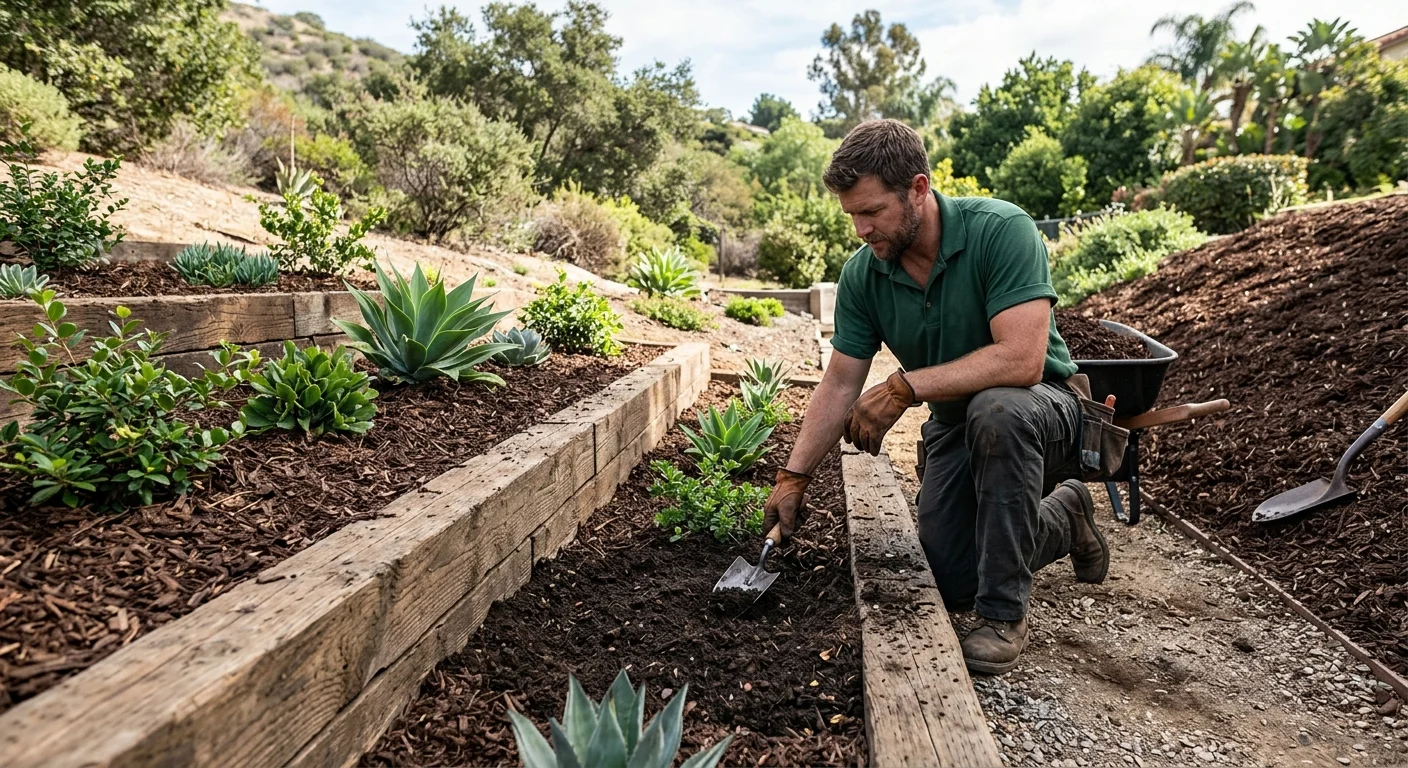
Landscape timbers, sometimes sold as landscape logs, are sawn or rounded wood pieces. The contractors we send set them as a timber landscape border, a low bed step, or a short riser on a path. They are a hardscape material. They sit in the same family as brick and metal edging.
They help most on modest jobs. A one-course border around a front-yard bed in North Park. A stacked pair of courses holding mulch on a gentle Mira Mesa grade. A short timber step between lawn and gravel in Encinitas, where the drop is a few inches. Those runs keep soil from washing onto the sidewalk in a January storm. They also keep bark off the lawn so the mower does not fling it down the block.
They struggle on wet or steep ground. A Chula Vista clay lot that ponds after rain will keep the wood soaked. An El Cajon or Lakeside bank that sheds water toward the house will push on every course. A coastal strip in Imperial Beach that takes salt spray and irrigation overspray will wet the same faces all summer. Inland heat in Escondido dries the top of the timber and leaves the buried face damp. That split is hard on wood.
City of San Diego watering rules still apply around the bed. In the City of San Diego Public Utilities service area, potable irrigation is allowed only before 10:00 a.m. or after 6:00 p.m. Watering is prohibited during and within 48 hours after measurable rainfall. If spray heads soak the timber face every morning, the wood stays wet even when the rest of the yard looks dry. A directed drip line is kinder to the border. The EPA WaterSense site is a clean place to start if the irrigation itself needs a rethink.
For bed edges in other materials, see landscape edging ideas that last. If the yard needs a plan beyond a border, the contractors we send work from a landscape design scope that places timber only where a low edge is enough.
How timbers differ from a wood retaining wall
A timber landscape border holds mulch, bark, and a shallow wedge of soil. A wood retaining wall holds a bank. That is a load choice.
Borders sit on or just in grade. They may be one or two courses high. They leave walks, driveways, and patios on their own structure. Walls have footings, drainage, and a designed height. They resist soil pushing downhill. Our wood retaining wall page covers that structural work.
The mix-up happens on slopes. A homeowner in La Mesa starts with two courses to keep ice plant from sliding. Then a third course goes on. Then a fourth. Now the stack is holding a slope, and maybe a side-yard path.
In the City of San Diego, a retaining wall needs a building permit when height exceeds 3 feet. Height is measured from the top of the footing to the highest point on the wall. A permit is also required when the wall supports a sloping backfill steeper than 1.5 horizontal to 1 vertical, or when it supports surcharge such as a driveway, walkway, structure footing, or fence. Walls under 3 feet can still need a permit when those other conditions apply. In unincorporated county, Planning & Development Services form PDS 083 states that retaining walls require a permit except those less than 3 feet in height and not supporting surcharge. Height is measured from the top of the footing to the top of the wall.
If the stack is holding soil, treat it as a wall until the governing office says otherwise. A City of San Diego lot goes to Development Services. An unincorporated lot goes to County Planning & Development Services. Our retaining wall permit guide walks through when that review kicks in.
Railroad ties are a different product. They are a rail material that sometimes shows up in yards. Confirm with the supplier whether a given tie is meant for a planting bed, especially a food garden. Lodge poles, bender board, and 6x6 construction lumber are different products too. The written scope should name the actual piece, not a catalog nickname.
What soil, drainage, and insects change
San Diego County soils change from the coast to the inland valleys. Coastal north county sand drains fast and still stays damp from marine layer and salt air. South Bay and inland clay hold water against the buried face of the timber. East County decomposed granite can look dry on top and stay wet at the cut. Each of those conditions changes how the wood stays sound. A published lifespan for landscape timbers in San Diego yards could not be confirmed against primary sources. Ask the supplier for the grade and the ground-contact rating on the sticker. Then ask the contractor how that rating meets the soil on your lot.
Drainage decides whether the border lasts. Water that sits against wood feeds decay. On a Point Loma or Pacific Beach lot, overspray from a lawn head is often the wetter problem. Rainfall is the smaller one. On a Spring Valley or Santee bank, water moving through the slope with nowhere to go is the wetter problem. A border with no outlet will trap moisture on the uphill side. A wall without drain rock and a relief path will do the same, with more soil behind it. If the yard already has soggy corners, fix the water path before you add wood. The UC Master Gardener Program of San Diego County is a good local reference on soil and watering habits.
Insects and decay follow moisture. Subterranean termites are present in this region. Wood in contact with soil is an invitation. Treatment brand, chemical, and insect rating belong on the product label and with the lumber yard. The contractor should state whether the specified timber is rated for ground contact, whether any cut ends get a field treatment named on the label, and whether the design keeps soil and irrigation off the top of the courses.
Fire is the other San Diego limit. CAL FIRE’s ember-resistant Zone 0 extends 5 feet from structures. That zone is kept free of combustible materials. Landscape timbers are wood. On a Ramona, Alpine, or unincorporated hillside lot that must keep defensible space, a timber border against the house is the wrong material. Confirm the zone rules with your fire authority before you pin wood next to siding.
When timbers become a larger hardscape job
A timber job stops being a border when the stack holds more than a shallow bed. It also stops when a walk, stair, or parking pad sits above it. It stops when the grade behind it is a real slope. It stops when the run sits inside 5 feet of the house.
A fence needs posts sized and set for wind and lateral load. Specify fence materials for a fence. Landscape timbers are sized for a timber landscape border. Using them as fence posts, deck beams, or play-structure stock is a different job with different hardware, footings, and, often, a different permit path. Confirm that path with the building department that governs the lot.
Home centers, farm-supply stores, and lumber yards in the county often stock landscape timbers. Stock, grade, and treatment change by aisle and by week. Confirm current stock and grade at the yard, or on the contractor’s order sheet, before anyone digs. Shelf prices could not be confirmed here, and they change. The contractor confirms the price with you before any work starts.
Once the work is a wall, a stair, or a graded bank, it belongs in retaining walls and hardscaping. The crews we send handle layout, drainage, and the material switch if timber is the wrong call. Concrete, block, and stone read differently next to stucco in La Jolla or a ranch house in Vista. That choice is a design choice and a permit choice.
On a Coronado or Point Loma lot, salt and constant moisture argue for a material that does not sit wet against grade. On a Poway or Escondido slope, the argument is load and summer heat. The same landscape log that looks right in a catalog has to survive the microclimate on your street. If the lot sits in an HOA, get the architectural rule in writing before the trench goes in. Many planned streets in 4S Ranch, Scripps Ranch, and Carlsbad name an edging material.
What a contractor’s written scope should confirm
Ask for a written scope. A phone description leaves too much out. The scope should name the product (landscape timber, landscape log, or another lumber) plus the species or treatment as sold. It should name the course count and the finished height above grade. It should say how the bottom course is set, how courses are pinned, and what keeps the run from creeping. Rebar, spikes, and deadmen are common methods. Those details belong on paper.
Hold landscape timbers in place only the way the scope describes. A trench for the bottom course, pins through each course, and a defined end treatment keep a run from walking downhill on a Clairemont or El Cajon grade. Skip those notes and the first wet winter will move the line.
The scope should say what sits behind the wood: native soil, mulch, drain rock, or filter fabric. It should say how irrigation will miss the face of the timber. If the stack holds soil, the scope should state whether the contractor treats it as a retaining wall. It should name who pulls any permit. The pro we match you with pulls the permit. It should cite City of San Diego Development Services or County PDS, depending on the lot. If the height or surcharge is close to a threshold, the scope should say the contractor will confirm the rule with that office.
Bloom Pro SD matches you with licensed, independent landscaping professionals. We answer the line and we make the match. You contract with the contractor directly. Verify the license on the CSLB license check before you sign. Licensed and insured is the baseline in California.
Ask what happens at cut ends, corners, and grade changes. Ask whether a timber step on a path is a border or a stair. Ask whether the design sits inside 5 feet of the house. Those answers decide if you are buying a timber landscape border or a hardscape rebuild.
When to call us
When a timber border starts holding real soil, sitting near a house, or turning into steps on a slope, you want a licensed landscaping pro on the job. Call us at (760) 400-6355 and we’ll match you with a licensed local pro. You contract with that contractor directly.