Shaping a sloped yard or defining garden beds often leads San Diego homeowners to consider a retaining wall. While many materials exist, wood retaining walls offer a distinct aesthetic that blends naturally with countless landscapes. It’s a choice that balances natural beauty with essential functional needs.
Why choose a wood retaining wall for your property
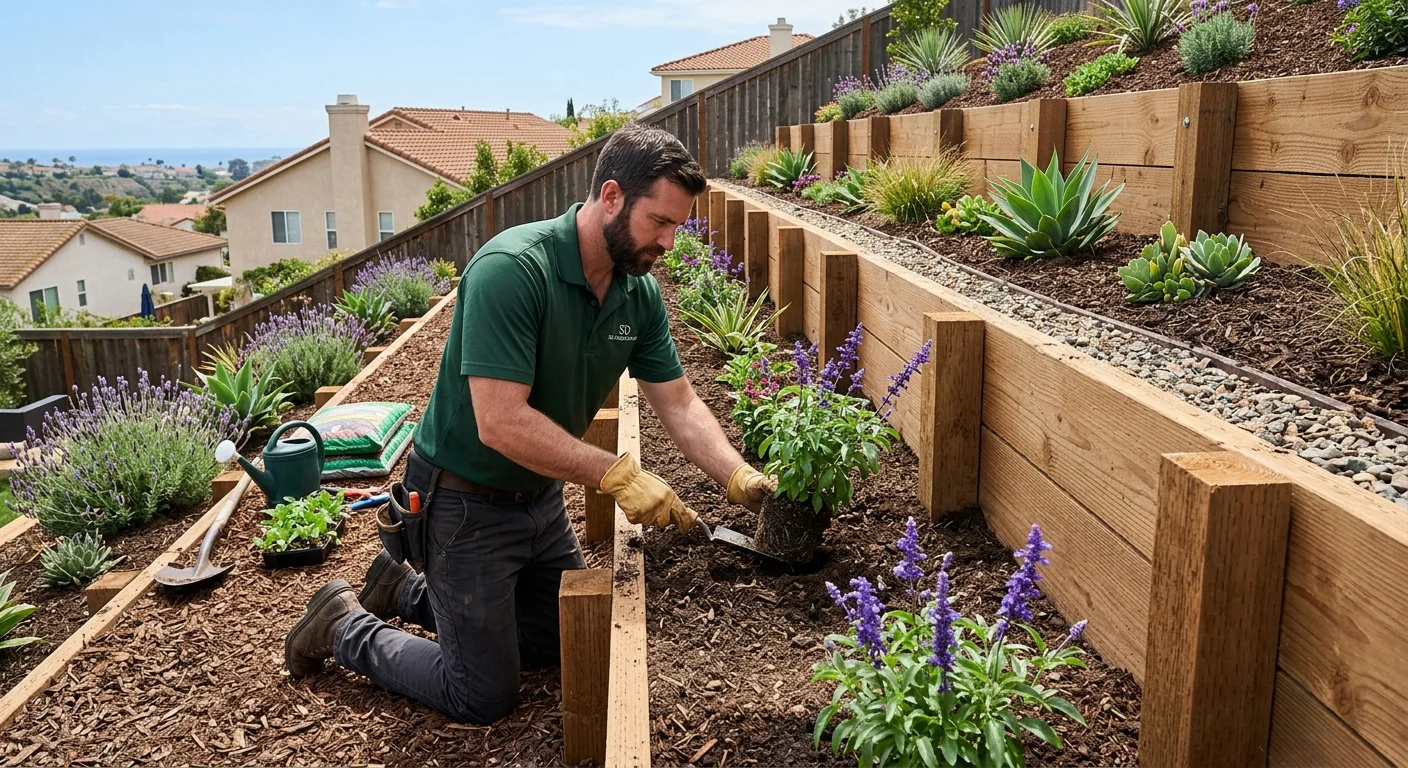
Wood retaining walls bring a warm, organic feel to any San Diego yard. Unlike the more formal appearance of concrete or stone, timber provides a rustic charm that complements lush greenery and natural landscapes. Homeowners often choose wood for its aesthetic versatility, fitting naturally into various garden designs from casual to contemporary. Its natural texture softens harsh edges, creating an inviting outdoor space.
Beyond aesthetics, wood retaining walls are practical for managing sloped terrains. They help prevent soil erosion, create level planting areas, and define outdoor living spaces. For smaller or less demanding applications, like raised garden beds or low landscape terracing, wood often offers quicker, more straightforward installation compared to heavier masonry materials. This can translate to reduced labor costs and project timelines, appealing to budget-conscious property owners.
Wood is also a renewable resource, appealing to those seeking environmentally friendly landscaping choices. Its natural appearance can boost curb appeal, especially when paired with appropriate plantings. From tiered garden beds on a gentle slope to a strong patio boundary, a properly designed and installed wood retaining wall provides stability and visual appeal. It transforms challenging gradients into functional and beautiful parts of your outdoor environment, maximizing usable space.
Pressure-treated timber vs. other wood options
When planning a wood retaining wall in San Diego, the type of timber you choose is critical for longevity. Pressure-treated timber is the overwhelming favorite and the only viable long-term option for this application. This wood is infused with chemical preservatives under high pressure, making it highly resistant to rot, fungal decay, and insect infestation – common enemies of wood in outdoor environments, especially when in direct contact with soil.
San Diego’s climate, with its occasional humidity, coastal moisture, and ever-present threat of subterranean termites, makes untreated wood an unwise choice for any ground-contact structure. Untreated lumber will quickly succumb to moisture-related rot and become a prime target for termites. These pests are a significant concern throughout San Diego County and can compromise wall integrity in just a few years, leading to costly repairs. Pressure-treated wood specifically combats these issues, extending the wall’s life and providing essential peace of mind.
While other wood types like redwood or cedar might be considered for natural beauty and inherent decay resistance, they typically come at a much higher cost. More importantly, they don’t offer the same long-term protection against aggressive termite species prevalent here as properly treated timber. For a structure designed to hold back soil, manage water, and withstand ground moisture, the comprehensive protection of pressure treatment is non-negotiable. Always ensure any timber used for a retaining wall is rated for “ground contact” or “below ground” use to confirm it has the appropriate chemical treatment for longevity.
How much does a wood retaining wall cost per foot in San Diego?
Bloom Pro SD does not publish a wood-wall linear-foot menu. Height, timber grade, drainage, access, and whether the wall needs engineering change the bid.
Key cost determinants include the wall’s height and length, the specific type and grade of pressure-treated lumber, site accessibility for crew and equipment, and the overall design complexity. Taller walls require heavier engineering, larger timbers, and more involved construction, which drives up costs. Projects on steep slopes or properties with limited access will incur higher labor charges. Permits follow the City and County 3-foot rules on our retaining wall permit in San Diego page, not a 3-to-4-foot guess.
Compared with masonry, wood often bids lower upfront on short landscape walls and shorter on lifespan. Permits follow the City and County 3-foot rules on our retaining wall permit in San Diego page, measured from the top of the footing. For homeowners considering various materials for sloped properties, review our detailed post on retaining wall costs for sloped San Diego properties for more comprehensive insights. If you are still exploring all your options, including stone and engineered concrete, explore our guide on San Diego retaining wall materials.
The importance of proper drainage and construction
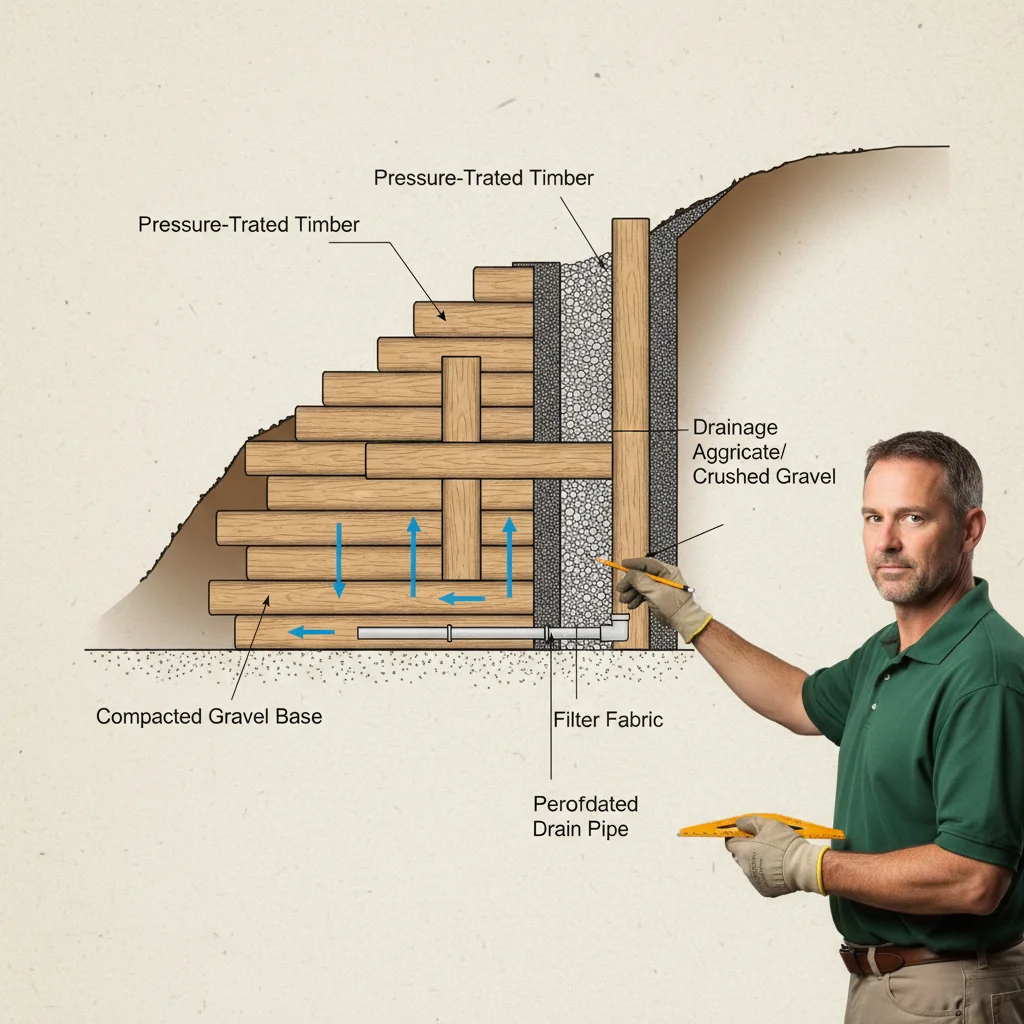
The longevity and stability of your wood retaining wall hinge significantly on expert construction and an effective drainage system. Even high-quality pressure-treated timber will fail prematurely if water isn’t managed correctly behind the wall. Improper drainage can lead to immense hydrostatic pressure buildup, causing the wall to bulge, lean, or even collapse. Consistent moisture contact, even with treated wood, accelerates rot and decay, drastically reducing its expected lifespan.
A professional installation includes several key components. First, a solid, level foundation is essential, often involving a carefully prepared and compacted gravel base for even load distribution. Next, adequate drainage materials, such as a generous layer of crushed gravel or specialized drainage aggregate, are placed directly behind the wall from the base to near the top. This permeable layer allows water to filter through instead of accumulating. Perforated drain pipes (often called “weep holes” or a French drain system) are then strategically installed at the base, directing collected water safely away. A durable filter fabric is also crucial to prevent fine soil particles from clogging the drainage system.
Beyond water management, structural integrity relies on solid anchoring. “Deadman” anchors are vital for taller or more stressed wood retaining walls. These timbers extend horizontally into the backfill and perpendicular to the main wall, effectively tying the wall into the stable soil behind it. They provide substantial additional support, preventing the wall from shifting, leaning, or failing over time. Hiring an experienced San Diego hardscaping contractor ensures these vital elements are incorporated into the design and construction, as they understand local soil conditions, climate challenges, and relevant building codes to deliver a durable, long-lasting structure.
Is a wood retaining wall right for your San Diego yard?
Deciding if a wood retaining wall is the best fit for your San Diego property involves weighing its unique advantages against potential drawbacks. The natural aesthetic and often lower upfront cost for smaller projects make it appealing. Wood blends beautifully with San Diego’s diverse plant palette and relaxed outdoor living style, offering an attractive, organic way to define spaces or manage gentle slopes within your landscape. It creates a natural transition between planted areas and constructed features.
San Diego climate still matters. Pressure-treated wood resists rot and insects better than untreated lumber, but it usually does not last as long as masonry. Termites remain a concern. Ask the contractor for a written maintenance and inspection plan rather than a guaranteed year count. Wood also requires occasional maintenance, such as checking for rot, insect damage, or loose timbers, to ensure its integrity and appearance over its lifetime.
For minor landscaping changes, decorative garden beds, or retaining walls under 3-4 feet, wood can be an excellent, cost-effective choice. It provides a quick and aesthetically pleasing solution, well-suited for terracing smaller areas. For larger, more structural walls, especially those over 4 feet or in critical load-bearing situations, a professional engineering assessment is vital. While wood can be engineered for these applications, concrete block or poured concrete might offer superior long-term stability and minimal maintenance, potentially justifying a higher initial investment. We can help you explore all your options for /services/hardscaping/ and guide you to the perfect solution for your home’s specific needs and local conditions.
Frequently asked questions
Is a wood retaining wall a good idea in San Diego?
For short walls, garden terraces and budget-limited projects, it is a reasonable choice, and it suits rustic and natural settings visually. For anything tall, load-bearing or expected to last decades, it is the shortest-lived of the common options, so the up-front saving is really a deferral of the cost.
What wood should be used for a retaining wall?
Pressure-treated timber is the standard, because untreated wood in contact with soil fails quickly. Grade matters: material rated for ground contact is not the same as material rated for above-ground use, and using the wrong one is one of the more common reasons a wood wall fails early.
What makes a wood retaining wall last?
Drainage, more than the timber itself. Water pressure building behind a wall is what pushes it over, so gravel backfill, a perforated drain pipe and a route for water to escape matter more than the face material. A wood wall built with proper drainage outlives a block wall built without it.
When to call us
Building a retaining wall, especially in San Diego’s varied terrain, requires expertise in engineering, drainage, and local building codes. A poorly constructed wall can fail, causing significant damage and posing safety risks. Call (760) 400-6355 to get matched. The independent professional quotes the wall.