A useful San Diego paver-patio budget starts with an itemized scope, not a per-square-foot headline. Material, excavation, base, drainage, pattern, edging, and access can move two similar-looking patios far apart. National supplier guides describe other markets and other years. Compare written bids for the same plan. Bloom Pro SD matches homeowners with licensed independent hardscape contractors; those contractors set the price.
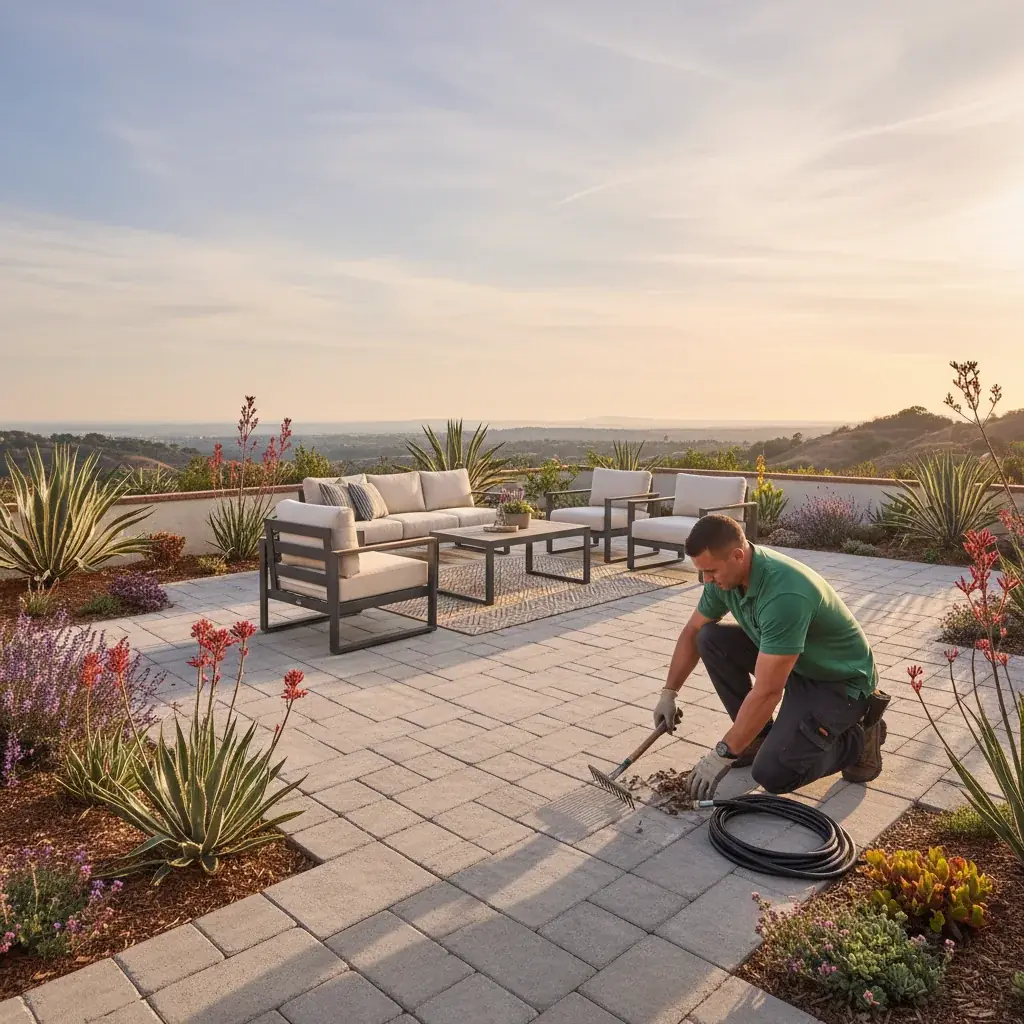
Concrete pavers, natural stone, and travertine: what to compare
The material you choose is often the biggest driver of your paver patio’s per-square-foot cost. Each option offers unique aesthetics, durability, and price points. It’s smart to weigh these factors against your budget and desired look.
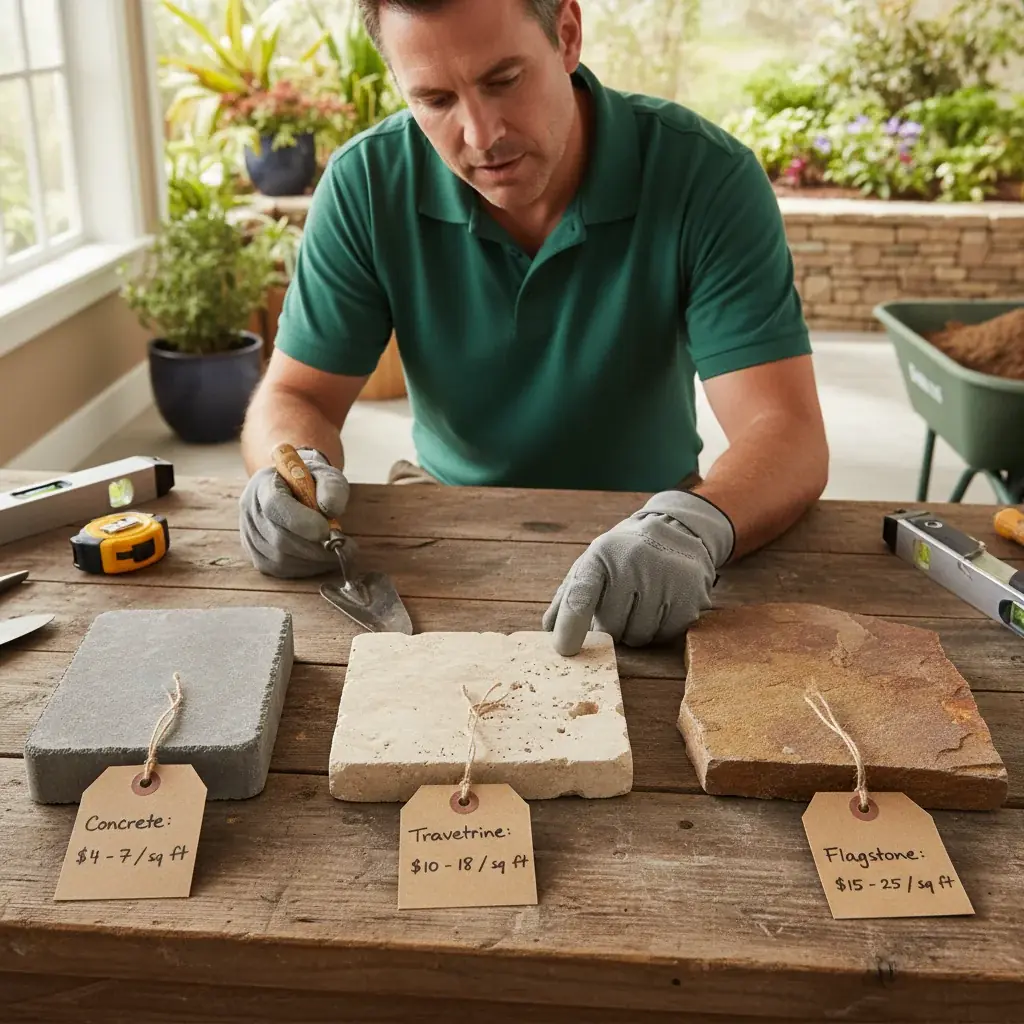
Concrete pavers: Usually the lowest material cost and the most common local choice. Shapes and textures can mimic brick or stone. Installed price is driven by base, cuts, and access, not by a blog per-square-foot band.
Natural stone: Flagstone, slate, or granite. Heavier handling and more cutting. Flagstone is natural stone on this page, not a separate patio type. Ask the quote to name the stone and the square footage of waste from cuts.
Travertine: Cool underfoot and common at pools. If the patio wraps a pool, coordinate with the pool contractor, for example Splash Pro Pools. Travertine often needs sealing. Bloom Pro SD does not set material prices. The independent hardscape contractor does, after they see the site.
Site prep that hides in the quote: excavation, base, drainage
You might only see the beautiful pavers, but significant work happens below the surface to ensure your patio lasts. Site preparation is a crucial part of any paver installation and accounts for a substantial portion of the overall cost. These steps are essential for a stable, long-lasting, and properly draining patio.
First, there’s excavation. Existing turf, soil, or old patio materials come out so the patio has a stable foundation. The depth of excavation depends on the paver thickness and the required base material. If the area has dense clay soil, large rocks, or existing concrete, excavation can become more complex and increase labor hours. Hauling away excavated material also adds to the cost, usually factored into the overall project.
Next, the crews we match you with build the base. This involves laying down and compacting layers of crushed gravel or aggregate. A solid, well-compacted base is paramount for preventing settling, shifting, and cracking over time. In San Diego, especially in areas with expansive soils, a thicker or more specialized base might be necessary. The amount of base material and the labor required for its proper compaction will impact the price. It’s not just about dumping gravel; it’s about creating a level, stable platform that can support the weight of the pavers and withstand foot traffic and furniture.
Finally, drainage is a critical consideration. Proper drainage prevents water from pooling on your patio or flowing towards your home’s foundation. This might involve grading the area to create a slight slope away from structures, or installing trench drains and French drains. Poor drainage can lead to structural issues for the patio and your home, as well as aesthetic problems like efflorescence or moss growth. Incorporating effective drainage solutions from the start is an investment that protects your property and the longevity of your patio. These preparatory steps, while not glamorous, are non-negotiable for a high-quality paver patio.
Patterns and edging that change the bill
A basic grid pattern is straightforward to lay. Herringbone, basketweave, and banded borders look sharper, and they add labor cost because the cuts and the layout take longer.
Paver Patterns: Simple patterns like running bond or stack bond use rectangular pavers laid in straight lines, requiring less cutting and planning. These are the most cost-effective. As you move to more intricate designs, such as herringbone, basketweave, or circular patterns, the labor costs typically rise. Herringbone, for example, requires pavers to be laid at 45-degree angles, demanding precise cuts and careful alignment. Intricate patterns also generate more waste from cut pavers, which contributes to the overall material cost. A skilled installer can execute these designs flawlessly, creating a stunning visual impact, but that expertise comes at a price.
Edging: Edging is crucial for keeping your pavers in place and preventing them from shifting or spreading over time. The simplest edging uses a sturdy plastic or metal restraint installed along the perimeter, often hidden beneath the border pavers or mulch. This is typically included in most standard installations. If you opt for decorative edging, such as a contrasting paver color, a soldier course (pavers laid perpendicular to the main pattern), or even a small retaining wall built into the patio’s edge, costs will increase. These decorative elements require more material, more cuts, and more specialized installation techniques. They do, however, add a finished, high-end look to your patio, defining its boundaries and enhancing its visual appeal. It’s part of a comprehensive landscape design that considers every detail.
When you’re comparing quotes, ask for a detailed breakdown that shows how much of the cost is for the pavers themselves, how much for site preparation, and how much for the labor involved in specific patterns or edging choices. These details help ensure your new hardscaping project aligns with your expectations and budget.
Permit thresholds and when you need one in San Diego County
Navigating permits can sometimes feel complicated, but it’s a necessary step for certain home improvements in San Diego County. For paver patios, the need for a permit usually depends on the size of the impervious surface you’re creating and how it impacts stormwater runoff.
In San Diego County, local regulations focus on managing stormwater runoff to protect water quality. An “impervious surface” is any surface that doesn’t allow water to seep into the ground, like a paver patio (even though pavers have joints, for permit purposes they are often considered largely impervious). Generally, if your new paver patio project significantly increases the amount of impervious surface on your property, or if it involves substantial grading or structural work, you will likely need a permit from your local jurisdiction (City of San Diego, Chula Vista, Oceanside, etc.).
Specific thresholds vary by city. There is no county-wide square-foot trigger on this page. Ask planning or building for your address, especially if you add a large patio, change drainage, or do substantial grading.
It’s always best practice to consult with the specific planning or building department of your city or the County of San Diego if you’re in an unincorporated area. They can provide the most accurate and up-to-date information on permit requirements for your specific project. A reputable landscaping contractor will be familiar with these local codes and can help guide you through the permitting process, or even handle it for you. Ignoring permit requirements can lead to fines, project delays, or even the need to tear out and rebuild your patio if it’s not compliant. It’s a small upfront effort that saves a lot of headaches later on.
Sealing, joint sand, and long-term maintenance cost
Once your paver patio is installed, a few finishing touches and ongoing maintenance steps help protect your investment and keep it looking its best. These aren’t just cosmetic; they significantly impact the patio’s longevity and performance.
Joint Sand: After pavers are laid, polymeric sand is swept into the joints between them. This special sand contains polymers that activate when wet, hardening to create a durable, flexible bond that locks the pavers in place. It also helps prevent weed growth and insect infestations. The cost of polymeric sand is generally included in the initial installation quote, but if you need to reapply it years down the line, it’s an expense to consider. This process helps your patio withstand San Diego’s weather shifts and foot traffic.
Sealing: Sealing can reduce stains and UV fade, especially on porous stone. It is usually an add-on with a reapplication interval from the product label. Put sealer product and square footage on the bid. Do not use a blog per-square-foot sealer rate.
Long-Term Maintenance: Compared to other patio materials like poured concrete, paver patios are known for their ease of maintenance and repair. If a paver gets cracked or stained, you can usually lift and replace individual pavers without disturbing the entire patio. This is a significant advantage in terms of long-term cost savings. Regular maintenance includes sweeping or blowing debris, occasional washing with a hose or power washer (on a low setting), and reapplying joint sand and sealer as needed. We also recommend considering how your paver patio integrates with other hardscaping elements, like a retaining wall, for a cohesive and durable outdoor space.
Project size: compare the same square footage, not invented totals
A small patio (bistro scale), a medium dining pad, and a large multi-zone patio are different bids even in the same material. Fixed mobilization can make a tiny patio look expensive per square foot. Ask each contractor to price the same drawing.
Get a detailed written estimate that breaks out materials, labor, site preparation, and extras. The contractors we match put the numbers in writing. You hire them directly.
Frequently asked questions
How much does a paver patio cost per square foot in San Diego?
Material sets the comparison: concrete pavers vs natural stone vs travertine. Installed totals depend on excavation, base, drainage, pattern, and access. There is no published San Diego per-square-foot rate on this page. Get itemized bids for the same plan.
What is hidden in a paver patio quote?
Everything under the pavers. Excavation to remove turf, soil or an old surface comes first, and its depth depends on paver thickness and required base. Dense clay, large rock or poor drainage all add work at this stage. The base and the drainage detail are what determine whether the patio is still flat in ten years.
Do paver patterns change the price?
Yes, through labour rather than material. Running bond and stack bond use straight lines and minimal cutting, so they are the most cost-effective. Herringbone, basketweave and banded borders take longer to lay and require far more cuts, which shows up in the bill even when the paver itself is identical.
Do I need a permit for a paver patio in San Diego County?
It depends on how much impervious surface you are creating, because local rules focus on stormwater runoff. Even though pavers are more permeable than poured concrete, a large installation can cross a threshold. Check with your local jurisdiction before you build rather than after.
What maintenance does a paver patio need?
Mainly joint sand and, optionally, sealing. Polymeric sand is swept into the joints after installation and hardens when wet to lock the pavers together and resist weeds. It needs topping up over the years. Sealing is cosmetic and protective rather than structural, and how often it is worth redoing depends on the material.
When to call us
When you’re ready to transform your outdoor living space with a durable and beautiful paver patio, it’s time to connect with an experienced landscaping professional. The crews we match you with cover everything from initial design and material selection through installation and drainage, so the patio holds up and adds value for years. Call us at (760) 400-6355 to get matched. The independent professional quotes the work.