Standing water in a San Diego yard almost always comes down to one of three things: the ground doesn’t slope away from the house, the soil underneath won’t absorb water fast enough, or an old drainage line has failed. A French drain, a channel drain, and a regrade are different jobs. Bloom Pro SD does not publish installed drainage rates. The right fix depends on where the water is coming from and where it is allowed to go.
If you’ve got a puddle that won’t drain, a soggy patch that kills the grass every winter, or water creeping toward your foundation, this guide walks through what’s actually causing it, which fix matches which cause, and what to expect to pay in San Diego County.
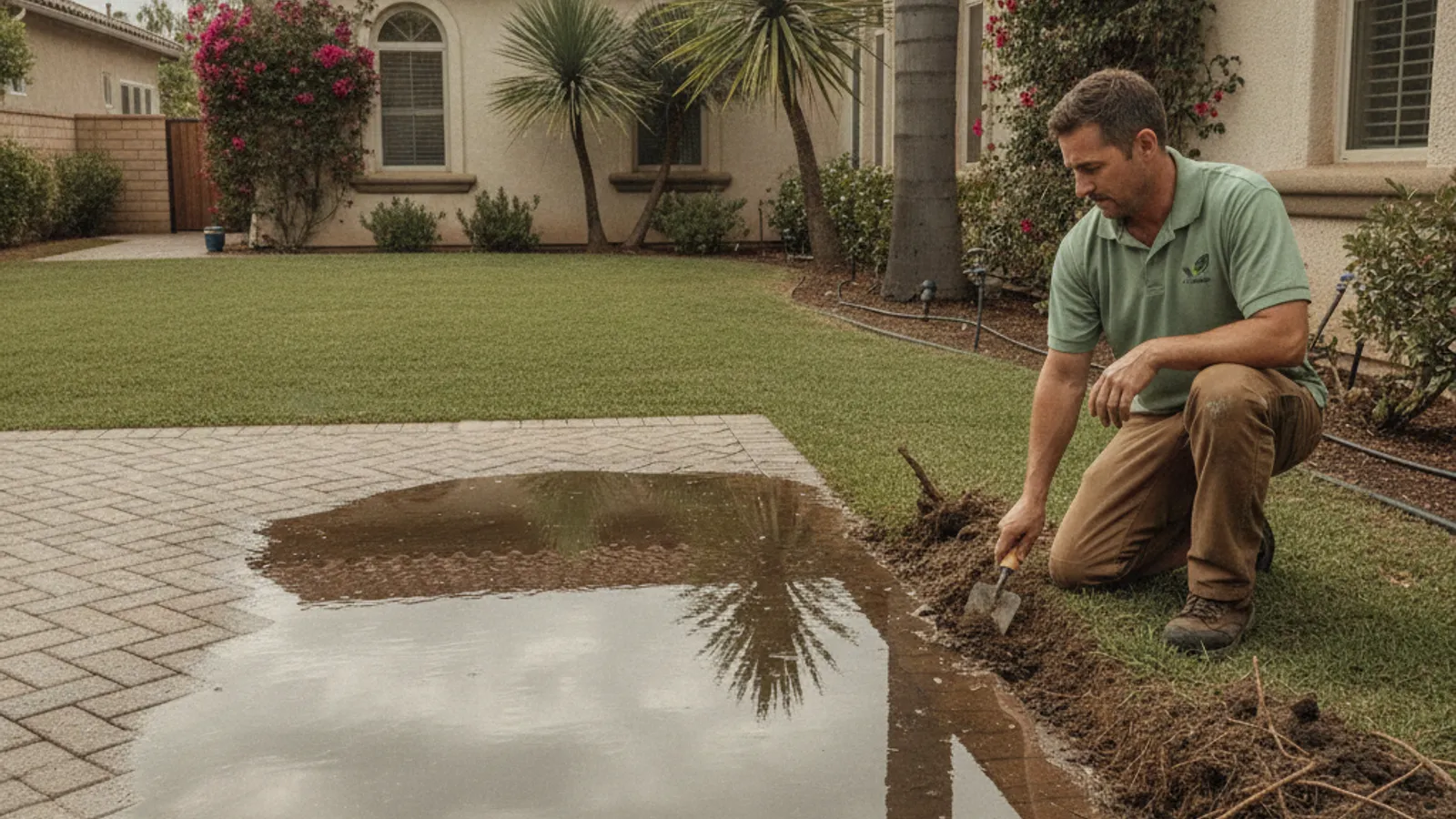
What causes yard drainage problems in San Diego?
Most complaints trace back to one of a handful of repeat offenders, and San Diego’s mix of soil types and older tract grading makes all of them common.
Flat or reverse grading. Many San Diego neighborhoods built in the 1960s through the 1980s were graded flatter than they should have been, and decades of settling and mulch buildup flatten a slope further. If the ground within 10 feet of your foundation doesn’t drop at least a few inches, water has nowhere to go but sideways.
Clay soil that won’t percolate. Inland pockets around Santee, El Cajon, Lakeside, and the East County foothills sit on expansive clay that swells when wet and drains slowly. Water that soaks into decomposed granite in Tierrasanta can sit on clay in Lakeside for days.
Compacted soil. Years of foot traffic or construction staging compact soil until it behaves like clay, even in areas that don’t naturally have it. A lawn patch that used to drain fine but now holds water usually got compacted at some point.
Downspouts and hardscape dumping water in one spot. A gutter downspout emptying onto the lawn, or a patio shedding runoff toward one low corner, concentrates water faster than the ground can absorb it, even on a well-graded lot.
A failed or undersized drain line. Older homes sometimes have a corrugated drain pipe that’s crushed, root-clogged, or was undersized to begin with. If a yard used to drain fine and suddenly doesn’t, check for a blocked line before assuming the grading changed.
If the water is coming from a broken sprinkler line rather than rain, that’s a different problem with its own urgency, see our guide to emergency sprinkler repair for a flooding yard for what to do right now.
How do you fix a yard drainage problem?
The fix depends on where the water starts and where it needs to end up. Most San Diego yards need one of these, sometimes two together.
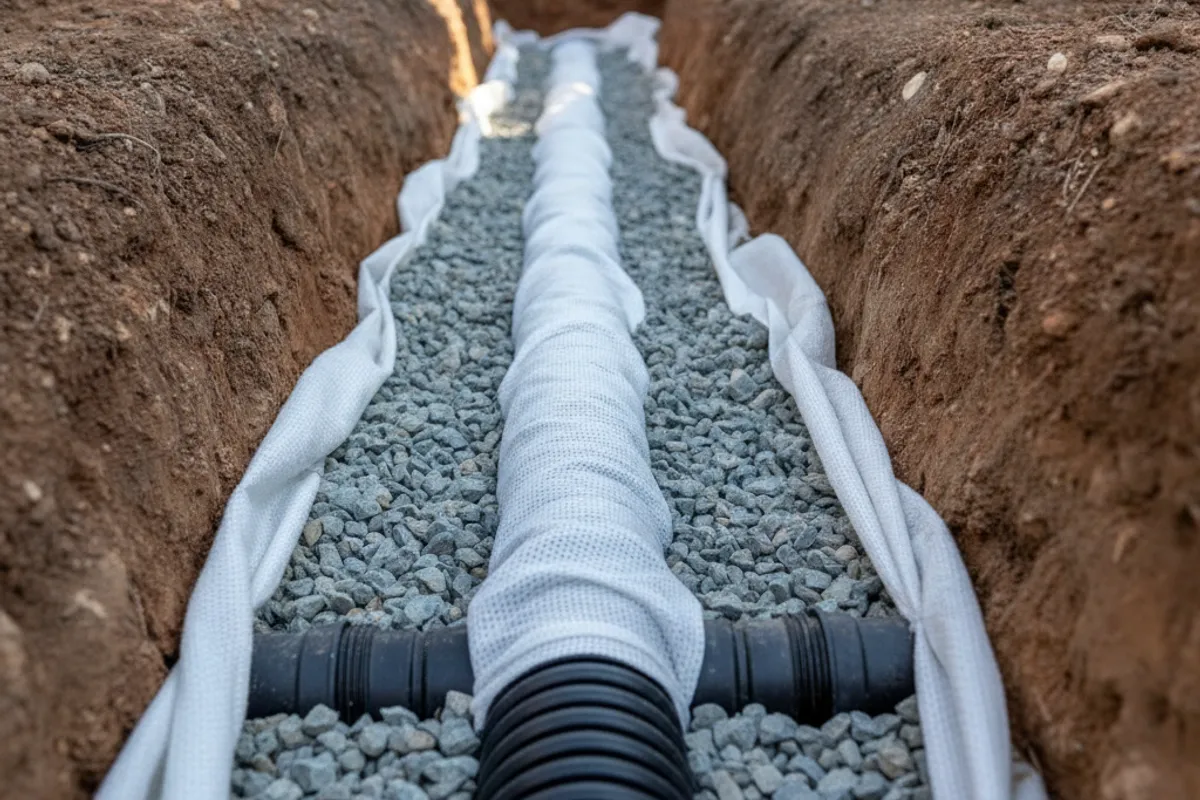
French drain. A trench dug along the wet path, lined with a perforated pipe wrapped in filter fabric and bedded in gravel, then covered with soil or turf. It collects water moving through the soil and carries it to daylight, a dry well, or the street. Right call for a soggy zone or water tracking downhill from a slope or a neighbor’s yard.
Channel drain (trench drain). A narrow grate set flush into a patio, walkway, or driveway that catches sheet-flowing surface water before it reaches the house or a low spot. The fix when hardscape itself is the problem, not the soil underneath it.
Regrading and a swale. Sometimes the real fix isn’t a pipe, it’s reshaping the dirt so gravity does the work. A shallow, grass-lined channel redirects surface water around a low spot without any hardware. Often the most durable fix on a flat lot, but it means moving soil and possibly re-sodding.
Dry well. A gravel-filled pit that lets collected water percolate into the ground on-site instead of piping it off the property. Works well where soil percolation is decent and there’s nowhere convenient to send water to daylight.
Downspout extension or tie-in. The cheapest fix on this list. Running solid pipe from a downspout to a spot 10 or more feet from the foundation, or tying it into an existing drain line, solves a surprising number of “my yard floods near the house” complaints on its own.
Most of these fall under the same scope as grading and drainage work built into a larger job. A referred retaining walls and hardscaping professional can quote drainage design, trenching, and installation, whether it’s a standalone French drain or part of a bigger regrade.
What does drainage repair cost in San Diego?
Pricing depends on the fix, the run length, and how much digging is involved.
French drain: linear footage, soil, and restoration. Channel drain: cutting into existing pavers or concrete. Dry well: depth and soil percolation. Regrading with a swale: priced by area reshaped, not a menu. Downspout extension or tie-in: often the first check before a larger drain.
Bloom Pro SD does not publish drainage rate cards.
A yard with more than one cause, say a flat grade feeding a low spot near a patio, often needs a combination fix, which is why an on-site look matters more than a phone estimate. If drainage is part of a bigger yard overhaul, our backyard remodel cost guide breaks down how drainage work fits into a full project budget, and slope work often carries its own drainage requirements, covered in our retaining wall cost guide.
Do you need a permit for drainage work in San Diego?
Most standalone drainage fixes on your own property, a French drain, a dry well, a downspout tie-in, don’t require a permit. It gets more involved with anything that discharges water off your property. San Diego jurisdictions, whether it’s the City of San Diego, Chula Vista, El Cajon, or the unincorporated county, generally require piped or graded runoff to be directed to an approved drainage course, not pointed at a neighbor’s fence line or dumped into the street. Larger regrading jobs that move real volume of dirt can also trigger a grading permit depending on the city.
Drainage work paired with a retaining wall is folded into that project’s permit when the City or County already requires a building permit for the wall. City Information Bulletin 220 and County PDS 083 use a 3-foot trigger from the top of the footing, plus surcharge and listed exceptions. Confirm on the retaining wall permit page before treating a drainage add-on as permit-free.
How to stop drainage problems before they start
Watch the yard during the first hard rain of the season. Standing water gone within a few hours is normal; water still sitting after a full day means a real problem worth fixing before the next storm. Keep downspouts clear and pointed away from the house, since a clogged gutter dumping at the foundation is one of the cheapest problems to create and one of the cheapest to fix. Watch for mulch or soil building up against hardscape over the years, since it can slowly raise the ground level until it blocks water that used to drain past a patio edge. And if you’re adding drought-tolerant landscaping or redoing a bed on a slope, that’s the cheapest moment to correct grading, before new plants and irrigation are in the ground.
When to call us
If a wet spot keeps coming back, water is creeping toward your foundation, or a patio is holding water instead of shedding it, have someone look at the actual slope and soil rather than guessing from a single storm. The crew you’re matched with walks the site, tells you which fix actually solves your problem instead of upselling the most expensive one, and handles design through installation. Call us at (760) 400-6355 for a straight answer on scope and cost, or find a crew that already works your part of the county through our San Diego County landscaping network.
Frequently asked questions
What causes standing water in a San Diego yard?
Standing water usually comes from flat or reverse grading near the house, clay or compacted soil that won’t absorb water quickly, downspouts or hardscape dumping runoff in one spot, or a drain line that’s failed or was undersized to begin with. Inland areas with expansive clay, like parts of Santee, El Cajon, and Lakeside, tend to hold water longer than coastal or decomposed-granite soils.
How much does a French drain cost in San Diego?
A French drain is quoted by length, soil, and restoration. Rocky or compacted soil takes longer to dig and bed. Compare itemized bids.
What’s the difference between a French drain and a channel drain?
A French drain collects water moving through soil, a buried perforated pipe in gravel that carries subsurface water away. A channel drain sits at the surface, a narrow grate set into a patio, walkway, or driveway that catches sheet-flowing water before it reaches a low spot or the house. Soggy soil calls for a French drain, and hardscape shedding water in the wrong direction calls for a channel drain.
Can I fix yard drainage myself?
A downspout extension or a small surface regrade with a shovel is realistic as a DIY project. A proper French drain or dry well is possible for a handy homeowner but easy to get wrong: insufficient pipe slope, the wrong gravel, or missing filter fabric, and the fix fails within a season. Anything tied to a retaining wall or a permit is worth having a professional handle.
Do you need a permit for a French drain in San Diego?
A standalone French drain that stays on your property and doesn’t discharge onto a neighbor’s lot or into the street usually doesn’t need a permit. Larger regrading work or drainage tied to a retaining wall can trigger permit requirements, and rules vary by city, so check with your local building department if you’re unsure.
How do I know if I need a French drain or just better grading?
If water tracks across the surface and pools in a low spot, regrading a swale is often the simpler and more durable fix, since it uses gravity instead of pipe. If water is soaking into the ground and resurfacing somewhere else, or a slope is feeding water from a neighbor’s yard, a French drain is usually the right call because it intercepts water below the surface. A landscaper who walks the site can tell you which situation you actually have.