That 400-square-foot patch of dirt behind your San Diego home can feel more like a design puzzle than a backyard. Without a smart plan, it quickly becomes a cramped, unused space. But with the right design moves, even the tightest lots can transform into a functional and beautiful outdoor oasis.
Why SD’s lot sizes punish bad layouts
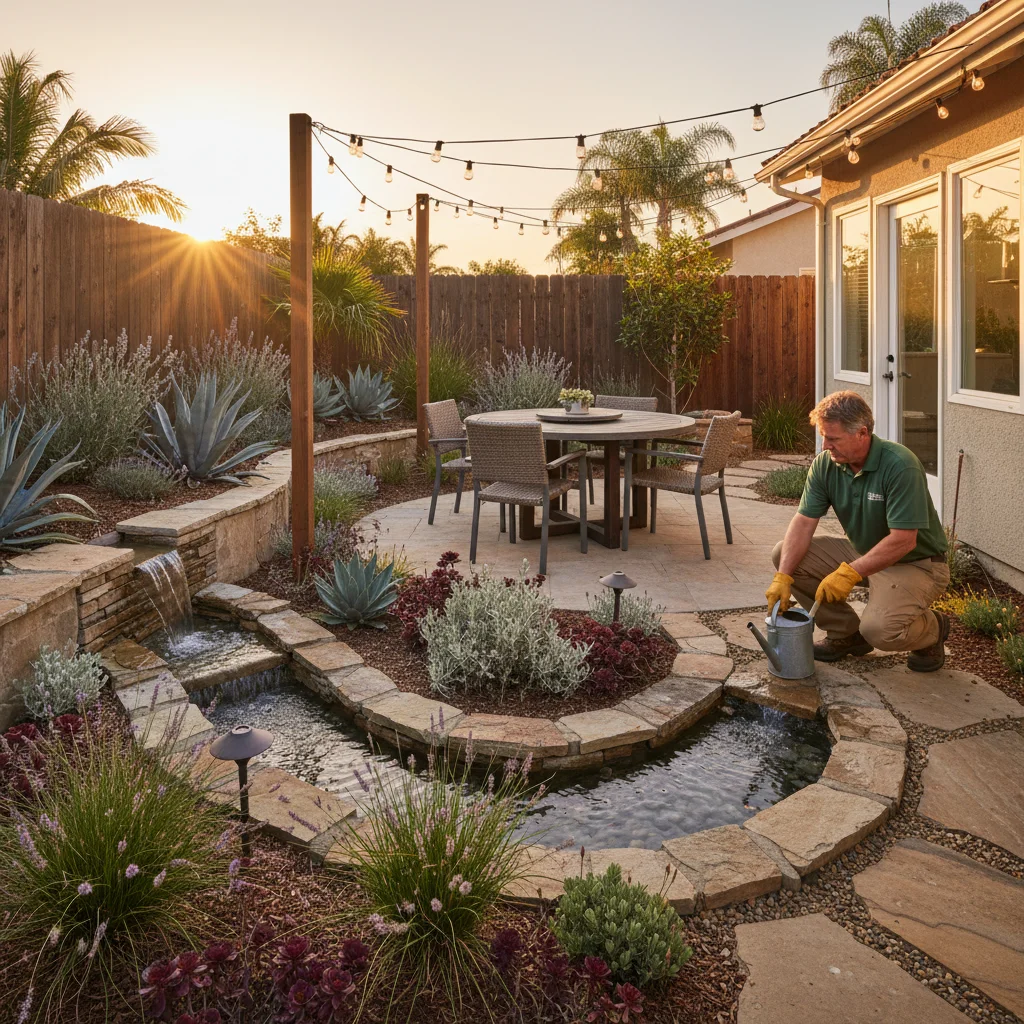
In San Diego County, from the historic bungalows of North Park to the newer townhomes in Chula Vista, small backyards are a common reality. Space is a premium. A poorly planned layout doesn’t just look bad; it actively shrinks your usable living area. Every square inch matters.
The most common mistake we see is a lack of clear purpose. A patch of struggling grass with a lonely barbecue doesn’t invite you outside. Another frequent issue is poor flow. A path that cuts straight through the middle of a small yard chops it into two even smaller, awkward sections. Oversized furniture or a massive, single-level deck can consume the entire space, leaving no room for greenery or movement.
In a small yard, every element must be intentional. A bad layout wastes precious real estate, making the space feel cluttered and claustrophobic. The goal is to create a design that feels cohesive and expansive, drawing you into the space rather than pushing you away. A professional landscape design is built around maximizing these compact footprints, turning limitations into charming, functional features. Thinking about the layout first is the most important step in any successful small yard project.
Layered planting depth: how to fake distance
One of the most effective ways to make a small backyard feel larger is to create the illusion of depth. Our eyes perceive distance through layers. By strategically layering plants, you can trick the brain into seeing more space than is actually there. This is a classic designer’s trick that works wonders in tight San Diego yards.
Think of your garden in three distinct planes: foreground, midground, and background.
Foreground
This is the layer closest to your vantage point, like your patio or back door. Use low-growing, fine-textured plants here. Groundcovers like Dymondia (Silver Carpet) or creeping thyme work well. Smaller perennials with delicate foliage also fit perfectly. The goal is an uncluttered, detailed view up close.
Midground
This is the heart of your planting beds. Here, you can introduce more variety in height, color, and texture. Think medium-sized shrubs and perennials like Salvia, Kangaroo Paw, and Lavender. This layer adds the most visual interest and helps obscure the boundaries of the yard.
Background
This layer is against your fence or back wall. It’s where you create your “back wall” of green. Taller, more narrow plants are ideal. Slender varieties of bamboo (clumping types only), Italian Cypress, or espaliered fruit trees work well. You can also use climbing vines like Star Jasmine on a trellis to soften the fence and draw the eye upward, creating a sense of height and enclosure.
Color also plays a role. Cool colors like blues, purples, and deep greens tend to recede, making them perfect for background plants. Warmer, brighter colors like reds, oranges, and yellows appear to advance, so use them in the foreground or as accents in the midground. By combining these layering techniques, you create a rich, complex view that feels much deeper and more expansive.
Hardscape ratios that work in tight yards
In a small backyard, the balance between hardscape (patios, paths, decks) and softscape (plants, lawn) is critical. While you need functional, solid ground for dining and lounging, too much concrete or paving can make a yard feel like a hot, sterile courtyard. Finding the right ratio is key to creating a space that is both usable and lush.
For most small San-Diego-style yards, a hardscape-to-softscape ratio of around 60/40 or even 70/30 often works best. This provides enough solid ground for furniture and foot traffic while leaving ample room for plants that soften the edges and add life. The key is to make every piece of hardscape count.
Consider these strategies:
- Use Large-Format Pavers: Instead of small bricks or busy patterns, opt for large, simple rectangular or square pavers. Fewer grout lines create a less cluttered look, making the patio area feel more spacious and serene.
- Maintain Material Continuity: Using the same hardscape material for the patio and pathways creates a smooth flow. This visual trick helps unify the space and makes it feel like one larger, cohesive area.
- Place Paths Strategically: Avoid a straight path down the center. Instead, run pathways along the perimeter. A gentle, sweeping curve can also make the journey feel longer and more interesting, creating a sense of discovery.
- Go Vertical: Don’t just think about the floor. A pergola can define an outdoor room without solid walls, providing shade and a structure for climbing plants. A built-in bench can be integrated into a low retaining wall, combining seating and planting space.
Getting these elements right often requires careful planning and professional execution. Our hardscaping services focus on creating patios, walls, and walkways that are perfectly scaled for your yard’s unique dimensions.
Multi-use zones: dining, lounging, dog run, vegetable bed
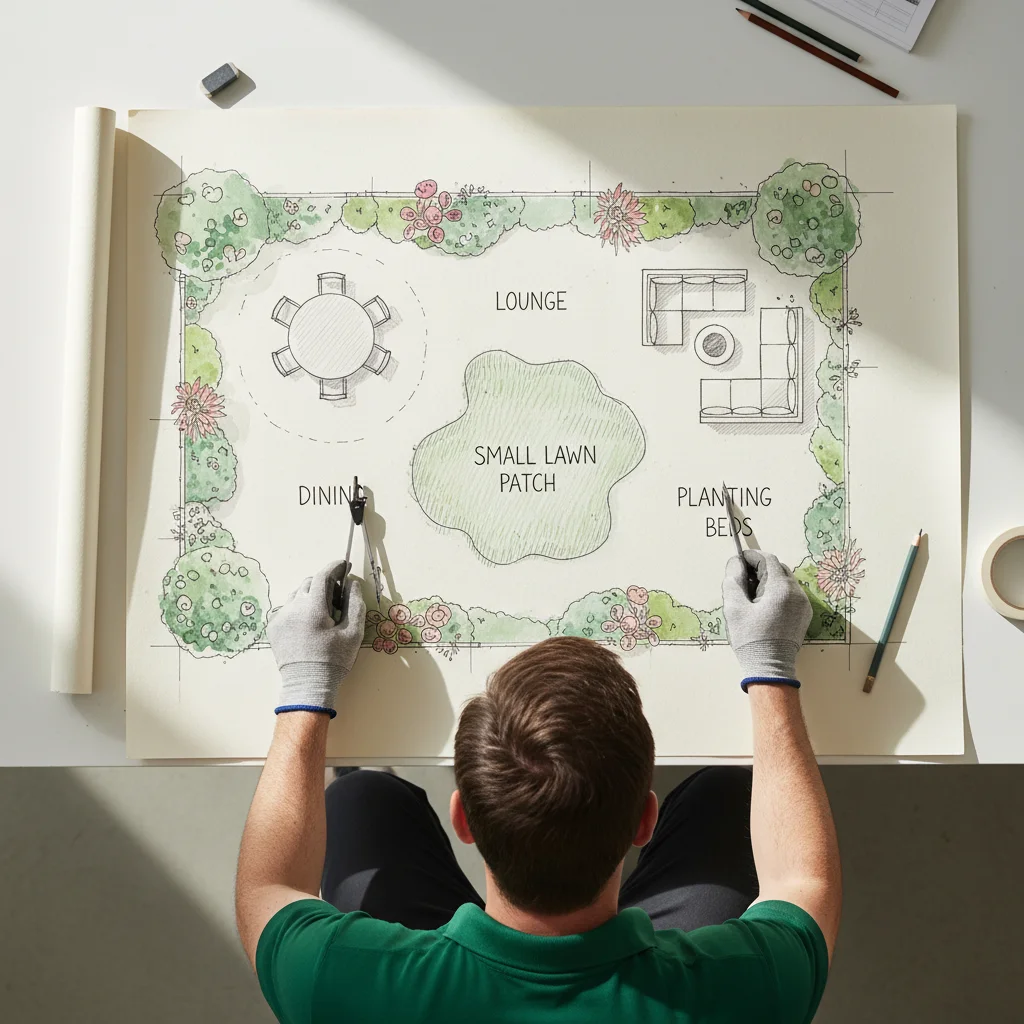
The most successful small backyard designs treat the space like an open-concept home. Instead of one monolithic area, you create distinct “rooms” or zones for different activities. This not only makes the yard more functional but also adds visual interest and makes it feel larger. You can define these zones without building physical walls.
The trick is to use subtle cues in your design. A change in flooring material is a classic way to delineate space. For example, a dining area might be on concrete pavers, while an adjacent lounge area is on decomposed granite. A small patch of high-quality artificial turf can create a designated, durable spot for a dog or kids to play.
Here are a few multi-use ideas for a compact San Diego backyard:
- The Dining Nook: A small bistro table and two chairs can tuck into a corner. Define the space with an outdoor rug or a border of potted plants.
- The Lounge Zone: A built-in bench along a wall can provide ample seating without the bulk of traditional outdoor sofas. It can also double as the edge of a raised planter bed. A small fire pit can be the centerpiece for evening conversations.
- The Urban Garden: You don’t need a huge plot for fresh herbs and vegetables. A series of vertical planters on a sunny wall or a few narrow raised beds can provide a surprising harvest.
- The Dog’s Corner: A designated “potty spot” with pea gravel or a durable groundcover can help protect the rest of your landscaping.
By thoughtfully assigning a purpose to each part of your yard, you ensure that no space is wasted. This approach turns a 400-square-foot yard from a single, awkward space into a versatile outdoor living area with multiple destinations.
Lighting tricks that extend usable space at night
When the sun goes down, a small backyard without lighting simply disappears. A well-thought-out lighting plan, however, can double your usable hours and make the space feel magical and even larger than it does during the day. It’s one of the most impactful investments you can make in a small yard.
The key is to use a variety of low-voltage fixtures to create layers of light. This is more about creating ambiance and highlighting features than flooding the area with bright, harsh security lights. A professional landscape lighting plan focuses on subtle effects that enhance the space.
Consider these essential lighting techniques:
- Uplighting: Place a spotlight at the base of a feature tree, a textured wall, or a tall ornamental grass. This draws the eye upward, emphasizing vertical space and creating beautiful shadows.
- Path Lighting: Low-profile lights along walkways are essential for safety, but they also guide the eye through the landscape, creating a sense of journey and depth.
- Wash Lighting: Use a wide-beam light to cast a soft, gentle glow across a fence or a hedge. This creates a beautiful backdrop and pushes the visual boundaries of the yard outward, making it feel more expansive.
- Festoon Lighting: String lights, also known as cafe or bistro lights, are perfect for creating a festive, intimate atmosphere over a patio or seating area. They define an “outdoor ceiling” and make the space feel like a cozy room.
By illuminating the furthest corners and tallest features of your yard, you make the entire volume of the space visible at night. This prevents the “black wall” effect that can make a yard feel confining after dark. Instead, you get a safe, inviting, and dramatic extension of your home.
Real project examples and budget ranges
It can be hard to visualize how these concepts translate to a real budget. To help, here are a couple of typical small backyard renovation scenarios in San Diego County. Keep in mind these are estimates; final costs depend on site access, material choices, and existing conditions.
Scenario 1: The South Park Craftsman (400 sq ft)
- Focus: A low-water, entertainer-friendly space.
- Features: A 150 sq ft patio with modern concrete pavers, a built-in ipe wood bench along one wall, layered drought-tolerant plants (agave, kangaroo paw, succulents), a drip irrigation system, and a simple low-voltage lighting package with uplights and path lights.
- Quote this as: measured patio, planting, drip, and lighting as separate lines
Scenario 2: The Carmel Valley Townhome (350 sq ft)
- Focus: A clean, modern, and dog-friendly yard.
- Features: A small 100 sq ft composite deck for lounging, a 150 sq ft area of high-quality artificial turf for the dog, a perimeter of decomposed granite with a few statement plants in pots, and overhead cafe string lights.
- Quote this as: deck or turf, DG, and lighting as separate lines
These projects show how a thoughtful small backyard design in San Diego can pack a lot of function and style into a compact footprint. The investment not only enhances your lifestyle but also adds significant value to your property. A detailed plan ensures your budget is used effectively to create the biggest impact.
Frequently asked questions
What are the best landscaping ideas for a small San Diego backyard?
Start with zones rather than one open area. Treat a compact yard like an open-concept home: a dining nook in one corner, a lounge zone along a wall with built-in bench seating, a vertical herb or vegetable planter on a sunny wall, and a durable groundcover or turf patch if you have a dog. Change the flooring material between zones, pavers for dining and decomposed granite for lounging, to define them without building walls.
What hardscape to planting ratio works in a small yard?
Around 60/40 or 70/30 hardscape to softscape works for most small San Diego yards. That gives you enough solid ground for furniture and foot traffic while leaving room for plants to soften the edges. Use large-format pavers rather than small busy patterns, keep the same material across patio and paths so the space reads as one area, and run paths along the perimeter instead of straight down the middle.
How do you make a small backyard look bigger?
Layer the planting in three planes. Low, fine-textured groundcovers like dymondia or creeping thyme in the foreground; medium shrubs and perennials such as salvia, kangaroo paw and lavender in the midground; and tall narrow plants, clumping bamboo, Italian cypress or a star jasmine trellis, against the back fence. Cool colors recede so use blues and purples at the back, and put warm reds and oranges up close.
What do small backyard landscaping projects cost in San Diego?
Two typical scopes from this guide: a compact craftsman yard with a small paver patio, bench, drought-tolerant planting, drip, and lighting; and a townhome yard with a small deck, a dog area, DG, and lighting. Site access and materials move the bids. Bloom Pro SD does not publish project totals.
When to call us
While dreaming up ideas is the fun part, executing a landscape project in a small space requires precision. Grading, drainage, irrigation, low-voltage electrical, and proper construction techniques are all critical for a beautiful and long-lasting result. A professional design and build team ensures all the pieces work together perfectly. You can verify any contractor’s license on the CSLB website before you hire.
If you’re ready to transform your small San Diego backyard into an outdoor space you’ll love, we can help.
Call us at (760) 400-6355 to get matched. The independent professional quotes the work.