If you’ve been putting off upgrading your irrigation timer, the 2026 rebate math is worth checking before you buy. SoCal Water$mart publishes the current weather-based irrigation controller rebate. Confirm the amount for your address before you shop.
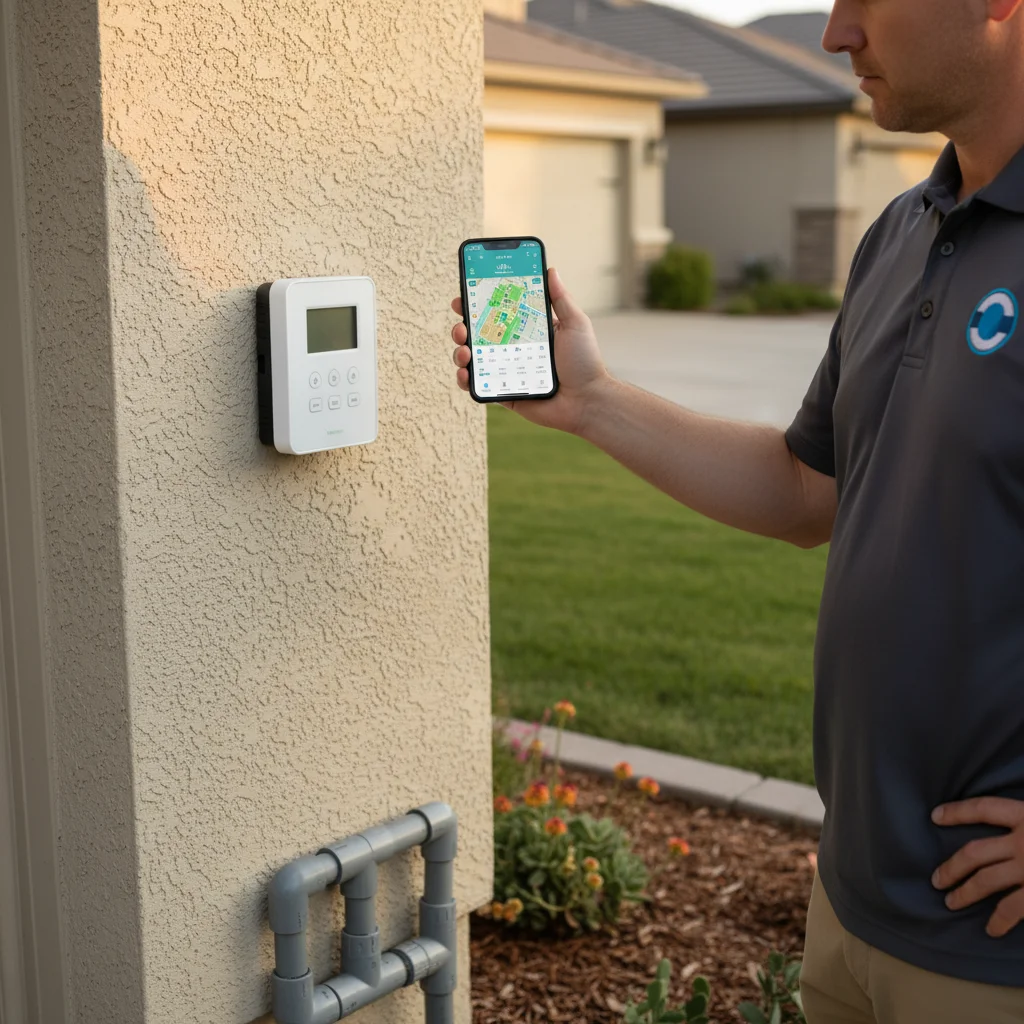
How smart controllers actually cut water bills in SD’s climate
San Diego doesn’t have a single watering season. Coastal neighborhoods like La Jolla and Ocean Beach deal with marine layer most of summer. Inland areas like El Cajon and Santee cook through heat spikes that can swing 30°F in a week. A fixed-schedule timer doesn’t know any of that, it runs whether the soil needs water or not.
Smart controllers pull real-time and forecast weather data from local stations and adjust run times automatically. They skip cycles after rain. They dial back during cooler stretches and ramp up during heat events. The EPA WaterSense program certifies controllers that meet minimum efficiency thresholds, and those are the models that qualify for rebates. For claimed gallon and bill savings, use the figures on the SoCal Water$mart irrigation controller page.
The crews we match you with see it on jobs where sprinkler and irrigation repair happens alongside a controller swap. The hardware upgrade catches missed savings that repaired heads alone can’t deliver.
SoCal Water$mart controller rebate amounts for 2026
The main rebate channel for San Diego homeowners is SoCal Water$mart, the Metropolitan Water District program administered through local member agencies. The program states rebates start at $80 per controller for landscapes under an acre, or $35 per station for landscapes over an acre. Eligible devices are rebated only for active stations, meaning stations physically connected to an in-use irrigation system. Your own agency’s amount can be higher, and funding can run out, so the only figure worth planning against is the one the estimator shows for your address.
For a broader look at what rebate programs are available this year, our post on drought-tolerant rebates in San Diego for 2026 covers turf removal, native plants, and mulch alongside irrigation upgrades.
Qualifying WaterSense models: Rachio, Hydrawise, RainBird, Hunter
The rebate programs require EPA WaterSense certification. Not every smart controller on the market qualifies, you need to check the label or confirm the model number on the EPA’s listed products database before buying.
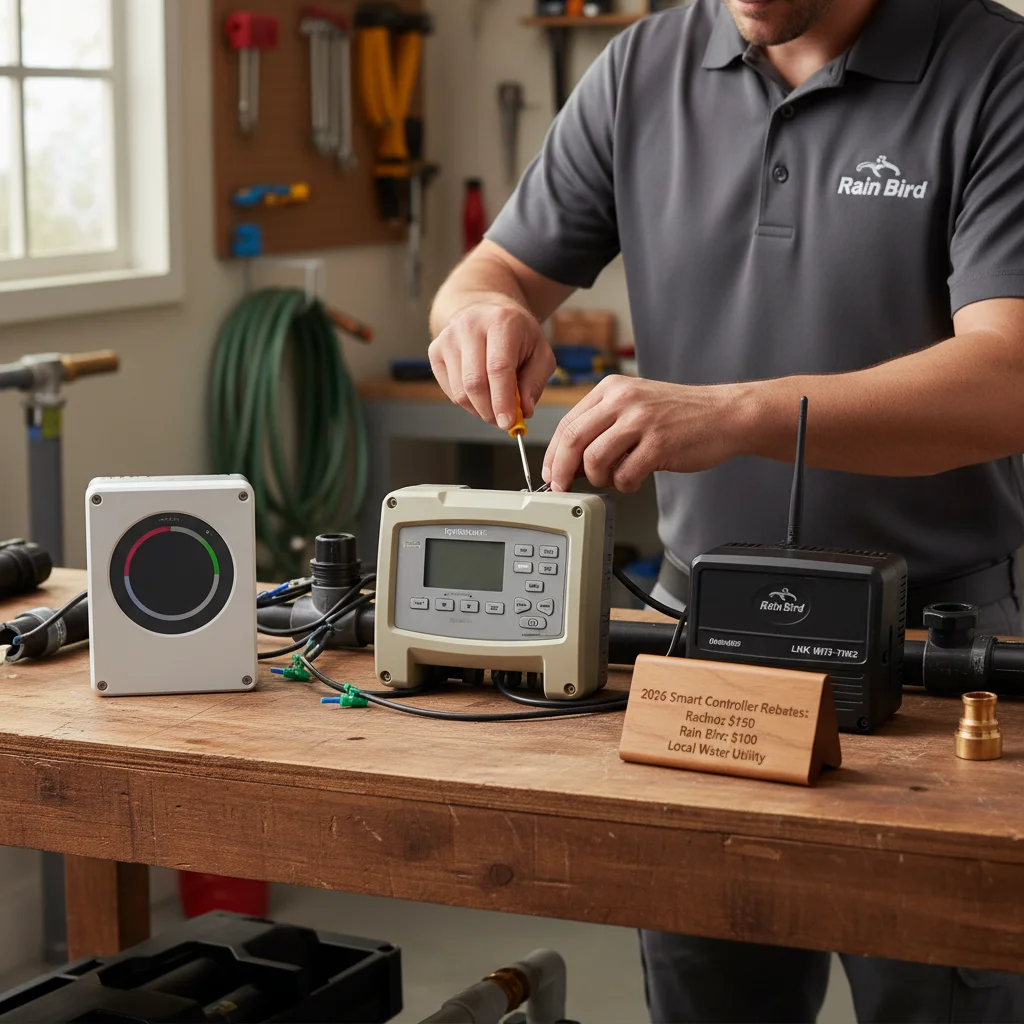
Rachio vs Hydrawise
Rachio is the homeowner Wi-Fi box most people buy at a hardware store. Hydrawise is Hunter’s contractor line, the controller a landscaper usually programs on a job. Both brands have EPA WaterSense-certified models, and both can qualify for the SoCal Water$mart rebate if the specific model is on the current qualified list. The rebate does not pick a winner. The choice is who will program and service the controller after it is on the wall.
Here are the most common qualifying models San Diego homeowners buy, and that matched irrigation crews install:
Rachio 3
The Rachio 3 is WaterSense certified in 8- and 16-zone configurations. It uses hyperlocal weather intelligence and integrates with Amazon Alexa, Google Home, and most smart home platforms. Confirm the current model number on the EPA list before you buy.
Hunter Hydrawise HC
The Hydrawise line qualifies in 6- and 12-zone versions. Hunter is a professional-grade brand, so it’s common on systems installed by landscapers rather than DIY setups.
Rain Bird ST8I / ST12I
Rain Bird’s smart Wi-Fi controllers are WaterSense certified and work with their flow sensor accessories. Confirm the specific model on the current qualified list rather than assuming the whole Rain Bird line qualifies.
Hunter X2
The X2 series supports up to 16 zones with WaterSense certification and optional flow sensor input. It’s a strong choice when a property has a lot of zones or a drip system that needs fine-grained scheduling.
All four brands are sold at Home Depot, SiteOne Landscape Supply locations in San Diego, and various irrigation supply houses. Keep your receipt, you’ll need it for the rebate application.
Install requirements: flow sensor, weather data, zone count
The rebate program doesn’t require a flow sensor, but some districts encourage it and a few offer a separate incentive for it. Flow sensors detect leaks and pipe breaks automatically, cutting off water before a burst line floods your yard overnight. If you’re already investing in a smart controller, adding a flow sensor at the same time is worth considering.
What the programs do check:
- WaterSense certification, the model must appear on the EPA’s current certified products list. Screenshot or print confirmation before you apply.
- Weather-based scheduling, the controller must use ET (evapotranspiration) data or local weather station data to adjust schedules. All four brands listed above meet this requirement.
- Installed and operational, rebates are paid after installation, not at point of sale. You apply after the controller is connected to your system.
- Residential service account, the rebate applies to accounts billed as residential by your water district. Commercial properties have separate programs with different amounts.
Zone count doesn’t affect eligibility, but it determines which model size you need. An 8-zone controller won’t cover a system with 12 zones. Make sure you’re matching the hardware to your existing system before purchasing.
If you’re not sure how many zones your system has or whether your wiring supports a smart controller swap, our irrigation repair and upgrade service is how you get matched with a crew that will count zones before anyone buys hardware.
Application process
Most rebate applications go through the SoCal Water$mart online portal:
- Confirm eligibility and the current amount for your address with the program’s rebate estimator before you buy.
- Confirm the model is EPA WaterSense certified and on the current qualified list.
- Have it installed and operational. Rebates are paid after installation, not at point of sale.
- Submit the residential application at socalwatersmart.com with your water bill, receipt, and model number.
- Follow the portal for status. Review time is not a number we can promise.
One common mistake: buying the controller before confirming your district participates. Not every small water agency in San Diego County is a current SoCal Water$mart participant. Check the program’s district lookup before you shop.
Our post on irrigation repair and water savings in San Diego covers leaky or inefficient systems, good context if you’re deciding whether to repair first or replace the controller.
When the rebate covers the hardware
The official program says rebates start at $80 per controller for landscapes under an acre. Whether that covers most of the hardware depends on the model you buy and the amount your agency is funding that week. Confirm both before you shop. Labor is a separate quote from the matched crew.
The rebate is separate from turf replacement. The two can stack on the same property if each program’s rules are met.
Frequently asked questions
How much is the smart irrigation controller rebate in San Diego?
SoCal Water$mart rebates for weather-based controllers start at $80 per controller for landscapes under an acre, or $35 per station above an acre, and apply only to active stations. It is separate from any turf-replacement rebate, so the two stack. The exact amount depends on your agency and sometimes on zone count, so check your own district’s current program before you buy.
Which smart controllers qualify for the rebate?
WaterSense-certified models. The common residential brands on San Diego jobs are Rachio, Hunter Hydrawise, Rain Bird, and Hunter. Certification is the gate, not brand preference, so confirm the specific model number appears on the qualifying list rather than assuming the whole product line is covered.
How does a smart controller actually save water?
It waters to demand instead of to a fixed timer. The controller pulls local evapotranspiration data, essentially how much water plants have lost to evaporation and transpiration, and adjusts run times to match, then skips cycles when it rains. In a climate where the right amount changes week to week, that is where the saving comes from.
Can the rebate cover the whole controller upgrade?
On a modest installation it can come close. An $80 rebate against a mid-priced controller leaves a manageable amount out of pocket, especially if you install it yourself on an existing, sound system. Larger zone counts and professional installation push the total past what the rebate covers.
When to call us
Smart controller installs look simple on the box, but mis-wired common terminals and incompatible transformer outputs are the most common reasons a new controller fails to run zones correctly. If your existing system has multiple valves, a master valve, or a pump start relay, a professional installation is worth it to avoid callbacks. The crews we match you with handle smart controller upgrades as part of the sprinkler and irrigation repair service: assessment, install, programming, and rebate paperwork guidance. Call (760) 400-6355 to get matched. The crew quotes the job, and you hire them directly.