Artificial turf quotes in San Diego depend on the turf product, demolition, base preparation, drainage, access, infill, edging, and the shape of the installation. Compare an itemized scope rather than a headline price per square foot.
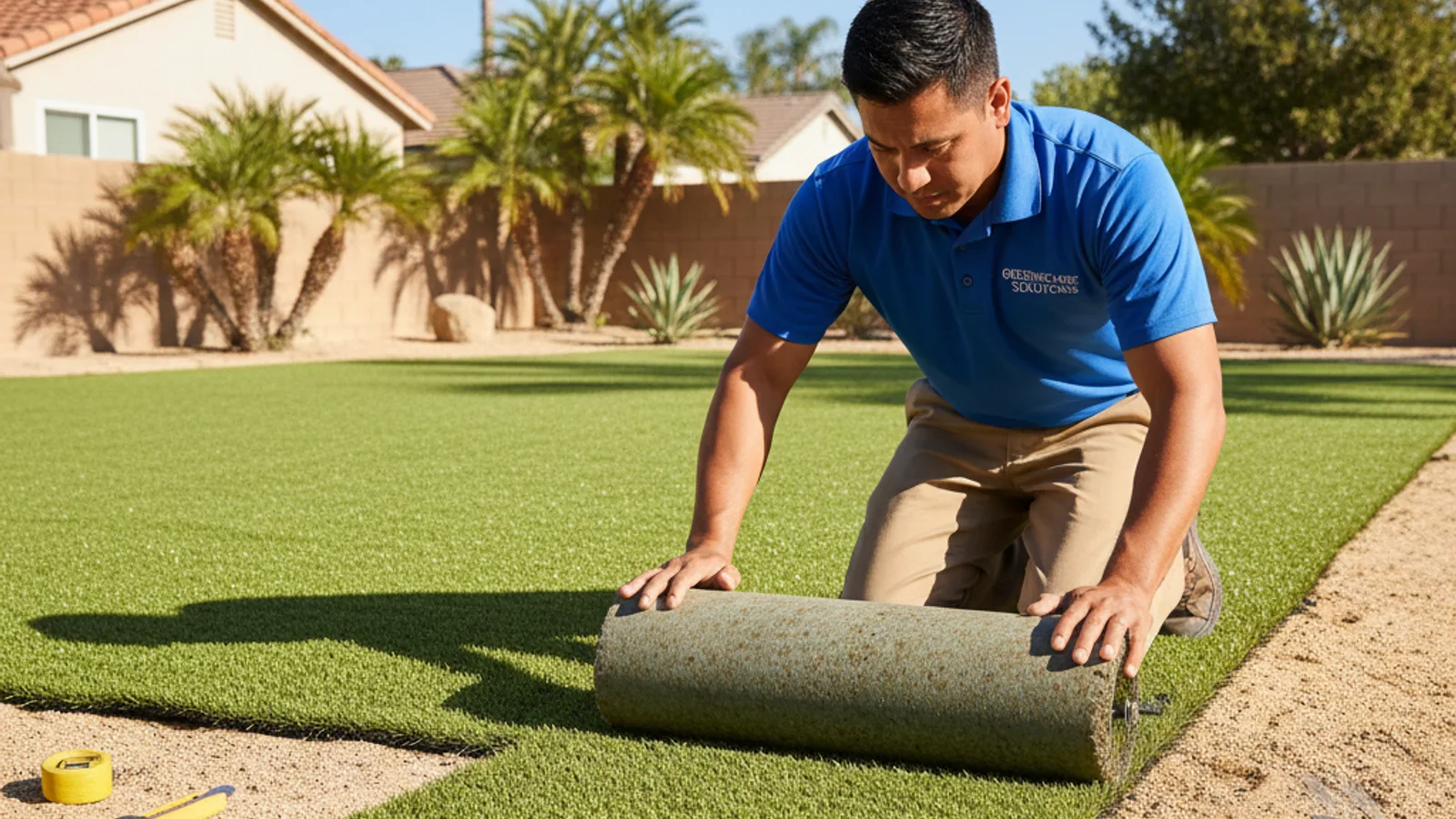
The final number depends on square footage, how much demolition and base work the yard needs, drainage, and the turf selected. Below is a checklist for comparing quotes, plus the rebate rule homeowners often miss.
If you’re still weighing turf against a living water-wise yard, read our artificial turf vs drought-tolerant landscaping comparison first. This post is the cost-and-rebate breakdown.
Itemized artificial turf quote checklist
Most turf quotes combine the product with preparation and installation. Ask the contractor to separate these items:
| Cost component | What the quote should state |
|---|---|
| Turf material | Manufacturer, product line, face weight, backing, warranty, and quantity |
| Removal and disposal | Existing lawn or surface removed, excavation depth, hauling, and disposal |
| Base preparation | Base material, depth, grading, and compaction method |
| Drainage | Existing problems, proposed drains or permeable base, and discharge path |
| Infill and seams | Infill product and quantity, seam layout, edging, and fastening method |
| Labor and access | Crew work, gate or slope constraints, equipment access, and site protection |
Material price alone does not describe an installed system. Preparation can vary sharply with soil, access, slope, existing hardscape, and standing-water problems. A lower quote may simply omit work included in another contractor’s scope.
What actually drives the cost
Two yards of the same size can come back with very different quotes. Here’s what moves the number.
Square footage. Fixed costs such as mobilization, disposal, and crew setup affect small and large projects differently.
Base prep. This is the foundation of the whole install. The crews we match you with remove the old lawn or surface, excavate a few inches, then build a compacted base of crushed rock so the turf sits flat and drains. Skip or skimp on this and the turf ripples, holds water, and fails early. Heavy clay soil, common across inland San Diego, needs more excavation and a deeper base, which adds labor.
Drainage. San Diego doesn’t get much rain, but when it comes it comes hard. Yards that already pool water need extra drainage work, French drains, perforated pipe, or a deeper permeable base, before turf goes down. That’s the single most common add-on that bumps a quote.
Infill. Infill is the granular material brushed into the turf to keep blades upright and add cushion. Standard silica sand is cheapest. Antimicrobial or coated infill, which controls pet odor, costs more but matters if dogs use the yard.
Use case. What the turf is for changes the product and the price:
- Lawn / general use sits in the middle. Mid-tier turf, standard base, standard infill.
- Pet turf runs higher. It needs a free-draining base, antimicrobial infill, and often a heavier backing that stands up to digging and rinsing. Budget toward the top of the material range.
- Putting green requires more precise grading, cup placement, seams, and fringe transitions than a basic lawn.
The rebate angle: artificial turf does not qualify
This is where San Diego homeowners get tripped up, so it is worth being blunt. The SoCal Water$mart turf replacement rebate does not pay for artificial turf. The program lists synthetic turf as an ineligible conversion, alongside leaving live turf in place, invasive plants, and impermeable surfaces. It is not a reduced rate. It is zero.
The reason is the point of the program. It pays homeowners to replace a living, thirsty lawn with organic, drought-tolerant landscaping: at least three plants per 100 square feet, a stormwater feature that captures rainfall on site, a permeable surface, and irrigation converted off overhead spray. Synthetic grass delivers none of that.
Do not subtract a SoCal Water$mart rebate from an artificial-turf quote. A qualifying living drought-tolerant landscape must meet the program’s current project-area, planting, permeability, stormwater, mulch, and irrigation rules. Our San Diego turf rebate guide explains those requirements, and the SoCal Water$mart website is the source to check before starting work.
If your own water agency runs a separate local program of its own that treats synthetic turf differently, that is worth a phone call, but do not plan the project around it until the agency confirms it in writing.
Artificial vs real grass cost over time
Upfront, sod is cheaper. A new sod lawn in San Diego typically installs for far less per square foot than turf, see our sod installation cost breakdown for current numbers. Turf’s higher install cost is the trade-off for nearly eliminating water, mowing, and fertilizer.
A real lawn carries recurring water and maintenance costs. Turf changes those costs rather than eliminating upkeep: it still needs cleaning, brushing, infill checks, edge work, and eventual replacement.
So the comparison isn’t “turf is cheaper” or “grass is cheaper.” It’s “turf front-loads the cost and flattens your monthly spend, grass back-loads the cost through years of water and upkeep.” Which one wins depends on how long you’ll stay in the home and how much you value a living yard.
Lifespan and replacement
Turf lifespan varies by product, ultraviolet exposure, traffic, maintenance, drainage, and installation. Ask for the manufacturer’s written warranty and exclusions, then compare them with the installer’s workmanship terms.
When turf reaches end of life, the contractor must inspect whether the existing base can remain or needs repair. Include future removal and replacement in any long-term comparison with a living landscape.
Frequently asked questions
Does artificial turf qualify for a San Diego rebate? No. The current SoCal Water$mart turf-replacement terms say synthetic turf is not allowed. Check the official program terms before work begins because rebate rules and funding can change.
How much does artificial turf cost per square foot installed in San Diego? There is no single reliable price without a defined scope. Compare itemized estimates covering the turf product, removal, base, drainage, infill, seams, edging, access, labor, disposal, and warranty.
Why is pet turf more expensive? Pet turf needs a free-draining base, antimicrobial or odor-control infill, and often a heavier, dig-resistant backing. Those upgrades push it toward the top of the material range and sometimes beyond. Our guide to artificial grass for dogs in San Diego covers what makes a pet system drain, resist odor, and last.
How long does artificial turf last? It depends on the product, sun exposure, traffic, drainage, maintenance, and installation. Use the product warranty and the installer’s workmanship terms for the system being quoted.
Is artificial turf cheaper than a real lawn? The answer depends on the two complete scopes and the period you compare. Include installation, water, maintenance, repairs, and eventual replacement rather than comparing only the initial material price.
When to call us
The base and drainage are hidden after installation, so require them in the written scope. We can take your project details and connect you with an independent local contractor. Ask that contractor for an itemized estimate and the exact product and workmanship terms.
Call us at (760) 400-6355 to get matched. The independent professional quotes the turf work.