Artificial turf saves San Diego homeowners $10,000 to $40,000-plus in water costs over 25 years compared to real grass, but real grass stays cooler underfoot and costs far less upfront. The right answer depends on how long you’re staying, how you use your yard, and how much you value low maintenance over a natural feel.
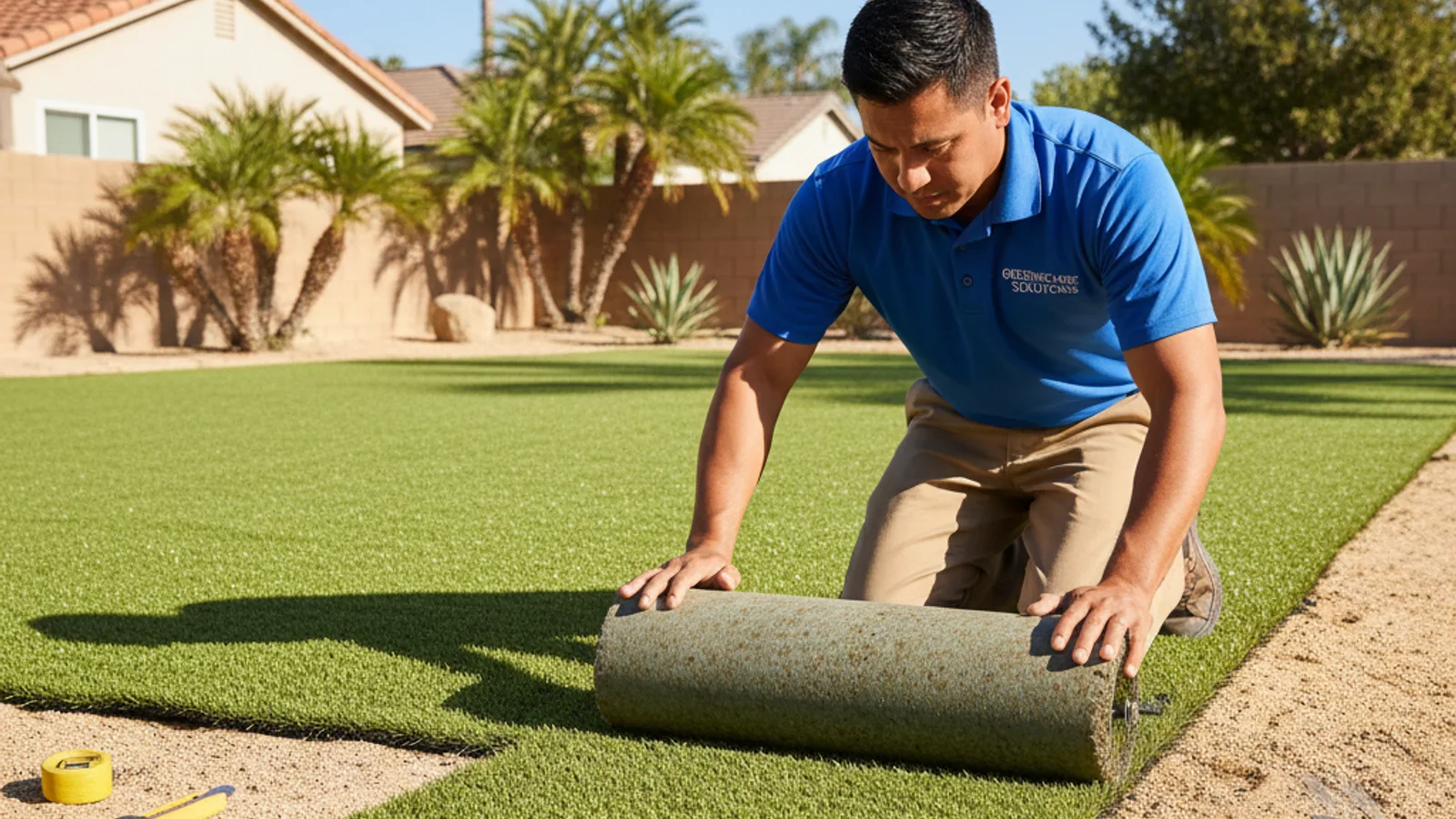
This is the bigger lifestyle question behind sod versus turf: not just install cost, but what your yard costs and feels like over the long run. San Diego’s dry climate and rising water rates make this comparison more relevant here than almost anywhere else in the country.
At a glance
| Real grass | Artificial turf | |
|---|---|---|
| Install cost | $2 to $5 per sq ft | $12 to $25 per sq ft |
| 25-year water cost | $12,500 to $20,000+ | Near zero |
| Annual water + upkeep | $1,600 to $3,000+ | $0 to minimal |
| Lifespan | Ongoing with care | 15 to 20 years |
| Feel in summer sun | Cool, soft | Can get hot underfoot |
| HOA restrictions | Rarely an issue | Cannot be outright banned (CA Civ. Code 4735) |
| Best for | Kids playing barefoot, cost-sensitive budgets | Water savings, low upkeep, pets |
The 25-year water math
This is the number that changes most people’s minds. A real grass lawn in San Diego can cost $12,500 to $20,000 or more in water alone over 25 years, before you add mowing, fertilizer, and repair. Artificial turf uses essentially no water after installation. Run the full comparison over that same 25-year window and turf typically saves homeowners $10,000 to $40,000-plus, depending on lawn size and how water rates move.
Broken down annually, a real lawn runs $1,600 to $3,000-plus a year in water and maintenance combined. Swapping a 1,000-square-foot lawn to turf saves roughly $400 to $700 a year on the water bill and 23,000 to 44,000 gallons of water annually. San Diego County Water Authority rates have climbed steadily for years, and there’s no strong reason to expect that trend to reverse, which makes the turf side of this math look better with each rate increase, not worse.
Turf installs for $12 to $25 per square foot and lasts 15 to 20 years, provided it’s set on a proper free-draining base. Skip the base work and you’ll deal with odor, poor drainage, and heat retention that no amount of rinsing fixes.
The heat problem nobody skips past
Here’s the honest trade-off: artificial turf gets hot. In direct San Diego summer sun, turf surface temperatures can climb well above the surrounding air, sometimes uncomfortably so for bare feet or paws. It’s worse inland, in places like El Cajon and Escondido, where summer highs run 10 to 15 degrees hotter than the coast. Coastal yards in La Jolla or Carlsbad benefiting from the marine layer stay more comfortable, but even there, turf in full afternoon sun gets warm.
Real grass doesn’t have this problem. It absorbs and dissipates heat, stays cool to the touch, and supports the soil biology underneath it. For families with young kids who play barefoot in the yard through summer, this single factor often outweighs every cost argument in favor of turf.
Maintenance time, not just maintenance cost
Real grass asks for a recurring commitment: mowing every one to two weeks in growing season, fertilizing on a schedule, dealing with weeds, and watching for brown patches from drought stress or pests. Our San Diego water rates and lawn economics post breaks down exactly how those rate increases hit a typical lawn budget.
Turf needs almost none of that. An occasional rinse to clear debris and a brush-through to keep the fibers standing is most of the upkeep. For homeowners who travel often, rent out a property, or simply don’t want yard work eating their weekends, that time savings is worth as much as the water savings.
Pets, kids, and everyday use
Turf holds up well under dogs, since there’s no grass to dig up or dead-patch from urine burn, though drainage and odor control matter more with pets in the yard. Our artificial grass for dogs guide covers the pet-specific install details worth knowing before you commit.
Real grass wins for younger kids who play barefoot, tumble often, and need a forgiving, cool surface especially during peak summer heat. It also supports a more natural yard ecosystem, from soil microbes to the occasional lizard, that a synthetic surface simply doesn’t.
HOA rules: you have more rights than you think
A lot of homeowners in HOA communities across Poway, Chula Vista, and similar planned developments assume their association can block artificial turf outright. Under California Civil Code section 4735, HOAs cannot ban artificial turf or drought-tolerant landscaping entirely, though they can set reasonable aesthetic standards for how it looks. Our HOA artificial turf rules post covers what associations can and can’t restrict, so you know your rights before you get a rejection letter.
Turf wins if
You want the water bill to disappear, you’re tired of mowing and fertilizing on a schedule, you have pets, and you’re staying in the home long enough to clear the payback window on installation cost. Turf also wins on slopes and shaded strips where grass never establishes well anyway.
Real grass wins if
You have young kids who play barefoot through summer, your upfront budget is tight, you value a natural yard ecosystem, or you’re not planning to stay in the home long enough for turf’s savings to outrun its install cost. If you go this route, sod installation gets you a full lawn fast rather than waiting on seed.
For the direct cost comparison between the two, our sod vs artificial turf post breaks down install pricing and payback timeline side by side.
Frequently asked questions
Which saves more money over time, turf or real grass?
Artificial turf saves significantly more over a 25-year window, typically $10,000 to $40,000-plus depending on lawn size, almost entirely due to eliminated water costs. Real grass costs $12,500 to $20,000 or more in water alone over that same period.
Does artificial turf actually get too hot to use in summer?
Yes, particularly inland in areas like El Cajon and Escondido where summer heat is more intense than the coast. Direct sun exposure raises turf surface temperature noticeably above real grass and above ambient air temperature. Shaded areas and coastal yards with marine layer stay far more comfortable.
Can my HOA stop me from installing artificial turf?
No. California Civil Code section 4735 prevents HOAs from outright banning artificial turf or drought-tolerant landscaping, though they can require reasonable aesthetic standards. Read the specifics in our HOA turf rules guide before submitting your request.
How long does artificial turf actually last?
Quality turf installed with a proper draining base typically lasts 15 to 20 years. Cutting corners on base prep, drainage, or turf quality shortens that lifespan and often causes odor and heat problems well before the material itself wears out.
Is real grass better for the environment than turf?
Real grass supports soil microbes, insects, and a small ecosystem that synthetic turf doesn’t replicate, but it also consumes significant water in a drought-prone region. Which option is more sustainable depends on how you weigh water conservation against ecological function, and there’s a reasonable case either way.
When to call us
If you’re trying to decide between artificial turf and a real lawn for your specific yard, we’ll walk the property and give you a straight read on sun exposure, drainage, and what actually fits your budget and lifestyle. Bloom Pro SD handles drought-tolerant landscaping and lawn maintenance across San Diego County, and we’re happy to help you think it through before you spend a dollar. Call (760) 400-6355.