Sod costs less upfront ($2 to $5 per square foot installed) while artificial turf costs more upfront ($12 to $25 per square foot) but pays that difference back in roughly 3 to 6 years through water and maintenance savings. Which one is right for you comes down to budget, how you use your yard, and how much time you want to spend on lawn care.
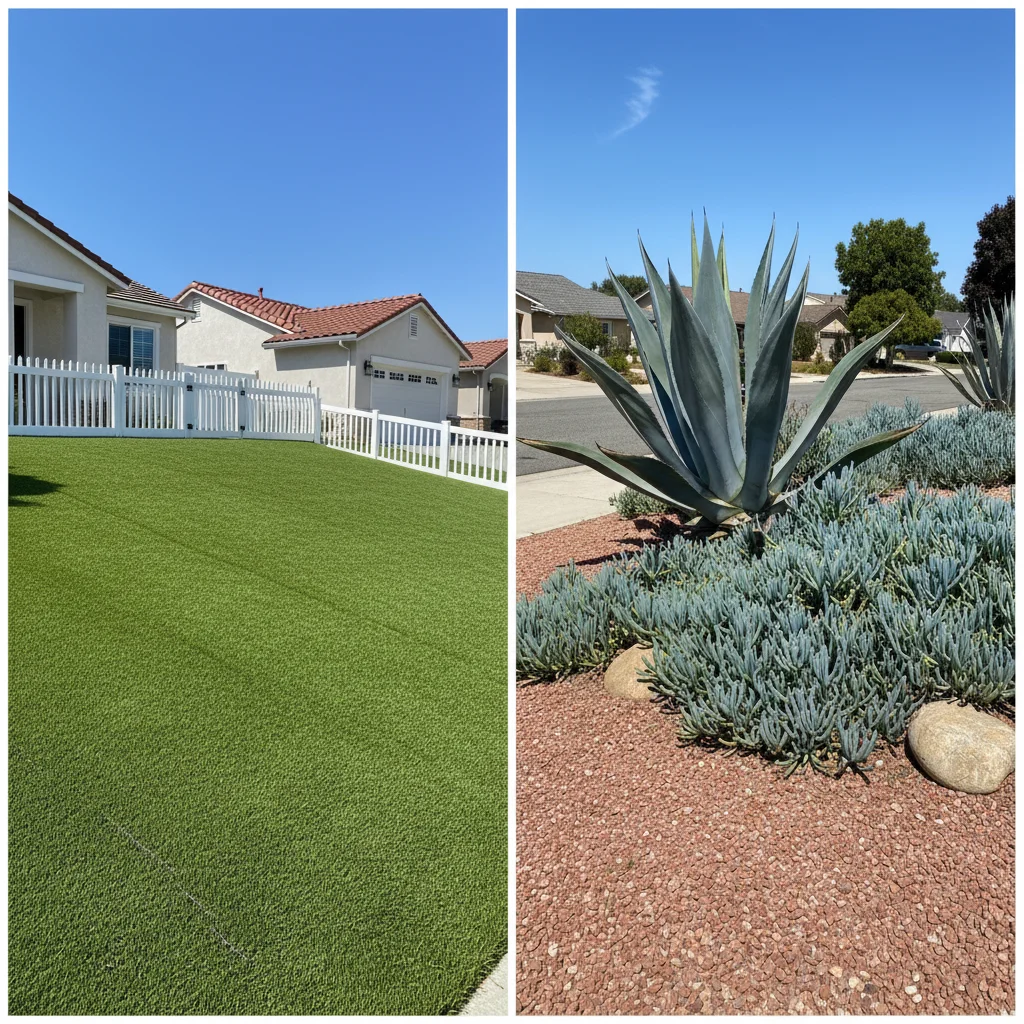
Both are popular choices across San Diego County, and both solve real problems. Sod gives you a real lawn fast without waiting months for seed to fill in. Turf gives you a lawn that never needs water, mowing, or fertilizer. Here’s how they actually stack up.
At a glance
| Sod | Artificial turf | |
|---|---|---|
| Installed cost | $2 to $5 per sq ft | $12 to $25 per sq ft |
| Lifespan | Ongoing, self-repairing | 15 to 20 years |
| Annual cost | $1,600 to $3,000+ (water + maintenance) | Near zero |
| Feel underfoot | Soft, cool | Firm, can get hot in sun |
| Water use | High, especially summer | None once installed |
| Maintenance | Mowing, fertilizing, weeding | Occasional rinse and brush |
| Best for | Kids/dogs who dig, budget-conscious buyers | Low-maintenance, water-conscious buyers |
Upfront cost: sod wins by a lot
A sod installation in San Diego runs about $2 to $5 per square foot, including the grass itself and a basic sprinkler tie-in. A 1,000-square-foot front yard lands somewhere between $2,000 and $5,000 depending on grass type and how much prep the soil needs.
Artificial turf costs $12 to $25 per square foot installed, which puts that same 1,000-square-foot yard at $12,000 to $25,000. The gap comes from what’s under the turf, not the turf itself. A proper install needs excavation, a compacted drainage base, weed barrier, and seamed sections nailed down correctly. Skip any of that and the turf holds odor, drains poorly, or ripples within a year or two.
If you’re comparing turf against a full water-wise yard rather than just a lawn, our artificial turf vs drought-tolerant landscaping post covers that separate decision. This one is strictly grass versus turf.
Long-term cost: turf catches up in 3 to 6 years
Sod isn’t free to keep alive. A real lawn in San Diego costs $1,600 to $3,000 or more a year once you add up water, mowing, fertilizer, and the occasional overseed or repair. Coastal lawns in Carlsbad and Encinitas need less water thanks to the marine layer, but inland lawns in El Cajon, Escondido, and Poway can push toward the top of that range through a hot summer.
Turf has none of that. Once it’s down, the ongoing cost is close to zero. Swapping a 1,000-square-foot lawn for turf typically saves $400 to $700 a year on the water bill alone, plus 23,000 to 44,000 gallons of water annually. Run that math over turf’s 15- to 20-year lifespan and the total savings land somewhere between $10,000 and $40,000-plus, depending on lawn size and your water rate.
That means the higher upfront cost of turf pays for itself in roughly 3 to 6 years for most San Diego households. After that, it’s straight savings. If your time horizon in the home is shorter than that, sod’s lower entry cost makes more sense.
Feel, use, and durability
This is where sod still wins for a lot of families. Real grass stays cool underfoot even in July, absorbs impact when kids fall, and self-repairs when a dog digs a hole or a soccer ball tears up a patch. Turf doesn’t self-heal the same way. A determined digger can pull up a seam, and turf in direct sun on a west-facing Chula Vista or Santee yard can get noticeably hot to bare feet on a summer afternoon.
Turf’s advantage is consistency. It stays green year-round with no brown patches, no bare spots from foot traffic, and no dormancy period. Bermuda and other warm-season sods go dormant and brown in winter unless overseeded, which some homeowners don’t mind and others find unacceptable on a front yard that faces the street.
Water restrictions and drought reality
San Diego County Water Authority has tightened outdoor watering rules more than once in the past decade, and lawns are usually the first thing to suffer. A stressed sod lawn during restricted watering days can brown out fast, especially inland where evaporation is higher. Turf is immune to this entirely, since it needs no irrigation at all once installed.
That said, San Diego water agencies do pay rebates for removing lawn, generally in the $2 to $4 per square foot range. Those rebates are for turf removal specifically, and many programs favor replacing grass with live drought-tolerant plants over artificial turf. Check current program rules before assuming a turf install qualifies. Our San Diego turf rebate breakdown walks through exactly what’s eligible right now.
Choose sod if
You want the lowest entry cost, you have kids or large dogs who dig and play rough, you like the cool, soft feel of real grass, and you don’t mind mowing every week or two. Sod is also the right call if you plan to sell within a few years, since the payback math on turf needs time to work in your favor.
Choose turf if
You’re tired of the water bill, you want a lawn that looks the same every day of the year with zero mowing, and you’re planning to stay in the home long enough to hit that 3- to 6-year payback window. Turf also makes sense on tricky slopes or shaded strips where sod struggles to establish anyway.
For a full breakdown of what drives turf pricing up or down, read our artificial turf cost guide. If you want the real-grass side of the math in more detail, our sod installation cost guide has the per-grass-type pricing.
Frequently asked questions
Is sod or artificial turf better for San Diego’s climate?
Both work well here, but they solve different problems. Sod needs consistent irrigation to survive our dry summers, while turf needs no water at all. Coastal areas with marine layer support sod more easily than hot inland valleys do.
How long does it take turf to pay for itself compared to sod?
Most San Diego homeowners see turf’s higher upfront cost recovered in 3 to 6 years through water and maintenance savings. The exact timeline depends on your lawn size, local water rates, and how much you were spending on lawn care before.
Does artificial turf really get too hot to walk on?
Yes, especially in direct summer sun in inland areas like El Cajon or Escondido. Turf surface temperatures can run well above ambient air temperature on a clear afternoon. Shaded turf areas and coastal yards with more cloud cover stay far more comfortable.
Can I get a rebate for installing artificial turf?
San Diego water agencies rebate lawn removal, generally $2 to $4 per square foot, but many programs prioritize replacing grass with live drought-tolerant plants over turf. Some do allow turf as the replacement. Confirm your specific agency’s current rules before budgeting a rebate into your project.
Is sod a bad choice if I want to save water?
Not necessarily. Choosing a warm-season grass like Bermuda cuts water use substantially compared to cool-season fescue, and pairing sod with drip or smart-controller irrigation reduces waste further. It still won’t match turf’s zero water use, but it’s a real middle ground.
When to call us
If you’re weighing a fresh sod lawn against artificial turf and want a straight answer for your specific yard, we can walk the property and tell you what actually makes sense given your sun exposure, soil, and budget. Bloom Pro SD installs sod and handles ongoing lawn care and drought-tolerant landscaping across San Diego County, and we’re glad to help you think through the trade-offs before you commit either way. Call (760) 400-6355.