A bluff-top yard in Carlsbad or Encinitas is not an inland San Diego planting job. Salt on leaves, wind, and corrosion on metal change which plants and which irrigation parts last. This guide is a site checklist. It does not publish wind speeds, setback feet, hardware life in years, or plant replacement cycles.
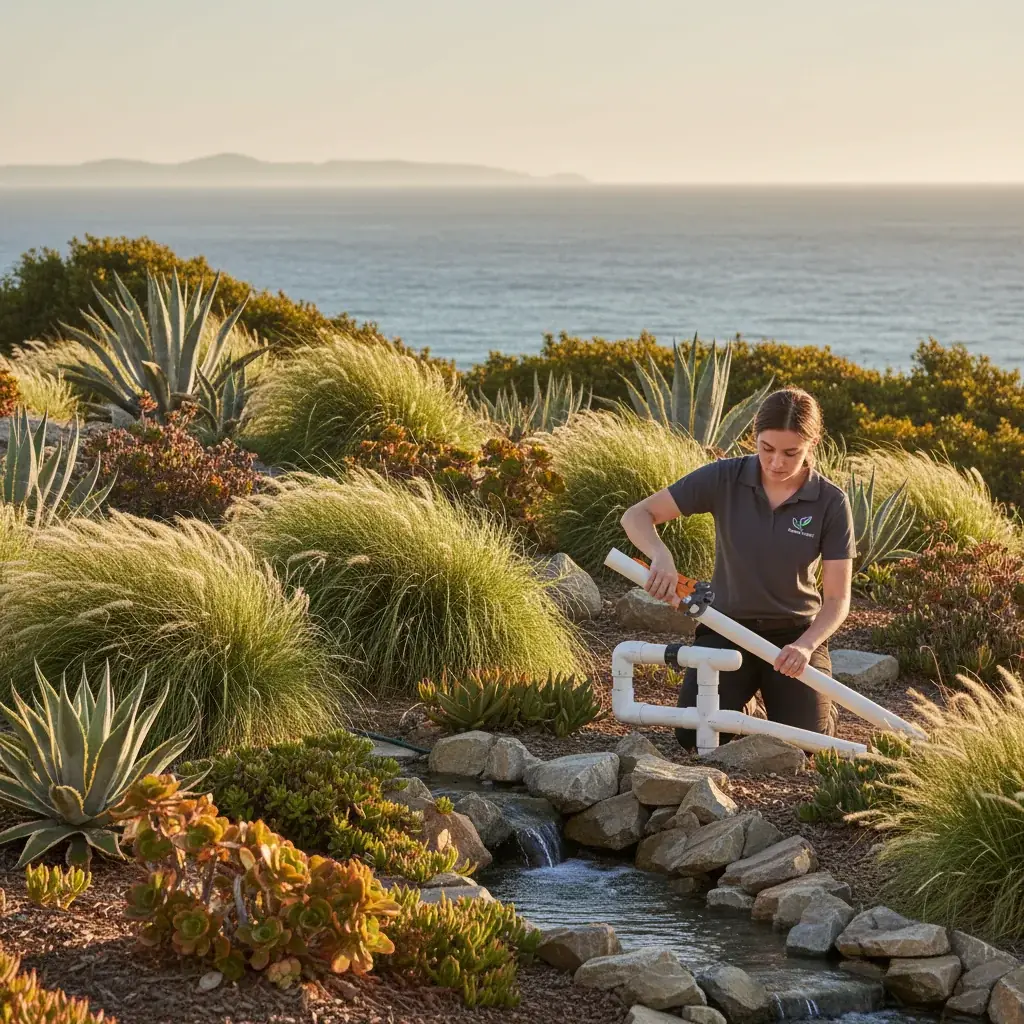
What salt spray and onshore wind do
Salt on leaf surfaces draws moisture and can burn tips, then whole leaves, on sensitive species. Wind adds drying and can break weak new growth. Photinia, Italian cypress, Japanese boxwood, and hybrid tea roses that look fine inland often decline close to the water. That is a pattern to verify on your lot, not a half-mile rule.
Plenty of plants are used successfully on this coast. The work is matching species to exposure and arranging taller plants to shelter interiors if that is the design.
Salt-tolerant species to verify locally
Layer taller screening at the perimeter and lower plants inside, if the lot allows it. Confirm each name with a coastal nursery or UC Master Gardeners of San Diego County.
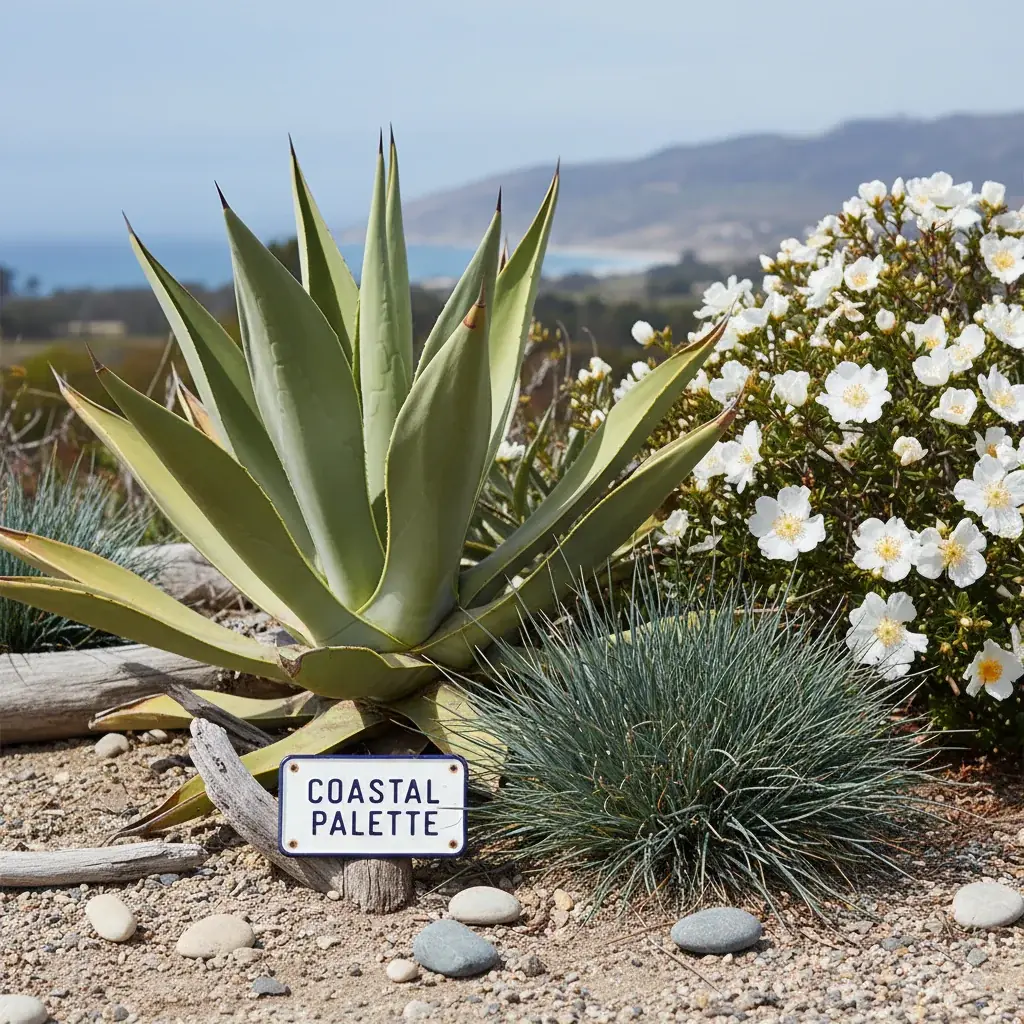
Agave attenuata: soft tips, architectural. Confirm inland vs coastal cold and walkway safety. See succulents.
Rockrose (Cistus): dry-summer shrub with spring bloom. Master Gardeners discuss Cistus among coastal performers. Confirm the cultivar.
Carex pansa: a sedge used as a low alternative to turf. Traffic and water still depend on the stand. Other groundcovers: drought-tolerant plants.
Lavender: Mediterranean. Some cultivars handle breeze better than others. Confirm salt notes.
Myoporum: used on slopes. Check current pest and invasive guidance before you specify a species. Cal-IPC and the nursery tag both matter.
Taller screens: Pittosporum crassifolium and some Melaleuca are common wind-buffer conversations. Confirm size and invasiveness.
Native coastal shrubs to look up on Calscape include lemonade berry (Rhus integrifolia) and coyote brush (Baccharis pilularis).
Hardscape and irrigation in salt air
Salt speeds corrosion on steel fittings, lighting, fasteners, and gate hardware. Specify plastic or brass irrigation parts unless the designer documents another coastal-rated choice. Stainless still pits. The independent contractor should name the parts on the quote. Bloom Pro SD does not spec or install. If you need repairs, see irrigation repair.
Drip puts water at the root zone and keeps foliage drier. Follow EPA WaterSense product info where you use those devices, and SDCWA for current conservation rules. This page does not publish efficiency percentages.
Concrete and porcelain pavers are common. Porous stone needs a maintenance conversation (sealing). Steel edging needs a finish that matches salt air. Retaining walls on coastal slopes need drainage and, when required, engineering. See retaining walls.
Landscape design should start with exposure, drainage, and corrosion, not with a plant mood board.
Microclimates: bluff, valley, inland Carlsbad
Bluff-top: strongest salt and wind. Keep the plant list strict. Natives and proven coastal succulents and shrubs are the usual shortlist.
Valley and canyon (for example Olivenhain): less direct spray, still marine air. Drainage on wet floors matters. Raised beds can be a design response.
East of El Camino Real: more heat, less salt. Priorities shift toward heat and water, as in drought-tolerant landscaping.
A Leucadia bluff and an inland Carlsbad cul-de-sac do not share a plant list.
Maintenance habits, not a numbered schedule
Rinse foliage and hardscape when dry winds leave visible salt and there is no rain to wash it off. How often depends on exposure.
Inspect irrigation for seeps and failed fittings. Corrosion is cumulative. Higher water use without a lifestyle change is a reason to look for leaks. See irrigation repair and water savings.
Prune for structure and wind, following the species. Rockrose and lavender are typically cut after bloom, not on a universal month.
Mulch to conserve moisture and suppress weeds. Keep organic mulch off stems (UC IPM mulch). Rebate projects have their own mulch depth rules.
Replacement of wind-burned plants is a site reality. There is no five-to-seven-year life on this page.
DIY vs a licensed contractor
Swapping one struggling shrub for a known coastal species can be a homeowner job. Grading, drainage, walls, and irrigation design on a bluff are not. Verify C-27 status at CSLB. California generally requires a license when the contract is $1,000 or more (see this site’s claims ledger).
Frequently asked questions
What plants survive salt spray in Carlsbad and Encinitas?
Confirm on the site: agave attenuata, rockrose, Carex, lemonade berry, coyote brush, and named coastal screens are the usual lookup list. Interior plants can sit behind a wind buffer if the design allows it.
What does salt air do to plants?
Salt on leaves dries tissue and can burn tips first. Wind adds drying and breakage. Sensitive inland favorites decline. Salt-adapted species still need the right drainage and water.
What irrigation hardware holds up near the coast?
Plastic or brass is the usual specification. Steel fails sooner in salt. Name the parts on the quote. No lifespan in years on this page.
Does coastal landscaping need different maintenance?
Yes: salt rinse when buildup is visible, earlier inspection of metal parts, and plant choices that match exposure. Follow species pruning, not a county calendar.
When to call us
Bloom Pro SD matches you with licensed independent landscapers. They quote the property. You hire them directly.
Call (760) 400-6355.