The best grass seed for a San Diego lawn is a named product whose planting window, light needs, irrigation directions, and intended use match the site. Some turf cultivars are sold primarily as sod, stolons, or plugs, so first confirm whether the exact grass you want is available as genuine seed. If you have not settled on a grass yet, compare the candidates in our guide to best grass types for San Diego lawns, then come back here for the seeding process.
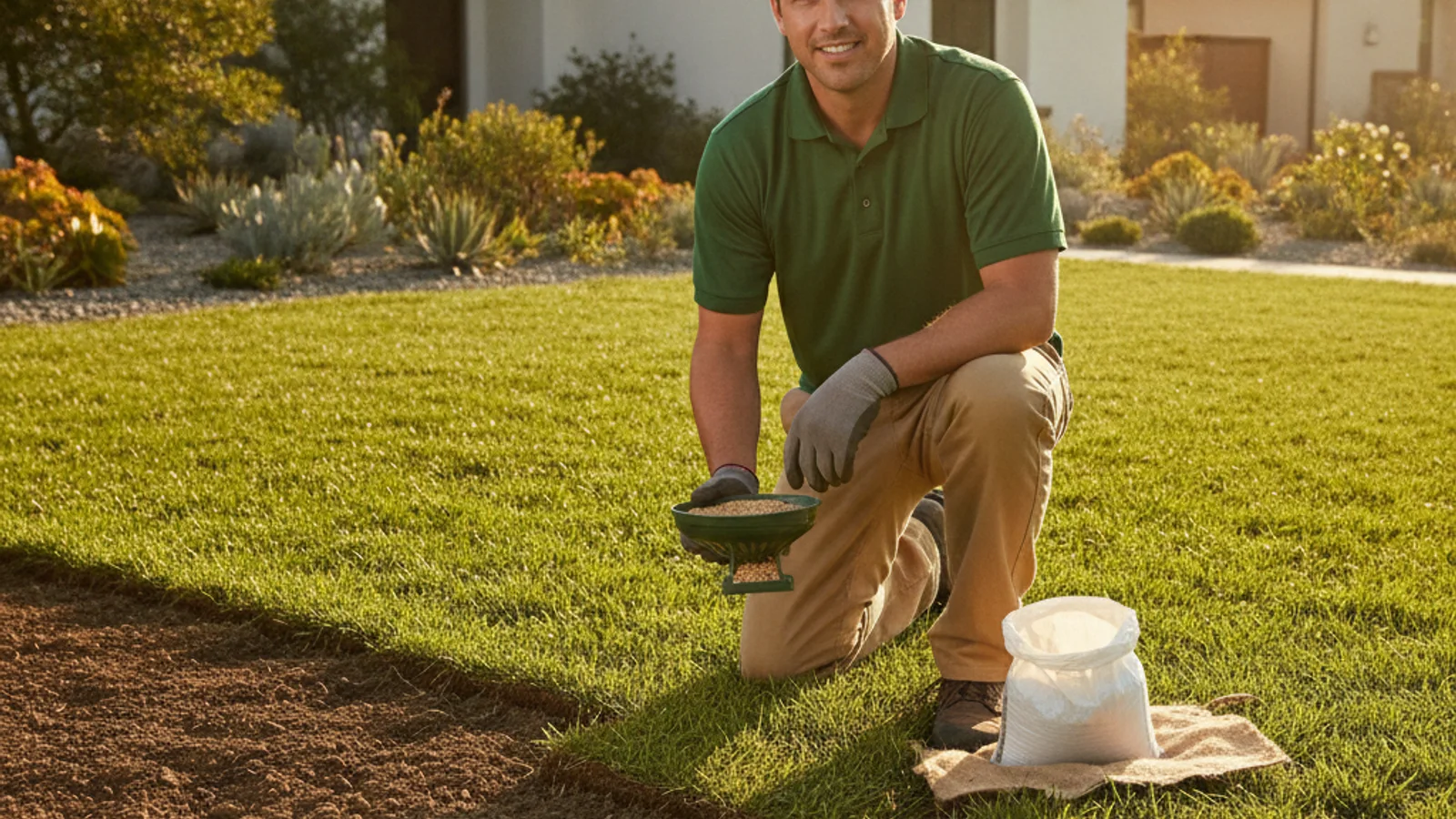
Choosing the right seed for your sun and shade conditions
Start with the planting area, not the picture on the bag. Track which sections receive direct sun and which remain shaded. Check the lawn at different points during the day. Buildings, walls, fences, and mature trees can create separate planting zones.
San Diego County doesn’t have one uniform growing environment. A coastal Encinitas yard and an inland El Cajon yard shouldn’t automatically receive the same recommendation. The central city, East County, North County, and South Bay also contain varied conditions. Judge the exact lawn rather than relying on a regional label.
Next, inspect the information supplied for each seed product. Look for its stated light requirements, planting window, application rate, and watering directions. If those details aren’t available, contact the manufacturer or retailer before buying. Don’t replace missing instructions with a guess.
Drainage and irrigation matter too. Run each sprinkler zone and watch where water lands. Note dry edges, overspray, puddles, and runoff. Correcting uneven coverage before seeding gives you a clearer starting point. It also prevents you from blaming the seed for an irrigation problem.
The UC Master Gardener Program of San Diego County is a useful local authority when a product label doesn’t answer a site-specific question. Bring the grass name, cultivar, yard location, and light observations.
Our guide to the best grass types for San Diego lawns can help narrow the broader turf choice. Then use current product information to choose the actual seed.
Bermuda vs. Fescue vs. St. Augustine from seed
Bermuda, fescue, and St. Augustine shouldn’t be compared by name alone. Cultivar, product format, and documented site requirements all matter. The words on the front of a bag don’t replace its technical directions.
Bermuda belongs in the first comparison when water use is a leading concern. Verified UC guidance groups Bermuda with warm-season grasses and says warm-season varieties need 25% less water than cool-season varieties. That comparison doesn’t prove every Bermuda product suits every San Diego yard. Confirm the selected cultivar’s light, planting, and maintenance directions.
For fescue, check the specific product rather than assuming every blend behaves alike. Our verified sources don’t establish one water-use figure or one planting schedule for all fescue seed. The manufacturer and UC Master Gardeners can help confirm whether a particular product matches your site.
Treat St. Augustine as a product-availability question first. Our approved sources don’t confirm that every St. Augustine cultivar is available as seed. Ask the supplier whether the named cultivar comes in a genuine seed product. If it doesn’t, compare the available installation formats instead of buying a vaguely labeled substitute.
Also decide whether you want a seeding project at all. Seed lets you follow a product-specific planting process. Installed turf is a different route. Our sod installation referral service can connect you with a local professional when you’d rather compare sod with seed.
Keep the final decision simple. Choose only a product with directions that match your observed light, available irrigation, and preferred maintenance plan.
The best time of year to plant grass seed in our climate
There isn’t one verified planting date for every seed and every San Diego County yard. We couldn’t confirm a countywide best month from the approved primary sources. The seed manufacturer and UC Master Gardeners should set the planting window for your chosen product.
That matters because the county includes coastal, inland, central, and South Bay conditions. Don’t copy a planting date from a yard in another part of the county. Use four checks instead: the product’s directions, current yard conditions, the weather forecast, and your water provider’s rules.
Within the City of San Diego Public Utilities service area, permanent restrictions affect irrigation timing. Potable landscape watering is allowed only before 10:00 a.m. or after 6:00 p.m. Watering is also prohibited during measurable rainfall and for 48 hours afterward. Irrigation can’t create runoff onto walkways, roads, parking areas, buildings, or neighboring property. Review the City of San Diego water-use restrictions before setting a schedule.
Those rules don’t automatically apply throughout the county. Properties served by other water agencies may face different requirements. Check the provider named on your water bill before planting.
A workable planting date must satisfy both sources. It must fit the seed maker’s current directions and your water agency’s current rules. If those conditions don’t align, postpone the project or choose another lawn approach.
A step-by-step guide to overseeding an existing lawn
Overseeding adds seed to an existing lawn. The process starts with diagnosis, because thin coverage can have more than one cause. Use this checklist to organize the work without inventing seed rates or watering intervals.
-
Map the weak areas. Mark the bare, thin, shaded, and sunny sections. Note where damage repeats. A simple sketch helps you compare those areas with sprinkler coverage.
-
Identify the existing turf. Don’t assume a bag will blend with the current lawn. If you can’t identify the grass, take clear samples and photos to a qualified local source. Ask for the identification before purchasing seed.
-
Check irrigation coverage. Run the relevant zones and observe the entire area. Record dry spots, blocked spray, leaks, overspray, and runoff. Arrange repairs before scattering seed when the system isn’t covering the intended lawn.
-
Read the complete product directions. Confirm the labeled planting window, preparation method, application rate, and watering instructions. Don’t use a rate copied from another brand or cultivar.
-
Measure the planting area. Separate lawn from patios, planting beds, paths, and other surfaces. Use the product’s labeled rate for the measured lawn area. If the calculation isn’t clear, ask the seller or manufacturer to confirm it.
-
Prepare and spread as directed. Follow the maker’s instructions for mowing, surface preparation, spreader settings, and seed placement. Don’t assume one preparation method works for every seed product.
-
Build a compliant watering plan. Match the label while following your water agency’s restrictions. Stop any runoff. Check the seeded area directly instead of assuming every sprinkler head covers it evenly.
-
Review the result before repeating the process. If growth remains patchy, recheck identification, irrigation, light, and product directions. Don’t keep adding seed without finding the mismatch.
Fertilizer should also follow a site-specific plan. Our lawn fertilization and care service can connect you with a professional who can assess that part of the project.
Why professional seeding gives you better results
Professional help can improve the planning and execution, but it can’t guarantee a specific outcome. The value comes from inspecting the actual site and turning several decisions into one coordinated scope.
A landscaping professional can evaluate the existing turf, planting area, light pattern, irrigation coverage, and intended use. The proposed scope should name the seed product or cultivar. It should also explain preparation, application, watering, and follow-up responsibilities. Ask questions when any part remains vague.
Professional input is especially useful when the existing grass can’t be identified. It also helps when irrigation coverage is uneven or earlier seeding attempts produced patchy growth. In those cases, buying another bag without a diagnosis may repeat the same process.
A contractor can also help you compare seed with installed turf. Seed may fit one section while sod installation makes more sense for another. The right answer should come from the site conditions and your goals, not a blanket sales claim.
Bloom Pro SD doesn’t seed lawns or install sod. We’re a referral service that matches San Diego County homeowners with licensed, independent local landscaping professionals. You’ll contract with and pay the professional directly. Before signing, confirm the contractor’s current status through the official CSLB license lookup.
Frequently asked questions
What is the best grass seed for San Diego?
Start with the site, not the bag. Track which parts of the lawn get direct sun and which stay shaded through the day, because buildings, walls, fences and mature trees create separate planting zones within one yard. San Diego County is not one growing environment either, so a coastal Encinitas yard and an inland El Cajon yard should not automatically get the same recommendation.
Is Bermuda a good grass seed choice here?
It is the one to look at first when water use is the leading concern. UC guidance groups Bermuda with warm-season grasses and notes warm-season varieties need about 25 percent less water than cool-season varieties. That does not mean every Bermuda product suits every San Diego yard, so check the specific cultivar’s documented site requirements before buying.
When is the best time of year to plant grass seed in San Diego?
There is no single countywide date, and we could not confirm one from primary sources. Let the seed manufacturer’s directions and UC Master Gardeners set the window for your chosen product. Then run four checks: the product’s stated conditions, the current state of the yard, the weather forecast, and your water provider’s restrictions.
Can I seed St. Augustine or zoysia?
Treat this as a cultivar and product-availability question. Confirm that the exact St. Augustine, zoysia, or Bermuda cultivar is sold as genuine seed and review its technical directions. If it is available only as sod, stolons, or plugs, compare those installation formats instead.
When to call us
Call when the seed choice is unclear, preparation is extensive, or repeated overseeding hasn’t corrected patchy growth. Call us at (760) 400-6355 and we’ll match you with a licensed local pro.