A Clairemont or El Cajon lawn that thinned after summer looks like a seed job. A lot of those yards are past the point where overseeding a lawn can close the gaps. If the stand is mostly gone, the soil is sealed, or the seed does not match the grass you already have, you are buying bird food, not turf.
What overseeding can repair, and what it can’t
Overseeding is spreading seed into living turf so new plants thicken thin spots. It is a repair. It works when there is still a living stand, the soil can take a seed, and the species you add can live with what is already there. Light wear from kids, dogs, or a side-gate path can fill. A tired tall fescue lawn that still greens after water can thicken. Density also leaves weeds less open dirt. That means seed-to-soil contact on a living, matched stand, with water that actually hits the dirt. Aerating and overseeding together help when the surface is compacted and seed would sit on a crust. For timing of that combo, use the lawn aeration and overseeding timing guide. This page is the other half: whether the lawn can still be repaired at all.
It cannot resurrect a lawn that is mostly dead. Seed needs living neighbors and soil contact. A beige rectangle in Mission Valley after a dry summer is often dormant bermuda. Scratch a crown. If the stolons are straw all the way through, seed will not stitch that back. It also cannot fix a coverage problem. If heads mist the sidewalk on Adams Avenue and leave a dry ring under a jacaranda, new seed dies in the same pattern. Fix the water first. Inside the City of San Diego Public Utilities service area, potable landscape watering is only allowed before 10:00 a.m. or after 6:00 p.m., and it is banned during rain and for 48 hours after measurable rain. New seed wants frequent moisture inside that window. Other county water agencies set their own rules. Confirm yours.
Wrong grass hides nothing. Mixing rye into bermuda, or fescue into kikuyu, gives two colors, two textures, and two water appetites. The UC Master Gardener Program of San Diego County notes that warm-season grasses such as bermuda and zoysia need about 25% less water than cool-season types. Thirsty seed on a drought-lean lawn still looks patchy in July.
Can you just throw grass seed down to overseed?
Broadcasting seed onto unprepared turf is the usual miss. Seed on thatch, clippings, or long blades never reaches soil. It dries, it feeds birds, and the thin spots stay thin. The crews we send mow short, clear debris, and open the surface before they spread. A roller or a light rake is about contact. We do not publish seed rates. The bag and the contractor set that on site.
What are the common overseeding mistakes?
Wrong species. Seeding into heat with no living turf. Skipping irrigation repair. Walking the yard into mud. Mowing new plants too soon, or taking off more than one-third of the blade once they are up. UC Statewide IPM is clear: cutting more than one-third of the blade in one pass stresses the plant and depletes root reserves. Treating dormant bermuda as dead, then overseeding San Diego warm-season turf with rye, is a winter costume.
Can I just put topsoil over grass and reseed?
A thin topdress can help seed meet soil. A load of dirt on living turf smothers the crowns you still have. If you need a new grade, that is a rebuild.
How grass type and season change the odds
San Diego mixes warm-season and cool-season lawns, sometimes on the same block. Bermuda, zoysia, St. Augustine, and kikuyu want heat. Tall fescue and rye want milder stretches. The same bag does not serve both.
A warm-season lawn that went off-color in August may still be alive. Bermuda in Santee often tans in heat, then greens when water and warmth return. Overseeding that stand with rye for winter color is a cosmetic play. The rye fades when heat returns. If the bermuda is actually dead, rye gives you a winter carpet and a bare yard by next summer.
A tall fescue lawn in a shaded Encinitas side yard is a different plant. Light thinning after summer can take seed of the same type, in a season when that grass is actually growing. A Midwest fall calendar does not map onto every San Diego lot. Coastal nights stay mild. Inland afternoons still cook into October. UC IPM treats common and hybrid bermuda, tall fescue, and kikuyu as plants with different active periods, and those periods shift with location. Do not merge them into one countywide date. If a seeding window cannot be confirmed for your street, ask the contractor or the Master Gardener program. National frost-date charts do not run this coast. Ramona is not La Jolla.
Best grass seed for San Diego is the place to compare species before anyone opens a bag. Match the seed to the stand you intend to keep. If you cannot name the grass, take photos in sun and shade and let the contractor ID it on the walkthrough. Guessing from a big-box blend is how yards get a stripe of rye in a bermuda field.
Season also changes weed pressure. Open dirt in a Chula Vista parkway fills with whatever germinates first. Seed without density, water, or the right species loses that race. Lawn fertilization and care after a successful fill-in is a separate job. UC IPM says nitrogen is the nutrient turf needs on a regular basis, that timing follows actual growth and species, and that phosphorus and potassium should not be assumed. A soil test beats a starter-bag guess. We do not sell a product or a calendar as a guarantee.
Why coastal and inland lawns need different calls
San Diego County is not one climate. A lawn two miles inland from the beach is already a different job.
Coastal north county, from Oceanside through Carlsbad and Encinitas, gets marine layer, salt air, and shade from two-story houses on small lots. Fescue shows up more. Soil stays cooler. Seed that would cook in Lakeside can limp along here, and bermuda that wants full sun gets thin under a pittosporum hedge. If the thin spots track the shade line, more seed will not invent light. You live with a thinner cool-season stand, change the plant, or stop calling that strip a lawn.
The central city, Clairemont to North Park to City Heights, mixes canyon wind, compacted fill, and small parkways beaten by parking and dogs. Traffic wear is real. Overseeding helps only where the soil still accepts a seed and the irrigation still hits the dirt. A parkway that is dirt from the sidewalk to the curb is a replace or a groundcover conversation.
East County and inland north county, El Cajon, Santee, Lakeside, Escondido, and San Marcos, take the heat. Warm-season grasses belong there if you insist on turf. Cool-season seed in a west-facing Lakeside front yard is a summer liability. Water use climbs. Tight clay and decomposed granite both show up inland. Seed sitting on a hard crust after a Santa Ana wind does not count as a planting.
South Bay lots in Chula Vista, National City, and San Ysidro run smaller and warmer. HOA rules can lock the species. Confirm that before you change color or texture. The contractors we send can tell you if the thin lawn is still the grass the CC&Rs expect.
Salt, slope, and canyon shade are local. If a page about overseeding could swap Encinitas for El Cajon and still read true, it is not describing your yard.
When sod replacement is the cleaner conversation
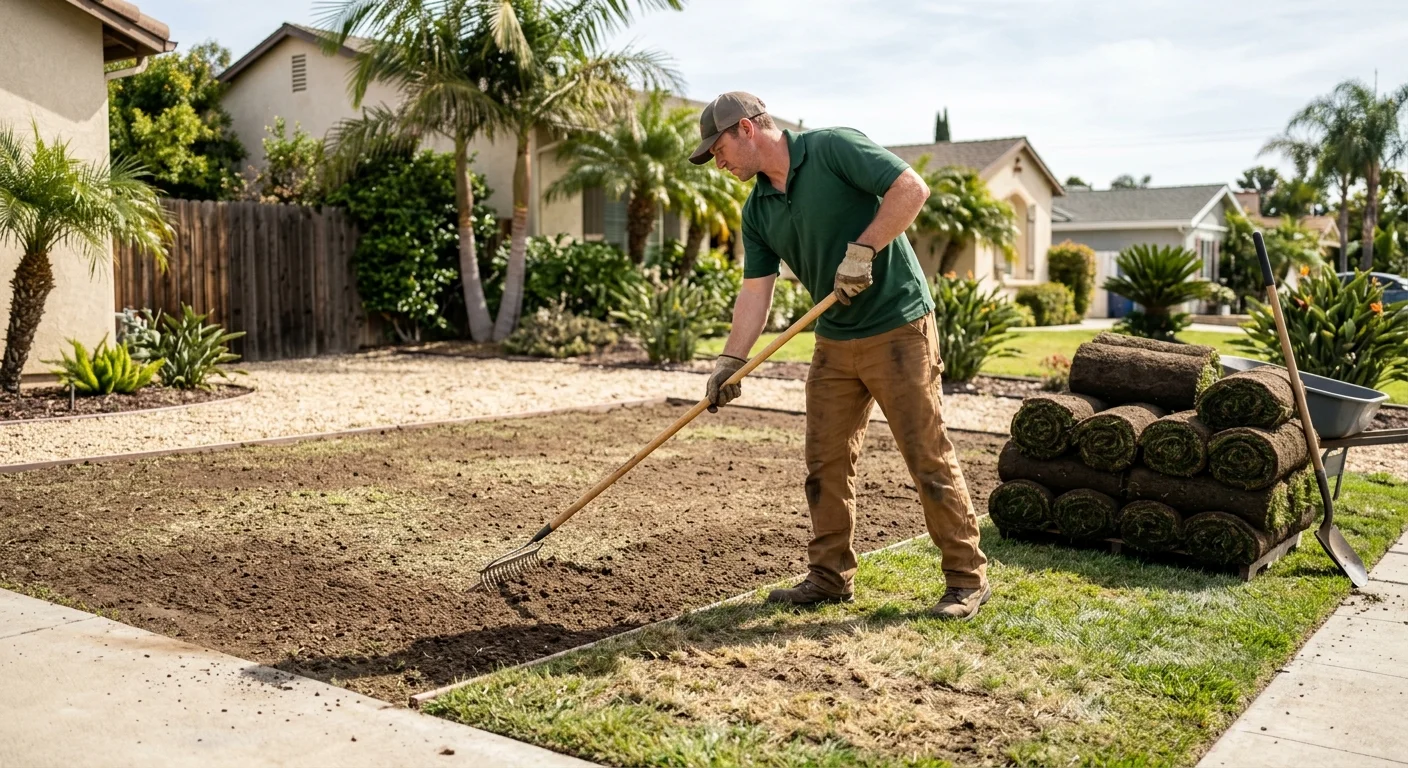
Sod is the honest move when the living cover is gone in big sheets, the species is wrong for the light and heat, or you are tired of watering a mix that never unifies. Seed is slow and patchy. Sod is a new surface. Compare the two on sod versus seed before you spend another season hoping.
Signs the repair is over: you can see more dirt than grass from the driveway. The remaining plants are a mix of bermuda, fescue, and weeds with no dominant stand. The irrigation cannot be balanced without rebuilding the laterals. The soil is so compacted that a screwdriver will not go in. Dogs have worn a dirt track that seed cannot hold. Those are sod installation conversations, not another bag of seed.
Sod still needs a contractor who grades, sets soil contact, and waters it in. Bloom Pro SD does not install it. We match you with a licensed local pro who does. You contract with that pro directly. You can verify a California license on the CSLB license check.
There is a third fork. If the lawn has already lost the argument with heat and water, replacing turf with plants can beat both seed and sod. The SoCal Water$mart turf replacement program pays $2.00 per square foot of removed turf, up to 5,000 square feet of converted yard per household per year. Your water agency may offer an additional rebate. Amounts are subject to change and to funding at the time of approval. Synthetic turf is not an approved conversion. Projects need at least three plants per 100 square feet, a stormwater feature that captures rainfall, surfaces that stay permeable, and overhead spray converted to drip, micro-spray, bubblers, or rotating nozzles, or the heads capped. You need approval before any turf comes out. Dead or dying turf and bare dirt do not qualify. Check your address on SoCal Water$mart before anyone digs.
What to share before requesting a contractor match
A good match starts with a clear yard, not a vague request to make it green. Send what you can see.
Grass type if you know it, or close-up photos of blades and of any runners. Sun map: morning sun, afternoon bake, all-day shade. Where you are: Encinitas bluff, El Cajon valley floor, Chula Vista parkway. Irrigation: dry rings, misting heads, runoff onto the sidewalk. Pets, kids, and the path people actually walk. HOA rules on turf species or color. Whether you want to keep a lawn at all.
Note last summer’s watering, any brown-patch pattern, and whether the tan grass greened after a deep soak. Dormant bermuda and dead fescue look similar from the porch and need opposite jobs.
We answer the line, take those details, and match you with a licensed, independent landscaping contractor. The crews we send look at the stand, the soil, and the water. They tell you if overseeding can still work, if aerating and overseeding belong together, or if sod or a turf-out is cleaner. They confirm the price with you before any work starts. We do not set prices, own equipment, or warrant the plants. The pros we connect you with are licensed and insured.
Bring the same photos to the walkthrough. A contractor who never looks at the soil is guessing. If you want a second pair of eyes on species, the Master Gardeners help desk is built for ID, not for hiring.
When to call us
Call when the lawn is thin enough that you cannot tell seed from sod from a turf-out, or when last season’s overseeding never filled. A licensed landscaping pro should walk the grass type, the irrigation, and the soil before anyone opens a bag. Call us at (760) 400-6355 and we’ll match you with a licensed local pro.