Spotted spurge in a Clairemont parkway, nutsedge in a Chula Vista strip, and crabgrass along an El Cajon driveway are not one job. A hired lawn weed control visit should name those plants, map where they sit, and put the work in writing before anyone opens a sprayer.
Why start with weed identification and site conditions
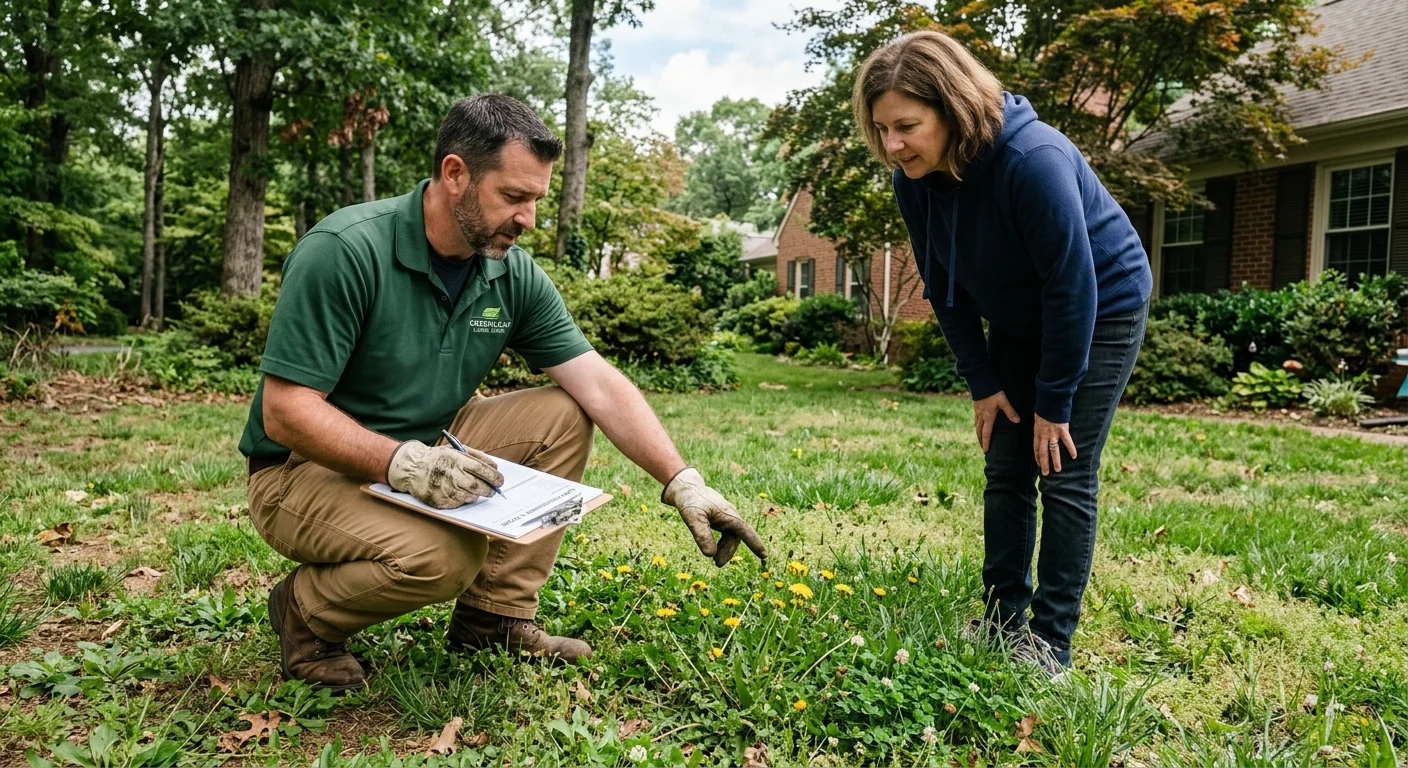
A useful visit starts on the lawn, not in the truck. The contractor you get matched with should walk the turf, the edges, and the thin spots, then tell you what they think they’re seeing. That ID step is the whole job in miniature. Broadleaf plants, weedy grasses, and sedges do not take the same approach. A product labeled for dandelion can miss nutsedge. A grassy-weed plan can scorch the turf you meant to keep.
San Diego County is not one lawn climate. Coastal lots in Encinitas and Ocean Beach sit under marine layer for much of the year. Tall fescue and St. Augustine show up more there. Inland East County yards in El Cajon, Santee, and Lakeside bake. Hybrid bermuda and kikuyu hold that heat better, and they host a different mix of invaders. A scope that treats those yards as identical is a spray plan, not a service.
Site conditions belong next to the plant names. Compacted clay along a Ramona walkway, shade under a La Mesa jacaranda, and a parkway that gets twice the water of the backyard all change what comes back. UC Statewide IPM guidance is plain on this point. Weeds rarely take over a well-managed lawn. The species you see often point to overwatering, compaction, or thin turf. Killing top growth without naming that cause is how the same patches return. Our common weeds identification guide walks through plants homeowners actually photograph. Bloom Pro SD does not diagnose from those photos. The licensed pro on site does.
Ask the contractor to separate a confident ID from a guess. If they cannot tell a weedy grass from your turf species, pause. Treating bermuda as a weed in a bermuda lawn, or leaving dallisgrass because it blends in, wastes the visit. Perennial weeds with rhizomes, stolons, or tubers also need a different conversation than a flush of summer annuals. Life cycle belongs in the notes, not as an afterthought.
What is good for killing weeds but not grass
Nothing is “good” in the abstract. A selective product is labeled for a weed list and a turf list. The label is the rule, not a store aisle name. Nonselective products kill green tissue they touch, including the lawn. Spot work, hand pulling, and cultural fixes (mow height, water, density) belong in the plan when chemistry is a poor fit. The contractor should say which path they intend, and why, for your grass type.
Why separate lawn treatments from planting bed work
Lawn weed control is not bed weeding. It should not be billed as one blob of “spray the yard.” Turf products that are selective in bermuda or fescue can still move, drift, or wash into a rose bed, a citrus skirt, or a native planting. Bed work often wants a different tool: hand pull, mulch, a mechanical edge, or a nonselective product used only on hardscape cracks. Mixing those jobs without a map is how a parkway treatment browns the lantana.
Ask the pro to mark three zones, even roughly: turf, planting beds, and hardscape. Call out HOA parkways, dog runs, vegetable boxes, and anything you treat as edible or pollinator space. South Bay lots in National City and Chula Vista often pack those uses onto a small lot. North County estates spread them out. The scope should name each zone as included or excluded.
Mulch in beds is a separate conversation. Fresh mulch can suppress germinating seed. It does not erase established perennial roots. If the contractor wants to refresh beds in the same visit, that is extra work with its own debris and plant-risk notes. Keep it on its own line, or keep it off the lawn visit.
Also separate “weed and feed” from weed control. Combining fertilizer and herbicide in one pass is a product choice, not a default. Timing that favors feeding may be the wrong window for the weed, and the reverse. If a pro wants to bundle them, they should say so in writing and name the grass type. Weekly mowing is another service. It helps density. It is not a substitute for a written weed plan. If you already have weekly lawn maintenance, tell the weed-control pro what that crew already does so the two scopes do not collide.
How do irrigation and bare soil affect recurrence
Weeds love a gap. Bare soil after summer burnout in Escondido, a dog path in Mira Mesa, or a dry ring from a misaimed rotor is an open invitation. If the contractor only treats leaves and leaves the dirt, the seed bank does the rest. Ask what they will do with thin turf: overseed, sod patches, or leave it and warn you. Bloom Pro SD does not install sod. The crews we send can, when that work is part of the match.
Irrigation is the other half. For properties in the City of San Diego Public Utilities service area, outdoor potable watering is allowed only before 10:00 a.m. or after 6:00 p.m. Watering is banned during measurable rain and for 48 hours after. Other water agencies set their own rules. Confirm yours. A treatment timed against a midday cycle, or washed off by a broken head, is not a product failure. It is a scheduling failure.
Ask the pro to walk the system with you. Heads that overspray the sidewalk, low-head drainage, and sunken rotors create wet strips where nutsedge and annual bluegrass thrive. Dry corners grow spotted spurge. EPA WaterSense is a solid primer on efficient irrigation if you want the homeowner-side background. Repair belongs to an irrigation pro, not a jug. If heads are the reason weeds keep winning, say so in the scope instead of stacking another round of chemistry.
This is also where weed control keeps failing for a lot of San Diego yards. The plant was treated. The leak was not.
Bare soil after treatment needs a plan. UC IPM is clear that total eradication is not a realistic goal for most lawns. Density is the long defense. Mowing should take no more than one-third of the blade in a single cut, per UC Statewide IPM. Scalping opens the canopy. Warm-season grasses such as bermuda and zoysia need about 25% less water than cool-season types, according to UC Master Gardeners of San Diego County. Overwatering a bermuda lawn in August to “help the spray” can feed the weeds you just paid to suppress. The UC Master Gardener Program of San Diego County is the local place to keep reading on cultural care.
What products, exclusions, and follow-up belong in writing
A verbal “we’ll hit the weeds” is not a scope. Before work starts, the contractor should confirm the price with you and put the method on paper. That paper should name the target plants, even if listed as suspected pending a closer look. It should list areas included: front turf, backyard, parkway, yes or no. It should say whether the visit is pre-emergent, post-emergent, mechanical, or a mix, and whether the intent is selective or nonselective. It should say if fertilizer is in the same pass. It should mark plants, play equipment, and edible beds they will stay away from. It should list what they will not do: trees, ivy banks, a neighbor’s fence line, HOA common area. It should say whether a return visit is part of this agreement, or a new job.
Do not expect a promise of a weed-free lawn. We do not warrant results, and an honest contractor will not either. Perennial nutsedge and oxalis can take more than one pass. Annual crabgrass is a timing problem as much as a product problem. For local windows, read our notes on pre-emergent timing rather than a Midwest calendar copied onto a bag.
The label is the rule for products. Re-entry for kids and pets is whatever that label says, not a rule of thumb from a national chain. We will not invent a waiting period here. If the contractor cannot show you the label or name the active approach, do not let them spray.
The pros we connect you with are licensed and insured. You can confirm a California contractor license on the CSLB lookup. Bloom Pro SD is a referral service. We match you. We do not apply pesticides, hold a landscape license, or keep a spray tank.
Exclusions save fights. Flowering natives, newly seeded patches, and mixed fescue-and-bermuda lawns are common miss points. A product suited to one grass may brown the other. If St. Augustine is in the mix, say so before anyone loads a tank.
What’s the best weed control for lawns
The best plan is the one matched to the weed, the grass, and the site. There is no countywide winner. Healthy, dense turf plus the right selective tool, used on the label, beats a stronger jug on the wrong plant.
When should you apply weed control to your lawn
Timing follows the weed’s life cycle and your grass’s active season, not a single calendar date. Pre-emergent work is meant to land before target seed germinates. Post-emergent work is meant for weeds that are up and growing. Coastal spring and inland spring are not the same week. Heat-stressed turf in an inland August is a poor candidate for aggressive chemistry. The contractor should explain the window they are using for your lot.
How do you treat weeds in a lawn without killing the grass
Start with ID. Use a selective product labeled for that turf, or skip chemistry and pull, overseed, or fix water. Keep nonselective products off the lawn. Stay off beds unless they are on the written map. Follow the label for rate, weather, and watering after.
What to share before requesting a contractor match
Photos in good light, from standing height and a close crop. Grass type if you know it: bermuda, tall fescue, St. Augustine, kikuyu, zoysia, or mixed. City or neighborhood, because Encinitas and Alpine are different jobs. Irrigation type: spray, rotor, drip on the parkway, or “I have no idea.” Pets, kids, vegetable beds. HOA rules if they restrict products or parkway work. What you already tried, and when. Bare spots you want filled versus lived with.
We answer the line, take those details, and match you with a licensed independent landscaping pro for weed control. You contract with that pro directly. They confirm the price with you before work starts.
When to call us
Call when the lawn is mixed weeds and thin turf, when beds and turf need different handling, or when you want a written scope instead of a driveway handshake. Call us at (760) 400-6355 and we’ll match you with a licensed local pro.