Grass sod fits broad replacement projects where installed turf is the priority. Seed may fit targeted repairs or yards where usable grass will remain. Your lawn’s condition, grass choice, preparation needs, and watering rules should guide the decision.
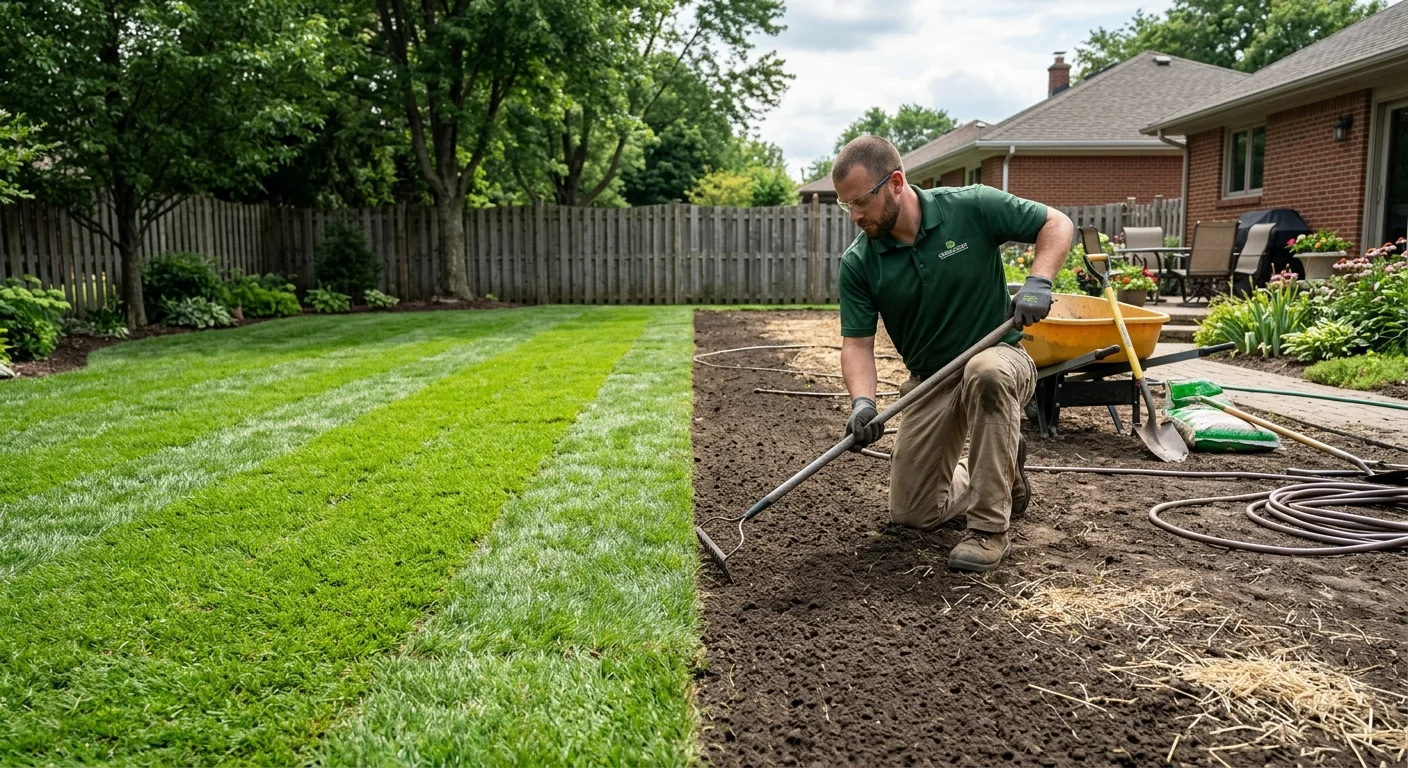
How sod and seed differ at the starting line
Sod and seed begin as different kinds of projects. A sod proposal treats the new lawn as installed material. A seed proposal treats it as a planting scope. Neither label tells you whether the underlying yard is ready.
Grass sod arrives as established turf that a contractor places over prepared ground. Seed starts as loose seed applied to a prepared area. That starting difference shapes the contractor’s material list, installation plan, and aftercare instructions.
Sod changes the visible surface during installation. That appearance doesn’t confirm that the grass has established below the surface. Seed leaves prepared soil visible at first. That appearance doesn’t mean the plan has failed. Bloom Pro SD doesn’t promise an establishment window or a particular result for either option.
When comparing proposals, look past the product name. Ask what happens before any grass reaches the yard. The contractor should identify the selected grass, measured area, removal scope, soil work, irrigation review, transitions, and written aftercare.
For sod, ask how edges near patios, walkways, and planting beds enter the scope. For seed, ask whether the proposal covers isolated patches or the full lawn area. Also confirm what will happen to usable existing turf.
Our sod installation referral service connects homeowners with licensed independent local contractors. The contractor evaluates the property and confirms whether sod, seed, or a divided repair plan fits the requested outcome. Bloom Pro SD handles intake and matching, not the landscaping work.
Which lawn damage favors repair or replacement
Start by mapping the damage instead of naming a solution. Mark isolated bare spots, thin sections, continuous dead areas, and healthy turf you want to keep. Photos from several angles can help a contractor see how those areas connect.
A repair proposal may make sense when you want to preserve substantial sections of usable grass. Seed could be considered for targeted bare areas. Small sod sections could also be discussed when the repair must match nearby turf. The contractor needs to confirm whether a compatible material is available.
Replacement deserves consideration when the affected area is broad or the grass type will change. It may also fit a project that includes a larger review of grading, irrigation, edging, or planting-bed boundaries. That doesn’t automatically make sod the correct choice. It means the contractor should price and describe the yard as a connected project.
Don’t hide observations behind a diagnosis. Tell the contractor where water pools, where runoff appears, and which sprinklers seem uneven. Note heavy foot traffic, pet areas, deep shade, exposed slopes, or recent digging. These details help define what needs inspection without claiming one cause.
New grass shouldn’t be presented as a cure for an unconfirmed yard problem. Sod can cover the surface, while seed can fill prepared areas. Neither choice replaces a contractor’s review of the site.
Ask for a written distinction between repair, partial replacement, and full replacement. The scope should identify areas that stay untouched. That makes sod vs seed proposals easier to compare and reduces assumptions about removal, preparation, and aftercare.
How grass type and season affect the choice
Grass type matters before you compare sod and seed. Ask the contractor to name the proposed variety in writing. Then compare that selection with the grass you’re keeping, the property’s exposure, and the intended use of the lawn.
The approved local research supports one clear water comparison. Warm-season Bermuda grass and Zoysia grass need 25% less water than cool-season varieties, according to the UC Master Gardener Program of San Diego County. That figure compares broad grass categories. It isn’t a water-bill estimate, survival promise, or reason to skip a site review.
Our guide to the best grass seed for San Diego can help frame the variety discussion. Still, a published guide can’t inspect your lawn. Ask the contractor whether the proposed seed or sod matches the remaining turf and the conditions observed at your address.
Bloom Pro SD’s approved claims ledger doesn’t contain a universal planting month, germination window, establishment time, or watering schedule for grass sod or seed. Those details couldn’t be confirmed as one countywide rule. Request variety-specific instructions from the contractor and check current guidance with a local horticultural authority.
Watering rules also depend on the property’s service area. Within the City of San Diego Public Utilities Department service area, potable-water landscape irrigation is permitted only before 10:00 a.m. or after 6:00 p.m. Watering is prohibited during measurable rainfall and for 48 hours afterward. The city also prohibits irrigation runoff onto nearby property, walkways, roads, parking areas, and structures.
Properties served by another water agency may face different restrictions. Confirm the provider for the address before accepting an aftercare plan. A plan for Encinitas shouldn’t simply be copied to El Cajon without checking the site and the serving agency.
What site preparation both options may need
Preparation is where sod and seed proposals become easier to compare. Either scope may contain several separate tasks. Ask the contractor to state which ones are included, excluded, or unnecessary after inspection.
The written scope should address existing surface material. It should say whether the contractor will remove grass, weeds, roots, rocks, or loose debris. It should also identify who handles material taken from the property. Don’t assume removal and disposal are bundled into a grass sod proposal.
Ask how the contractor will evaluate the finished grade. Walk the boundaries together and point out low areas, slopes, drains, hardscape edges, gates, and planting beds. If grading or drainage work is proposed, request a clear description before work starts.
Irrigation deserves its own line in the scope. Tell the contractor what you observe when the system runs. Ask whether the proposal includes an irrigation review, repairs, adjustments, or none of those items. Bloom Pro SD can’t confirm that an existing system fits new grass without a contractor’s property evaluation.
Soil amendments, starter products, or other treatments should also be named. Ask what the contractor proposes and why it applies to your yard. Don’t rely on a generic package description.
Review our San Diego sod installation process before comparing contractor scopes. For budgeting questions, the San Diego sod installation cost guide explains which project details can shape a contractor’s price. Bloom Pro SD doesn’t publish a price list. The independent contractor confirms the scope and price with you before any work starts.
What to share before requesting a contractor match
Good intake starts with observable details. Share the property address, photos, approximate lawn area, and the sections you want to keep. State whether you’re considering seed, grass sod, or both. It’s also fine to say you haven’t decided.
Describe the result you want without promising it to yourself. You might want to repair scattered bare spots, replace a continuous lawn, change grass varieties, or coordinate grass with another landscape project. Those are useful goals for the contractor to evaluate.
Include notes about sunlight, shade, foot traffic, pets, slopes, gates, and access. Mention visible pooling, runoff, damaged sprinkler heads, or uneven spray. Say what you observed rather than assigning a cause.
Tell us whether the new lawn must meet an HOA or property-management requirement. If you have written requirements, share the actual document. Bloom Pro SD doesn’t confirm HOA approval or submit documents on a homeowner’s behalf.
You should also identify your water provider when known. If you don’t know it, say that during intake. The contractor can then account for the need to confirm current restrictions before giving aftercare directions.
Bloom Pro SD answers the line and matches homeowners with licensed independent local landscaping contractors. We don’t install sod, spread seed, inspect irrigation, or set the contractor’s price. You contract with and pay the professional directly.
Before hiring, request the contractor’s license number and check it through the official California Contractors State License Board lookup. Then confirm the grass type, preparation scope, exclusions, aftercare responsibilities, and price in writing.
When to call us
A broad lawn replacement, grading concern, or connected irrigation scope is a good point to involve a licensed landscaping pro. Bloom Pro SD can collect the project details and refer you to an independent contractor who confirms the work scope. Call us at (760) 400-6355 and we’ll match you with a licensed local pro.