A sod install day looks simple from the sidewalk: a truck, some rolled grass, a crew working in rows. What actually decides whether that lawn thrives or struggles happened before the sod ever touched the ground. Knowing the sequence helps you follow along and ask the right questions while it happens.
What happens before old turf is removed
Most jobs start with a site walk, not a shovel. A contractor looks at the existing lawn’s condition, the slope of the yard, where water currently drains, and what’s underneath the surface: sprinkler lines, root systems from nearby trees, buried utilities. That walk shapes the plan for everything after it.
This is also when grass selection gets locked in. San Diego’s climate supports several turf types, and each one has different soil, sun, and water needs. A yard with heavy afternoon shade under mature trees calls for a different grass than a flat, sun-baked front lawn. If you haven’t settled on a type yet, our guide to grass types and installation costs breaks down how the common options compare.
Timing gets discussed here too. Sod is a living product, and soil temperature affects how fast it roots. Some months give new grass an easier start than others, which our timing guide for San Diego sod covers in detail. A contractor who skips this conversation and just schedules the next open date isn’t doing the planning that a good lawn depends on.
Before any digging starts, ask what’s included in writing: removal method, disposal, grading, soil work, sod, and delivery. A vague verbal estimate is where scope disputes start later.
Measurement matters more than it sounds like it should. A contractor should walk the whole area with a wheel or tape rather than estimate square footage by eye, because sod is sold and priced by the square foot, and an eyeballed number that runs short mid-install means a second delivery and a delayed finish. Odd-shaped beds, curved borders, and areas cut out for trees or hardscape all need to be subtracted from the total before ordering, not adjusted for after the pallets arrive.
How soil preparation affects the installation plan
Once the old lawn and any weeds are cleared, the ground underneath gets assessed on its own terms. San Diego County has a wide range of native soils, from sandy coastal ground to dense inland clay, and each behaves differently under new turf. Clay-heavy soil compacts easily and can trap water at the surface, starving roots of air. Sandy soil drains fast but holds onto fewer nutrients.
That’s why soil amendment is usually part of the plan rather than an upsell. Working organic material into the top several inches gives new sod roots something to grow into, instead of fighting compacted native ground. Grading happens at the same stage: the crew checks that water will move away from the foundation and won’t pool in low spots, which is one of the most common reasons a new lawn fails within its first year.
If your property has struggled with drainage or standing water in the past, say so before work starts. A contractor who’s aware of the yard’s history going in can adjust the grading plan instead of discovering the problem after the sod is already down.
Homeowners can verify a contractor’s license status, including any disciplinary history, at the CSLB license lookup tool before soil work begins. A landscaping job of any real size in California requires a licensed contractor, and this is worth confirming before a crew is on your property.
How contractors lay and fit fresh sod
Sod ships as harvested rolls or slabs on pallets, and it’s a perishable product. Once it’s cut from the farm, the clock is running on how long it can sit rolled up before quality starts to drop, which is part of why an installer wants soil prep finished before the delivery truck arrives.
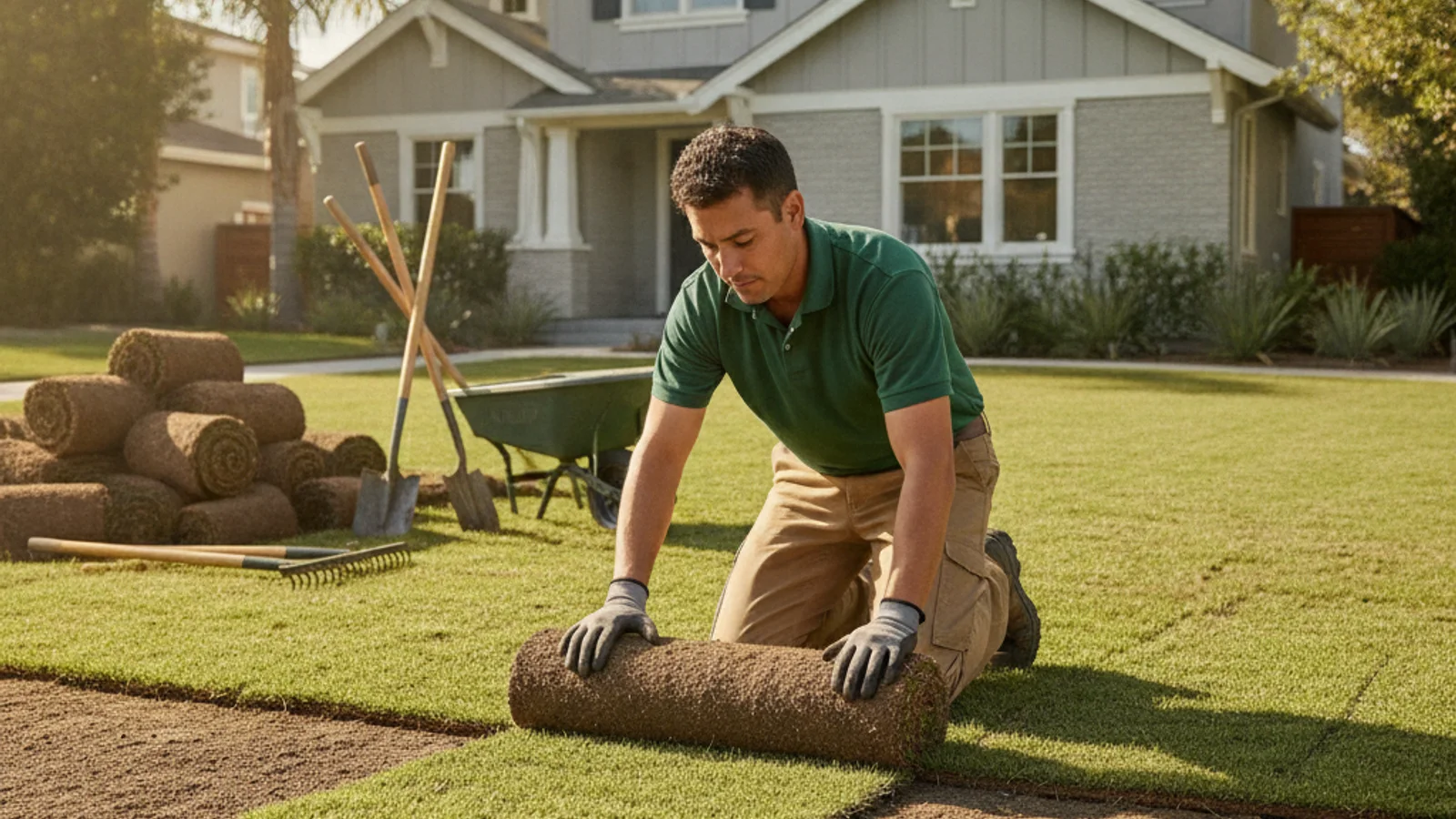
Laying starts along the longest straight edge of the yard, usually a driveway or a sidewalk, and works outward in staggered rows, similar to laying brick. Staggering the seams instead of lining them up in a grid keeps the lawn from developing weak seams that show as visible lines later. Each piece gets fitted tight against the next, without stretching or gapping, and cut to shape around beds, walkways, and irrigation heads with a sharp knife rather than torn by hand.
On sloped sections, which are common on hillside lots throughout the county, installers may stake sections temporarily to keep the sod from sliding before roots take hold. After the area is fully laid, a lawn roller goes over the surface to press the sod into firm contact with the soil beneath it and remove air pockets that would otherwise dry out the roots.
Before the contractor leaves, ask them to run the irrigation system and confirm even coverage across the new lawn.
What the first watering conversation should cover
The install itself isn’t the end of the job. New sod has no established root system yet, and how it’s watered in the days and weeks after laying determines whether it takes hold or dies back in patches. This conversation should happen on-site, not as an afterthought over the phone.
A contractor should walk you through how the irrigation system is set for the establishment period, which zones need adjustment, and how that schedule is expected to change as the lawn roots in. San Diego’s watering-day restrictions vary by water agency and often carve out an allowance for newly installed landscaping during establishment, so ask your provider directly rather than assuming a citation won’t apply. Our first-month watering guide walks through what that schedule generally looks like once the crew has left.
This is also a good time to ask what happens if a section of sod doesn’t take. Get any answer about replacement in writing rather than as a spoken assurance, and don’t treat a verbal promise as binding once the crew has packed up.
What to confirm before signing the scope
Before you sign anything, the written scope should spell out exactly what’s included: removal and disposal of the old lawn, grading, the type and depth of soil amendment, the grass variety and its price basis, irrigation adjustments, and cleanup. If any of those items are missing from the paperwork, ask why before you agree to a start date.
Ask who handles disposal of the old turf and green waste, since hauling fees are sometimes billed separately from the install itself. Ask whether the quoted price is final or subject to change once the crew opens up the ground and sees what the soil actually looks like. Rocky or heavily compacted soil discovered mid-job is a common source of change orders, and a contractor who flags that possibility upfront is being straightforward with you.
Confirm the payment schedule and get everything, including the grass type and square footage, in writing before the truck shows up. A contractor who resists putting the scope on paper is not one to hand a yard over to.
If you’re weighing sod against water-wise alternatives for parts of the yard that don’t get much use, our drought-tolerant landscaping service and the SoCal Water$mart rebate program are both worth a look before you commit the whole lot to turf.
When to call us
A sod installation touches soil work, grading, and irrigation all at once, which is exactly the kind of job that goes wrong fastest without the right hands on it. We connect San Diego County homeowners with licensed local sod installation pros who scope the job in person and put the details in writing before anything starts.
Call us at (760) 400-6355 and we’ll match you with a licensed local pro.