New sod is a thin mat with cut roots. Until it knits into the soil below, it dries faster than an established lawn. UC IPM says to water the soil just before laying sod on hot days so roots are not placed on a dry, hot surface, to install sod immediately after delivery, and to prefer the grass’s active growing period. There is no single countywide minutes-per-zone calendar that fits every yard. Keep the sod-to-soil contact moist, check your water agency’s establishment rules, and use the installer’s written watering plan for the product you bought.
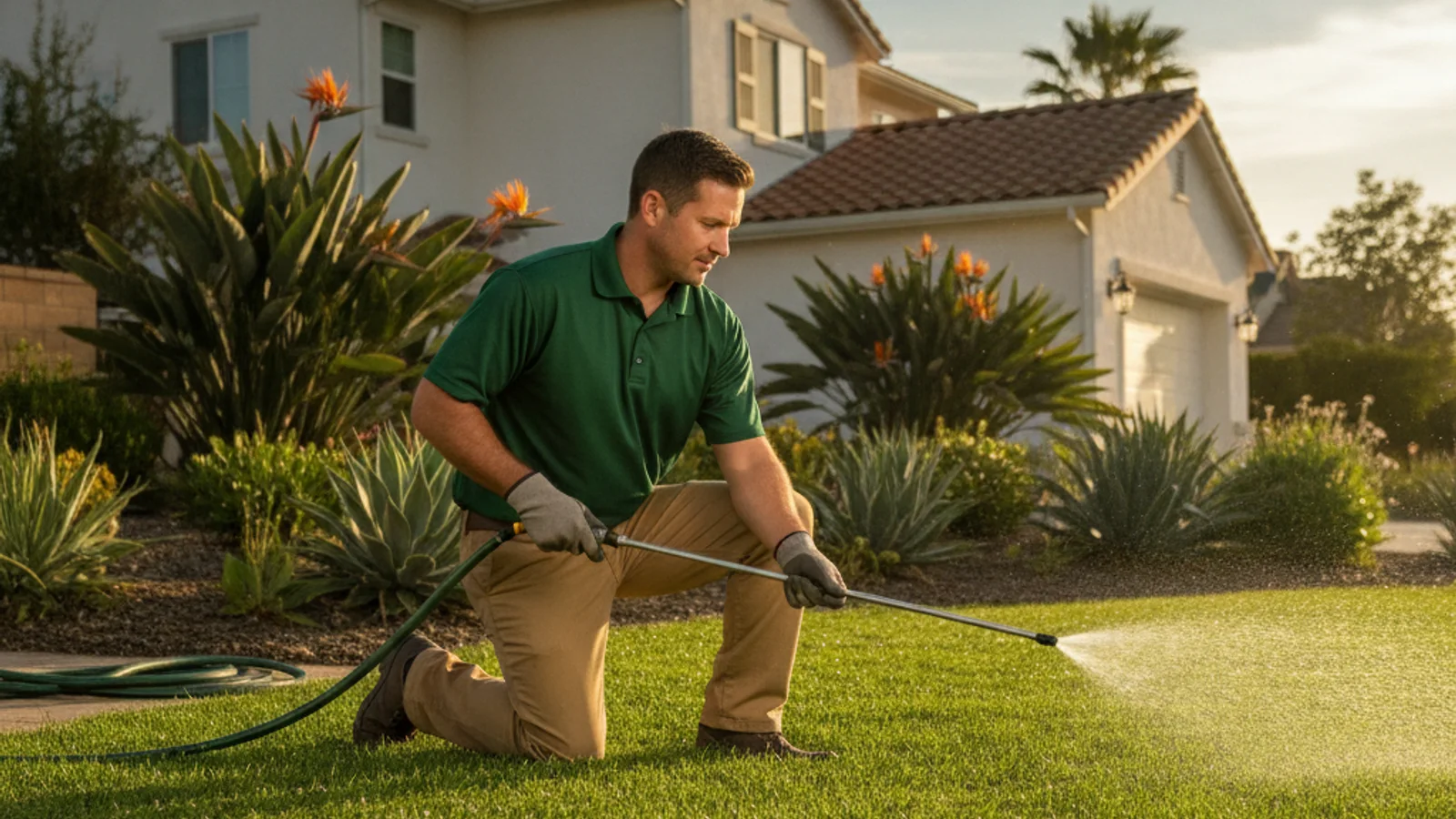
If you just had sod installed, or you’re about to, the hard part isn’t the install. It’s the four weeks after, when a beautiful green lawn either takes hold or turns crispy at the edges. San Diego’s long, dry summers make this window less forgiving than almost anywhere else in the country, because the same heat that browns an established lawn hits rootless sod many times harder. This guide walks through exactly how to water it, how to read whether it’s rooting, and when it’s safe to start treating it like a normal lawn. If you’re still in the planning stage, the timing guide for installing sod in San Diego covers which months give new sod the easiest start.
How often should you water new sod in San Diego?
New sod comes as a thin mat of grass and soil with its roots cut off. Until those roots grow down into the ground beneath it, the sod can only drink from the shallow layer it sits in, and that layer dries out fast in San Diego sun. The whole job of the first month is to keep that zone constantly moist while the roots reach down, then gradually train them to go deeper by watering less often.
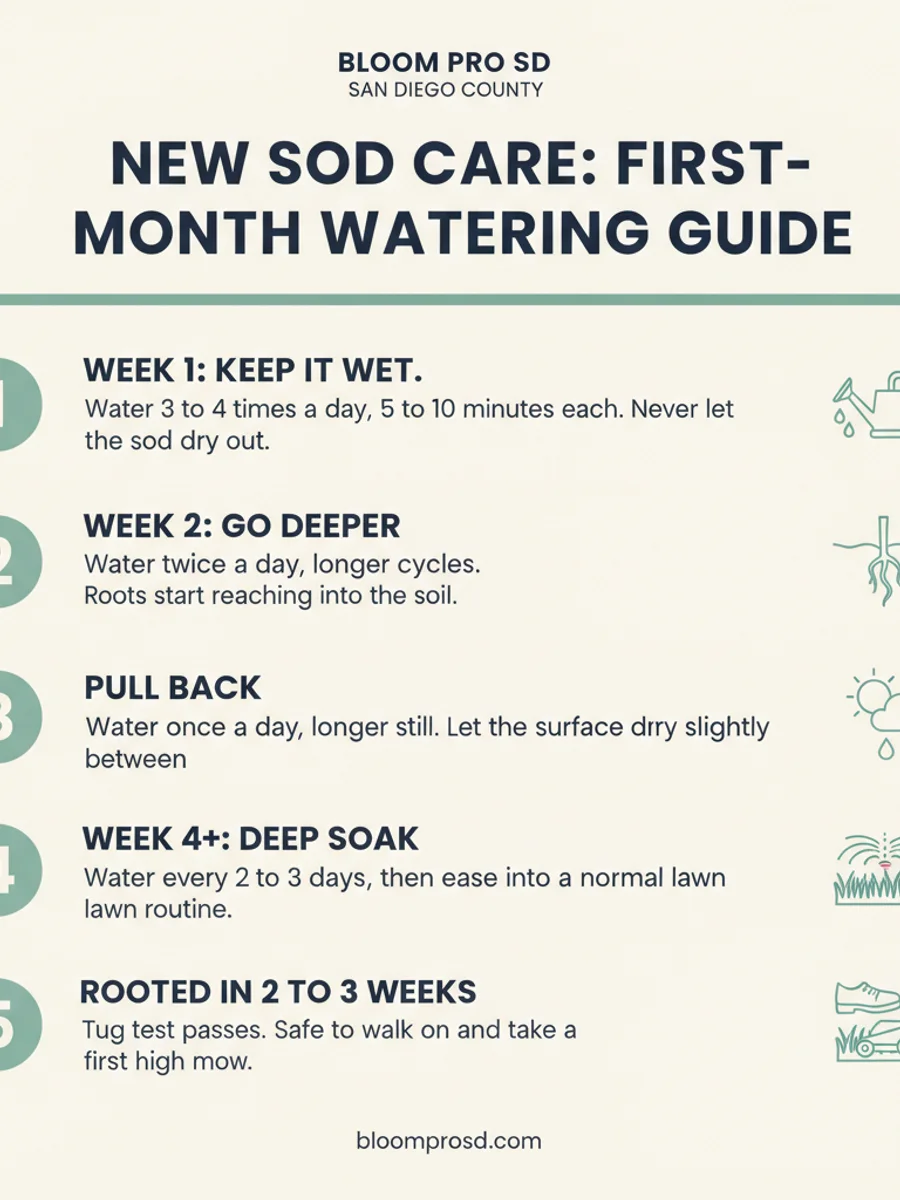
Here’s a practical way to run the first month without inventing a county timer setting. Inland yards often dry faster than coastal ones. Cooler marine-layer lots may need less frequent cycles. Your water agency’s establishment rules still control legal watering days.
Right after install: Follow the installer’s first soak so the sod sits tight against the soil. UC IPM warns against placing turfgrass roots on a dry, hot surface.
Until the sod resists a gentle tug: Keep the sod-to-soil contact moist. Short cycles that prevent runoff on slopes are often used so water soaks in. There is no verified 5-to-10-minute, two-to-four-times-a-day county recipe. Watch edges, seams, and hot concrete borders, which dry first.
After it holds: Lengthen the interval so moisture goes deeper. UC IPM’s one-third mowing rule still applies on the first cut. Confirm extra watering with your water agency before assuming an establishment exemption.
One honest caveat on water rules: San Diego’s watering-day restrictions generally include an allowance for newly installed landscape during its establishment period, but the exact terms depend on your water agency. Check your provider’s rules before you assume, and don’t let a restricted watering day cost you the lawn in its first week.
Why new sod is so easy to lose in a San Diego summer
An established lawn has roots reaching a foot or more into the soil, so it can ride out a hot afternoon by drinking from moisture stored deep down. New sod has none of that. It has only the half-inch of soil it was grown in, sitting on top of your ground with a seam of air still between them until the roots bridge the gap.
That’s why heat is so punishing here. Dry wind and direct sun pull moisture out of that thin mat within hours, and the edges and seams dry first because they’re exposed on more sides. You’ll see it as curling, silvery-gray strips along every cut line while the middle of each roll still looks fine. Corners near hot concrete, south-facing slopes, and any spot a sprinkler barely reaches are the first to go. Once a section of rootless sod fully dries and browns, it usually doesn’t come back, and the fix is replacing that piece rather than reviving it. Keeping every inch wet in week one is cheaper than resodding the dead patches later.
How to tell if your new sod is rooting
After about two weeks, you can check progress with the tug test. Grab a corner of a sod piece and pull up gently. If it resists and feels anchored, roots have started to grip the soil below, and that’s your signal to begin tapering the water. If it lifts up like a loose rug with no resistance, the roots haven’t taken yet, so hold the schedule steady and keep it wet a while longer.
The color also tells you what’s happening. Bright, upright green means it’s happy. Blue-gray blades that don’t spring back when you step on them, along with curling edges, mean it’s drying out and needs water now. A soft, spongy feel underfoot, a sour smell, or yellowing patches that stay wet point the other direction, toward too much water and not enough air, which invites fungus. New sod is far more often lost to drying out than to overwatering in San Diego, but both are possible, and the tug plus color read tells you which way to adjust.
When can you walk on, mow, and fertilize new sod?
Walking on it: Stay off new sod for the first two weeks as much as you can. Foot traffic presses the sod away from the soil right when the roots are trying to bridge that gap, and it compacts wet ground. After the tug test says it’s rooting, light traffic is fine.
First mow: Wait until the sod passes the tug test and the grass has grown tall enough that you’re only cutting the top third off, usually around two to three weeks. Let the lawn dry enough to support a mower without sinking, use a sharp blade, mow on a high setting, and never scalp it. The first few cuts should take a little off the top and nothing more. If you’re not sure how short to keep it after that, how often to mow a San Diego lawn breaks down the right height and frequency by grass type.
First fertilizer: Many installers lay sod over a starter fertilizer, so the lawn is already fed for its first few weeks. Hold off on your own first feeding until roughly week four to six, once the lawn is established, then follow a normal program. The San Diego lawn fertilizer schedule lays out the timing for the rest of the year.
Setting up your sprinklers for the establishment window
New sod needs the opposite of a normal watering setup. Instead of a few long, deep soaks a week, it needs many short cycles that keep the surface wet without flooding it. Program your controller for the extra daily start times in week one, then walk the lawn while it runs to find the spots the water misses. Dry corners, edges along fences, and strips beside driveways are the usual gaps, and hand-watering those trouble spots for the first week is often the difference between full coverage and a few dead patches.
On slopes, water tends to run off before it soaks in, so break each watering into two or three shorter bursts a few minutes apart so it can absorb. If your existing sprinklers don’t cover the new sod evenly, it’s worth fixing before the lawn pays for it. Our guide on adjusting sprinklers for San Diego summer covers the quick tune-ups, and for broken heads or weak coverage, irrigation repair crews in the network can sort out the system before your new lawn suffers for it.
If a section browns out despite your best effort, don’t panic and don’t assume the whole lawn is lost. Read how to revive a struggling San Diego lawn first to tell dead from stressed, then replace only the pieces that are truly gone.
The landscapers we connect you with across San Diego County handle the whole job, from sod installation to walking you through the establishment schedule for your specific yard and grass type. If you want the cost picture before you commit, sod installation cost in San Diego breaks down pricing per square foot, and the best grass types for San Diego lawns guide helps you pick sod that fits your sun, water, and traffic.
Call (760) 400-6355 to get matched with a licensed independent professional who quotes sod work for your address.
Frequently asked questions
How long does it take new sod to root in San Diego?
New sod usually starts to resist a gentle tug as roots knit into the soil below. How many weeks that takes depends on species, weather, and watering, so the tug is a better check than a calendar. Heat speeds growth but also dries the mat faster. If a corner lifts like a loose rug, keep the contact moist and ask the installer before changing the plan.
How much should I water new sod in the first week?
Keep the sod-to-soil contact moist in short cycles that do not run off. There is no verified county minutes-per-zone recipe. Inland summer heat often needs more frequent checks than a marine-layer lot. Walk the lawn after a cycle and hand-water missed edges if the controller leaves them dry.
Can you overwater new sod?
Yes, though in San Diego’s dry heat new sod is far more often lost to drying out than to overwatering. Signs of too much water are a spongy, squishy feel underfoot, a sour smell, standing water that doesn’t drain, and yellowing patches that stay wet, all of which can invite fungus. If you see those signs, cut back the frequency while still keeping the sod from fully drying between waterings.
When can I walk on or mow new sod?
Stay off new sod while it is still lifting like a rug. Wait to mow until it passes the tug test and you can follow the UC one-third rule. When you do mow, let the lawn support the mower, use a sharp blade, cut high, and do not scalp it.
Is new sod exempt from San Diego watering restrictions?
San Diego water agencies generally allow extra watering for newly installed landscape during its establishment period, but the specific rules and any required time limits vary by provider. Check your own water agency’s current restrictions before you install, since the establishment allowance and its exact terms differ from one district to the next. Don’t let a restricted watering day cost you the lawn in its critical first week.