Most brown San Diego lawns in June are not automatically dead. Warm-season grass can go dormant and still have a living crown. If the grass pulls out by the handful with no living crown at the base, that section may need replacement. Confirm with a tug and a crown check before you spend a month watering a mat that will not recover.
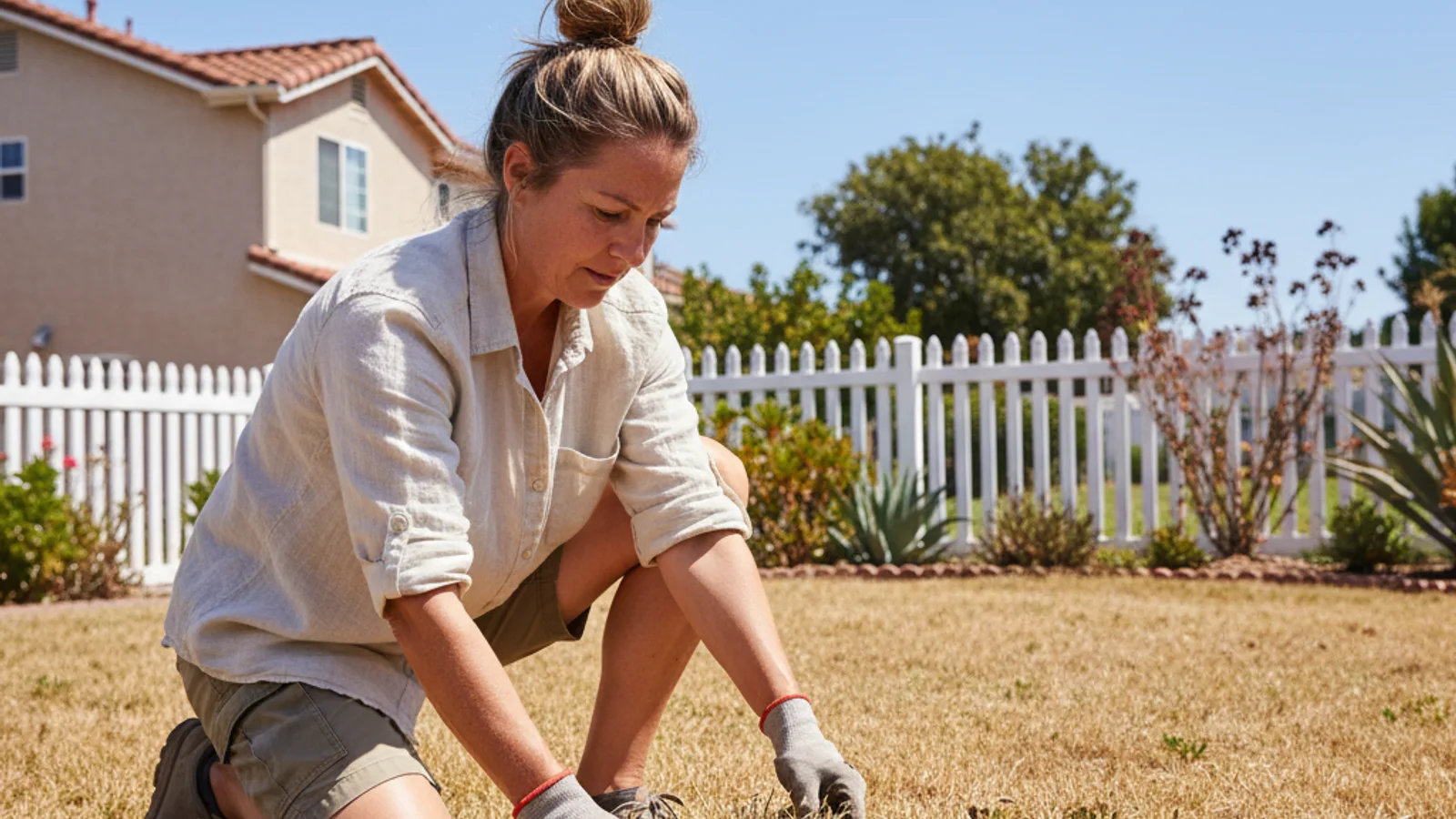
Dead vs dormant: the tug test and the crown check
Before you spend a dime, find out if there’s anything alive to save. Dormant grass is brown but still rooted and resting. Dead grass has no living tissue left. Two quick checks tell you which you have.
The tug test. Grab a handful of brown grass and pull firmly. Dormant grass resists and stays anchored in the soil. Dead grass slides out with almost no effort, like pulling hair from a brush, because the roots have rotted or dried through.
The crown check. The crown is the small node at the base of each blade, right at the soil line, where new growth comes from. Part the grass and look closely, or dig up a small plug. A dormant crown looks whitish, firm, and slightly plump. A dead crown is brown, brittle, and dry all the way through. The crown is what matters most, blades can be crispy while the plant is still very much alive underneath.
If most of your lawn passes both tests, you have a recovery job. If it fails both across large stretches, you’re looking at a replacement, at least in those areas.
| Sign | Dormant (saveable) | Dead (needs replacing) |
|---|---|---|
| Tug test | Roots hold, blades resist | Grass pulls out by the handful |
| Crown at soil line | White, firm, plump | Brown, brittle, dry |
| Pattern | Often whole lawn, uniform | Scattered patches or large bare zones |
| Response to water | May green after a deep-watering trial | No living crown after inspection |
A common San Diego mix-up: heat-dormant Bermuda or kikuyu can look bone dead in June while the cool-season ryegrass around it stays green, then the warm-season grass roars back as the soil warms. Don’t tear it out on looks alone.
The fastest revival path for a saveable lawn
Once you’ve confirmed living crowns, here’s the order that gets color back quickest in San Diego summer.
1. Deep-watering reset. Stop the light daily sprinkles. Water deeply and less often to pull roots downward, away from the hot surface. Run zones long enough to soak six inches down, then let the top dry between sessions. Our clay soil can’t take it all at once, so use cycle and soak: split a long run into two or three shorter bursts with a break between so the water sinks instead of running to the gutter. If you’re guessing on timing, our San Diego summer watering schedule gives you minutes per zone to start from.
2. Dethatch and aerate. A thick brown thatch layer blocks water and air from reaching the crowns. Rake out the dead material, then aerate to pull small soil plugs and break up compaction. This is the step most homeowners skip, and it’s the reason their watering and seed never seems to take. Air and water reaching the root zone is what wakes a stressed lawn up.
3. Overseed or patch. Fill thin and bare spots with seed matched to your existing grass. Loosen the top inch or two of soil, work in a little compost, spread seed, press it in, and keep it consistently moist until it establishes. Summer seeding needs daily attention since the surface dries fast, so shade the area lightly if you can. For mid-size bare patches, plugs or small sod cuts root faster than seed in the heat.
4. Fertilize for the season. Feed a stressed lawn, don’t blast it. A balanced slow-release feed gives steady nitrogen without forcing tender new growth that scorches in full sun. Warm-season grasses respond well to summer feeding, cool-season grasses prefer a lighter hand until temperatures ease. Our lawn fertilization program times feedings to what the grass can actually use. If brown spots are still spreading after all this, the original cause may still be active, our guide to brown patches and what’s causing them walks through diagnosing it.
When it’s truly dead and resodding is the real fix
If the tug test pulls grass out by the handful across most of the yard and the crowns are brown and brittle, no amount of water, seed, or feed brings it back. At that point you’re paying to maintain a corpse. The faster, cheaper-in-the-long-run move is to start over with fresh sod.
Sod gives you an instant mature lawn instead of waiting months for summer seed to fill in, which matters if you’ve got an event or photos coming up. The catch is the prep: the old dead turf has to come out, the soil gets tilled and amended, and the ground gets graded before the rolls go down. Skip that and the new sod struggles the same way the old one did.
For a replacement in San Diego heat, lean warm-season. Bermuda, St. Augustine, kikuyu, and zoysia handle our summers far better than fescue or ryegrass, they root faster in warm soil and need less water once established. Our best grass types for San Diego lawns breaks down which fits sun, shade, foot traffic, and your water bill. The crews we match you with handle the prep and the lay through sod installation so the new lawn actually takes.
What it realistically costs to revive vs resod
Reviving a saveable lawn is the cheaper road by a wide margin. Dethatching, aeration, overseeding, and a feed cost a fraction of replacement, and most of the spend is labor and a few bags of seed and fertilizer. The trade is time, expect two to four weeks of consistent watering and care before it looks like a lawn again.
Resodding costs more up front because you’re buying new turf plus the labor to remove the old lawn, prep the soil, and lay the rolls. What you get for it is a finished green lawn the day it’s installed and a fresh start on grass suited to the climate. Square footage, how much old turf has to come out, soil condition, and grass variety all move the number, so a real quote means someone seeing the yard.
The expensive mistake is spending revival money and weeks of watering on grass that was dead the whole time, then resodding anyway. That’s exactly what the tug and crown checks prevent. When in doubt, confirm what’s alive first.
How we help
We start with an honest assessment: tug test, crown check, and a look at your irrigation and soil to see what’s saveable and what isn’t. If the lawn can come back, we run the revival, dethatch, aerate, overseed, and a properly timed feed, then keep it on track with lawn maintenance so it doesn’t slide back. If it’s gone, we tell you straight and handle the resod with the right warm-season grass for your yard.
No selling you a teardown when a reset would do, and no months of watering dead grass when sod is the smarter buy.
FAQ
Is my lawn dead or just dormant? Do the tug test and crown check. If the grass holds when you pull it and the crowns at the soil line are white and firm, it’s dormant and saveable. If it pulls out easily and the crowns are brown and brittle, that section is dead.
How long does it take to revive a dead lawn in San Diego? A saveable lawn usually shows new color in one to two weeks after a deep-watering reset and looks like a real lawn again in two to four weeks once overseeding fills in. Truly dead turf needs resodding and looks finished the day it’s installed.
Can I revive my lawn in the middle of summer, or should I wait? You can start a revival now, warm-season grasses actually green up fastest in summer heat. Cool-season seed is harder to establish in peak heat, so for fescue or ryegrass, plan heavier overseeding for fall and focus on watering and feeding the living grass through summer.
Is it cheaper to revive a lawn or replace it with sod? Reviving is far cheaper when there’s living grass to work with, since you’re paying for labor, seed, and feed rather than new turf and removal. Resodding costs more but gives an instant lawn and a fresh start, which is the better value once most of the lawn is genuinely dead.
Not sure whether your brown lawn is worth saving? Call us at (760) 400-6355 for a lawn revival assessment, and we’ll tell you straight.