As San Diego’s sunny days stretch longer and temperatures begin to climb, your landscape’s watering needs change dramatically. The efficient sprinkler schedule that worked in spring likely won’t cut it when the summer heat truly settles in. Adjusting your sprinkler system now saves water, protects your plants, and helps you avoid a surprisingly high water bill.
Why you need to change your watering schedule for summer
San Diego’s climate shifts significantly from spring to summer. Cooler, milder spring days give way to intense heat and often lower humidity, meaning plants lose moisture much faster through evaporation and transpiration. Your lawn and garden beds will experience more stress if they don’t receive adequate hydration. Ignoring these seasonal changes can lead to dry, brown patches in your lawn, wilting flowers, and struggling shrubs.
Changing your san diego summer watering schedule isn’t just about giving your plants more water. It’s about watering smarter. Deeper, less frequent watering is generally more effective in summer. This encourages roots to grow deeper, making plants more resilient to heat and drought. Watering too frequently but for short durations can promote shallow root growth, making your landscape more vulnerable. Plus, following water-saving guidelines from the San Diego County Water Authority isn’t just good for the environment; it’s good for your wallet. Local regulations often dictate specific watering days and times, especially during peak summer months, to prevent excessive water use. We’ve compiled a detailed guide on specific watering recommendations in our post about a summer lawn watering schedule san diego. By proactively adjusting your system, you ensure your landscape thrives without wasting precious resources or incurring penalties.
A step-by-step guide to reprogramming your controller
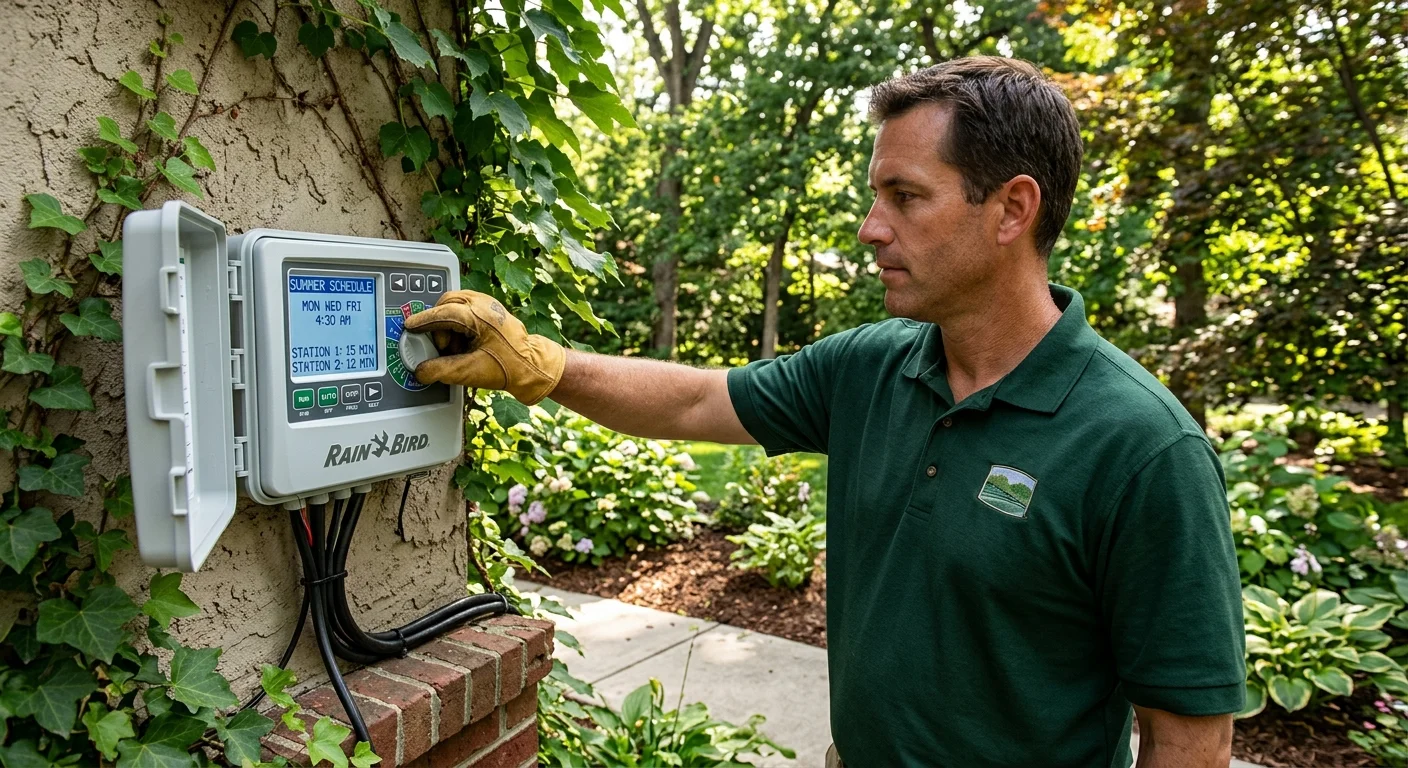
Reprogramming your sprinkler controller might seem daunting, but it’s a crucial step for summer efficiency. Most modern controllers, whether dial-and-button or smart-enabled, follow a similar logic. Always start by reviewing your controller’s manual if you’re unsure about specific button functions.
Step 1: Set the correct date and time
This seems obvious, but an incorrect internal clock can throw off your entire schedule. Double-check that the current date and time are accurately programmed.
Step 2: Adjust your start times
Instead of starting multiple times a day, consider one early morning start time. Watering before 8 AM minimizes evaporation from the sun and wind, allowing more water to reach the roots. In San Diego, avoiding midday watering is essential. For clay soils, or on slopes where runoff is an issue, you might consider a “cycle and soak” method. This involves two or three short cycles for each zone, separated by an hour or so. For example, instead of watering for 15 minutes straight, water for 5 minutes, wait an hour, then water for another 5 minutes, and so on. This allows water to penetrate deeper without pooling or running off.
Step 3: Modify zone run times (how long to water lawn in summer san diego)
This is where you determine how long to water lawn in summer san diego. Different zones have different needs. Lawns generally require more water than shrub beds or drought-tolerant plants.
- Lawns: Aim for deeper watering. Depending on your soil type and grass, this could mean 10-20 minutes per zone, 2-3 times a week. Watch for signs of stress, but avoid daily, shallow watering.
- Shrub and flower beds: These often need less frequent, but still deep, watering. 5-10 minutes might be sufficient, 2 times a week.
- Drought-tolerant plants: Many San Diego natives need very little supplemental water once established. You might even turn off zones dedicated to these plants completely during summer, or water for just a few minutes every other week.
Step 4: Adjust watering days
Shift from watering every other day or every third day to perhaps 2-3 days a week for lawns, and less for other plants. Remember the “deep and infrequent” principle. Check local water agency restrictions, as many San Diego communities have specific watering day limitations during summer.

How to adjust spray heads for optimal coverage and less waste
Even the best watering schedule is ineffective if your sprinkler heads aren’t delivering water efficiently. Misaligned or malfunctioning heads can waste significant amounts of water, leading to dry spots, runoff, and higher bills.
Adjusting arc and radius
Many sprinkler heads allow you to adjust both the arc (the area it covers) and the radius (how far it sprays).
- Arc: Use a flathead screwdriver or the specific adjustment tool provided with your sprinkler heads to set the arc. You want the water to land on your landscape, not on sidewalks, driveways, or fences. Overlapping coverage is good for even distribution, but excessive overlap onto non-irrigated areas is wasteful.
- Radius: Some heads have a screw that can reduce the spray radius. Tightening this screw forces the deflector into the water stream, shortening the spray. This is useful for preventing overspray onto hardscapes or neighboring properties. For rotor heads, often a nozzle change is needed to significantly alter the radius, or you can adjust the flow rate at the head if it has a flow control screw.
Cleaning and replacing nozzles
Clogged nozzles are a common problem. Debris, mineral buildup, or even insects can block the tiny openings, leading to uneven spray patterns or reduced flow. Periodically clean your nozzles by gently removing them and clearing any obstructions. If a nozzle is cracked or severely worn, replace it. New, efficient nozzles, especially those with multi-stream rotating patterns, can significantly improve water distribution and reduce runoff compared to older spray nozzles. Look for EPA WaterSense labeled products when purchasing replacements; they’re designed for efficiency.
Checking for leaks and clogs before the heat sets in
A proactive sprinkler system check up san diego style can save you from a major headache (and bill) later in the summer. Leaks and clogs are common issues that can waste water and damage your landscape.
Visual inspection
Walk through your yard while the system is running, zone by zone. Look for:
- Puddles or soggy spots: These indicate a leak in the line or a broken head.
- Geysers or unusually high sprays: A broken riser or a loose head can cause this.
- Weak or non-existent spray: This might be a clogged nozzle, a damaged head, or a problem with water pressure to that zone.
- Water running down sidewalks or into the street: This is a clear sign of misaligned heads or excessive runoff, often from too-long run times.
The “can test” for even coverage
For a more precise check, place several empty tuna cans or straight-sided cups randomly across a zone. Run that zone for 10-15 minutes, then measure the amount of water in each can. If there’s a significant difference between cans, your coverage isn’t even, and you might have clogged or misadjusted heads. This test helps you fine-tune run times and head adjustments for consistent watering.
Looking for hidden leaks
Sometimes leaks aren’t visible above ground. Check your water meter. If no water is being used in your house (turn off all appliances and faucets), but the small leak detection dial on your meter is still spinning, you likely have a leak somewhere in your main irrigation line or service line. Even small leaks add up quickly. A continuous drip can waste hundreds of gallons a month, which is a significant loss in San Diego’s arid climate. Addressing these issues immediately protects both your landscape and your budget.
When to call a professional for a sprinkler system tune-up
While many basic adjustments are DIY-friendly, some sprinkler issues require a professional touch. If you’re encountering persistent problems or simply want peace of mind, contacting a local landscaping network like Bloom Pro SD is a smart move.
You should consider calling us if:
- You can’t identify the source of a leak: Hidden leaks can be hard to pinpoint and require specialized tools for detection and repair.
- You have low pressure across multiple zones: This could indicate a problem with your main irrigation valve, backflow preventer, or even issues with your home’s water supply.
- Your controller is old or malfunctioning: Older controllers can be inefficient, difficult to program, or prone to electrical issues. Upgrading to a smart controller can offer significant water savings and convenience, but installation can be complex.
- You need help with system upgrades: Thinking about converting to drip irrigation in certain areas or installing more efficient sprinkler heads? A professional can design and install a system tailored to your landscape’s specific needs, ensuring optimal water distribution.
- You’re dealing with extensive repairs: Major line breaks, valve replacements, or significant system overhauls are best left to experts who have the right tools and expertise. The pros in our network specialize in comprehensive Sprinkler & Irrigation Repair, ensuring your system runs smoothly and efficiently all summer long.
Frequently asked questions
How should I change my sprinkler schedule for a San Diego summer?
Water deeper and less often rather than more often. Heat and lower humidity push evapotranspiration up, so plants lose moisture faster, but responding with short daily cycles keeps roots shallow and makes the lawn less able to handle the heat. Longer, more spaced cycles drive roots down where the soil stays cooler and wetter.
How do I check my spray heads are covering properly?
Run a cycle and watch it. Look for heads spraying onto hardscape, heads blocked by grown-in planting, tilted heads throwing at the wrong angle, and gaps where two heads should overlap. Misaligned heads waste a surprising amount of water while still leaving dry spots, which is why a coverage problem often looks like a watering problem.
What should I check before summer heat arrives?
Leaks and clogs. Walk the yard during a run cycle looking for persistently wet ground, check each valve individually, and clear clogged nozzles. Finding a leak in May is a repair. Finding it in August, after two months of tiered water rates, is a repair plus a bill.
When to call us
Don’t let a poorly adjusted sprinkler system compromise your San Diego landscape this summer. Our irrigation specialists can perform a thorough sprinkler system check-up, make necessary repairs, and optimize your watering schedule for maximum efficiency and plant health. Call us at (760) 400-6355 to get matched. The independent professional quotes the work.