Your San Diego lawn should be a green oasis, not a patchy, struggling carpet. If your grass looks tired, doesn’t respond to water or fertilizer, and feels spongy underfoot, you might be dealing with a common but often misunderstood problem: thatch. This hidden layer can suffocate your lawn, preventing it from reaching its full potential.
What is thatch and why is it a problem for San Diego lawns?
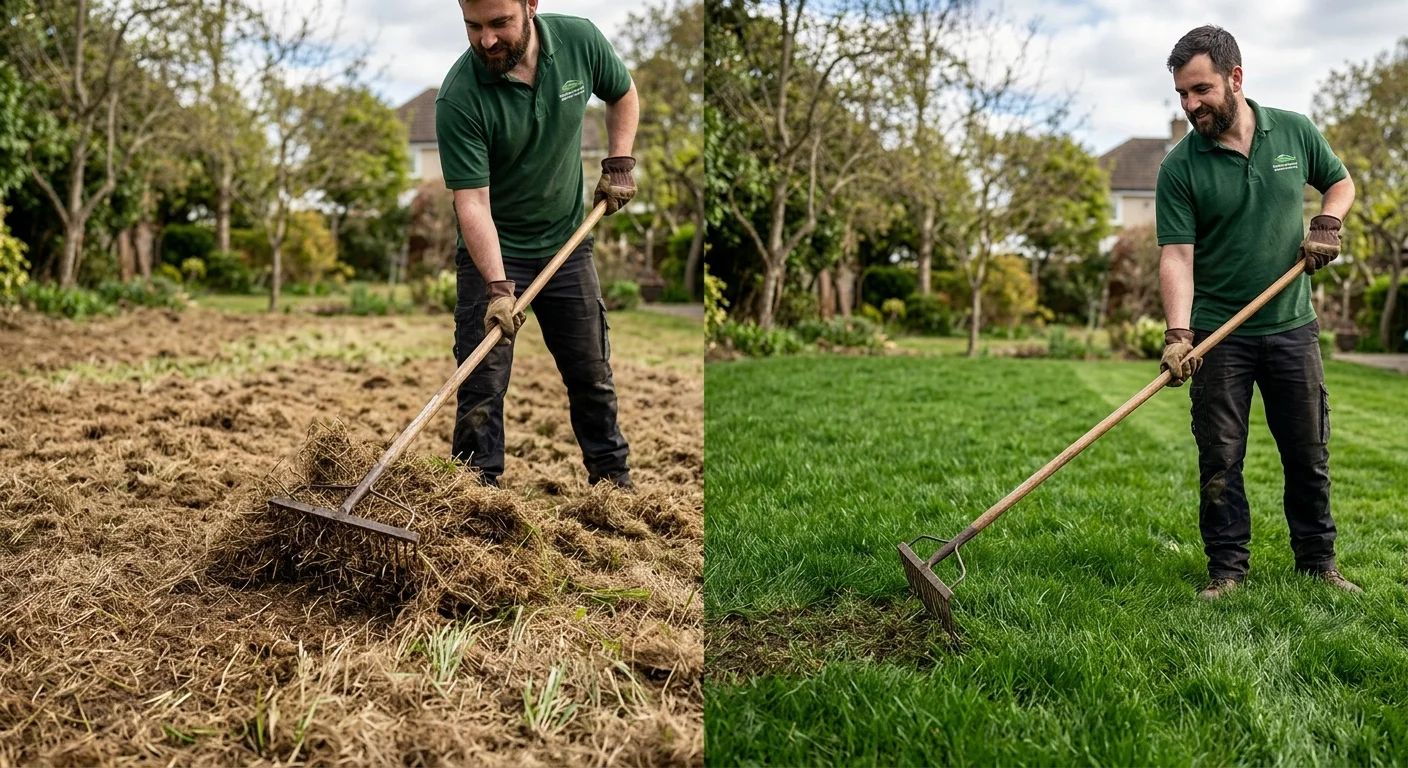
A healthy lawn works as a system: roots, soil, and grass blades all feeding each other. Thatch is what breaks that system. It’s a dense, matted layer of dead and decaying grass stems, roots, and organic debris that builds up between the green grass blades and the soil surface. It’s not just a little bit of leaf litter; it’s a tight, interwoven mat that can become incredibly thick.
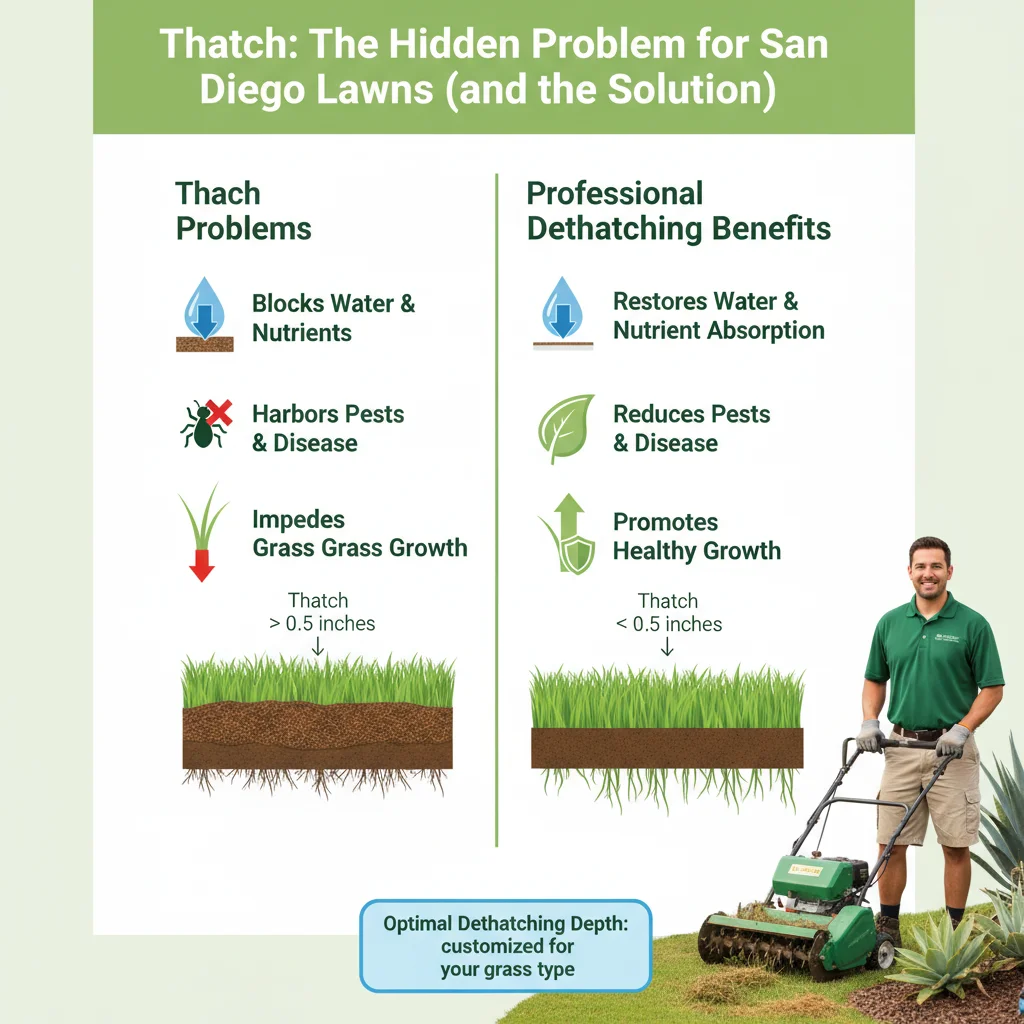
Think of thatch like a heavy, water-repellent blanket on your bed. A thin blanket is cozy, but too thick, and it’s uncomfortable and traps heat. Similarly, a very thin layer of thatch (less than half an inch) can actually be beneficial, protecting soil from temperature swings and reducing water evaporation. However, when it gets thicker, it becomes a major issue for San Diego lawns.
Our warm climate often encourages vigorous grass growth, which, without proper care, can quickly contribute to thatch buildup, especially in grasses like Bermuda and Kikuyu common here. This dense layer acts as a barrier. It blocks water and nutrients from reaching the soil and grassroots, essentially starving your lawn even if you’re watering and fertilizing regularly. That’s why consistent lawn fertilization and care are essential, especially once thatch is addressed. It also creates a perfect breeding ground for pests and diseases, and makes your lawn more vulnerable to heat stress, a big concern during our hot San Diego summers. Excessive thatch also prevents new grass from emerging properly, leading to thin spots and an overall unhealthy appearance.
How to tell if your lawn has a thatch problem
Identifying thatch is simpler than you might think. You don’t need special tools, just a keen eye and a trowel. Start by walking across your lawn. Does it feel unusually springy or spongy, almost like walking on a thick cushion? That’s often a tell-tale sign.
For a more precise check, grab a small hand trowel or a spade. Dig up a small section of your lawn, about 2-3 inches deep, including the grass blades, roots, and soil. Once you have this cross-section, examine the layer between the green grass blades and the underlying soil. You’re looking for a brownish, fibrous, spongy layer. Measure its thickness. If this layer is more than half an inch thick, your San Diego lawn likely has a thatch problem that needs attention.
Other indicators include a lawn that doesn’t seem to absorb water efficiently – puddles might form on the surface, or water runs off, rather than soaking in. You might also notice your lawn struggling despite regular irrigation, developing brown patches, or showing signs of increased pest activity. Even with diligent weekly lawn maintenance, excessive thatch can undermine all your efforts. Catching thatch early prevents it from becoming a more severe issue, saving you time and money in the long run.
The best time of year to dethatch in our climate
Timing is crucial when it comes to dethatching, especially in San Diego’s unique climate. You want to dethatch when your grass is actively growing and can quickly recover from the stress of the process. For warm-season grasses like Bermuda, Kikuyu, and St. Augustine – which are prevalent in our region – the ideal time is late spring through early summer, typically April to June. This period allows your lawn to heal and fill in any bare spots before the hottest part of summer arrives.
If you have cool-season grasses like Tall Fescue, which some homeowners opt for, the best time to dethatch would be in early fall, around September or October. However, warm-season grasses dominate most San Diego landscapes, making spring/early summer the prime window for most residents.
Dethatching at the wrong time, such as during the dormant season or extreme heat, can severely damage your lawn. During dormancy, your grass doesn’t have the energy to recover, leading to prolonged stress and potential death. Dethatching during peak summer heat can also stress your lawn, leaving it vulnerable to drought and disease. The goal is to remove the harmful thatch without causing undue stress to your healthy grass. The San Diego County Water Authority (SDCWA) emphasizes efficient water use, and a dethatched lawn can absorb water much more effectively, contributing to water savings.
Dethatching vs. core aeration: what’s the difference?
Many homeowners confuse dethatching with core aeration, or mistakenly think they achieve the same results. While both processes aim to improve lawn health, they tackle different problems and use different methods.
Dethatching, also known as power raking, specifically targets that dense, fibrous layer of thatch sitting above the soil surface. It uses specialized equipment with rotating tines or blades to physically lift and remove this matted organic debris. The primary goal is to break up and pull out the thatch, allowing air, water, and nutrients to reach the soil.
Core aeration, on the other hand, focuses on relieving soil compaction below the surface. It uses a machine that pulls small plugs, or “cores,” of soil, grass, and thatch out of the lawn. This creates small holes, allowing air, water, and fertilizer to penetrate deep into the root zone. Aeration improves drainage, encourages deeper root growth, and can help break down a thin layer of thatch over time by introducing soil microbes into it.
While core aeration can indirectly help manage very light thatch, it’s not designed to remove thick, established layers. If you have more than half an inch of thatch, dethatching is the direct and more effective solution. After dethatching, especially if significant thatch was removed, some homeowners choose to perform core aeration and overseeding to further enhance soil health and promote dense, new growth. You can learn more about the benefits and timing of this complementary process in our guide on lawn aeration and overseeding in San Diego. Often, these two services work best in tandem, but they are distinct processes addressing different lawn issues.
Why professional dethatching is safer for your lawn
Dethatching might sound straightforward – just remove the dead stuff, right? However, using a power rake or dethatching machine incorrectly can cause significant damage to your San Diego lawn. DIY dethatching comes with several risks that can set your lawn’s health back months, or even require extensive repairs.
One of the biggest risks is setting the dethatching machine’s depth too aggressively. If the blades dig too deep, they can tear into healthy grass roots, leading to large bare patches and damaging your irrigation system. An inexperienced hand can also miss areas, leaving uneven thatch removal, or go over the same spot too many times, causing unnecessary stress. Different grass types and varying thatch thicknesses require a nuanced approach, something a general homeowner might not realize.
The professional landscapers in our network have the right equipment and, more importantly, the expertise to assess your lawn’s specific needs. They understand the optimal depth settings for different grasses and thatch levels in San Diego. They know how to operate the machinery efficiently and safely, minimizing stress to your lawn while effectively removing the thatch. They also know when not to dethatch, preventing harm during vulnerable periods.
Hiring a professional ensures the job is done correctly the first time, protecting your investment in your lawn and preventing costly mistakes. They also properly dispose of the large amount of thatch debris, saving you the hassle. Plus, professional dethatching is often integrated with a broader lawn care plan, including services like lawn fertilization and care and post-dethatching clean-up, ensuring your lawn recovers quickly and thrives. This expertise helps your lawn become healthier, more resilient, and more beautiful, enhancing your home’s curb appeal without the DIY headache. You can always check a contractor’s California State License Board (CSLB) license to confirm their qualifications before you hire: www.cslb.ca.gov.
Frequently asked questions
What is thatch and when does it become a problem?
Thatch is the dense, matted layer of dead and decaying grass stems, roots and organic debris that builds up between the green blades and the soil. A thin layer under half an inch is actually beneficial and protects the soil. Past that it behaves like a water-repellent blanket, shedding irrigation and starving roots.
How do I know if my lawn needs dethatching?
Walk it first. A lawn that feels unusually springy or spongy underfoot is the classic sign. To confirm, cut and lift a small wedge two to three inches deep and look at the layer between the green blades and the soil surface. If that brown fibrous band is more than half an inch thick, you have a thatch problem.
When is the best time to dethatch in San Diego?
Dethatch when the grass is actively growing so it can recover from the stress. For the warm-season grasses that dominate San Diego lawns, Bermuda, kikuyu and St. Augustine, that means spring into early summer. For cool-season tall fescue, early fall around September or October is the better window.
What is the difference between dethatching and core aeration?
They solve different problems. Dethatching, also called power raking, uses rotating tines to lift and remove the matted organic layer sitting above the soil. Core aeration pulls plugs out of the soil itself to relieve compaction. A spongy lawn needs dethatching. A hard, compacted lawn needs aeration. Plenty of San Diego lawns need both, but not on the same day.
When to call us
If you’ve identified a thick layer of thatch in your San Diego lawn, or if your grass just isn’t thriving despite your best efforts, it’s time to consider professional help. Dethatching is a labor-intensive process that, when done improperly, can do more harm than good. Let Bloom Pro SD match you with a pro who can handle this essential service, ensuring your lawn gets the precise care it needs to flourish. Call us at (760) 400-6355 to get matched. The independent professional quotes the work.