A quinclorac-based post-emergent herbicide is the only thing that reliably kills crabgrass that’s already in your lawn, and it only works well on young plants with one to three tillers. Once crabgrass matures into thick, seed-headed clumps in late summer, herbicide gets unreliable and hand-pulling before it drops seed is often the more realistic move. Either way, crabgrass leaves bare soil behind when it dies at the first cool snap, so the real fix isn’t just killing this year’s plants. It’s closing the gap it leaves and getting pre-emergent down before next year’s crop germinates.
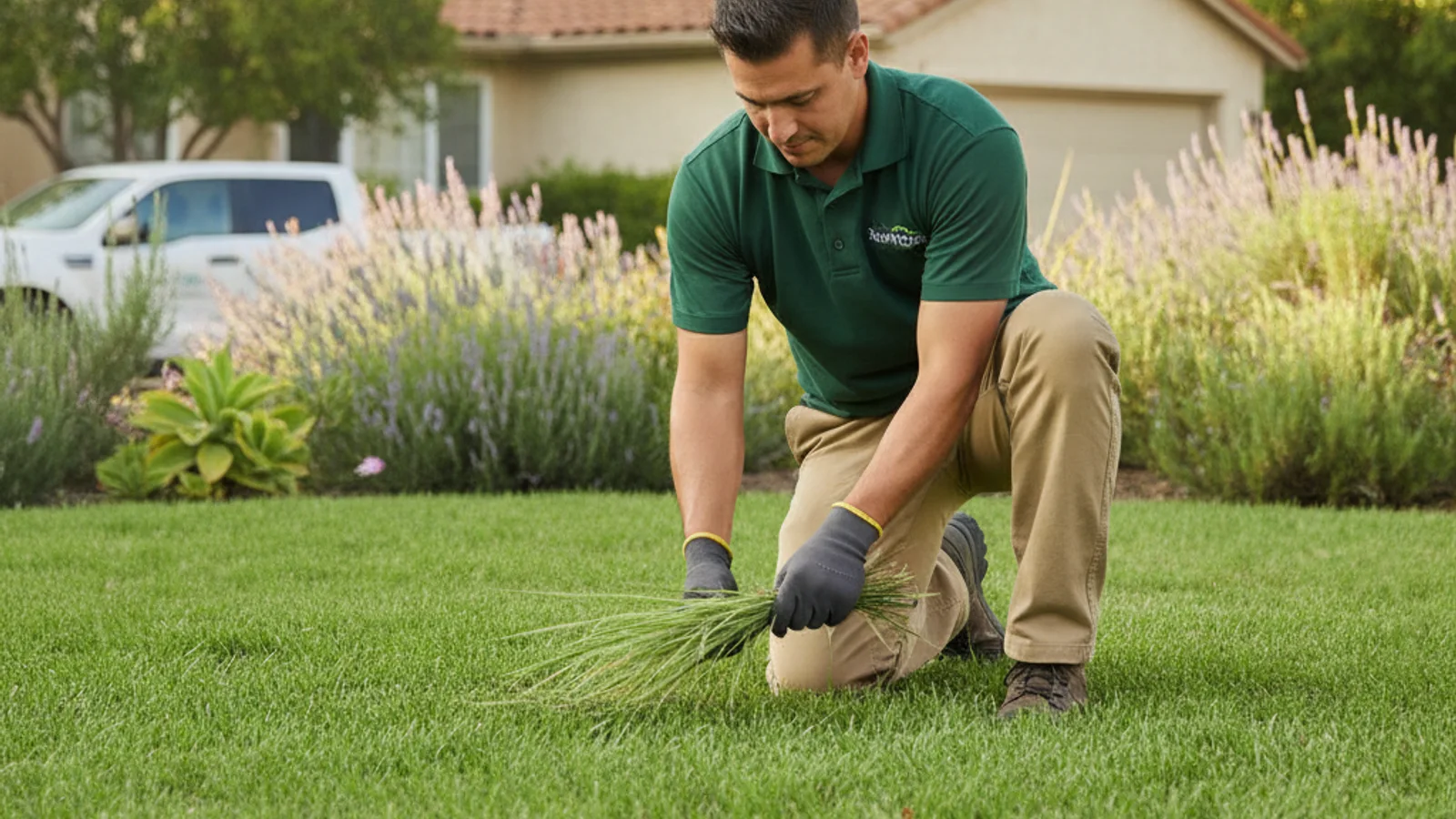
If you’re staring at a patch of coarse, pale-green grass sprawling low across your lawn right now, you’re not alone. This is peak crabgrass season across San Diego County, and it shows up in the same spots every year: sunny strips along driveways, sidewalk edges, and any section of fescue that’s thinned out from heat or foot traffic. If you’re not sure what you’re looking at, the weed identification guide walks through how to tell crabgrass apart from nutsedge, spurge, and other common San Diego lawn weeds. This post picks up from there. It’s about what to actually do once you’ve confirmed it’s crabgrass and it’s already established.
Why crabgrass takes over San Diego lawns every summer
Crabgrass is a warm-season annual, which means San Diego’s long, mild summers are exactly the conditions it wants. It germinates in soil that’s already warmed past 55 to 60°F, then grows fast through the hottest months while cool-season fescue lawns, which make up most residential turf here, are already stressed by heat and struggle to compete.
The pattern is predictable. Crabgrass shows up first along south-facing edges, next to concrete that radiates extra heat, and in any strip of lawn that’s mowed too short or watered inconsistently. Thin, weak turf can’t shade out crabgrass seedlings, so the weed gets full sun and takes the opening. By July, what started as a few sprigs near the driveway can spread into a mat several feet wide.
Post-emergent herbicide: what actually kills it and what doesn’t
Quinclorac is the standard post-emergent herbicide for crabgrass in home lawns, and it’s selective, meaning it targets crabgrass without killing cool-season turf grasses like fescue when used as labeled. It works best on young crabgrass with one to three tillers, the early growth stage before the plant has branched out and thickened.
This is the part homeowners get wrong most often: many “weed and feed” products marketed for lawns only target broadleaf weeds like dandelion and clover. Crabgrass is a grass, not a broadleaf, so a standard weed and feed does nothing to it. Check the label specifically for quinclorac, or for fenoxaprop or sethoxydim as alternatives, before assuming a bag of weed and feed will handle it.
Timing matters as much as the product. Quinclorac applied to young crabgrass in June often clears it in one or two applications spaced seven to ten days apart. The same product applied to a mature, seed-headed clump in late August is far less reliable, and repeated applications on tough, established crabgrass can stress the surrounding turf without fully killing the weed. Be honest with yourself about which stage you’re dealing with before you spend money on a third round of herbicide.
Hand removal and non-chemical options that actually work
If your crabgrass is already mature and herbicide is a coin flip, hand-pulling is often the more reliable move, especially for isolated clumps rather than a lawn-wide infestation. Pull after watering or rain, when soil is soft enough that you can get the whole root system out rather than snapping off the top growth.
The reason timing matters here isn’t cosmetic. A single crabgrass plant can produce roughly 150,000 seeds before the season ends, and every one of those seeds is next year’s problem. Getting clumps out before they set visible seed heads, the wispy finger-like clusters at the top of the plant, cuts down dramatically on what you’re dealing with next summer.
For crabgrass growing in driveway or sidewalk cracks, boiling water poured directly on the plant is a genuinely effective, zero-chemical option. It won’t touch anything in the surrounding lawn, which makes it useful for hardscape edges without risking your turf. Spot solarization, covering a small patch with clear plastic for two to three weeks of full sun, can also work on isolated areas, but it kills everything under the plastic, grass included, so it’s a last resort for small bare-adjacent patches rather than a lawn-wide tool.
Comparing your crabgrass control options
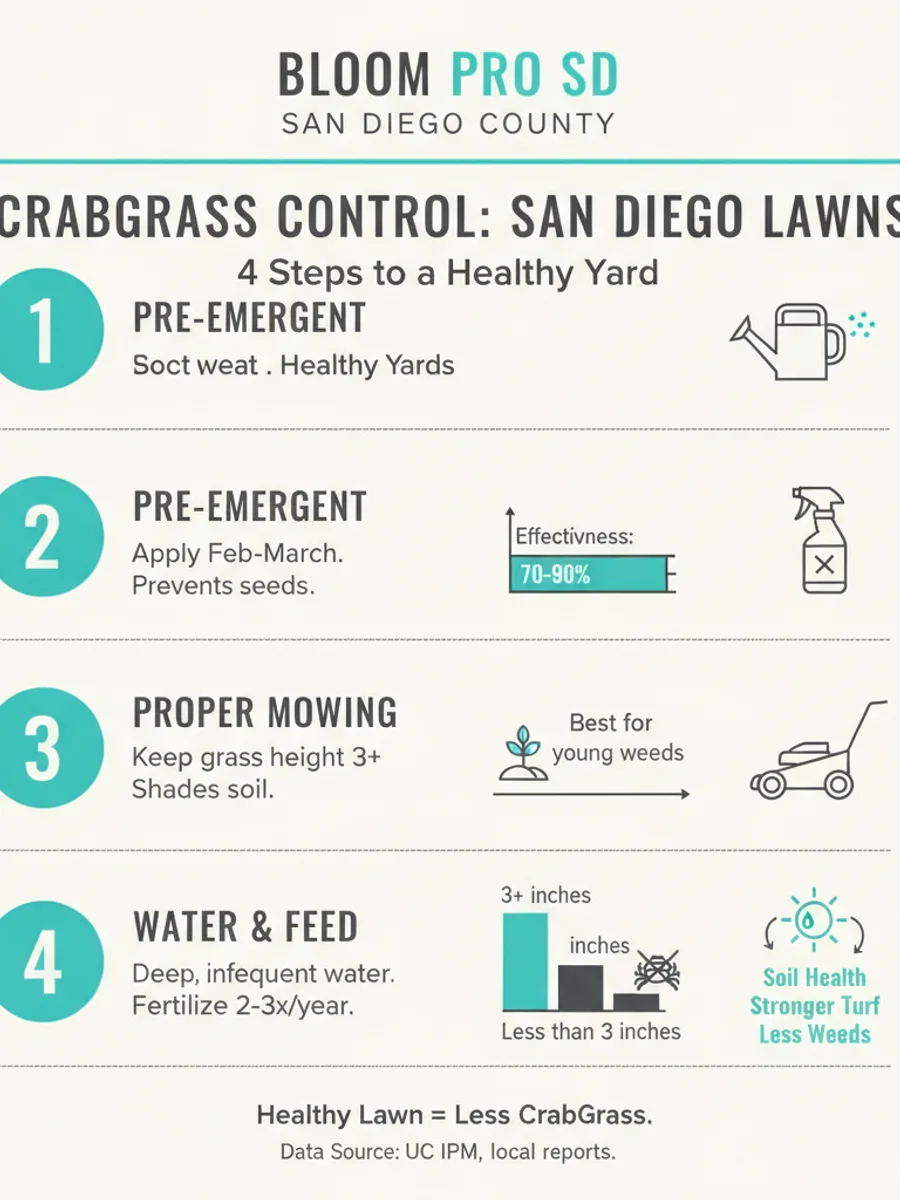
| Control method | How well it works | Best for |
|---|---|---|
| Hand-pulling | High on young or isolated plants, lower once roots are deep and widespread | Small patches, driveway edges, catching it before it seeds |
| Quinclorac post-emergent | High on young crabgrass (1-3 tillers), unreliable on mature clumps | Lawn-wide infestations caught early in summer |
| Spot treatment (boiling water, solarization) | High on hardscape cracks, kills everything on turf | Sidewalk and driveway cracks, small isolated patches |
| Lawn renovation (overseed/resod) | High for closing bare patches and blocking re-invasion | Areas where crabgrass has already died back or been removed |
| Pre-emergent next winter | High for preventing next year’s crop, does nothing for current plants | Late-winter application before soil hits 55-60°F |
Renovating the bare patches crabgrass leaves behind
Crabgrass is an annual, so it dies on its own at the first real cool snap or frost, typically sometime between late fall and early winter across San Diego County. That sounds like good news, but it usually isn’t. Crabgrass dies back and leaves bare, compacted soil exactly where it was thickest, which is prime real estate for the next round of weed seeds to move into if you leave it open.
The fix is to treat those spots like any other bare patch. Loosen the compacted soil, overseed with fescue seed matched to your existing lawn, and keep the area consistently moist while it establishes. For larger dead zones or lawns that took a beating over the summer, reviving a stressed San Diego lawn covers the broader renovation process, and sod installation is worth pricing out if the bare area is large enough that seed would take too long to fill in before next year’s germination window opens.
Stopping next year’s crabgrass before it starts
The most durable fix for crabgrass isn’t a better herbicide, it’s a thicker lawn. Fescue mowed at the right height, fed on a normal schedule, and watered deeply but infrequently shades the soil surface and starves out crabgrass seedlings before they can establish. A consistent lawn maintenance routine does more over a full season than any single herbicide application.
The other piece is timing pre-emergent correctly for next year, which is a completely different conversation from what’s covered here. Our pre-emergent timing guide breaks down the soil-temperature triggers that tell you exactly when to put pre-emergent down for San Diego’s climate, generally late January through mid-February, before this year’s seed bank has a chance to germinate.
How Bloom Pro SD helps
The landscapers we connect you with across San Diego County handle crabgrass at every stage, from spot-treating a driveway strip to a full lawn renovation after a bad summer. Weed control crews in the network can assess whether your crabgrass is still young enough for post-emergent herbicide or whether hand removal and renovation is the smarter move this late in the season, and they’ll set you up with a pre-emergent plan for next year so you’re not fighting the same patch again.
Call us at (760) 400-6355 to schedule a crabgrass assessment. Booking is always open, there’s no pressure and no upsell, and every request gets matched with landscapers who actually cover your part of the county.
Frequently asked questions
What kills crabgrass but not grass?
Quinclorac is the standard selective herbicide that targets crabgrass without harming most cool-season lawn grasses like fescue when applied as labeled. It’s most effective on young crabgrass with one to three tillers, so check the product label specifically for quinclorac rather than assuming any lawn weed killer will do the job, since many broadleaf weed and feed products don’t touch grassy weeds at all.
Will crabgrass die on its own?
Yes, crabgrass is a warm-season annual and it dies naturally at the first real cool snap or frost, usually sometime between late fall and early winter in San Diego County. The problem is it leaves bare, thinned soil behind exactly where it grew, and that bare ground is an open invitation for next year’s weed seeds unless you overseed or resod it.
When is it too late to kill crabgrass with herbicide?
Once crabgrass has matured past three tillers and developed visible seed heads, typically by late summer, post-emergent herbicide gets unreliable and can stress your turf without fully clearing the weed. At that stage, hand-pulling before the seed heads mature, followed by fall renovation of the bare spot, is usually the more realistic approach than repeated herbicide applications.
Does pulling crabgrass make it worse or spread it?
No, pulling crabgrass doesn’t cause it to spread, but leaving seed heads on the plant while you pull can shake loose seeds into the surrounding soil. Pull before the wispy finger-like seed heads fully form when possible, and bag the pulled plants rather than leaving them on the lawn if seed heads are already present.
How much does professional crabgrass and weed control cost in San Diego?
A contractor should quote post-emergent work and any season-long program after seeing the lawn. Bloom Pro SD does not publish a treatment price.