The right mulch in San Diego depends on bed type, plants, and how fast the material breaks down. Thickness is a site and material decision. Keep organic mulch 6 inches or more from trunks (UC). Replenish as it decomposes.
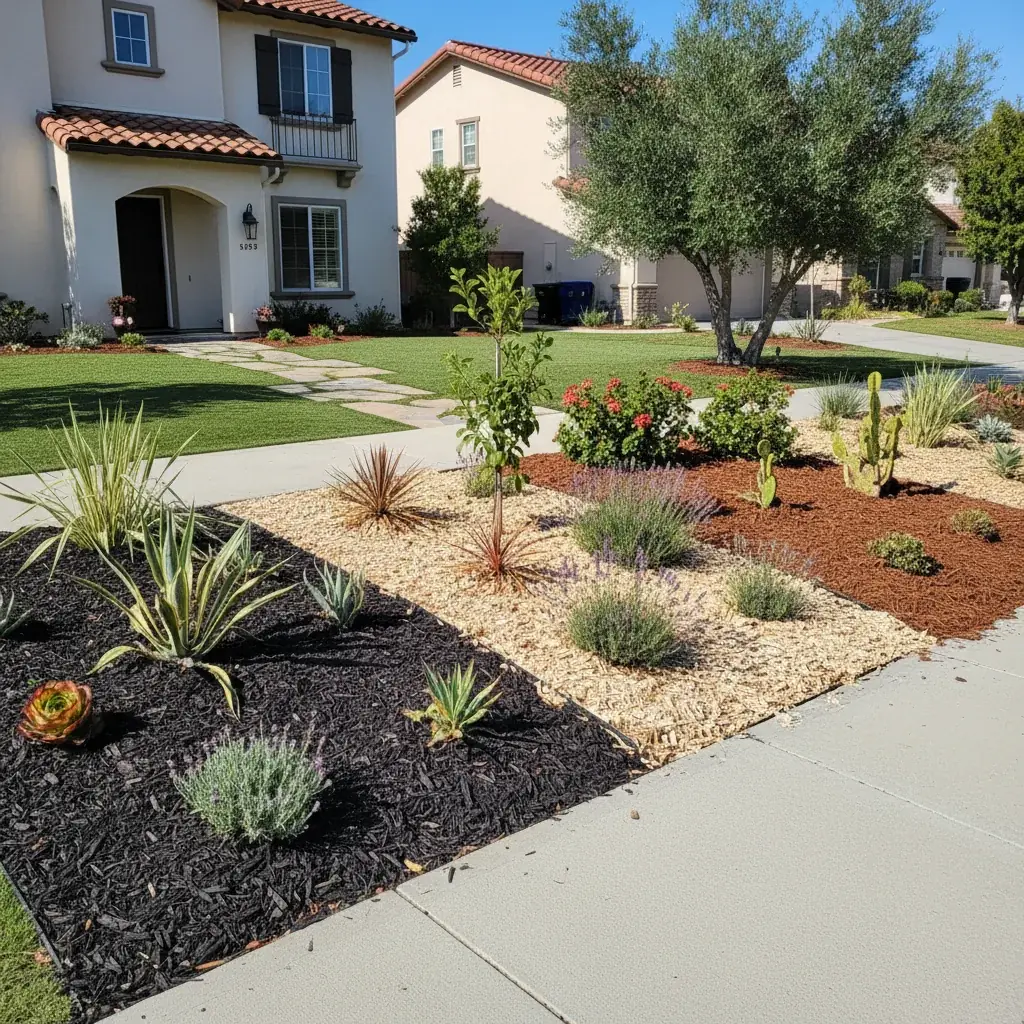
Why SD’s dry climate changes the mulch math
San Diego’s wet season is concentrated, and beds spend long dry stretches on irrigation. That changes what you need from mulch. Confirm rainfall and watering rules for your own address rather than using a county average.
In wetter climates, mulch is mainly about aesthetics and weed suppression. Here, moisture retention is the priority. A 3-inch layer of organic mulch keeps soil cooler and slows evaporation, which usually means fewer irrigation cycles. Confirm current conservation tips with your own water agency.
That moisture-retention benefit also compounds. Cooler, more consistent soil temperatures keep plant roots less stressed during the June–September heat stretches Coastal and inland San Diego yards both feel. Plants in well-mulched beds simply need less babysitting.
The dry climate also changes how fast organic mulches break down. In San Diego’s low-humidity air, shredded bark and arborist chips decompose more slowly than they would in, say, the Bay Area. That’s good news for your refresh budget. It also means fine-textured materials like gorilla hair hold together longer before wind scatters them, a real consideration if your yard faces an offshore breeze or a canyon draft.
One more climate-specific note: if your property sits in a fire-risk zone, which covers a significant portion of East County, Rancho Bernardo, and hillside neighborhoods, CAL FIRE’s Zone 0 is the first 5 feet from the structure. Combustible organic mulch does not belong in that 5-foot band. Zone 1 then runs out to 30 feet and is a different rule set. Confirm the current CAL FIRE defensible space guidelines for your address.
Shredded bark vs arborist chips vs gorilla hair: pros and cons
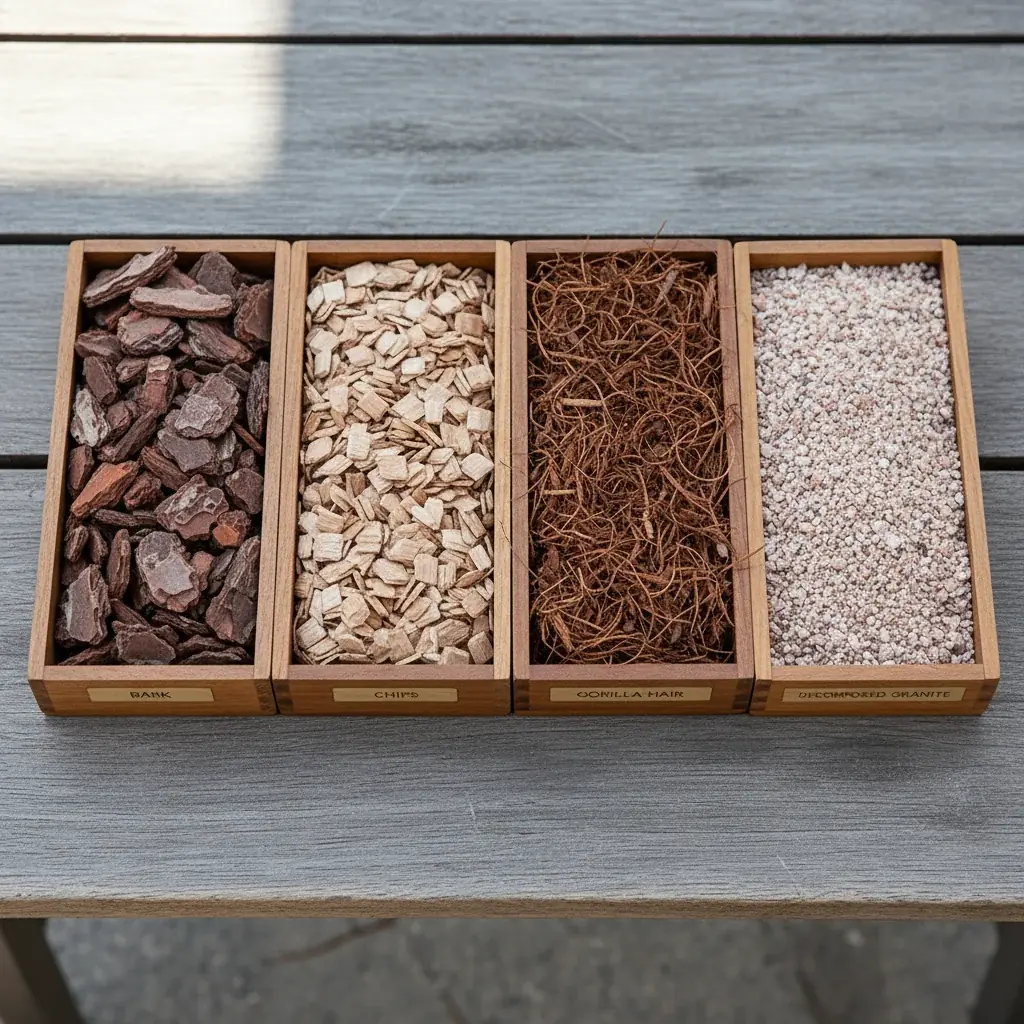
These three organic mulch types cover the majority of residential beds in San Diego. Each has a distinct use case.
Shredded bark
Shredded bark, typically fir, cedar, or pine, is the classic choice for ornamental beds and front-yard curb appeal. It compacts slightly over time, which actually helps it resist displacement in wind. It looks tidy, comes in a range of dye colors (natural to dark brown to black), and breaks down slowly enough that a 3-inch application typically lasts 18–24 months before a meaningful top-dress is needed.
The downside: dyed bark can fade in San Diego’s intense UV exposure faster than manufacturers suggest. After six months, some black-dyed products turn orange-gray. If color consistency matters to you, opt for natural cedar or go with a product specifically rated for UV stability.
Arborist wood chips
Arborist chips are raw, unprocessed chips from tree trimming, a mix of wood, bark, and sometimes leaves. They’re chunkier and less uniform than shredded bark, which gives them a more natural, woodland look that pairs well with native and drought-tolerant plantings. The UC Master Gardeners of San Diego County frequently recommend arborist chips for their soil-building properties, as they feed beneficial fungi as they break down.
Cost is a major advantage. Many arborists in San Diego will deliver a full load (roughly 10 cubic yards) for free or low cost to avoid landfill fees. The catch: you get what they’re chipping that week, so consistency varies. They also tend to float and scatter more than shredded bark in heavy irrigation runoff.
Gorilla hair mulch
Gorilla hair is shredded redwood or cedar bark processed into long, fibrous strands that mat together like felt once laid. That interlocking texture is what sets it apart, it’s extremely resistant to slope erosion and wind displacement, making it a go-to choice for hillside beds, raised berms, and any yard with a drainage gradient. It’s widely available at local nurseries and big-box stores in San Diego.
The trade-off is water penetration. A tightly matted gorilla hair layer can initially shed irrigation water rather than letting it soak through. Break it up lightly before laying it, and apply in 2–3 inch layers rather than 4 inches, to keep permeability high.
Decomposed granite and gravel for drought-tolerant beds
Inorganic mulches, decomposed granite (DG), crushed gravel, river rock, belong in a different category. They don’t feed the soil, but they don’t decompose either, which means a one-time investment with no refresh cycle. For drought-tolerant landscaping, agaves, ornamental grasses, native salvias, succulents, inorganic mulch often makes more sense than organic.
DG in particular is a natural fit for San Diego yards. It comes in tan, gold, and reddish hues that complement the region’s earthy palette. Stabilized DG (mixed with a polymer binder) firms up enough to walk on without tracking into the house. Unstabilized DG stays looser and works better as a pure planting-bed cover.
Gravel and river rock excel as mulch around cacti and other succulents where the goal is to reflect heat and prevent crown rot. Just be aware that dark gravel can raise surface temperatures significantly in full-sun beds, that’s fine for heat-lovers, less ideal for shallow-rooted perennials.
One limitation of inorganic mulch: it does nothing for soil biology. If you’re building a garden that will evolve over time, plan to amend the soil at planting rather than relying on mulch decomposition to do the work.
Depth, refresh frequency, and weed suppression
UC IPM says mulch thickness is one of the factors that changes weed control and how water reaches the root zone. Ask the contractor to name the planned depth for each bed. Too thin and weeds get light. Too thick and irrigation can sit or miss roots. Follow the product and plant, not a county-wide inch rule.
For weed control specifically, depth matters more than material. A 3-inch layer of arborist chips blocks just as much light as 3 inches of shredded bark. What differs is how quickly gaps appear as material settles and decomposes. Dense, fine-textured materials like gorilla hair tend to hold their depth longer between refreshes.
Organic mulch decomposes, settles, and moves, so plan to replenish it. How often depends on material, slope, wind, and irrigation, not a published San Diego calendar.
UC IPM notes that mulch can be combined with a preemergence herbicide, with placement and product as separate decisions. Use the label and a confirmed weed identity. Do not assume a February soil-temperature trigger for every bed.
Mulch volcano mistakes and what they cost you
A mulch volcano is exactly what it sounds like, mulch piled up against a tree trunk or shrub crown in a cone shape. It’s one of the most common landscaping errors in San Diego yards, and it consistently causes real damage.
When organic mulch stays in constant contact with bark, it holds moisture against tissue that needs to stay dry. Over months, that leads to bark rot, fungal disease, and sometimes irreversible cambium damage. On established trees, a bad mulch volcano can weaken the root crown enough that a strong Santa Ana wind becomes a real hazard.
The fix is simple: UC IPM says keep organic mulch 6 inches or more back from trunks. Pull it back if you can see it touching bark. The mulch ring should be flat or even slightly concave near the base of the plant, a “donut,” not a volcano.
Mulch piled against a trunk can rot bark and kill the plant. Keep it pulled back. It’s worth getting right.
Cost ranges by yard size and material
Mulch pricing in San Diego varies by material, delivery, and how much prep the beds need. Arborist chips are often cheap or free from a local tree crew. Shredded bark, gorilla hair, and decomposed granite cost more and depend on the yard. Get a written bid. A mulching and bed refresh visit that includes edging, old-mulch removal, or pre-emergent will land higher than a dump-and-spread.
If you’re thinking about converting irrigated lawn area to mulched, drought-tolerant beds to reduce your water bill, it’s worth reading through the rebate options available through SoCal WaterSmart, San Diego County homeowners may qualify for turf replacement rebates that offset a portion of the conversion cost.
Frequently asked questions
What is the best mulch for San Diego beds?
It depends on the bed. Shredded bark is the tidy choice for ornamental front-yard beds and resists wind displacement as it compacts. Arborist wood chips are the cheapest, often free or near-free delivered by local tree crews, and suit native and drought-tolerant planting. Gorilla hair is the slope answer, because its fibrous strands mat together and hold on a grade better than loose bark chips.
What is gorilla hair mulch and when should you use it?
Gorilla hair is shredded redwood or cedar bark processed into long fibrous strands that interlock like felt once laid. That matting is why it holds on slopes and in wind where bark and chips wash or blow away. The trade-off is water penetration: a tightly matted layer can shed irrigation at first, so break it up lightly and lay it 2 to 3 inches deep rather than 4.
How deep should mulch be, and how often does it need refreshing?
Ask for a written depth. UC IPM treats thickness as a site and material decision. Depth matters for weed light, but the same inch count does not make two materials equivalent on a slope or under drip.
Why is piling mulch against a trunk a problem?
A mulch volcano holds moisture against bark that needs to stay dry. Over months that causes bark rot, fungal disease and sometimes irreversible cambium damage, and on an established tree a bad one can weaken it significantly. Pull mulch back from trunks and shrub crowns so the flare is visible.
When to call us
If your beds cover more than a few hundred square feet, have significant slope, or you’re not sure whether your current mulch is contributing to plant stress, a professional assessment saves you from guessing. The pros we match you with handle material selection, bed prep, pre-emergent application, and install, so you get the right mulch at the right depth without the Saturday-afternoon math. Call us at (760) 400-6355 to get matched. The independent professional quotes the work.