San Diego maintenance follows grass type, coastal or inland heat, water-agency hours, and product labels. A month-by-month list is a reminder, not a county recipe. Pre-emergent, fertilizer, and prune timing still need soil temperature, plant ID, and the bag or UC page, not a date alone.
Why generic monthly checklists fail in our climate
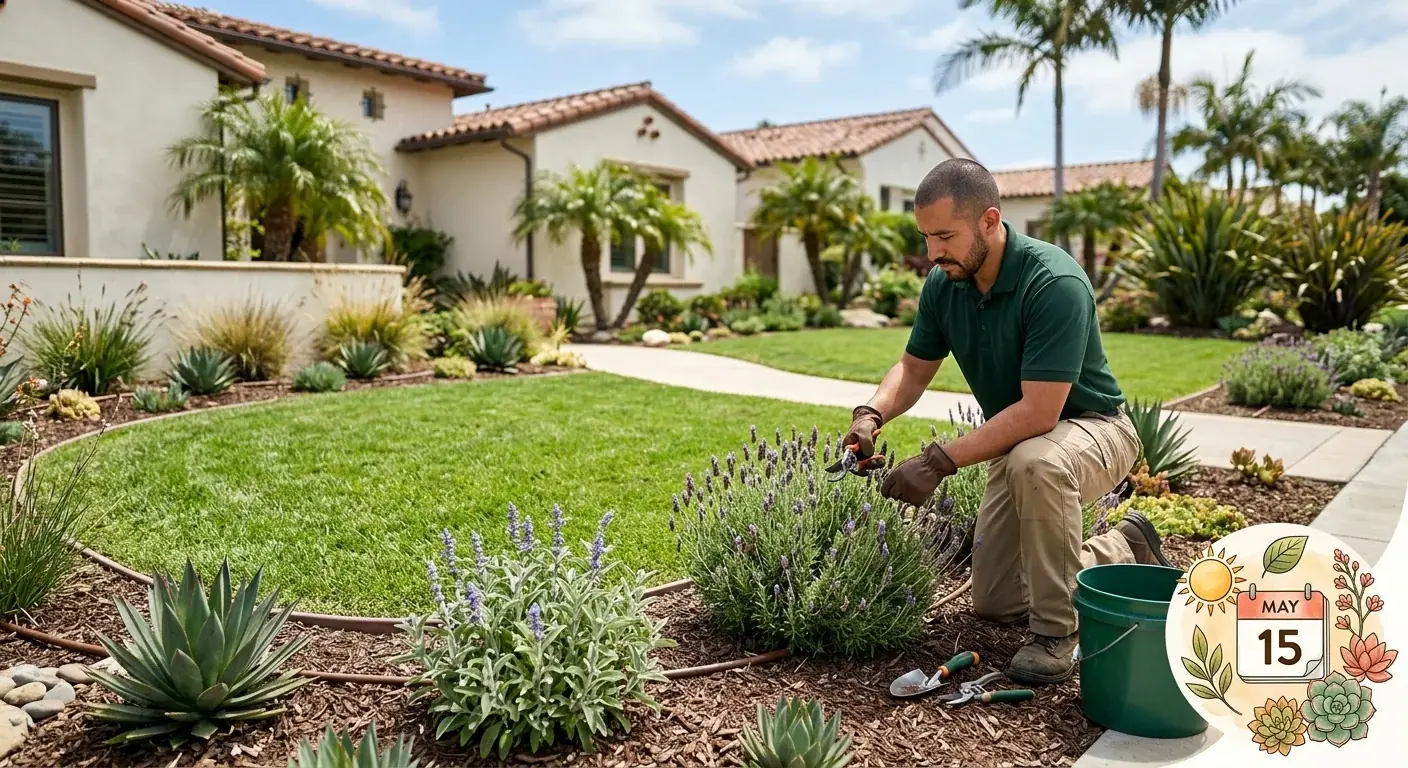
San Diego isn’t like the rest of the country. We don’t experience four distinct, dramatic seasons. Instead, our climate blends Mediterranean influences with coastal and inland variations, creating numerous microclimates across the county. This means a one-size-fits-all monthly maintenance guide simply won’t work for your San Diego yard.
For example, homeowners in regions with heavy snowfall spend winter preparing for spring thaw. Here, we’re focused on cool-season plant growth and managing occasional, lighter rains. Our summers bring prolonged dry heat, demanding careful irrigation strategies and drought-tolerant plant care, rather than consistent humidity-driven concerns. Traditional checklists might advise heavy pruning in late fall, which could expose sensitive San Diego plants to rare but damaging winter frosts. They often overlook the critical importance of fire-wise landscaping that defines our dry season.
Understanding these local nuances is key. Your cool-season lawn grasses, like tall fescue, behave differently than warm-season varieties such as Bermuda grass. Drought-tolerant shrubs and succulents have their own unique seasonal requirements. Water conservation is also a constant consideration, influencing everything from irrigation schedules to plant choices. Relying on generic advice can lead to wasted effort, unhealthy plants, and higher water bills. A local approach ensures your landscape thrives while respecting our environment.
January through March: cool-season feeding and pre-emergent
San Diego’s “winter” is typically mild, making these months ideal for specific cool-season tasks.
January
It’s a prime time for dormant pruning. Tackle deciduous trees and shrubs, shaping them for spring growth. Many fruit trees benefit from winter pruning now. Keep an eye on winter weeds, pulling them by hand or spot-treating before they establish. Your lawn will need minimal water; reduce irrigation frequency significantly. Focus on cleaning up fallen leaves and debris, especially in beds, to prevent fungal issues.
February
This month is crucial for proactive weed prevention. Apply a pre-emergent herbicide to your lawn and garden beds to stop spring weeds from germinating. Timing is everything for this task, and our local climate means it usually happens earlier than in other parts of the country. You can learn more about precise timing for San Diego weed control. If you have a cool-season lawn, a light application of cool-season lawn fertilizer can give it a boost. Inspect your irrigation system for any leaks or damage that might have occurred during winter’s less frequent use. Address any issues promptly to prepare for spring.
March
As days lengthen and temperatures gradually climb, begin spring planting for cool-season annuals. Pansies, snapdragons, and calendulas add immediate color. Start adjusting your irrigation schedule, gradually increasing run times or frequency to meet the emerging needs of your plants. Continue to monitor for new weed growth. A proactive approach to weed control now prevents bigger problems later. For lawns, if you haven’t already, a balanced lawn fertilization sets the stage for healthy growth in the coming months.
April through June: warm-season ramp-up and irrigation tuning
These months mark the transition from mild spring to the early heat of summer, demanding adjustments in your landscape care.
April
This is when warm-season grasses, like Bermuda and St. Augustine, begin their active growth phase. If you have these varieties, it’s time for their first fertilization of the year. For all plants, continue to prune spring-flowering shrubs and trees after they’ve finished blooming. This encourages new growth and preserves their shape. Crucially, now is the time to thoroughly check your irrigation system. Look for broken sprinkler heads, clogged emitters, or leaky pipes. A functioning system is essential as dry weather approaches. Regular lawn maintenance should be in full swing, with mowing heights adjusted for optimal health.
May
Temperatures are rising steadily, so increase your watering frequency and duration accordingly. Deep, infrequent watering is generally better than shallow, frequent watering, promoting deeper root growth. Prepare your garden for the upcoming summer heat by adding a layer of mulch to retain soil moisture. Begin monitoring for common San Diego pests, such as aphids, which become more active in warmer weather. Ensure your lawn mowing height is slightly higher to protect grass blades from the sun. The San Diego County Water Authority (SDCWA) offers excellent resources on efficient outdoor water use, which is critical during this period. You can find their tips at sdcwa.org.
June
Summer officially arrives, bringing more intense heat and sunshine. Continue to monitor your irrigation system, making further adjustments based on weather and plant needs. Consider installing a smart irrigation controller to optimize water use. Deep watering becomes even more important for established plants. Watch for signs of heat stress, such as wilting or discolored leaves, and address them by ensuring adequate water. Consistent lawn maintenance keeps your turf healthy and resilient through the start of summer. This is also a good time to check that your sprinklers are hitting only your plants and not wasting water on sidewalks or driveways.
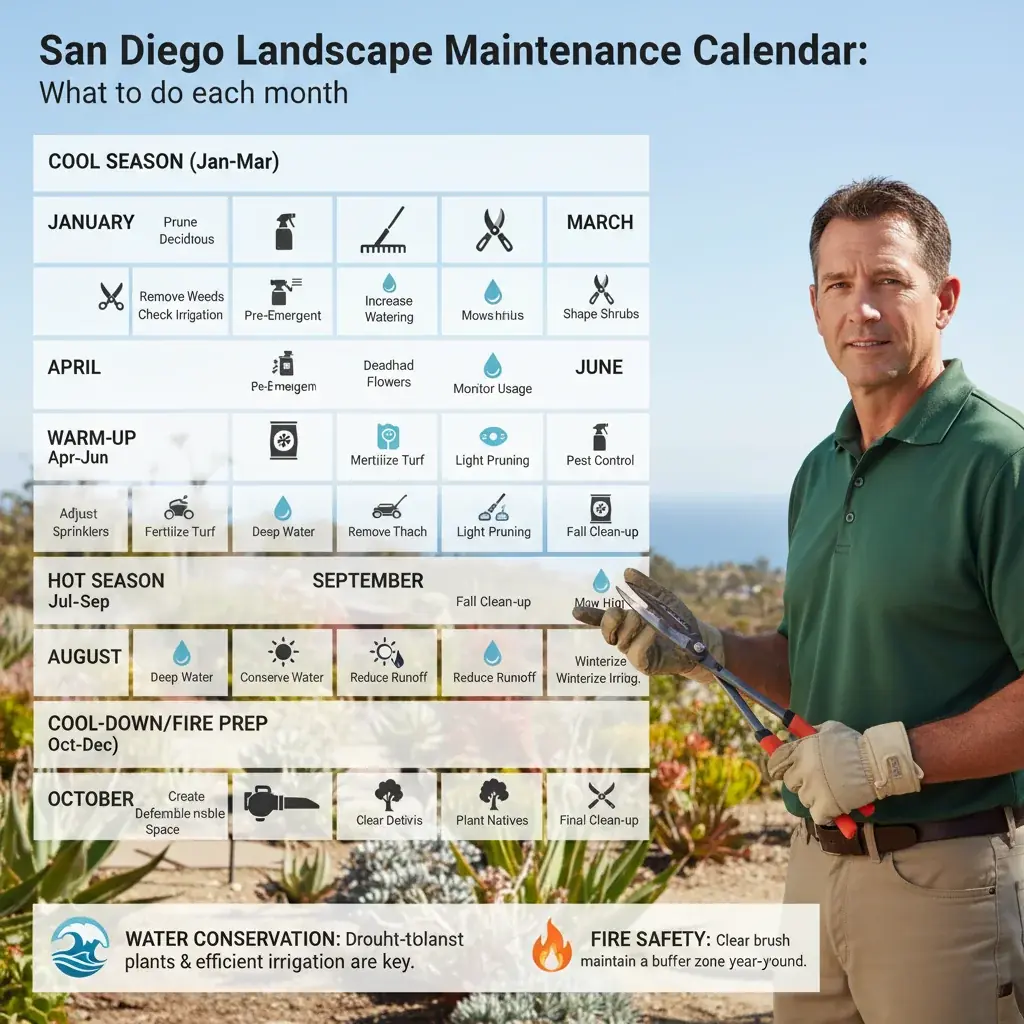
July through September: heat stress and deep watering
These are San Diego’s hottest and driest months, requiring careful attention to water and plant health.
July
Deep watering is paramount now. Ensure your plants, especially established trees and shrubs, get enough water to penetrate their root zones. Water early in the morning to minimize evaporation. Avoid heavy pruning during this intense heat, as it can stress plants further. Instead, focus on removing only dead or diseased branches. Monitor plants for signs of heat stress like drooping, yellowing, or browning foliage, and adjust watering as needed. Consider adding temporary shade for particularly sensitive plants.
August
Maintain your deep watering schedule. Continue to monitor for pests that thrive in hot, dry conditions, such as spider mites, and address them with appropriate, low-impact solutions. A light, balanced feeding might benefit stressed plants, but avoid heavy fertilization which can burn roots in the heat. Spot-treat any persistent weeds. For lawns, keep mowing heights higher to provide more shade for the soil and roots. Regular checks of your irrigation system will help catch any issues before they become major problems, ensuring your plants get the water they need.
September
While still warm, the days are slowly beginning to shorten. Start preparing your beds for fall planting by amending soil with compost. You can begin reducing watering slightly as temperatures slowly cool down, but remain vigilant, as heat waves can still occur. Consider light cleanup of spent annuals and minor pruning to shape plants without causing stress. For cool-season lawns, late September can be an ideal time for aeration and overseeding, if your turf needs revitalization after the summer. This helps new grass establish before cooler weather sets in.
October through December: cleanup, mulch refresh, and fire prep
As temperatures cool, these months are about refreshing your landscape, preparing for winter, and focusing on essential fire safety.
October
This is a great month for significant seasonal cleanup. Clear out dead annuals, prune back perennials, and remove any accumulated debris from garden beds. Fall is an excellent time for planting new trees, shrubs, and perennials in San Diego, allowing them to establish roots before spring. Amend your soil with organic matter to prepare for next season’s growth. Consider applying a fall pre-emergent herbicide to tackle cool-season weeds.
November
Refresh your garden beds with a fresh layer of mulch. Mulching helps retain soil moisture, suppress weeds, and regulate soil temperature, providing a neat and tidy look. While hard freezes are rare in San Diego, protecting sensitive plants with covers during exceptionally cold nights can be beneficial. Continue with general cleanup, raking leaves and ensuring gutters are clear. If you haven’t already, plant cool-season vegetables like lettuce, spinach, and broccoli in your garden. For effective mulching practices, choose materials that complement your landscape and provide maximum benefit.
December
Focus on final cleanup tasks, removing any remaining debris and ensuring your landscape is tidy for the mild winter. This is also a critical time for fire-wise landscaping prep, especially in inland or canyon-adjacent areas. Create and maintain defensible space around your home by clearing brush, dead plant material, and flammable debris. Trim lower branches of trees and ensure proper spacing between plants. The University of California Cooperative Extension (UC IPM) provides valuable guidance on fire-wise plant selection and maintenance, which is an essential resource for San Diego homeowners. Lightly prune any plants that need shaping, but avoid heavy pruning that could stimulate new growth vulnerable to a cold snap.
What to skip, chores that don’t apply in San Diego
San Diego’s unique climate means you can cross several common landscaping tasks off your list. Many monthly maintenance guides are written for regions with harsher winters and more traditional seasonal shifts, making their advice irrelevant for us.
For starters, extensive winterizing of outdoor plumbing and irrigation systems, common in freezing climates, is rarely necessary here. Our occasional cold snaps are typically mild enough that pipes don’t freeze solid, especially if they’re properly insulated. You also won’t be dealing with heavy snow removal or complex preparations for spring thawing. The ground rarely freezes to any significant depth.
Another common chore you can largely skip is the massive leaf raking efforts seen in deciduous forests. While some trees lose leaves, the volume is generally far less, and many of our plants are evergreen or semi-deciduous. You also don’t need to worry about preparing plants for prolonged periods of dormancy due to hard freezes. Our plants experience more of a “rest” period rather than a deep dormancy.
Instead of these traditional tasks, your San Diego landscape maintenance should prioritize water conservation, drought tolerance, and fire safety. These are the true year-round challenges and opportunities in our beautiful region.
Frequently asked questions
Why do national monthly garden checklists not work in San Diego?
Because they are written for four distinct seasons we do not have. Our Mediterranean climate blends coastal and inland variation into many microclimates across one county, and the tasks that structure a Midwest calendar, preparing for a spring thaw, winterizing plumbing, do not apply. Our real dividing lines are the dry season and the growth cycle of warm-season versus cool-season grass.
What should I do in the January to March window?
Cool-season feeding and pre-emergent. This is when fescue is actively growing and takes its spring feeding, and mid-February is the application window for pre-emergent against summer weeds like crabgrass, spurge and goosegrass. Miss that window by three or four weeks and most of the benefit is gone.
What are the July to September priorities?
Heat stress management and deep watering. These are San Diego’s hottest, driest months, and the failure mode is shallow frequent watering that leaves roots near the surface. Longer, less frequent cycles, correct mowing height, and holding off on fertilizing stressed turf are the things that carry a lawn through.
What tasks can San Diego homeowners skip?
Most cold-climate winterizing. Extensive winterizing of outdoor plumbing and irrigation is rarely needed here because our cold snaps are mild and pipes do not freeze solid. Deep mulching for frost protection is also unnecessary in most coastal and inland valley neighbourhoods, though 2 to 3 inches of mulch is always worth having for moisture retention.
When to call us
While many of these tasks are manageable for a homeowner, some projects benefit from professional expertise. If you’re tackling a major seasonal cleanup, need help with precise lawn fertilization schedules, require comprehensive weed control, or want consistent expert lawn maintenance, Bloom Pro SD is here to help. The pros in our network understand San Diego’s unique climate and deliver tailored solutions. Call us at (760) 400-6355 to get matched. The independent professional quotes the work.