Artificial turf still needs care even though it does not need mowing or routine irrigation. Brushing, cleaning, and inspections help address matting, debris, pet residue, and damage before small problems become harder to repair.
San Diego’s climate actually makes turf maintenance easier than most places. There’s no snow load, no freeze-thaw cycle, and no heavy leaf drop in most yards. What our climate does bring is intense summer UV, long dry stretches that let dust and pollen build up on the blades, and, for anyone near the coast, salt air that settles into the fibers. A little routine care handles all of it. If you are still at the approval stage rather than the upkeep stage, start with what HOAs can and cannot say about artificial turf in San Diego.
What artificial turf maintenance actually involves
Real artificial turf maintenance in San Diego breaks into four recurring tasks: rinsing, brushing, infill top-ups, and weed checks along the edges. None of them take long, and none of them need special equipment beyond a hose and a stiff push broom.
Rinsing can remove dust, pollen, and residue. Follow the turf manufacturer’s cleaning instructions and adjust to actual use: pet areas and visibly dirty surfaces usually need attention sooner than low-traffic decorative areas. Confirm that water is draining rather than pooling before adding more.
Brushing can lift blades that have matted in high-traffic paths, such as the route from a patio door to a side gate. Use only tools and techniques approved by the product manufacturer; aggressive brushing can damage some fibers or disturb infill.
Infill checks matter because the specified infill can support blades and help the installed system perform as designed. If the backing becomes visible or a high-traffic area feels or looks different, ask the installer or manufacturer whether the infill needs redistribution or replacement. Do not assume every turf system uses the same material or depth.
Edge and seam checks catch the two failure points that actually shorten turf’s lifespan: weeds pushing up through seams, and edges pulling away from the border material. A quick walk of the perimeter every couple of months, pulling any weeds by hand before they establish a root system under the turf, prevents a much bigger fix later.
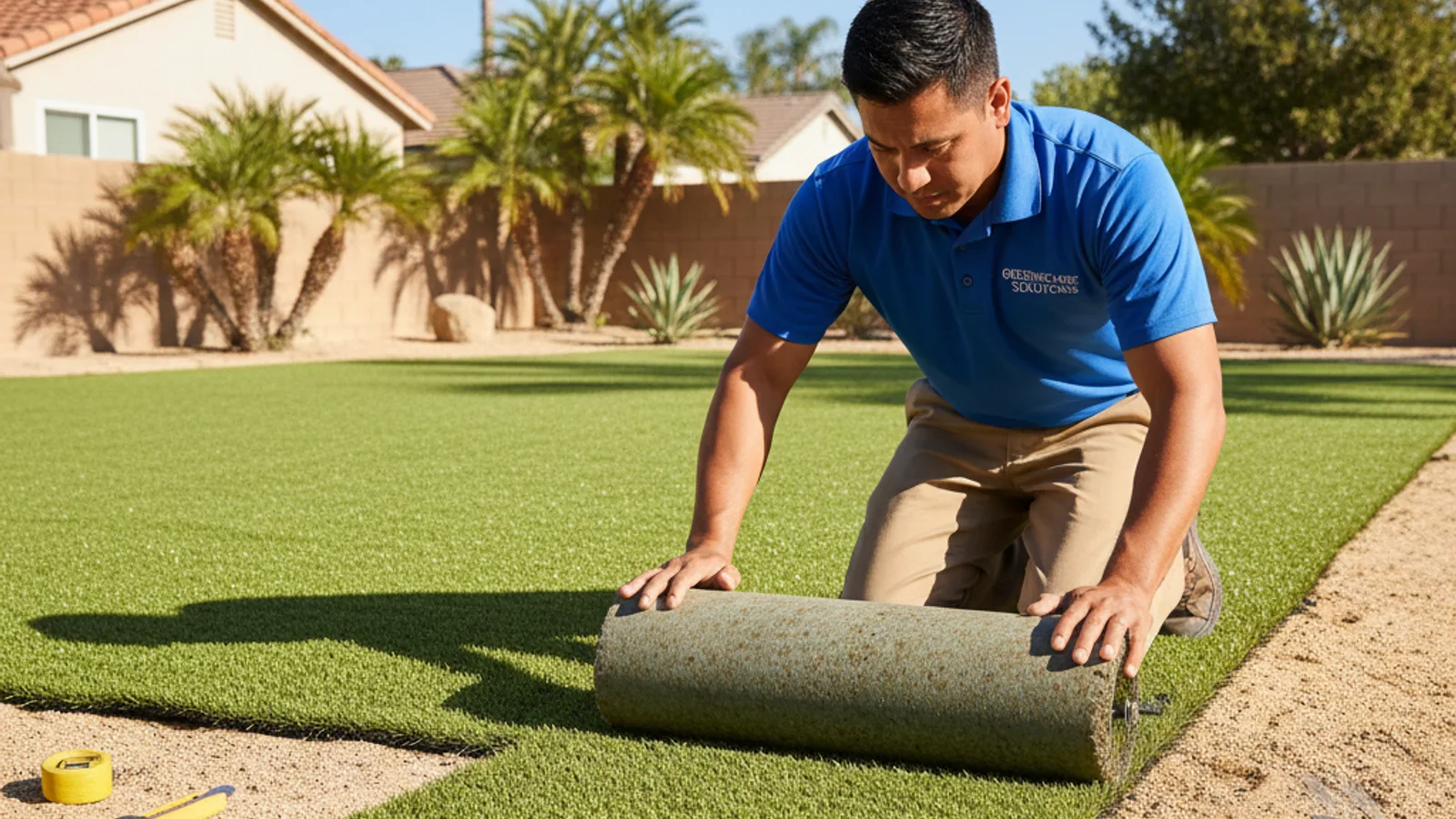
A seasonal artificial turf maintenance schedule for San Diego
Because San Diego doesn’t have a true winter, turf maintenance here follows our actual seasons: dry summer, Santa Ana fall, mild wet winter, and a short spring growth window for anything trying to root at the edges.
Summer (June through September): This is the highest-maintenance stretch. Surface temperatures on dark-colored turf can climb well above the surrounding air temperature on a sunny afternoon, sometimes uncomfortable enough to keep bare feet off it for a few hours midday. Rinse more often in summer, both to cool the surface for pets and to wash away dust that builds up during our dry months. Check infill levels after any stretch of heavy backyard use, like a summer of pool parties or kids home from school.
Fall (October through November): Santa Ana winds carry a lot of debris. This is a good stretch to brush out any accumulated dust and do a full infill check before the wetter months. If your property backs up to open space or has mature trees nearby, fall is also when you’ll see the most organic debris landing on the turf, so a rinse-and-brush combo every few weeks keeps it from working into the backing.
Winter (December through February): San Diego’s version of winter is mild and occasionally wet. Rain actually does some of the rinsing work for you during this stretch, so you can stretch the manual rinse schedule out. This is the easiest season for turf maintenance, and a good time to do the twice-yearly infill top-up if you haven’t already.
Spring (March through May): Weeds are most aggressive at the edges and seams in spring, so this is the season to be strict about the perimeter check. It’s also a smart time to schedule a professional groom if the turf has matted down over the year, since a spring refresh sets the lawn up to look its best through summer entertaining season.
What affects artificial turf maintenance cost
Many homeowners can handle light cleaning with tools approved for their turf. A professional quote may make sense for deep cleaning, infill work, drainage diagnosis, or seam and edge repair. Ask each contractor to itemize the turf area, condition, cleaning method, infill material and quantity, repairs, disposal, and access charges. That makes quotes easier to compare without relying on a generic visit price that may not match the installed system.
If you’re weighing artificial turf against a planted landscape, compare actual installation quotes plus the water, cleaning, repair, and replacement assumptions for each option. Our artificial turf cost guide and artificial turf vs. drought-tolerant landscaping comparison explain what to include.
Signs your turf needs more than routine care
A few warning signs mean it’s time for something beyond the regular brush-and-rinse routine. Persistent odor that doesn’t clear after rinsing usually points to infill that’s holding bacteria, especially common in pet areas, and needs a deeper clean or a partial infill replacement. Visible seams or bubbling in the surface mean the backing has shifted, which is a repair job, not a maintenance one. And turf that’s gone noticeably flat across the whole yard, not just traffic paths, usually means the infill has compacted below the level that supports the blades, which calls for a full top-up rather than a spot fix.
If you’re seeing any of these conditions, ask a qualified turf contractor to identify the cause and provide a written repair scope before the problem spreads. Confirm whether cleaning, infill work, drainage correction, or seam repair is included.
Turf holds up well in neighborhoods across the county, from Carlsbad’s coastal salt air to inland heat in El Cajon, but the maintenance habits above matter more in those two extremes than in mild in-between microclimates. If you skipped turf for a real lawn instead, our guide on when to install sod in San Diego covers the other side of that decision, and our turf rebate breakdown covers what the county and water districts currently pay per square foot for converting.
Frequently asked questions
How often should artificial turf be rinsed in San Diego?
Clean turf when it is visibly dirty and follow the manufacturer’s instructions for the installed product. Pet areas and high-traffic surfaces may need more frequent attention, while unnecessary rinsing can waste water.
Does artificial turf need infill added over time?
Some systems need infill redistributed or replenished as it moves or compacts. Check the installation documents and ask the installer what material and depth the product requires before adding anything.
How long does artificial turf last with proper maintenance?
Service life depends on the product, UV exposure, installation, drainage, traffic, pet use, and maintenance. Use the manufacturer’s written warranty and exclusions when comparing products rather than relying on one lifespan estimate.
Can I pressure wash artificial turf?
A garden hose is safer than a pressure washer for routine artificial turf maintenance. High-pressure spray can dislodge infill and damage the backing. If a deep clean is needed, a professional will use equipment calibrated for turf rather than a standard pressure washer.
Does artificial turf get too hot to walk on in San Diego summers?
Dark-colored turf can get hot enough on a sunny summer afternoon that bare feet or paws are uncomfortable on it for a few hours midday. Rinsing with cool water brings the surface temperature down quickly, and lighter-colored infill and blade options reduce how hot it gets in the first place.
Is professional turf maintenance worth it if I already rinse and brush myself?
Routine cleaning may cover basic care, but visible seams, lifting edges, persistent odor, drainage problems, or widespread matting justify a professional inspection. Ask for the diagnosis and proposed work in writing before authorizing maintenance or repair.