The best succulents for San Diego landscaping are Agave attenuata, Blue Glow agave, Aloe arborescens, blue chalk sticks, and Aeonium. Succulents are among the lowest-water, lowest-maintenance options available for San Diego yards, most need zero supplemental irrigation after year two and thrive in the same dry, well-drained conditions that challenge conventional plants. The single most important rule: drainage first. Succulents die from overwatering and clay soil far more often than drought.

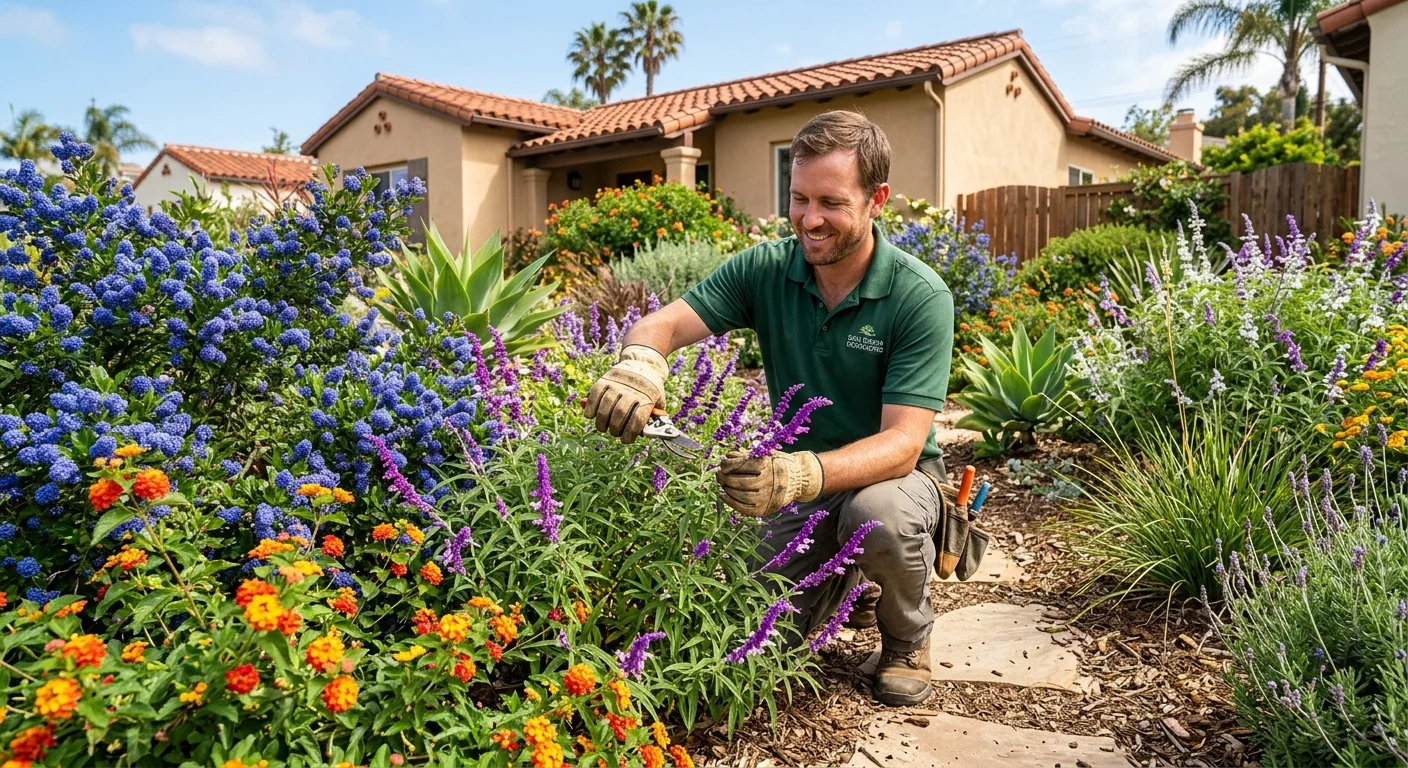
A well-designed San Diego drought-tolerant landscape with agaves, aloes, and low-water succulents under bright afternoon sun.

Top succulents for San Diego: comparison table

SucculentTypeWater needSunMature sizeCoastal OK?Frost hardy?SD note
Agave attenuataArchitecturalNone after yr 2Full/part3-5 ft × 5 ftYesMild frost onlySoft tips, safe near walkways; monocarpic
Agave ‘Blue Glow’ArchitecturalNone after yr 2Full2-3 ft × 3 ftYesTo ~20°FTight rosette; no offsets; ideal container or focal point
Aloe arborescensArchitecturalVery lowFull/part6-10 ftYes (salt tolerant)To 25°FOrange winter blooms; spreads by offsets
Aloe veraMoundingVery lowFull/part1-2 ft × 2 ftYesTo 28°FSpreads fast; keep in pots or edged beds
Barrel cactus (Ferocactus)ArchitecturalNone after yr 2Full2-4 ftInland bestTo 15°FSlow-growing; excellent in dry inland gardens
Blue chalk sticks (Senecio serpens)GroundcoverVery lowFull/part6-12 in × spreadingYesTo 25°FPowder-blue foliage; spreads to fill gaps
Sticks on fire (Euphorbia tirucalli)AccentVery lowFull4-8 ftYesTo 26°FToxic sap, wear gloves; vivid orange-red in cool months
Hens-and-chicks (Echeveria)Groundcover/accentVery lowFull/part4-12 inYesVaries by speciesHundreds of varieties; perfect for rock gardens and borders
Sedum ‘Angelina’GroundcoverVery lowFull4-6 in × spreadingYesHardyGolden-orange foliage; fills fast between stepping stones
Aeonium arboreumAccentLow (summer dormant)Full/part shade3-5 ftYes (ideal)To 25°FSummer dormant, looks stressed July-September, then rebounds
Jade plant (Crassula ovata)MoundingVery lowFull/part3-6 ftYesTo 25°FLong-lived; keep dry; fast decline if overwatered

Why succulents work so well in San Diego

San Diego’s Mediterranean climate, mild winters, long dry summers, alkaline soil, is almost exactly what succulents evolved for. Most of the world’s best succulent-growing regions have the same profile.

The practical benefits for a San Diego yard are real. A mature agave or established aloe hedge needs one or two deep waterings per month in peak summer, sometimes none. That cuts outdoor water use significantly compared to a lawn or even a conventional shrub border. Several succulents, including agave and aloe, qualify for SDCWA WaterSmart rebates as part of a turf conversion, which can offset installation costs.

Succulents also bring structural interest that is hard to match at the same water budget. Agaves and aloes hold their form year-round. They do not require deadheading, regular pruning, or fertilizing once they settle in.

The honest tradeoff is that succulents punish poor drainage and overwatering more than almost any other plant category. Sandy loam drains well enough on its own. Clay-heavy soils, common in parts of El Cajon, Chula Vista, and older Escondido neighborhoods, need amendment or raised planting beds before succulents thrive. If water sits around the crown after rain, the plant rots from the inside out, and there is no saving it. See our drought-tolerant plants guide for the broader planting context.

Coastal vs. inland: what changes for succulents

Coastal San Diego (La Jolla, Encinitas, Coronado, Ocean Beach, Carlsbad)

Coastal yards are the easiest environment for most succulents. The marine layer moderates temperature extremes, and frost is rare. Aeoniums thrive near the coast, the fog and cool temperatures match their natural habitat. Agave attenuata (soft-tipped, no spine hazard) is the safest architectural choice within a few blocks of foot traffic.

Note that aeoniums go summer dormant. From roughly July through September they drop lower leaves, look ratty, and close up their rosettes. This is normal, not a problem to solve with more water. Overwatering during summer dormancy is how aeoniums die. Leave them alone and they green back up fast in October.

Aloe arborescens is salt-tolerant enough to handle coastal conditions and its orange winter flowers are a real asset in the January-February window when almost nothing else blooms.

Inland valleys and East County (El Cajon, Santee, Ramona, Alpine, Lakeside)

Inland zones regularly see summer highs of 95-105°F and occasional winter overnight lows below 30°F. A few adjustments matter here.

Agave attenuata is marginally frost-tender (damaged below 26-28°F). For East County or mountain-adjacent areas, swap it for the cold-hardier Agave parryi or Agave weberi, both of which handle the occasional hard freeze. Barrel cactus (Ferocactus) is also better suited to the inland climate, it tolerates higher heat and is fully cold-hardy.

Aeoniums survive inland with afternoon shade but are less vigorous than at the coast. If you like the look, site them on a north or east-facing exposure and expect slower growth.

Sticks on fire (Euphorbia tirucalli) produces its best orange-red coloring with cold nights, inland yards often get better winter color than coastal ones.

Designing with succulents: three principles that hold

1. Drainage is not optional. Succulents need sharp drainage. In native clay soils, this means raising the bed by 6-8 inches with amended soil (roughly 50% native soil, 30% coarse pumice or perlite, 20% compost), or using a decomposed granite or gravel mulch that channels water away from crowns. On slopes, this is naturally handled, flat clay beds need work before planting.

2. Mass for impact, space for air. A single agave in a lawn of gravel looks like a planting detail. A mass of blue chalk sticks edging a path, a grouping of three Agave attenuata at staggered heights, or an aloe hedge reads as intentional design. Group odd numbers (3, 5, 7), vary heights within the grouping, and leave enough spacing for airflow, succulents packed too tight in humid coastal air can develop fungal rot.

3. Gravel mulch over bark mulch. Organic bark mulch traps moisture around succulent crowns. Decomposed granite or river rock is the better call, it regulates soil temperature, prevents mud splash, and dries out quickly after rain.

For combining succulents with other low-water plants, our drought-tolerant shrubs guide covers what pairs well structurally, and the groundcovers guide covers slope applications where succulents are mixed with native groundcovers.

Succulent care in San Diego

Watering. New plants need regular water during establishment: every 5-7 days for the first two months, then stepping down. After the first full growing season, most established succulents in San Diego need water only during the dry season (May-October), roughly once every 2-3 weeks for smaller plants, once a month for large agaves and aloes, and near-zero for barrel cactus. In a normal rain year, many need nothing from November through April.

Soil amendment at planting. If your soil drains slowly, amend before planting. Dig a hole 1.5× the root ball width and depth, mix removed soil with coarse pumice or perlite at a 2:1 ratio, and ensure the crown sits above the surrounding grade by an inch or two.

Agave offsets (“pups”). Most agaves produce offshoots around the base. Left alone, they crowd the parent plant and create a messy clump. Remove them with a sharp spade when they are a few inches tall, allow the cut to callous for two days, and replant or compost.

Monocarpic note. Agave attenuata, Blue Glow, and most Agave species flower only once, typically after 10-25 years, and then die. The flower stalk is dramatic (10-20 ft tall) but the parent plant is done. Offsets, if present, carry on. Blue Glow does not produce offsets, so plan for eventual replacement.

Euphorbia sap. Sticks on fire and other euphorbias have a white milky sap that causes skin and eye irritation. Wear gloves and eye protection when cutting or dividing. Keep away from pets.

Frequently asked questions

What is the best low-maintenance succulent for a San Diego yard?

Agave attenuata is the best low-maintenance choice for most San Diego yards. It’s large enough to anchor a landscape bed, requires no irrigation after year two in most locations, has soft leaf tips that are safe near walkways, and is tolerant of both coastal and mild inland conditions. The only drawback is that it flowers once and dies, but this typically takes 15-25 years and the plant produces offsets that carry on.

Do succulents survive frost in San Diego?

Most succulents planted in coastal and central San Diego survive without protection, since hard frost is rare below 300 ft elevation. Inland valleys (El Cajon, Alpine, Ramona) occasionally see lows below 28°F, which can damage Agave attenuata, aeonium, and jade. For those areas, choose cold-hardy agave species like Agave parryi, plant tender species against a south-facing wall for microclimate protection, or plan to cover them on the rare nights below 30°F.

Are ice plant and blue chalk sticks the same thing?

No, and the distinction matters. Blue chalk sticks (Senecio serpens) is a tidy, low-growing succulent groundcover that stays controlled and is appropriate for most San Diego landscapes. Traditional ice plant (Carpobrotus) is an invasive species that spreads aggressively, overtops native vegetation on slopes, and is banned or restricted in some San Diego County coastal areas. If a contractor recommends ice plant for slope coverage, ask specifically which species, there are non-invasive alternatives including blue chalk sticks, dymondia, and native groundcovers from our groundcovers guide.

Why are my succulents rotting in San Diego?

Overwatering and poor drainage are the cause in almost every case. Succulents store water in their leaves and stems, meaning they already carry reserves when rain falls. Watering on a lawn or shrub schedule drowns them. The fix is to water less and amend the soil for faster drainage. If the crown is already mushy, the plant is usually too far gone to save, remove it, let the bed dry out for two to three weeks, amend with pumice, and replant with proper spacing for airflow.

Can I mix succulents with other drought-tolerant plants?

Yes, and a mixed palette usually looks better than succulents alone. Agaves and aloes pair naturally with low-water native shrubs like Cleveland sage and ceanothus. Blue chalk sticks works as a groundcover edge under taller shrubs. Sedum fills gaps between stepping stones alongside decomposed granite paths. The key is matching water needs, plants watered on a succulent schedule (infrequent, deep) should be grouped together, not mixed with higher-water shrubs that need more frequent irrigation. See our drought-tolerant plants guide for pairing ideas and the full plant table.

What succulents grow well in San Diego shade?

Aeonium is the best choice for part shade in San Diego, especially coastal gardens where morning fog and afternoon shade from structures or trees are common. It grows slowly in full shade but handles dappled light well. Echeveria and aloe vera tolerate part shade (3-4 hours of direct sun) without losing their form. Agave and barrel cactus need full sun and decline in shade, do not plant them on north-facing walls or under dense tree canopy.

Ready to plan a succulent landscape?

Succulent landscapes look effortless when they are well designed and properly planted, and high-maintenance when they are not. The difference is usually soil preparation, drainage, and the right plant for the right zone.

Our team at Bloom Pro SD designs and installs water-wise succulent landscapes across San Diego County, from coastal yards in Encinitas and La Jolla to inland properties in Escondido and El Cajon. We handle soil amendment, gravel mulch installation, and irrigation zoning as part of every drought-tolerant landscaping project. If you are starting from scratch, our landscape design service begins with a site walk and a scaled planting plan.

Call us at (760) 400-6355 for a same-day estimate.