The best drought-tolerant shrubs for San Diego include California Lilac (Ceanothus), Lemonade Berry, Salvia, Coast Rosemary, and Lantana. Coastal yards do best with salt-tolerant evergreens like Coast Rosemary and Lemonade Berry. Inland and valley gardens can lean on flowering options like Salvia and Ceanothus that handle summer heat. Established watering interval depends on the species, soil, and exposure. Ask the independent professional to write it for the plants they install. If you searched “flowering shrubs San Diego,” the bloom-first list is flowering shrubs for San Diego yards.
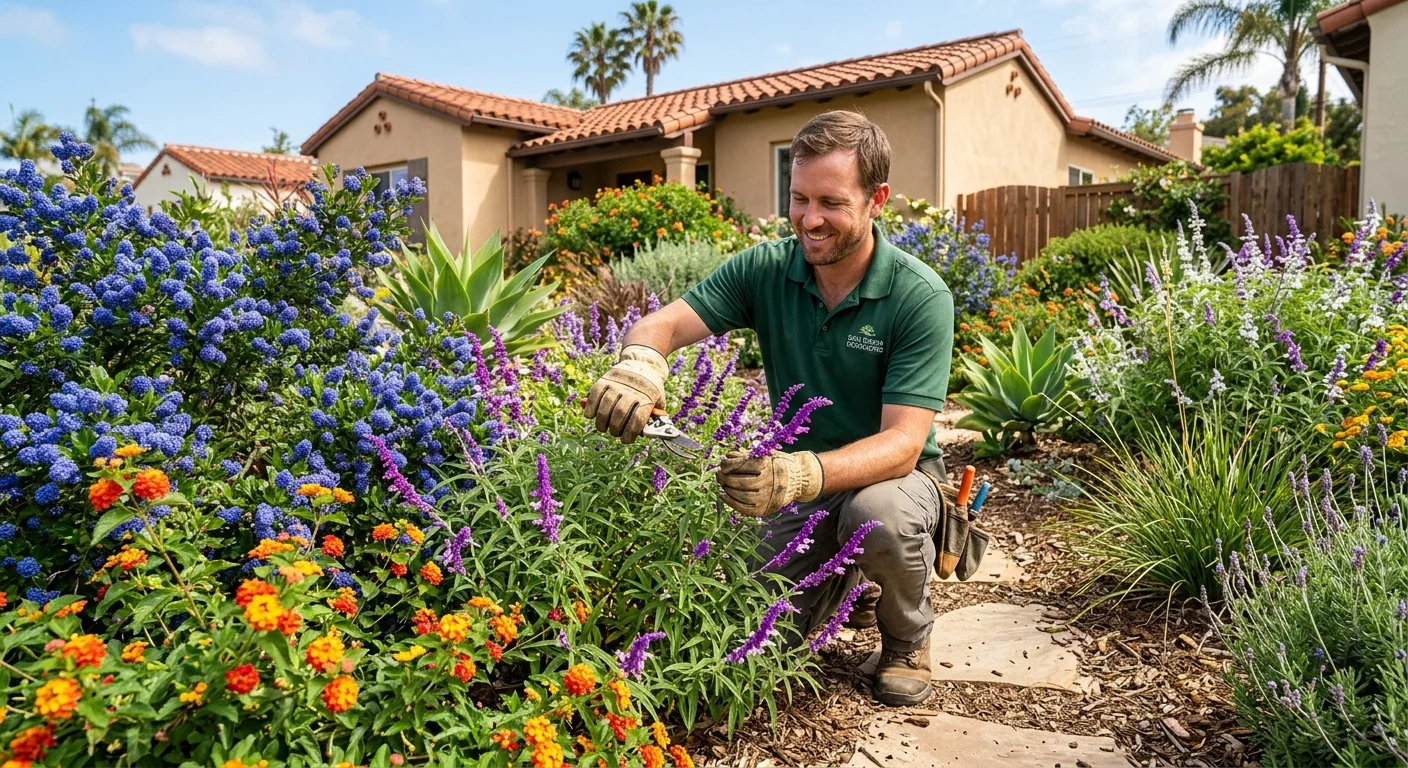
Quick comparison: top drought-tolerant shrubs for San Diego
| Shrub | Evergreen or flowering | Water need | Sun | Mature size | Bloom season | Best SD zone |
|---|---|---|---|---|---|---|
| Ceanothus (California Lilac) | Both (evergreen, spring flowers) | Very low | Full sun | 4–12 ft | Feb–May | Coastal, inland |
| Lemonade Berry | Evergreen | Very low | Full sun–part shade | 10–15 ft | Feb–Apr | Coastal, slopes |
| Coast Rosemary | Evergreen | Low | Full sun | 3–6 ft | Spring–fall | Coastal, salt-spray |
| Lantana | Flowering | Low–moderate | Full sun | 2–6 ft | Spring–fall | Inland, valley |
| Salvia (Cleveland Sage) | Flowering | Very low | Full sun | 3–5 ft | Mar–Jun | All zones |
| Oleander | Flowering | Very low | Full sun | 6–12 ft | Spring–fall | Inland, highway |
| Pittosporum tobira | Evergreen | Low–moderate | Full sun–part shade | 6–10 ft | Spring | Coastal, inland |
| California Fuchsia | Flowering | Very low | Full sun | 1–3 ft | Aug–Nov | All zones |
| Nandina (Heavenly Bamboo) | Evergreen | Low–moderate | Full sun–part shade | 4–8 ft | Spring (berries fall) | Inland |
| Shiny Xylosma | Evergreen | Low–moderate | Full sun–part shade | 8–10 ft | Inconspicuous | All zones |
Evergreen shrubs for San Diego
Evergreen shrubs hold their foliage year-round, making them the backbone of any low-water San Diego landscape. They provide structure, privacy screening, and erosion control on slopes without seasonal gaps.
Lemonade Berry (Rhus integrifolia)

This California native grows 10–15 ft tall with dense, leathery leaves that handle coastal salt spray and dry inland summers equally well. It’s one of the best slope shrubs in San Diego County, with deep roots that stabilize erosion-prone hillsides from Rancho Bernardo to Fallbrook. Water need is very low once established. The small pink berries attract birds.
Shiny Xylosma (Xylosma congestum)

A fast grower that responds well to shearing, Xylosma is a go-to privacy hedge in San Diego neighborhoods like Chula Vista and El Cajon where homeowners want a formal screen. It reaches 8–10 ft and tolerates full sun and reflected heat from walls or fences. Water need is low to moderate.
Coast Rosemary (Westringia fruticosa)

This Australian native is one of the best choices for coastal San Diego yards in La Jolla, Ocean Beach, or Encinitas because it tolerates salt spray that damages many other shrubs. Silvery-green leaves and small white flowers appear off and on through the year. It stays compact at 3–6 ft and needs very little pruning. See our hedge trimming service for keeping it shaped.
Pittosporum tobira (Japanese Mock Orange)

A reliable evergreen for hedges, foundation plantings, and entry screens. Dark glossy leaves and fragrant white spring flowers. At 6–10 ft, it’s wide enough to block a fence line in one row. Low to moderate water need, tolerates coastal and inland conditions.
Nandina (Heavenly Bamboo)

Not a bamboo at all, Nandina offers year-round interest with foliage that shifts from green to deep red in cooler weather and bright red berries in fall. A strong vertical accent at 4–8 ft. Works well in inland valleys like El Cajon or Santee where temperature swings bring out the color.
Flowering shrubs for San Diego
Flowering drought-tolerant shrubs give San Diego yards season-long color without a big water bill. Most attract pollinators, which keeps the surrounding garden healthier.
Ceanothus (California Lilac)

The most versatile drought-tolerant flowering shrub in California. Ceanothus blooms in shades of blue, purple, and white from late winter through spring, and comes in forms ranging from low groundcovers to large 12-ft specimens. It’s native to San Diego County coastal sage scrub, so it’s already adapted to the soil and rainfall pattern here. Very low water once established. A top pick for hummingbirds and native bees.
Salvia (Sages)

Cleveland Sage is the standout for San Diego. It’s native to the county, blooms purple in spring, and handles full sun and summer drought without irrigation once it’s settled in. At 3–5 ft, it works as a border shrub or massed planting. ‘Hot Lips’ Salvia (red and white) is a popular non-native choice that re-blooms through fall. Both are hummingbird magnets.
Lantana

Lantana blooms almost nonstop from spring through fall, with clusters of yellow, orange, red, and pink flowers, often all on one plant. It loves the heat in inland San Diego areas like Escondido, El Cajon, and Santee. Grows 2–6 ft, low to moderate water need. A magnet for butterflies. It spreads aggressively in mild coastal zones, so give it room.
Oleander (Nerium oleander)

One of the toughest plants in San Diego County, Oleander blooms in pink, white, red, or yellow almost year-round and tolerates heat, drought, and poor soil. At 6–12 ft, it’s effective as a tall flowering screen. Note that all parts of the plant are toxic if ingested, keep away from pets and children and wear gloves when pruning.
California Fuchsia (Epilobium canum)

This low native shrub (1–3 ft) blooms brilliant red from August through November, a season when almost nothing else is flowering in a low-water garden. It’s a magnet for migrating hummingbirds and works well on slopes, in rock gardens, or as a colorful edge plant.
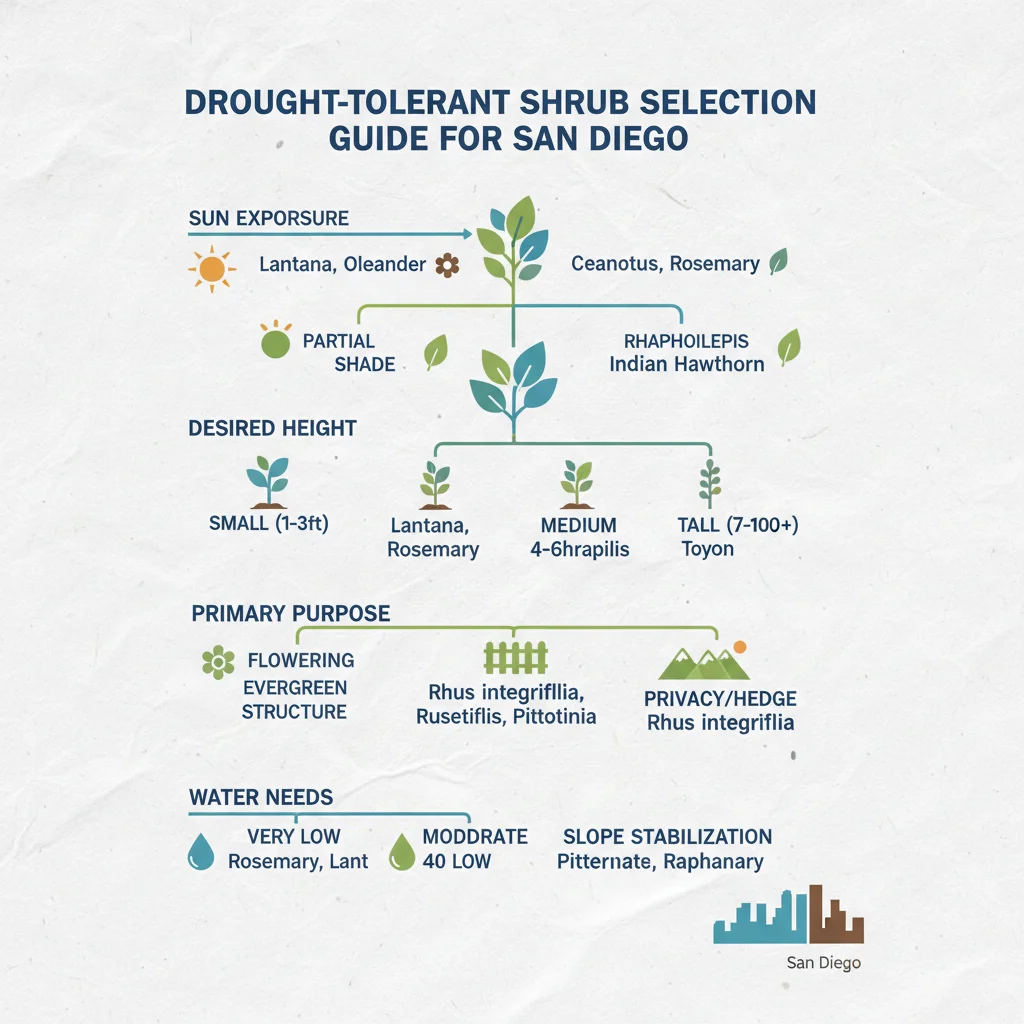
San Diego-specific considerations
Coastal yards (La Jolla, Encinitas, Ocean Beach, Coronado)
Salt spray rules out many popular shrubs. Stick to Coast Rosemary, Lemonade Berry, Ceanothus, and Pittosporum in the first three blocks from the water. All four tolerate marine air. Avoid Nandina and most Salvia varieties within a block of the beach.
Inland valleys and hot zones (El Cajon, Santee, Escondido, Ramona)
Summer temperatures regularly hit 95–105°F in these areas. Lantana and Oleander are built for it. Ceanothus can struggle in the hottest inland spots, choose a larger, shrub-form variety rather than the low groundcover types, which burn out faster.
Slope and erosion control
Lemonade Berry and Ceanothus are the two most recommended shrubs for San Diego slope stabilization. Both have deep, spreading root systems. County grading permits often ask for a revegetation plan on cut slopes. Confirm the plant list with the permit, not a blog.
SoCal Water$mart turf rebate
The live turf rebate is SoCal Water$mart: a current SoCal Water$mart payout you must confirm in the official estimator, if the project is approved before turf comes out. Native shrubs such as Ceanothus, Lemonade Berry, and Cleveland Sage are typical on those conversions. Rebate amounts and funding change. Check SoCal Water$mart before you plant. Drought-tolerant landscaping is the conversion page if you are ripping turf.
How to establish drought-tolerant shrubs
Good planting makes the difference between a shrub that thrives and one that limps along. San Diego soils drain well in most areas, which suits most drought-tolerant choices. Dig a hole twice as wide as the root ball and just as deep. Loosen any circling roots before planting. Set the crown level with or slightly above the soil surface, never below.
Water deeply for the first three to four months: once or twice a week the first month, then stepping down to every two weeks by month three. After they are established, watering depends on the species, soil, and rain. Ask the independent professional to write the interval for the plants they install. A 3-inch layer of mulch cuts soil moisture loss significantly, pair it with a drip or low-volume irrigation system for the establishment phase.
For a deeper look at pairing shrubs with other low-water plants, see our guides to drought-tolerant plants, drought-tolerant trees, and flowering shrubs for San Diego. For privacy screening specifically, see the best privacy hedges for San Diego, and for low-water beds, California native plants and the best succulents for San Diego.
Frequently asked questions
Are drought-tolerant bushes and shrubs the same thing?
Yes. Bush and shrub are the same plant in everyday use, and every low-water bush on this list is a shrub by the nursery’s label. Nurseries, water agencies and rebate paperwork all use “shrub”, so that is the word you will see on a plant tag, but if you searched for drought-tolerant bushes you are in the right place. The distinction worth caring about is evergreen versus deciduous, because that decides whether the plant carries the bed through winter.
What is the best evergreen shrub for San Diego?
Lemonade Berry (Rhus integrifolia) is the top evergreen shrub for most San Diego gardens. It’s a California native, handles coastal salt spray and inland heat, reaches 10–15 ft for a full privacy screen, and needs almost no water once established. Coast Rosemary is the better choice if you’re within a block of the ocean.
What is the best flowering drought-tolerant shrub for San Diego?
Ceanothus (California Lilac) is the most versatile flowering choice. It’s native to San Diego County, blooms blue or purple in late winter through spring, attracts pollinators, and needs very little supplemental water after the first year. For summer-through-fall color, add Lantana or Salvia alongside it.
Which shrubs work best as a low-water privacy hedge?
For a formal clipped hedge: Xylosma or Pittosporum tobira both shape cleanly and stay dense. For a natural screen that also flowers: Lemonade Berry or large-form Ceanothus. Oleander creates a tall flowering screen but requires caution around children and pets because all parts are toxic. Hedge trimming covers maintenance on all of these.
Are there fast-growing shrubs for San Diego that don’t need much water?
Xylosma grows quickly, often 2–3 ft per year with moderate water, and accepts shearing to any desired size. Lantana also fills in fast in warm inland areas. Oleander is one of the fastest-growing drought-tolerant screening plants in San Diego County once established.
When is the best time to plant shrubs in San Diego?
Fall (October through December) is ideal. Cooler temperatures and winter rains reduce the irrigation needed to establish new plants, and roots have the whole winter to settle before summer heat arrives. Spring planting works too, but you’ll need to water more consistently through the first summer.
Do drought-tolerant shrubs in San Diego qualify for water rebates?
Several do, if they sit in a conversion that meets SoCal Water$mart rules. The live program pays a current SoCal Water$mart payout you must confirm in the official estimator. Native shrubs such as Ceanothus, Lemonade Berry, and Cleveland Sage are common on those jobs. Programs open and close. Check SoCal Water$mart before you buy plants.
What are the best drought-tolerant shrubs for San Diego?
Split them by job. Evergreen shrubs carry privacy and structure year-round, flowering shrubs carry colour, and each group has low-water options that hold up through a San Diego summer without supplemental irrigation once established. The common mistake is buying for the flower and ignoring mature size, which produces a bed that needs constant cutting back within three years.
Which evergreen shrubs stay green year-round in San Diego?
The evergreen picks covered above hold foliage through the dry season and through our mild winter, which is what makes them the backbone of a low-water bed. They give the bed structure when the flowering plants are out of season, and because they are not deciduous they do not create the autumn debris load that drives up cleanup cost.
When to call us
Choosing the right combination of evergreen and flowering shrubs for your specific microclimate, coastal, inland, slope, or mixed, takes a site visit and some honest plant knowledge. The independent professionals we match design and install water-wise shrub landscapes across San Diego County. Call us at (760) 400-6355 to get matched. The independent professional quotes the work.