The flowering shrubs that actually bloom in San Diego sun are Ceanothus, Cleveland sage, lantana, bougainvillea, and Texas ranger. Evergreens for year-round structure sit further down. This page is the bloom-first list. Drought-tolerant evergreens and privacy screens live on drought-tolerant shrubs for San Diego.
Picking the right shrub comes down to sun and whether you want color or year-round structure. Get those right and a shrub can carry a bed for a decade.
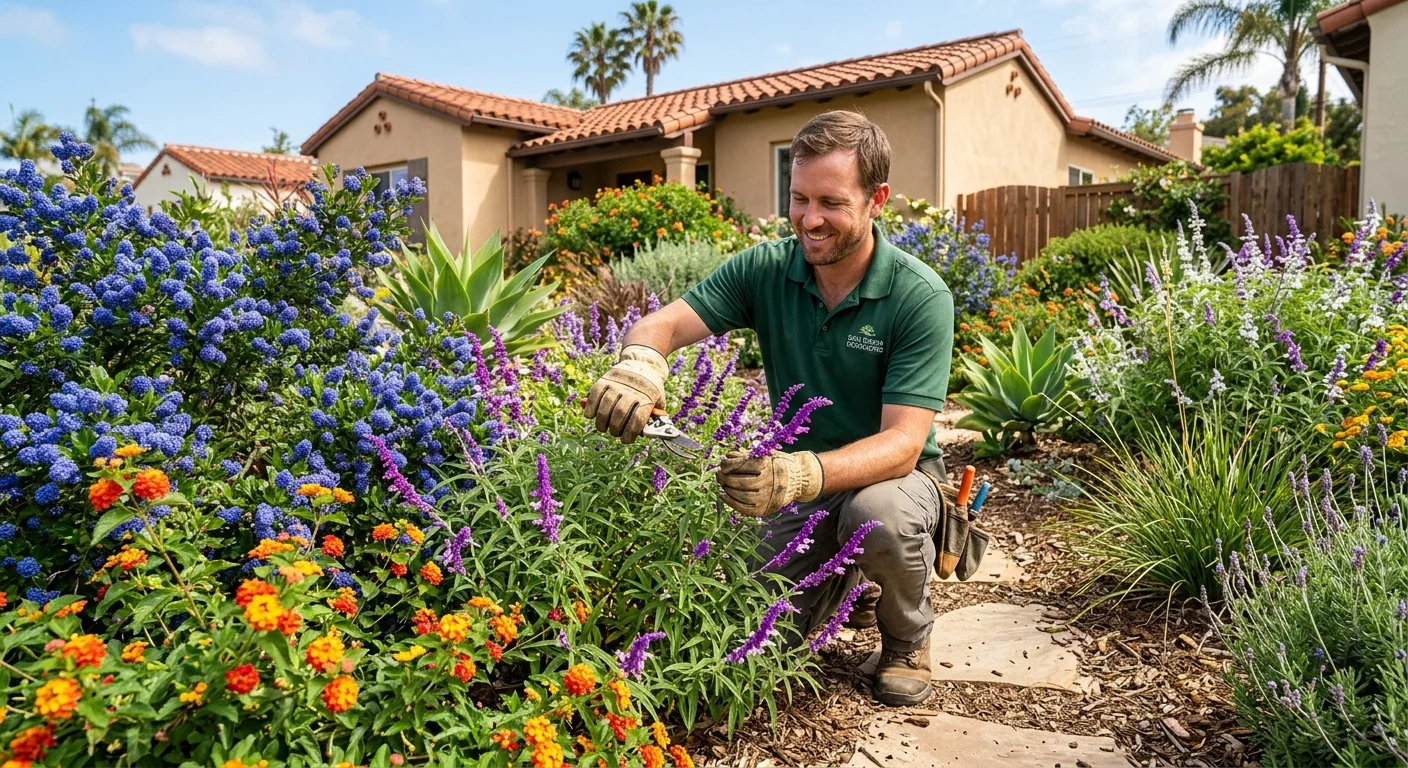
Flowering shrubs that bloom hard in San Diego sun
Full-sun beds are where flowering shrubs earn their keep. These take heat, want little water once rooted, and give long bloom windows.
Cleveland sage (Salvia clevelandii) is the workhorse. Native, fragrant, and covered in purple-blue flower whorls from late spring into summer. It tops out around 4 to 5 feet and asks for almost no water after the first year. Bees and hummingbirds swarm it.
Lantana blooms nearly year-round in our mild zones. The spreading types stay low and wide, the mounding types hold a tidy 3-foot ball. Orange, yellow, pink, and purple are all common. It shrugs off heat and reflected wall warmth that fries other plants.
Texas ranger (Leucophyllum) has silvery-gray foliage and purple flowers that pop after humidity or a rare summer rain. It’s one of the toughest shrubs for hot inland yards in El Cajon, Santee, and Escondido, and it handles being pruned into a loose hedge.
Grevillea brings red, orange, and pink spider-like flowers and feeds hummingbirds through winter when little else blooms. The ‘Long John’ and ‘Superb’ types give the longest show. Give it sharp drainage and don’t overwater.
Cape plumbago carries soft sky-blue flowers spring through fall and takes both sun and part shade. It’s a fast filler for a slope or a bare fence line and recovers quickly after a hard cutback.
For a deeper list of low-water options and how they pair with succulents and grasses, see our guide to drought-tolerant shrubs for San Diego.
Evergreen shrubs for year-round structure and privacy
Flowers come and go. Evergreen shrubs are what hold a yard together the other ten months. These keep their leaves all year and do the heavy lifting for screening, hedges, and green backdrops.
Texas privet (Ligustrum japonicum ‘Texanum’) is the default San Diego privacy hedge for a reason. Dense, glossy, fast, and cheap to fill a long run. It clips into a clean wall or grows loose, and white flower clusters show up in spring.
Xylosma makes a softer, lighter-green hedge with arching growth and small thorns that discourage foot traffic. It handles sun and part shade and takes hard shearing.
Pittosporum (tobira and ‘Silver Sheen’) ranges from compact mounding types for foundation beds to tall narrow screens for tight side yards. The dwarf ‘Wheeler’s Dwarf’ stays under 3 feet with no pruning, which makes it a low-maintenance front-of-bed pick.
Indian hawthorn (Rhaphiolepis) is the rare shrub that’s both evergreen and a reliable bloomer. Pink or white spring flowers, then clean leathery foliage the rest of the year. The compact varieties suit small front yards and rarely need trimming.
Coast rosemary (Westringia) gives a fine gray-green texture, takes salt air, and stays handsome with almost no care. It’s a strong choice for coastal beds in Encinitas, Carlsbad, and Coronado where ocean wind burns softer plants.
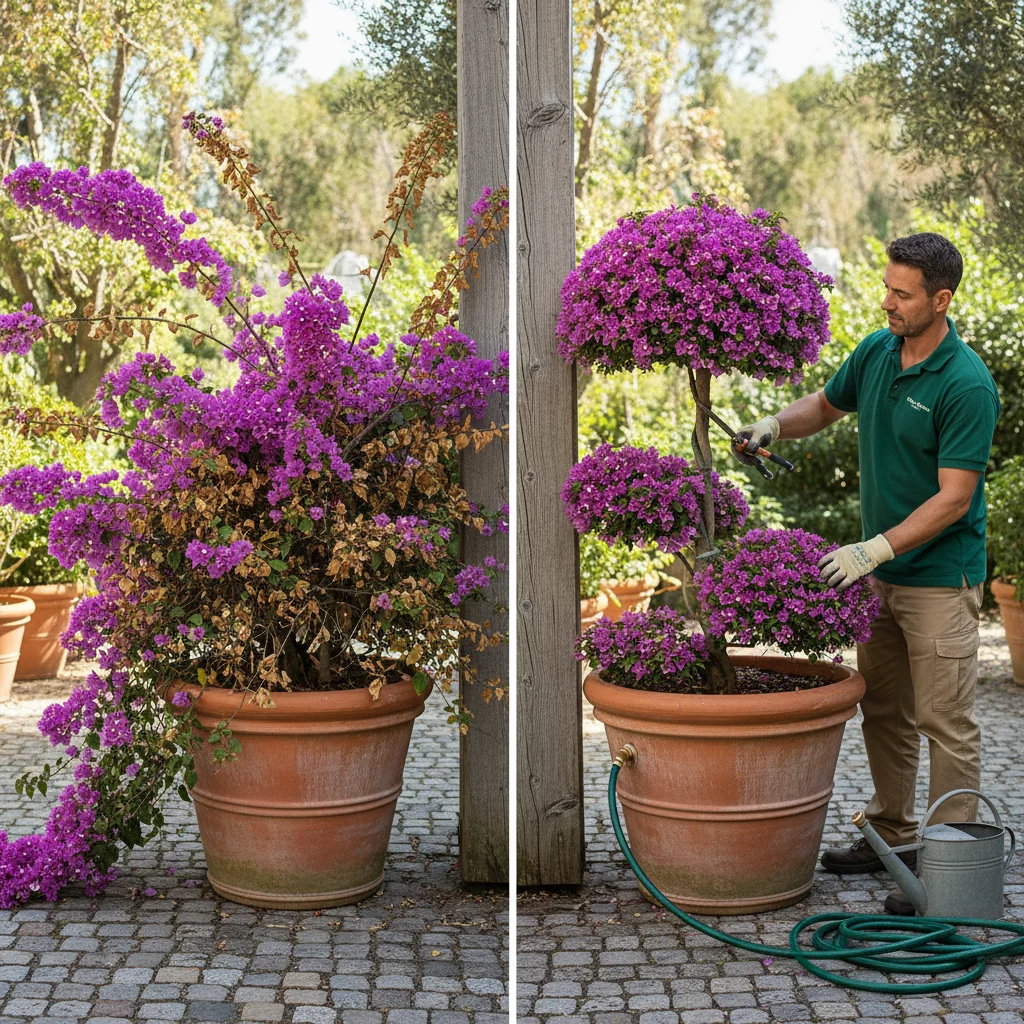
Match the shrub to your zone: coast vs inland
San Diego County is several climates stacked together. The shrub that thrives in La Jolla can struggle in Ramona, and the reverse is true.
Coastal zones (Encinitas, Carlsbad, Coronado, Point Loma) stay mild but deal with salt spray and marine layer. Reach for salt-tolerant, mildew-resistant plants: coast rosemary, lantana, grevillea, and Indian hawthorn. Avoid shrubs prone to fungal leaf spot in damp air.
Inland and east county (El Cajon, Santee, Escondido, Ramona) swing hotter and drier with real summer heat spikes. Texas ranger, Cleveland sage, and oleander-style toughness win here. These spots also see more frost in winter, so skip tender tropicals.
Transition zones (Poway, San Marcos, Vista, Rancho San Diego) get the best of both and can grow nearly anything on this list. This is where you have the most freedom to mix bloom colors and textures.
If you’re planning a whole bed and not just one shrub, our front-yard landscaping ideas for San Diego walks through layout, layering, and how to keep curb appeal through summer.
How to plant shrubs so they actually survive year one
Most shrub failures here trace back to planting, not the plant. A few habits make the difference.
Plant in fall or early spring, not mid-summer. Roots need cool soil to establish before the heat hits. A shrub set in July fights to survive instead of settling in.
Dig the hole twice as wide as the rootball but no deeper. The crown should sit slightly above grade so it never sits in a puddle. San Diego’s clay-heavy soils drain slowly, and a buried crown rots.
Water deep and infrequent from the start. A short daily sprinkle trains shallow roots that can’t reach summer moisture. Soak the rootzone, then let the top few inches dry before the next watering. Drip is far better than spray here. If you’re converting a thirsty bed, our drip irrigation conversion guide covers the swap.
Mulch 2 to 3 inches deep, kept a few inches off the stems. Mulch holds moisture, blocks weeds, and cools the soil through August.
Water, sun, and bloom: a quick comparison
Use this to pick fast based on the spot you’re filling.
- Hot full sun, low water, long bloom: lantana, Cleveland sage, Texas ranger, grevillea
- Full sun, evergreen structure, hedge: Texas privet, xylosma, pittosporum
- Part shade, some bloom: cape plumbago, Indian hawthorn, pittosporum
- Coastal and salt exposure: coast rosemary, lantana, Indian hawthorn, grevillea
- Small front yard, low maintenance: dwarf pittosporum, compact Indian hawthorn, mounding lantana
Most of these need water only once or twice a week through the first summer, then far less. That’s a big reason San Diego yards lean on shrubs over high-water annuals.
How much pruning do flowering shrubs really need?
Less than most people think. Over-pruning is the most common mistake we see, and it costs you flowers.
Flowering shrubs bloom on either old wood or new wood, and cutting at the wrong time removes next season’s flowers. As a rule, prune spring bloomers right after they finish flowering, and prune summer or fall bloomers in late winter before new growth starts.
Most healthy shrubs only need shaping once or twice a year, plus a light deadheading to push more blooms. Shearing everything into tight balls on a monthly schedule wastes money and stresses the plant. For pricing on professional shaping and what a maintenance visit actually covers, see our hedge trimming cost guide.
If a bed has gotten overgrown or leggy, a single hard renovation cut in late winter usually brings it back fuller than constant light trimming ever would.
FAQ
What flowering shrub blooms longest in San Diego? Lantana is hard to beat. In our mild coastal and inland zones it can bloom nearly year-round, with the heaviest color from late spring through fall. Cape plumbago and grevillea also hold long bloom windows.
What’s the best evergreen shrub for privacy here? Texas privet for a fast, dense, affordable hedge, or xylosma if you want a softer look. Both fill a screen quickly and take regular shearing. For tight side yards, a narrow pittosporum like ‘Silver Sheen’ works better.
Which shrubs handle full hot sun inland? Texas ranger, Cleveland sage, lantana, and grevillea all take inland heat in El Cajon, Santee, and Escondido once established. They want sharp drainage and infrequent deep watering, not daily sprinkling.
Do flowering shrubs need a lot of water? The ones on this list don’t, after year one. They’re chosen specifically for low water. The catch is the first summer, when deep, infrequent watering is what builds the deep roots that carry them through later dry spells.
Can I plant shrubs in summer? You can, but fall or early spring is far better. Summer planting forces a shrub to establish roots during the worst heat, which raises the failure rate and the water bill. If you must plant in summer, water carefully and add extra mulch.
When to call us
If you want a bed that holds color and structure through every season without a high water bill, the landscapers in our network can design and plant it for you. They match the right flowering and evergreen shrubs to your sun, soil, and zone, from coastal Encinitas to inland El Cajon, and handle the landscape design and ongoing shaping so the bed stays sharp.
Call us at (760) 400-6355 to get matched. The contractor walks your yard, checks your light and drainage, and gives you a plant list that fits your spot.