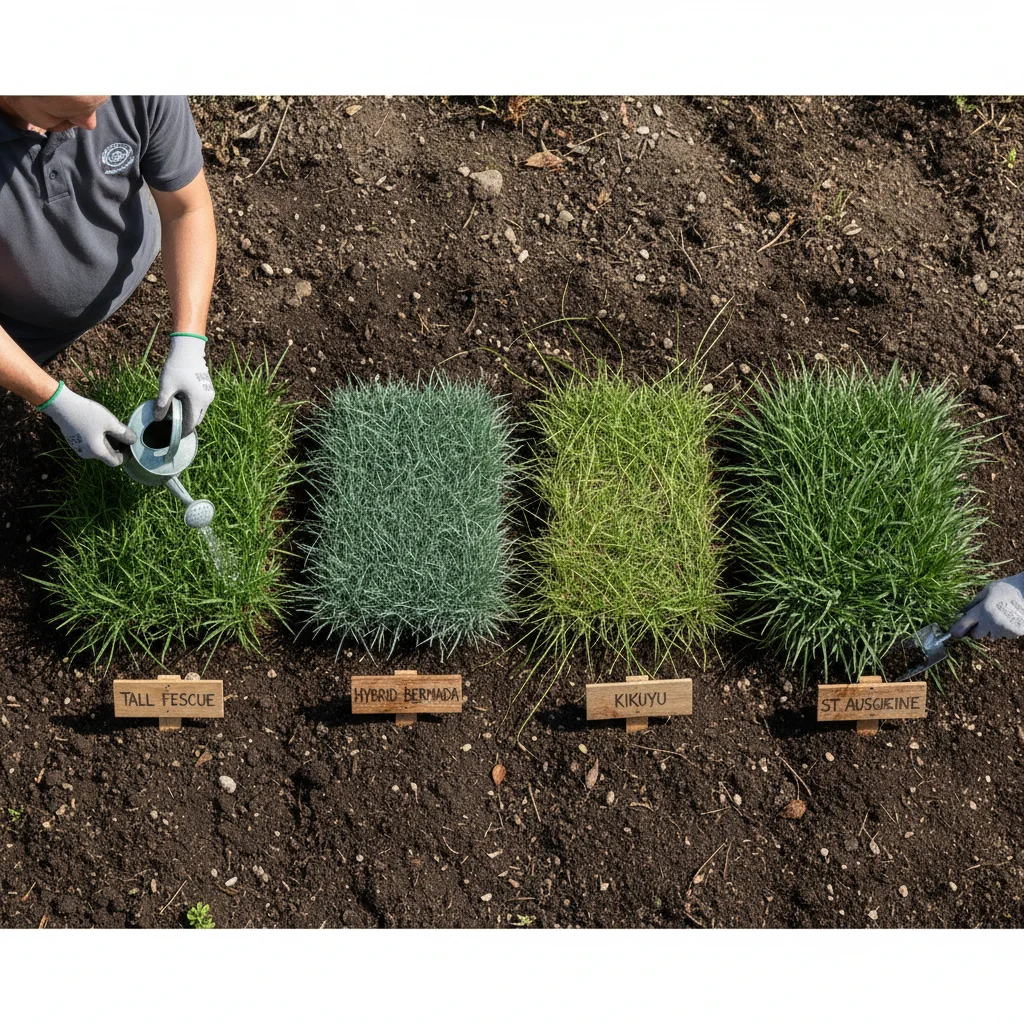
For most San Diego yards, tall fescue is the safer default, it stays green through December through February when bermuda goes tan, tolerates the marine-layer shade common on coastal lots, and qualifies for SDCWA turf-replacement rebates that bermuda does not. Bermuda wins on one factor: if your yard is inland East County with full sun all day, bermuda’s water demand is meaningfully lower and it handles summer heat with less stress.
Side-by-side comparison for San Diego conditions
| Factor | Tall fescue | Bermuda grass |
|---|---|---|
| Season type | Cool-season | Warm-season |
| Water use (summer) | ~35-40 in/yr | ~20-28 in/yr |
| Year-round green? | Yes, stays green all year in SD | Goes tan/dormant Dec-Feb inland |
| Sun requirement | 6-8 hrs preferred, tolerates moderate shade | 6+ hrs full sun required |
| Foot traffic | Moderate; bunching habit, slower repair | High; stolons repair bare spots fast |
| Mowing height | 2-3 inches | 0.5-1.5 inches |
| Sod cost installed | $0.60-$1.20/sq ft material + $1-2 labor | $0.50-$1.00/sq ft material + $1-2 labor |
| Seeding option? | Yes, tall fescue seed is widely available | Hybrid bermuda is sod or stolon only (sterile) |
| Best SD zones | Coastal, canyon-shaded lots, North County coast | Inland valleys, East County, full-sun yards |
| SDCWA rebate eligible? | Sometimes (turf replacement programs) | No |
Water estimates based on San Diego County Water Authority evapotranspiration data. Sod costs are county-wide ranges and vary by supplier and site prep required.
Coastal vs. inland: zone determines the winner
San Diego’s two dominant microclimates pull these grasses in opposite directions, and it’s the clearest way to make the call.
Coastal zones (La Jolla, Encinitas, Oceanside, Pacific Beach, Carlsbad): the marine layer cuts afternoon heat and raises humidity, which moderates both grasses’ stress. But coastal lots frequently deal with trees, fences, and west-facing exposures that cut direct sun to five or six hours. Bermuda needs that full six hours minimum to stay dense; in anything less it goes thin and weedy. Tall fescue, being a cool-season grass, handles moderate shade without thinning and loves San Diego’s mild winter temperatures. For these yards, fescue is the default.
Inland and East County (El Cajon, Santee, Escondido, Ramona, Alpine): summers push triple digits and the marine layer rarely penetrates past the foothills. Bermuda is bred for this kind of heat. Its deep root system digs further into the soil to find moisture, and it can be irrigated far less frequently than fescue once it establishes. If your inland yard gets six or more hours of unobstructed sun, bermuda’s lower water footprint is the honest advantage here.
For a broader view of how all the county’s common turf choices stack up, the best grass types for San Diego lawns guide covers kikuyu, St. Augustine, and zoysia alongside these two.
Water cost on San Diego’s tiered rates
This is where the numbers matter most. San Diego operates tiered water pricing, and residential accounts hitting the upper tiers pay $10 or more per hundred cubic feet. Tall fescue’s summer water demand runs roughly 35-40 inches per year across all SD climate zones. Bermuda’s demand runs 20-28 inches per year, a difference of 25-40% depending on your inland heat exposure.
On a 2,500 sq ft lawn in an inland zip code at upper-tier rates, that gap can represent $150-$300 per season. Coastal yards with moderate summer temps narrow it considerably, because fescue’s lower heat stress reduces its peak demand.
One more factor: the San Diego County Water Authority and Metropolitan Water District have offered turf-replacement rebate programs that pay per square foot to remove conventional lawns. Tall fescue has qualified under some program cycles as a lower-water-use alternative when replacing high-demand species. Bermuda has never qualified because its water use doesn’t meet the thresholds. If an active rebate program is running when you’re ready to install, fescue is the only one of these two you can apply against it. Check SDCWA’s current WaterSmart programs before you make a final call.
Winter color: the tradeoff nobody talks about enough
This is one of the least-discussed but most practical differences between these two grasses.
Bermuda is a warm-season grass that goes dormant when soil temperatures drop. In San Diego’s inland zip codes, that means a tan, straw-colored lawn from December through February. In HOA communities where brown dormant turf draws notices, or in front yards where curb appeal matters year-round, this is a real cost. Some homeowners overseed with annual ryegrass each fall to maintain winter color on bermuda; that’s an extra annual expense and task.
Tall fescue is a cool-season grass that actually grows most actively in fall and spring. It holds green through San Diego’s mild winters without overseeding, without extra inputs, and without HOA friction. For most residential front yards in this county, year-round color tips the scale toward fescue.
Traffic and dogs
Bermuda has the structural edge here. Its stolon-based spreading habit means worn spots and bare patches repair themselves over a season without reseeding, provided there’s enough sun. Sports fields and parks in San Diego’s hotter inland cities often use bermuda for exactly this reason.
Tall fescue’s bunching growth habit doesn’t self-repair the same way. A dog trail worn down to dirt will stay bare longer with fescue and may need overseeding or a sod patch to fill back in. If you have large dogs with a fixed running path across the yard, bermuda’s repair speed is a real advantage.
That said, fescue handles moderate foot traffic fine for most family yards. The gap only becomes meaningful in concentrated, high-frequency wear zones. If the yard is more passive-use lawn than dog run, fescue holds up without issue.
For dogs and heavy-use comparisons with other warm-season options, see kikuyu vs. bermuda grass in San Diego, which covers kikuyu’s exceptional traffic recovery in detail.
Sod vs. seed: the installation difference
This is a practical point that affects your install cost and timeline.
Tall fescue can be installed as sod or seeded directly. Seeding is significantly cheaper per square foot, $0.10-$0.20 in seed cost versus $0.60-$1.20 in sod material, but it takes 8-12 weeks to establish a usable lawn and requires consistent moisture during germination. Marathon sod (grown by Southland Sod Farms in Oxnard) is the dominant tall fescue product in Southern California; Marathon I, II, and III are all tall fescue cultivars selected for SoCal heat, and they hold up better in inland zones than generic seed blends. When contractors quote fescue sod in San Diego, Marathon is usually what they’re pricing.
Hybrid bermuda is sterile. It cannot be grown from seed because it produces no viable seed. Every bermuda installation uses sod, plugs, or stolons. This makes bermuda installs slightly more expensive per square foot on material alone, and it limits your options when patching bare spots later. You’re always buying sod or plugs; you can’t throw down a handful of seed and wait.
If upfront cost matters and you can manage a 10-week establishment window, fescue seed is the most affordable way into a quality San Diego lawn. If you want instant coverage, both grasses go in as sod and the cost difference narrows. The full breakdown is in the sod installation cost guide for San Diego.
For the installation process itself, from site prep through first-week watering schedule, our sod installation service page covers what to expect.
Which grass fits your San Diego yard
Pick tall fescue when:
- Your yard is coastal or canyon-adjacent with partial shade
- Year-round green matters to you or your HOA
- You want to qualify for SDCWA turf-replacement rebates
- You prefer seeding as the lower-cost install option
- You’re in a North County coastal zip (Carlsbad, Encinitas, Oceanside, San Marcos)
Pick bermuda grass when:
- Your yard is inland, East County, or gets unobstructed full sun all day
- Water savings is the top priority and you’re on upper-tier rates
- You have dogs or heavy foot traffic with concentrated wear paths
- You’re comfortable with a tan lawn December through February, or willing to overseed
- You want the lowest material cost for a sod install
If you’re also weighing St. Augustine against fescue, especially for shadier coastal lots, the St. Augustine vs. fescue guide for San Diego is worth reading before you decide. And if warm-season durability is the priority, kikuyu vs. bermuda covers the two most traffic-tolerant options in this climate.
Once you’ve picked your grass, the lawn maintenance service page covers ongoing care after installation.
Frequently asked questions
Which is better for San Diego, tall fescue or bermuda grass?
For most San Diego yards, tall fescue is the better default. It stays green through winter, tolerates the partial shade common on coastal lots, and qualifies for water authority rebate programs that bermuda does not. Bermuda is the better pick for full-sun inland yards in East County where summer heat is intense and minimizing irrigation costs is the top priority.
Does bermuda grass go dormant in San Diego winters?
Yes. Bermuda goes tan and dormant when soil temperatures drop in cooler months, typically December through February in inland zip codes. Coastal areas with milder winters can see bermuda hold color longer, but brown dormancy is expected most years inland. Tall fescue, being a cool-season grass, stays green through San Diego’s mild winters without overseeding.
Can tall fescue handle San Diego heat?
Yes, tall fescue handles San Diego summers well, particularly in coastal and valley zones. Its deep root system, which reaches 12-24 inches at maturity, lets it access soil moisture between watering cycles and tolerate summer heat without going dormant. In extreme East County heat (Ramona, Alpine, Julian), fescue needs more frequent irrigation than bermuda, but it doesn’t go tan or dormant the way bermuda does in winter.
Is bermuda grass or tall fescue more drought tolerant in San Diego?
Bermuda grass is more drought tolerant once fully established. Its estimated annual water use is 20-28 inches per year in San Diego, compared to tall fescue’s 35-40 inches. The gap is most meaningful in hot inland zones where summer irrigation drives the bill. Coastal yards narrow the difference because moderate temperatures reduce fescue’s peak demand. Both grasses are far more water-efficient than St. Augustine or kikuyu.
Can you seed tall fescue in San Diego, or does it have to be sod?
You can seed tall fescue. It’s one of the few lawn grasses that germinates reliably from seed in San Diego’s climate, making it a lower-cost option than sod. Seeding works best in fall (October through November) when soil is warm but air temperatures are cooling, giving the grass its strongest establishment window. Bermuda, by contrast, is only available as sod, plugs, or stolons; hybrid bermuda is sterile and produces no viable seed.
What is Marathon sod and is it tall fescue?
Marathon is a brand of tall fescue sod grown by Southland Sod Farms in Oxnard, California. It’s the dominant tall fescue product sold in San Diego and across Southern California. Marathon I, II, and III are different cultivars of tall fescue selected for heat tolerance in this climate; they differ mainly in blade width and growth rate. When a San Diego contractor quotes tall fescue sod, Marathon is almost always what they’re pricing. So comparing Marathon vs. bermuda is the same comparison as tall fescue vs. bermuda.
Ready to install
If you know which grass you want and you’re ready to move forward, or if you’d like a second opinion on which fits your specific yard, our team covers all of San Diego County, coast to backcountry. We handle site prep, grading, sod selection, and installation so your new lawn establishes clean. Call us at (760) 400-6355 for a same-day estimate.