For most San Diego yards, Kikuyu grass is the better choice, it tolerates partial shade, handles heavy foot traffic, and stays green longer through mild winters. Bermuda beats it only when you want a finer blade, have full sun all day, and mow tight. Kikuyu grass (Pennisetum clandestinum) is a coarse, fast-spreading warm-season turf originally from East Africa that dominates San Diego parks, sports fields, and residential lawns for good reason.
This page compares kikuyu against bermuda only. For bermuda measured against fescue, St. Augustine and zoysia, see our guide to best grass types for San Diego lawns.
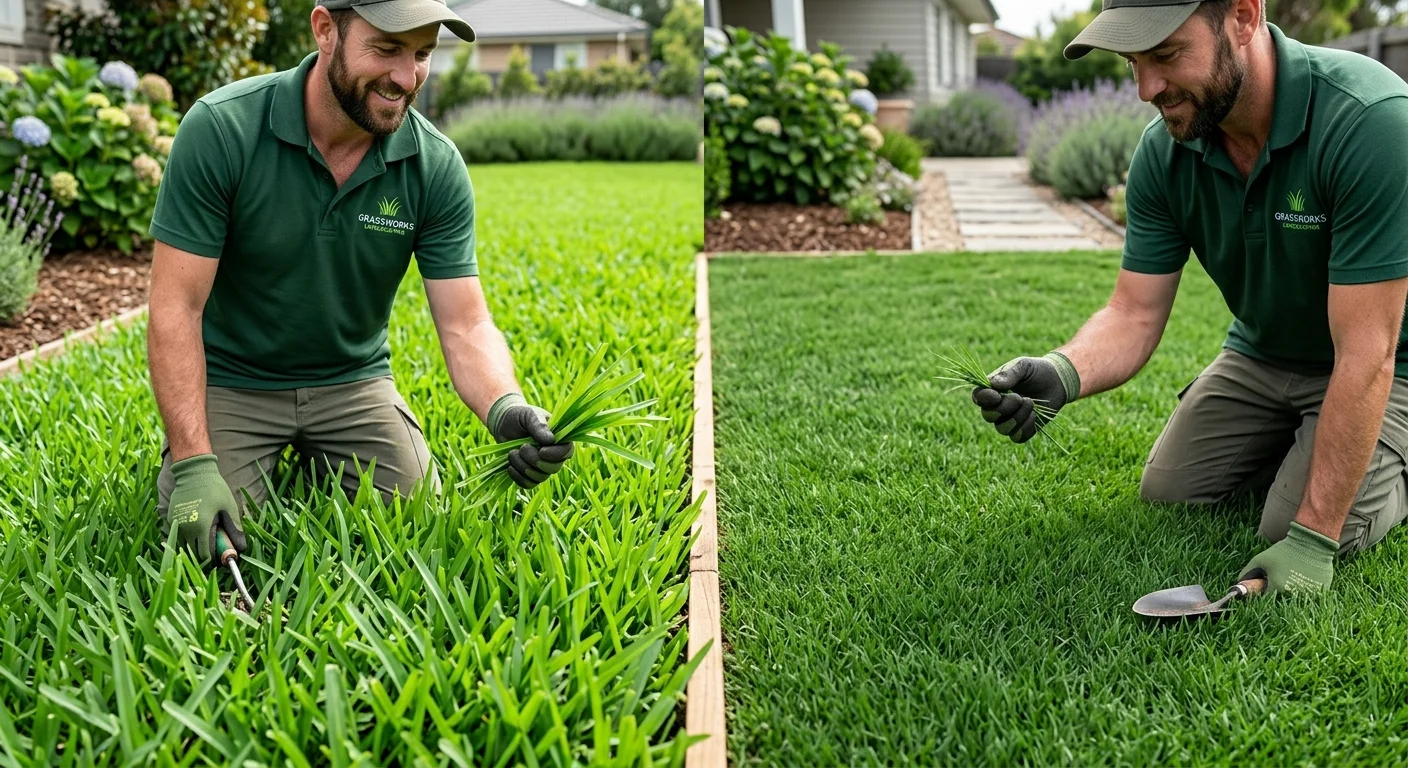
To get started, here’s a quick side-by-side comparison of these popular San Diego lawn choices:
| Feature | Kikuyu Grass | Bermuda Grass |
|---|---|---|
| Appearance | Coarser blades, bright apple green, dense | Finer blades, deep green, very dense |
| Texture | Thick, soft, spongy | Fine, soft, smooth |
| Growth Habit | Very aggressive, spreads quickly | Aggressive, spreads quickly |
| Drought Tolerance | Excellent | Excellent (often slightly better) |
| Foot Traffic | Extremely high | High |
| Sun Exposure | Full sun, tolerates some partial shade | Full sun, needs 6-8+ hours daily |
| Water Needs | Moderate-low, efficient once established | Moderate-low, very efficient |
| Mowing Height | 1-2 inches | 0.5-1.5 inches |
| Weed Suppression | Excellent, highly competitive | Excellent, highly competitive |
| Winter Dormancy | Stays greener longer in mild winters | Turns brown in cooler months |
Key differences in appearance, texture, and growth habits
When you look closely at Kikuyu and Bermuda grass, you’ll immediately notice their distinct visual and tactile qualities. Kikuyu grass features wider, coarser blades with a vibrant, almost apple-green color. It creates a very dense, thick turf that feels soft and spongy underfoot. Its growth habit is exceptionally aggressive, spreading rapidly through both above-ground stolons and underground rhizomes. This rapid spread helps it fill in quickly and recover from damage. However, it also means Kikuyu can invade adjacent flowerbeds or pathways if not properly edged.
Bermuda grass, by contrast, has much finer, narrower blades that give it a more delicate and manicured appearance. Its color is typically a deeper, richer green. The texture is smooth and soft. Like Kikuyu, Bermuda is an aggressive spreader, using both stolons and rhizomes to establish a thick, dense lawn. While aggressive, it tends to create a more uniform, carpet-like surface, especially when kept closely mowed. Both types are warm-season grasses, meaning they thrive in heat and sunlight. They establish quickly, which is why they are common choices for sod installation across San Diego. In cooler winter months, both can enter dormancy, but Kikuyu often maintains a greener appearance longer in our mild San Diego winters compared to Bermuda, which typically browns more noticeably.
Water and sun requirements for San Diego’s climate
San Diego’s abundant sunshine and generally dry conditions make water efficiency a top priority for any lawn. Both Kikuyu and Bermuda grass are excellent choices for our climate because they are highly drought-tolerant. However, they do have some differences in their specific needs.
Kikuyu grass thrives in full sun but shows a surprising tolerance for partial shade. This can be a real advantage if your yard has areas that receive less than a full day of direct sunlight. Once established, Kikuyu is very water-efficient, needing moderate-low irrigation. It’s crucial to provide consistent moisture during the initial establishment phase to ensure a strong root system.
Bermuda grass, on the other hand, demands full, direct sunlight. It needs at least 6-8 hours of intense sun daily to truly flourish. Areas with significant shade will struggle to grow healthy Bermuda. When it comes to water, Bermuda is remarkably efficient, often considered slightly more drought-tolerant than Kikuyu once its deep root system is fully developed. Its ability to access water from deeper in the soil helps it withstand prolonged dry spells.
For San Diego homeowners, choosing a drought-tolerant grass is an intelligent decision, helping conserve water and manage utility costs. The San Diego County Water Authority (SDCWA) offers valuable resources on efficient watering practices and water-wise landscaping. Both Kikuyu and Bermuda are great options compared to other grass types when you are considering the best grass types for San Diego lawns that can handle our arid conditions.
Durability: which one stands up to foot traffic and pets?
When it comes to handling the rigors of family life, pets, and active play, durability is a key factor in choosing a lawn. Both Kikuyu and Bermuda grass are renowned for their toughness, far exceeding the resilience of many cool-season grasses. However, there are nuances in their ability to recover from heavy use.
Kikuyu grass truly excels in high-traffic environments. Its aggressive growth habit, combined with its tough blade structure, allows it to bounce back quickly from repeated foot traffic, children’s games, and pets running across the lawn. This exceptional resilience is why Kikuyu is often the turf of choice for sports fields and parks in similar climates. If your family spends a lot of time outdoors, if you have energetic dogs, or if you regularly host gatherings, Kikuyu will likely stand up to the challenge with minimal signs of wear.
Bermuda grass is also very durable and can handle considerable foot traffic. It establishes a dense, tough turf that resists wear well. For most active family yards, Bermuda provides ample resilience. However, in extreme, concentrated impact situations, Kikuyu often shows a slightly faster and more complete recovery. Bermuda’s finer blades might take a little longer to regenerate from divots or heavily worn paths compared to Kikuyu’s vigorous growth. Ultimately, both are excellent choices for active households, offering far superior resistance to wear and tear than more delicate lawn varieties.
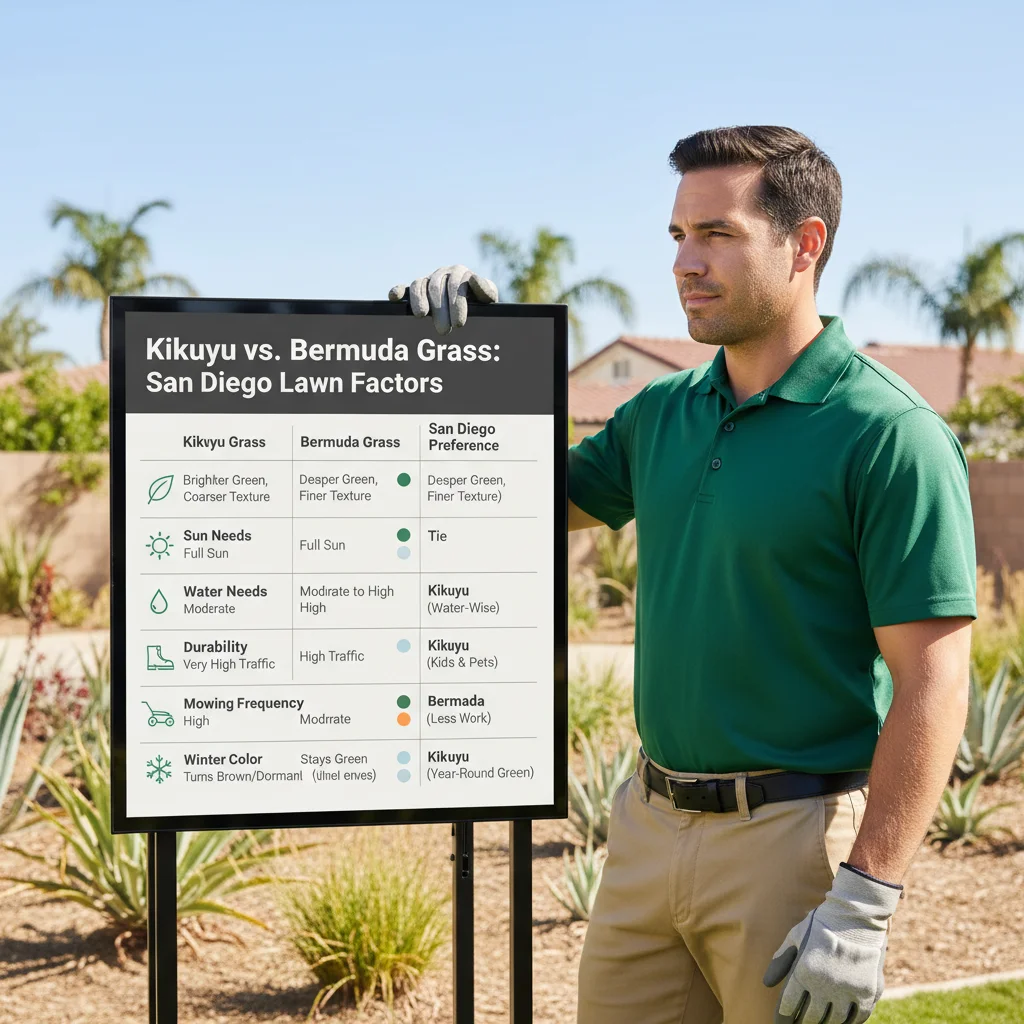
Maintenance needs: mowing, fertilizing, and disease resistance
Maintaining a beautiful lawn in San Diego involves a consistent routine, and while both Kikuyu and Bermuda are relatively low-maintenance once established, their rapid growth means frequent attention.
Mowing: This is where both grasses demand regular work. Kikuyu grass grows exceptionally fast during its active season, often requiring weekly mowing, and sometimes even more frequently in peak summer. To keep it looking neat and prevent scalping, aim for a mowing height of 1-2 inches. Bermuda grass also grows quickly and benefits from frequent mowing. It can be cut shorter than Kikuyu, typically between 0.5 and 1.5 inches, allowing for that classic, manicured golf-course look. Regular mowing is crucial to prevent thatch buildup and encourage horizontal growth. If you prefer not to manage this yourself, professional weekly lawn maintenance can be a huge help.
Fertilizing: Both Kikuyu and Bermuda are heavy feeders during their growing season. They benefit from a regular fertilization schedule to maintain their vibrant color and density. A balanced warm-season fertilizer applied every 4-6 weeks during spring and summer is usually sufficient. Over-fertilization can lead to excessive growth and thatch. Our lawn fertilization & care service can ensure your grass gets the nutrients it needs.
Weed Control: Thanks to their aggressive growth and dense nature, both grasses are excellent at naturally suppressing weeds. A healthy, thick Kikuyu or Bermuda lawn leaves little room for unwanted plants to take root. However, their aggressive spreading can sometimes lead to invasion of garden beds or cracks in pavement. Proper edging and occasional spot treatment for stubborn weeds are good practices. For proactive defense, consider implementing a San Diego weed control and pre-emergent timing strategy.
Disease and Pests: In general, both Kikuyu and Bermuda are tough and resistant to most common lawn diseases and pests in San Diego’s climate. They can occasionally experience issues like dollar spot, brown patch, or armyworms, especially under stress from improper watering or fertilization. However, with good cultural practices, serious outbreaks are less common than with some other grass types. Both can also develop thatch, a layer of dead and living organic matter that builds up on the soil surface. Occasional dethatching or core aeration helps maintain good air and water penetration.
Our verdict for most San Diego yards
Deciding between Kikuyu and Bermuda grass for your San Diego lawn ultimately comes down to your specific priorities, aesthetic preferences, and how you plan to use your yard. Both are exceptional warm-season grasses perfectly suited to our climate, offering excellent drought tolerance and durability.
If you prioritize an extremely resilient lawn that can withstand heavy foot traffic, rambunctious pets, and active family play, Kikuyu grass is often the slight frontrunner. Its coarser blades and aggressive growth mean it recovers quickly from wear and maintains a vibrant, bright green appearance, even with a bit of partial shade. It’s a fantastic choice for busy households where durability and ease of recovery are paramount, provided you’re prepared for its vigorous mowing schedule.
On the other hand, if you have a yard bathed in full, direct sunlight and desire a finer-bladed, more manicured look reminiscent of a golf course, Bermuda grass might be your ideal pick. It’s incredibly drought-tolerant, offers great durability, and can be mowed very short for a sleek aesthetic. While also high-traffic friendly, its slightly finer texture gives it a different feel and visual appeal.
For many San Diego homeowners seeking a beautiful, durable, and water-wise lawn, Kikuyu offers a slightly more forgiving option in terms of shade tolerance and extreme durability. However, both represent smart choices that thrive here. The “better” grass truly depends on your specific needs and the look you’re aiming for. Whichever you choose, professional sod installation ensures your new lawn gets the best possible start. If you’re wondering about the investment, you can find more information on sod installation cost in San Diego.
Frequently asked questions
Is kikuyu grass good for San Diego?
Yes. Kikuyu is one of the best grass types for San Diego’s climate. It handles the heat, tolerates brief drought, and stays green well into winter because San Diego’s coastal temperatures rarely drop low enough to push it fully dormant. Its tolerance for partial shade also makes it practical for yards that don’t get full sun all day.
Is kikuyu better than bermuda for San Diego yards?
For most homeowners, yes. Kikuyu handles more shade, recovers faster from heavy traffic, and holds its color longer in winter. Bermuda is the better pick only when you have a full-sun yard and want a closely mowed, fine-bladed lawn with slightly better drought performance once deep roots establish.
Does kikuyu grass spread and become invasive?
Kikuyu spreads aggressively through both stolons and underground rhizomes, so it will invade adjacent flower beds and cracks in hardscape if you don’t edge it regularly. In San Diego’s climate it grows actively from spring through fall. Regular steel-edging every two to four weeks keeps it contained. That same vigor is what makes it repair itself so quickly after damage.
Which needs less water, kikuyu or bermuda?
Both are highly drought-tolerant and among the most water-efficient warm-season grasses available. Bermuda tends to edge out kikuyu slightly once its root system is fully established (12 to 18 months), because its deeper roots access soil moisture further down. During the establishment window both need consistent watering, roughly two to three times per week. After that, either grass can often thrive on San Diego County Water Authority-recommended irrigation schedules.
Can you mix kikuyu and bermuda grass?
You can, but it’s not recommended. The two grasses grow at different heights and have different blade textures, so a mixed lawn looks patchy. Kikuyu is also aggressive enough to crowd out bermuda in shadier areas over time. If you’re replacing an existing lawn or patching bare spots, stick to one variety for a uniform result. See our guide to St. Augustine vs. fescue for San Diego if you’re also weighing cooler-season options for shadier parts of the yard.
Which warm-season grass is easiest to maintain in San Diego?
Kikuyu and bermuda are similar in maintenance effort. Both need frequent mowing during the growing season and a fertilization schedule every four to six weeks in spring and summer. Kikuyu’s faster growth means you’ll mow slightly more often, but its ability to recover quickly from wear means you spend less time reseeding bare patches. For a full comparison of all popular options, read our best grass types for San Diego lawns guide. If shade is your main concern, see kikuyu vs. St. Augustine grass, or weigh a softer, denser turf in our zoysia grass for San Diego guide.
Kikuyu grass vs bermuda: which is better for a San Diego lawn?
Both are warm-season grasses well suited to San Diego, and the choice comes down to how you use the yard. Kikuyu has wider, coarser, apple-green blades and forms a dense spongy turf that bounces back fast from kids, pets and heavy foot traffic, and it tolerates partial shade better. Bermuda has finer, narrower blades and a deeper green for a more manicured look. If durability matters most, Kikuyu edges it; if appearance matters most, Bermuda does.
Bermuda grass vs kikuyu: which needs less mowing and water?
Neither is low-mow. Both grow fast enough in their active season to need weekly mowing, and Kikuyu often needs it more than weekly in peak summer, so plan on frequent cutting either way. On water they are close, since both are highly drought-tolerant once established and both are strong choices for San Diego’s dry conditions. Kikuyu’s advantage is that it holds up in partial shade where Bermuda thins out.
When to call us
Choosing and installing the right sod can transform your San Diego yard, but it’s a significant project. Professional sod installation ensures proper ground preparation, irrigation adjustments, and expert installation for a healthy, thriving lawn from day one. We work across San Diego County, coast to backcountry. Call us at (760) 400-6355 to get matched. The independent professional quotes the work.