Fire-season yard work should follow CAL FIRE and the fire authority for the address, not a blog plant list. Read CAL FIRE defensible space and the brush-clearance guide. Bloom Pro SD matches independent contractors. We do not inspect for fire agencies.

Understanding defensible space zones around your home
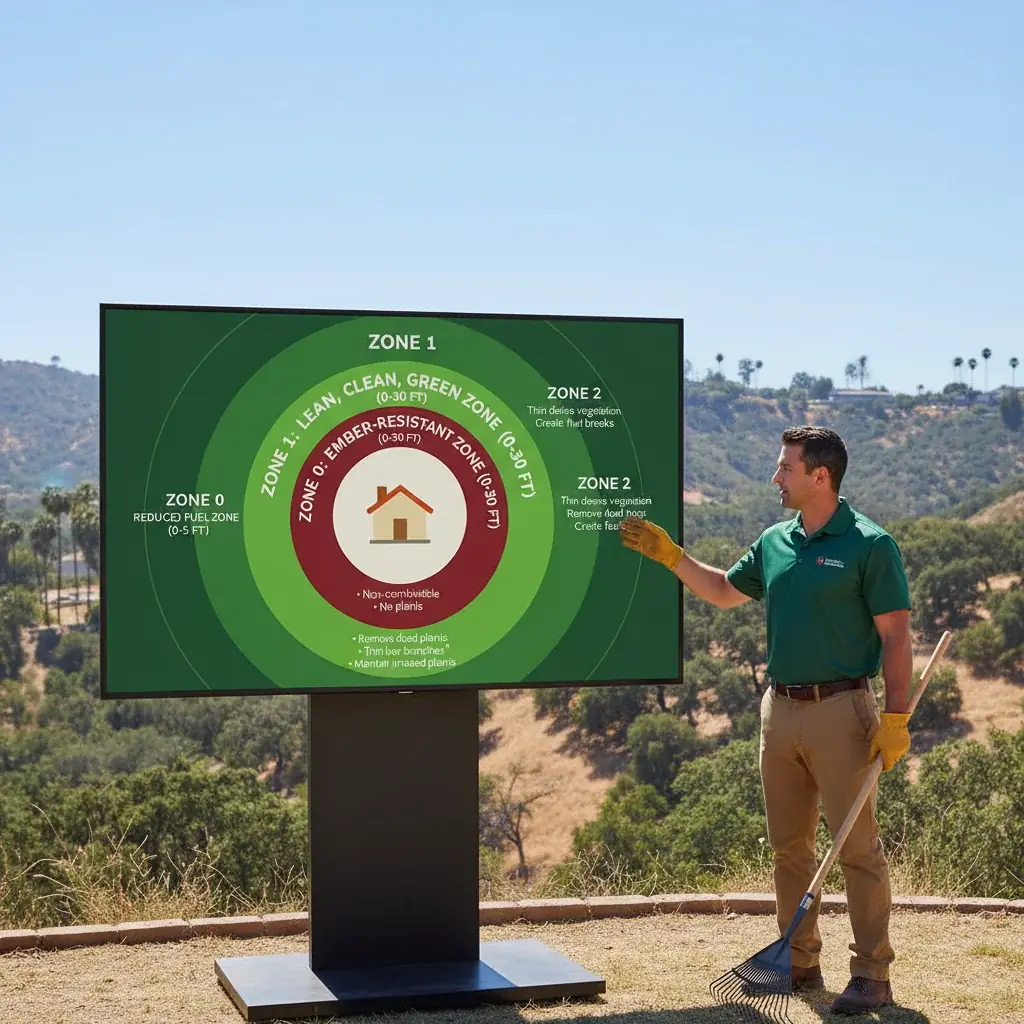
Creating and maintaining defensible space is the most critical step San Diego homeowners can take. Cal Fire defines defensible space as the buffer you create between your home and the vegetation around it. This space gives firefighters a safer area to work and helps protect your home from advancing flames or embers. It isn’t just about clearing everything; it’s about strategic management in specific zones.
Zone 0: The Ember-Resistant Zone (0-5 feet from your home) This immediate area needs to be extremely lean, clean, and non-combustible. Remove all flammable materials here. This includes dead leaves, pine needles, and any plant material. Avoid wood mulch and choose hardscaping materials like concrete, pavers, or gravel instead. Any plants in this zone should be low-growing, well-irrigated, and fire-resistant. This zone stops embers from igniting materials right next to your house.
Zone 1: The Lean, Clean, and Green Zone (0-30 feet from your home) Within this critical zone, you must maintain clear, well-spaced, and irrigated vegetation. Remove all dead or dying plants, grasses, and weeds. Space out shrubs and trees, ensuring they don’t form a continuous path for fire. Trim tree limbs up from the ground and away from structures. Keep lawns mowed short. This zone works to reduce the intensity of any approaching fire and prevents it from spreading directly to your home.
Zone 2: The Reduced Fuel Zone (30-100 feet from your home) This outer zone focuses on reducing the overall fuel load. Remove or thin out dense stands of vegetation. Cut down or prune dead trees and shrubs. While less intensely managed than Zone 1, it’s still crucial for slowing a fire’s progress. Here, you want to break up continuous fuel sources. This helps weaken the fire as it moves towards your property. Consistent maintenance across all three zones is key for effective fire protection. Following these Cal Fire guidelines significantly enhances your home’s safety.
What to clear: dead plants, dry leaves, and brush
Effective fire season yard cleanup centers on removing combustible materials. These items act as fuel, allowing fires to spread quickly and intensely. In San Diego’s dry climate, even small amounts of debris can become a serious hazard. Start by inspecting your entire property, focusing on areas where fuel can accumulate.
Pay close attention to anything that is dead, dry, or decaying. This includes dead leaves, fallen branches, and dry grasses, especially during our long dry spells. Clear out any accumulation of pine needles from under trees and around the base of your home. Prune away dead or dying branches from shrubs and trees. These “ladder fuels” can carry fire from the ground into the tree canopy. Don’t forget areas like under decks, within unenclosed foundations, and along fences. These are often overlooked but can be highly vulnerable spots.
Gutters can also collect dry leaves and debris, creating a direct path for embers to ignite your roof. Clean them out regularly. Remove any weeds and overgrown brush that have dried out. These materials ignite easily and can spread fire rapidly. Getting rid of these fuels reduces the intensity and speed of a wildfire. It also gives firefighters a better chance to defend your home. If your district sent a notice, our guide to defensible space and brush clearance in San Diego walks through the zones and deadlines that apply to your lot. A thorough seasonal cleanup is essential for this critical task. This comprehensive service can prepare your yard for the upcoming fire season.
Proper tree trimming for fire safety
Trees are a valuable part of any landscape, but they require proper care to ensure fire safety. Unmaintained trees can become major fire hazards, especially in a region like San Diego. Strategic trimming reduces the amount of flammable material and creates breaks in the canopy. This prevents fire from spreading quickly through your yard.
First, create vertical clearance. Remove all tree limbs within 10 feet of your home, garage, or any other structure. This prevents fire from directly igniting your buildings. For trees located on a slope, increase this clearance distance accordingly. Limbing up tall mature trees or taking down a dead one is past what a landscape crew should handle on a ladder; for that work a tree service like Branch Pro San Diego has the climbers and equipment to do it safely. Next, address ladder fuels. These are low-hanging branches or shrubs that can allow a ground fire to climb into the tree canopy. Trim branches up to 6-10 feet from the ground. If the tree is shorter than 18 feet, remove lower branches up to one-third of the tree’s height.
Ensure adequate horizontal spacing between trees. Canopies should not be touching, especially if the trees are close to your home. Maintain a minimum of 10 feet between tree canopies. For larger trees or those in high-fire-risk areas, more spacing is better. Remove any dead, diseased, or dying branches immediately. These are highly combustible. For overgrown hedges or shrubs that pose a risk, consider professional hedge trimming. This ensures proper clearance and maintains the plant’s health while enhancing fire safety. Regular, professional trimming protects your trees and helps safeguard your home.
Choosing fire-resistant plants for your landscape
Selecting the right plants is a smart strategy for fire-safe landscaping in San Diego. While no plant is entirely “fireproof,” many are less flammable than others. These fire-resistant plants tend to have certain characteristics that make them safer choices, especially in Zone 1 and Zone 2.
Look for plants with high moisture content in their leaves and stems. Succulents, for example, store a lot of water and burn much slower than dry, woody plants. Plants with supple, easily bent leaves are often good choices. Avoid plants that contain volatile oils, resins, or waxy coatings. These can act as natural accelerants. Plants with fine, twiggy growth or loose, papery bark also tend to ignite easily.
Excellent fire-resistant options for San Diego include many native species. Examples are Aloe, California Lilac (Ceanothus), and various types of Agave and Yucca. Groundcovers like Sedum and Ice Plant are also good for reducing fuel loads. When planting, remember that spacing is crucial. Even fire-resistant plants can contribute to a fire if they are planted too densely. Grouping plants by water needs can help maintain their moisture content through proper irrigation. Always place less flammable plants closer to your home and avoid planting any highly flammable species in Zone 0 or Zone 1. This strategic selection helps create a landscape that is both beautiful and safer from wildfire.
Hardscaping choices that create fire breaks
Hardscaping plays a vital role in creating effective fire breaks around your San Diego home. These non-combustible elements act as barriers, interrupting the path of fire and reducing the risk of ignition. Unlike plants, hardscape materials do not burn, providing a crucial defense zone.
Patios, walkways, and driveways are excellent examples of natural fire breaks. Made from concrete, pavers, or stone, they create wide, non-flammable zones directly adjacent to your home. Ensure these areas are kept clear of any combustible debris like dry leaves or pine needles. Expanding existing hardscape or adding new features can significantly enhance your home’s fire safety. Consider extending a patio or widening a path that leads around your house.
Gravel or crushed rock beds are another effective hardscaping option. They are ideal for use in Zone 0, immediately around your foundation. These materials prevent plant growth and provide an ember-resistant surface. Decorative rock gardens, properly maintained with fire-resistant plants and minimal organic material, also contribute to fire safety. Even a well-constructed retaining wall, made from stone or concrete, can act as a partial fire break on sloped terrain. When planning your landscape design, integrate these hardscape elements strategically. They provide aesthetic appeal while offering invaluable protection during fire season. These installations contribute to a strong, fire-safe perimeter for your property.
When to schedule your seasonal fire prep cleanup
Timing is everything when it comes to preparing your San Diego yard for fire season. The region typically experiences its highest fire risk in late summer and fall, following a long, dry spring and summer. This makes late spring and early summer the ideal time to conduct your comprehensive fire prep cleanup.
By tackling your cleanup before temperatures consistently rise and vegetation completely dries out, you get ahead of the risk. Waiting too long means dealing with much drier, more combustible materials. Early action ensures your property is ready when conditions become most dangerous. However, fire safety is not a one-time task. It requires ongoing maintenance throughout the year, especially during periods of drought or high wind. Regular checks for dead plants, accumulating debris, and overgrown vegetation are essential.
While many homeowners can handle some aspects of fire prep, a professional seasonal cleanup can cover equipment, brush volume, high pruning, and green-waste disposal. The matched independent professional should confirm current CAL FIRE and local defensible-space rules for the parcel. We can connect you with a crew that quotes that work. Preparing ahead of peak fire weather is still the homeowner’s duty.
Frequently asked questions
What are the defensible space zones around a San Diego home?
CAL FIRE defines them by distance from the structure. Zone 0 is the ember-resistant zone from 0 to 5 feet, where nothing combustible should sit against the house. Zone 1 runs 5 to 30 feet and is the lean, clean and green zone. Zone 2 runs 30 to 100 feet and is the reduced-fuel zone.
What should I clear first for fire safety?
Anything dead, dry or decaying. Dead leaves, fallen branches and dry grasses are the fuel that carries fire across a property, and pine needle accumulation under trees and against the house is one of the most commonly missed sources. In San Diego’s long dry spells, even small amounts of debris matter.
Which plants are safest in a fire-risk area?
Plants with high moisture content and supple, easily bent leaves. Succulents store water and burn far more slowly than dry woody material. Avoid eucalyptus within 30 feet of structures, junipers, pampas grass, pepper trees and Italian cypress near the eaves. California natives like toyon, manzanita and ceanothus are good performers.
When should fire prep happen?
Late spring, before temperatures climb and vegetation fully dries. San Diego’s highest risk lands in late summer and fall after a long dry stretch, so waiting until then means working with much drier, more combustible material. Getting ahead of it also means the property is ready when Santa Ana conditions arrive.
When to call us
Preparing your yard for fire season often involves significant physical labor and specialized equipment. If you have a large property, dense vegetation, or you want a licensed independent professional to walk the parcel, call (760) 400-6355. They quote the work. You hire them directly.