You pop the lid off the green box in your yard to check a zone and find it half full of water. Sometimes it’s clear and cold. Sometimes it’s cloudy and sitting on top of visible mud. Either way, the box you expected to see dry valves in is now a small pond, and it’s not obvious whether that’s a problem you can leave alone or one that’s costing you water every day.
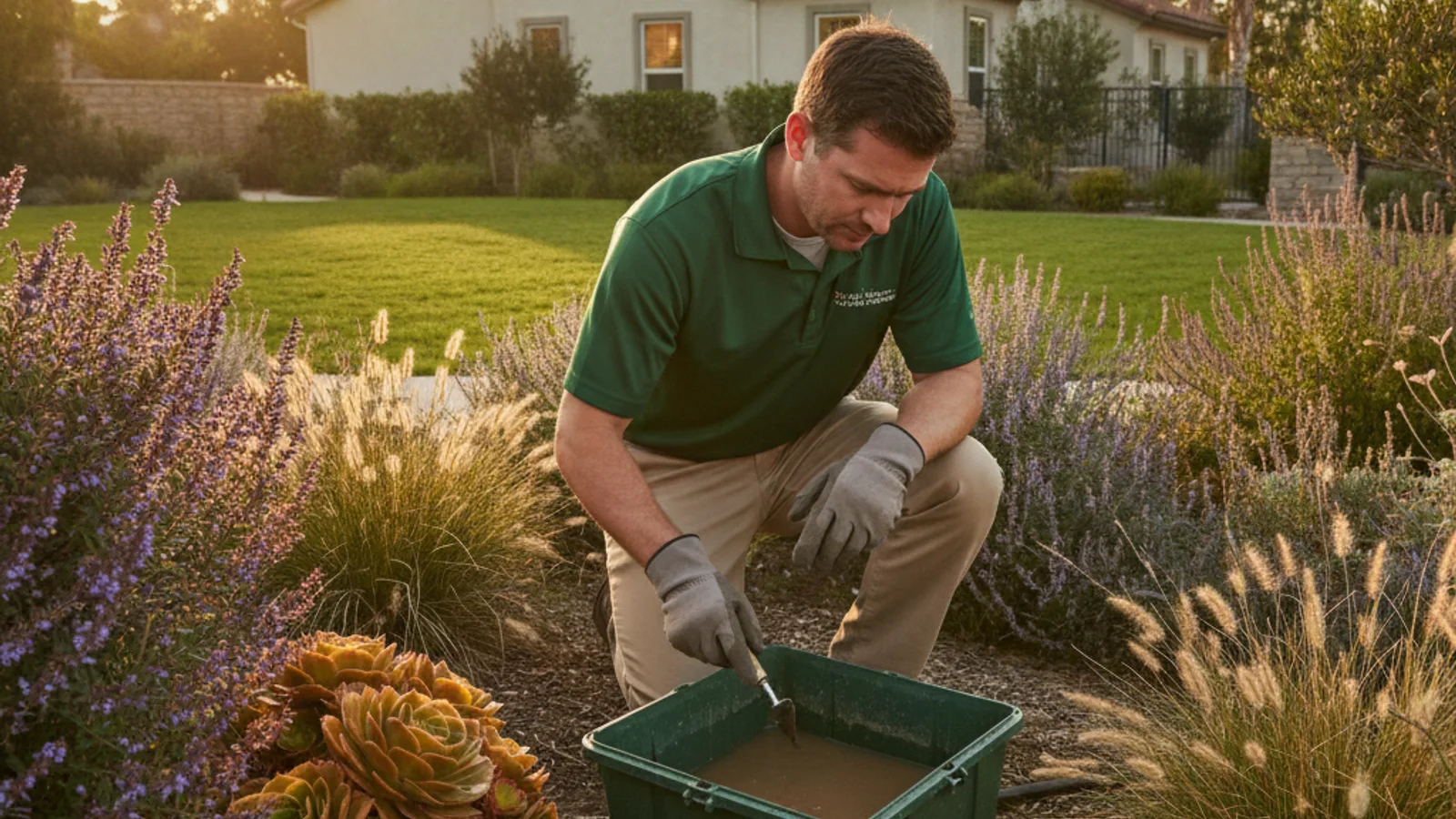
Why water appears inside the valve box
A valve box is just a plastic housing set into the ground so the valves, wiring, and pipe fittings for one or more zones sit somewhere accessible instead of buried under dirt. It isn’t sealed. The lid keeps out debris and foot traffic, not water, and the box usually has no floor at all, just open ground underneath. That design means water can get in from above, from the sides, or from a fitting failing inside the box itself.
Some water in the bottom of a valve box after a storm is normal. San Diego’s clay-heavy soil in inland pockets like El Cajon, Santee, and parts of Lakeside doesn’t drain fast, so a box sitting in a low spot can collect groundwater the same way a low corner of your lawn does. The question worth answering isn’t whether there’s water in the box. It’s whether that water shows up only after rain and slowly disappears, or whether it’s there constantly, rising even on dry weeks with the system off.
A box that’s dry a day after rain but wet again three days later, with no rain in between, isn’t collecting rainwater anymore. Something inside the system is putting water there, and that’s worth tracking down before it wastes more than it already has.
How to separate rainwater from an irrigation leak
Start with timing. Check the box the morning after a storm, then check it again on a dry day, ideally one where the irrigation controller hasn’t run that zone in at least 24 hours. If it’s dry on the dry day, rain explains what you saw and no repair is needed. If it’s wet on the dry day too, move to the next test.
Shut off water to the property at the main shutoff, or at minimum disable the irrigation controller so no zone can activate, and check your water meter’s leak indicator, usually a small triangular or star-shaped dial that spins any time water is moving through the line. If it’s spinning with everything off, water is flowing somewhere on the property, and a valve box that keeps refilling is a strong candidate for where.
Bail the box out completely with a cup or a wet-vac and time how fast it refills. A box that fills back up within an hour with the system off points to a leak feeding it directly, either from a cracked fitting inside the box or a mainline running near it. A box that takes a full day or more to seep back to the same level is more consistent with groundwater working its way in from surrounding clay soil after a wet week, not an active leak. Our guide to finding a sprinkler system leak walks through the meter and zone-by-zone checks in more detail if the leak indicator confirms water is moving somewhere in the system.
Which valve, fitting, and pipe clues matter
Once you know it’s not just rainwater, look at what’s actually visible in the box. A valve that’s warm or vibrating slightly when the system is off usually means the diaphragm inside isn’t sealing and water is passing through it continuously, not just when the zone runs. Our breakdown of fixing a sprinkler valve covers how to tell a stuck diaphragm from a failed solenoid if you want to go a step further before calling anyone.
Water bubbling or seeping specifically from a threaded fitting or a glued PVC joint, rather than rising evenly from the bottom of the box, points to a cracked or separated connection at that joint instead of the valve itself. Fittings inside a valve box take stress from soil movement over time, and San Diego’s expansive clay shifts more than most soils do through wet and dry seasons, which loosens joints that were fine when installed.
If the water level in the box rises and falls in step with when a specific zone runs, rather than staying constant, the leak is probably downstream of that valve, in the lateral line feeding that zone, not in the valve or the box itself. That distinction matters because a lateral line leak is often further from the box, out under the lawn, even though the water shows up in the box first as the low point.
Note whether the water in the box smells or looks like standing surface runoff (soil, leaves, cloudy) versus clean and cold, closer to what comes out of a hose. Clean water is more consistent with a pressurized line leak. Cloudy water that matches the color of the surrounding dirt after rain is more consistent with surface or groundwater intrusion.
When repeated pooling points to a wider drainage issue
Sometimes the valve box isn’t the source of the water at all. It’s the lowest point in a yard that doesn’t drain well, and it’s simply catching what the rest of the property is shedding. If you’ve ruled out an irrigation leak with the meter and bail-out tests above and the box still fills every time it rains, hard, and stays wet for days afterward, the box is likely acting as an accidental drain for a grading or soil problem that also shows up elsewhere in the yard.
Look for other signs on the same property: a soggy lawn patch that never fully dries, water pooling against a patio edge, or a section of yard that’s noticeably greener than the rest even in dry weather. Those are the same symptoms covered in our guide to yard drainage problems in San Diego, and if you’re seeing more than one of them, the valve box is a symptom of that larger issue rather than something with its own separate cause.
Regrading, a French drain, or a dry well placed upslope of the valve box can keep water from reaching it in the first place, which is a different scope of work than repairing a valve or a fitting. It’s worth mentioning both when you describe the problem, since fixing the valve box alone won’t stop water from finding its way back in if the yard’s grading is what’s sending it there.
What to report before we match you with a pro
A clear description up front saves a second visit. Note whether the water appears only after rain or also on dry days, how long it takes to refill after you bail it out, whether the water is clean or cloudy, and which specific valve or fitting looks wet if you can tell. Mention whether any other part of the yard holds standing water too, since that changes whether the fix is inside the box or upslope of it.
It also helps to know how many zones the box serves and roughly how old the irrigation system is, since older PVC and older valve models fail differently than newer ones. None of this requires opening anything up beyond lifting the lid and looking. The goal is giving the pro who shows up enough to start diagnosing immediately instead of repeating the checks you’ve already done. Irrigation repair should start with a full system check across every zone, not one valve in isolation.
If you want a plain description of what a well-run irrigation system should look like before you compare it to yours, EPA WaterSense publishes homeowner-facing guidance on efficient irrigation design and common failure points. And if a repair turns out to require more than valve or fitting work, such as a regrade or a new drain line, you can confirm any contractor’s license status directly through the CSLB license lookup before signing anything.
When to call us
If you’ve bailed the box out, checked the meter, and you’re still seeing water where you shouldn’t, or you’re not sure which of these causes applies to your yard, that’s a normal reason to bring in a pro instead of guessing further. Call us at (760) 400-6355 and we’ll match you with a licensed local pro.