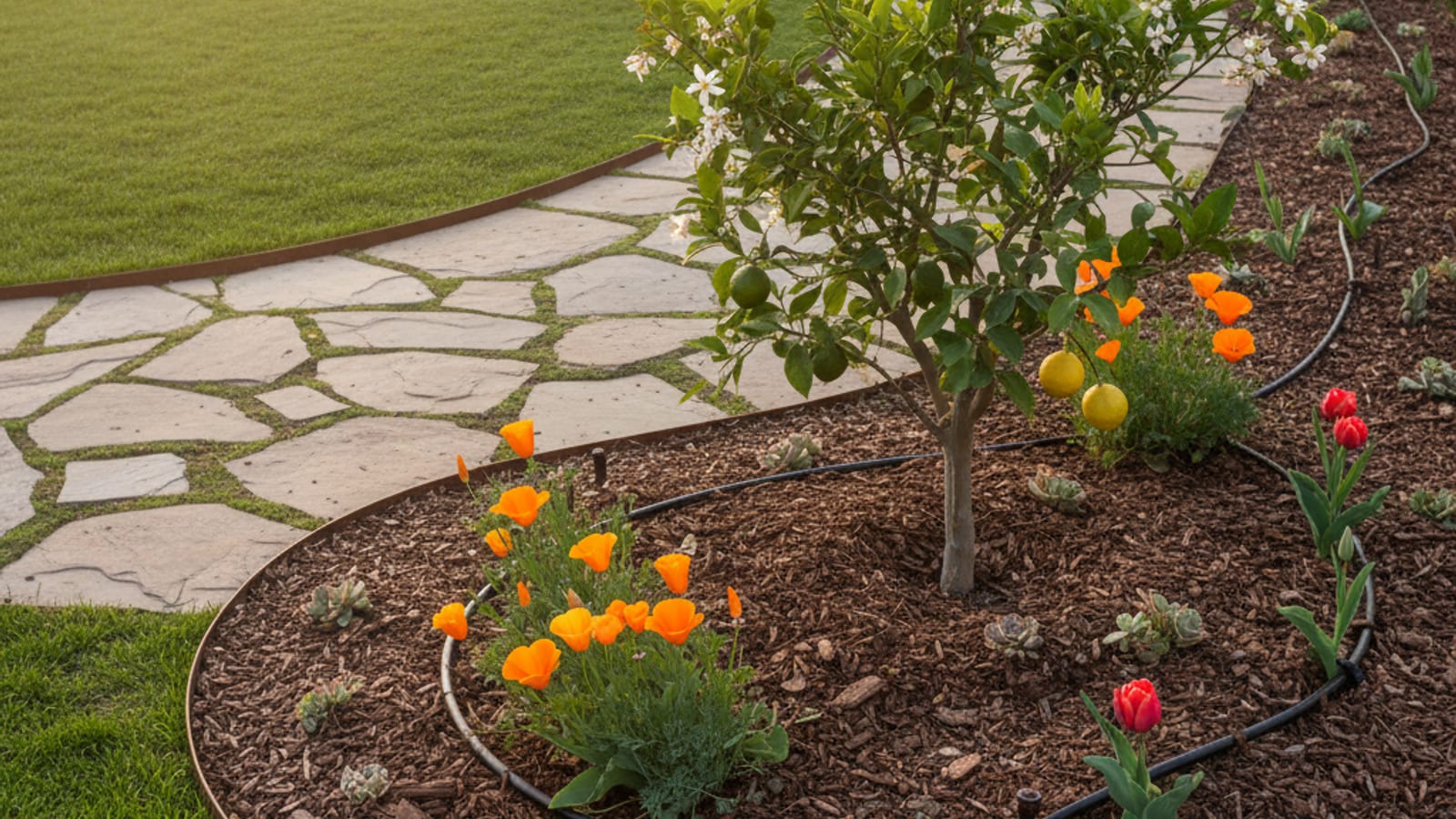
SD doesn’t get a real winter, but we do have a spring. Warm-season and cool-season grasses start growing on different calendars by lot, not a county mid-month date. The work you do before summer heat sets the tone for the growing season.
Skip the timing and you spend peak heat playing catch-up on weeds and weak growth. Pre-emergent timing follows soil temperature and the product label, not a hardware-store price.
The 8-item spring checklist
1. Pre-emergent weed control, before summer weeds germinate
This is the single most important task. Pre-emergent stops weed seeds from germinating before they sprout. Timing is tight:
- Summer-weed pre-emergent (crabgrass, spurge, goosegrass): follow soil temperature and the product label. Late application after germination does not work as pre-emergent.
- Products: Prodiamine (Barricade), Pendimethalin, or Dithiopyr
- Rate: follow the label for your grass type, over-application can thin existing turf
- Reapply: follow the product label. This page does not hold a July cutoff for San Diego lawns.
If your lawn has chronic crabgrass or spurge, do NOT skip this step. Post-emergent work after germination is a different, usually larger job than a timely pre-emergent. Ask the independent professional to quote both paths for the same yard.
2. First fertilizer pass, when the grass is growing
Warm-season grasses start pulling nutrients once soil is warm enough for growth. A soil thermometer beats a county date. A balanced starter fertilizer at that point wakes up the lawn evenly.
- Rate: use the product label and a soil test, not a remembered pounds-per-thousand figure.
- Type: slow-release granular (e.g., 21-0-0 or 16-4-8) for even 4-6 week feed
- Wait to fertilize cool-season fescue until it is actively growing on that lot
If the independent professional adds a foliar iron, the mix rate belongs on the product label. Iron can help on alkaline soils when a test shows it is needed.
3. Mowing height reset, as growth resumes
Winter mowing heights for warm-season grasses run 1.5-2”. Spring transition, raise to the middle of the range (2-2.5”). The taller cut encourages deeper root growth going into summer and shades the soil as it warms.
If the lawn got shaggy over winter, do a two-pass reset: cut to 2.5” first, mow again in a week at 2”. Cutting long grass in a single pass removes more than one-third of the blade and stresses the plant.
4. Irrigation system audit, before summer demand
Before you turn the controller up for summer, walk the system:
- Run each zone for its full scheduled time and watch for broken heads, leaking valves, or dry spots
- Check head alignment, string trimmers and lawn mowers rotate heads off-angle over winter
- Verify controller settings against current water district restrictions. Confirm the agency named on your bill rather than a remembered month.
- Replace nozzle inserts in pop-up heads that have thrown bad patterns all winter
- Smart controller? Let it auto-adjust to ET data once demand rises. Confirm that the weather skip and seasonal adjust are actually on.
If it’s been years since an irrigation audit, or you moved in with the existing system, a pro walk of the zones catches more leaks than a casual look. Bloom Pro SD does not publish audit prices.
5. Hedge and shrub hard pruning, before the spring flush
Hedges get their heaviest prune of the year while they can still recover before summer heat:
- Boxwood, privet, Italian cypress, hard shape-up to target size. They recover fast once spring growth starts.
- Roses, major prune while they are still dormant enough. Late still works on many lots; confirm with the independent professional.
- Ornamental shrubs, selective thinning for shape and airflow
- Ficus hedges, selective interior thinning, not shearing, our sun burns sheared ficus brown inside
- Avoid: any hedge that’s actively flowering (wait until after bloom)
6. Bed cleanup and mulch refresh
Beds take a winter beating from leaves, rain-soil, and weed germination. Spring cleanup:
- Pull existing weeds to bare soil
- Refresh mulch to 3-inch depth, top up what’s broken down
- Edge the beds with a steel edger for clean lines against lawn
- Check drip emitters while you’re in there, clogged emitters show themselves now when plants start pushing new growth
Bark mulch in bed zones reduces evaporation. Depth belongs on the product or agency page you are following, not a remembered water-savings percentage.
7. Dormant-damage cleanup
Inspect the yard for winter damage:
- Dead branches from Santa Ana wind events
- Bark damage from gopher or rabbit feeding
- Cracked pots or hardscape from rare freeze nights (mountain communities especially)
- Dead spots in the lawn, identify cause (shade, drainage, pet damage) before blindly reseeding
If a dead spot is more than 12” across and showing bare soil, plan a sod patch or overseed, depending on grass type, while temperatures are cool enough for root establishment.
8. Plant new material before summer heat
Plant while soil is warm enough for roots and before summer heat stress. Coldest microclimates wait longer. This page does not freeze a county month.
- Native plants, ceanothus, salvia, manzanita, toyon, establish fastest planted now
- Succulents and agaves, plant any time, but spring installs get a full season of growth before summer stress
- Citrus and fruit trees, plant while nights are still mild enough for establishment
- Annual color, snapdragons, pansies (cool), petunias and marigolds (warming up)
Skip warm-season sod until soil and nights are warm enough for that grass on that lot. Inland and coastal yards differ. Ask the farm or the independent professional, not a remembered mid-month cutoff.
Why this timing matters
Warm-season grasses in San Diego grow through a long warm season. Missing the early-season window means playing catch-up later:
- No pre-emergent → summer weeds take over once they germinate
- No spring feed → lawn limps through its biggest growth period
- No mowing height reset → root system stays shallow
- No irrigation audit → first hot week has you watering broken zones
A half-day of focused spring prep saves 6 months of corrective work.
Frequently asked questions
What should San Diego spring lawn prep include?
The core items are clearing winter debris, checking and adjusting the irrigation system before demand rises, applying pre-emergent for summer weeds, and setting mowing height for the growing season. Pre-emergent follows soil temperature and the product label. Starting after those weeds have germinated is too late.
Why does spring timing matter so much here?
Because several spring tasks are windows rather than chores, and Midwest calendars do not set the day here. Pre-emergent only works before germination. Irrigation adjustments made after the first heat wave arrive too late for the lawn that was already stressed. Getting ahead of the lot is most of the value.
When do warm-season grasses green up in San Diego?
Once soil temperatures hold in the range the grass actually uses. Coast and inland lots differ. Feeding or aerating before the lawn is growing works against it, because the grass cannot use the input or recover from the stress.
Book a spring cleanup
If all of this sounds like a lot, a professional spring and seasonal cleanup can bundle hedge work, bed refresh, mulch, labeled weed work, irrigation check, and a fertilizer pass when those items belong on the same visit. From there, weekly lawn maintenance keeps the growing season on track.
Call (760) 400-6355 and we’ll match you with a local pro. Ask that professional when their spring cleanup calendar actually fills. This page does not hold a booking cutoff.
We serve Encinitas, San Marcos, Poway, El Cajon, Chula Vista, and all of San Diego County.