Choosing a lawn care pro starts with a written scope, not a vague promise to handle the yard. Compare each visit, every exclusion, and how changes get approved. The right lawn care professional should also fit your property and communication needs.
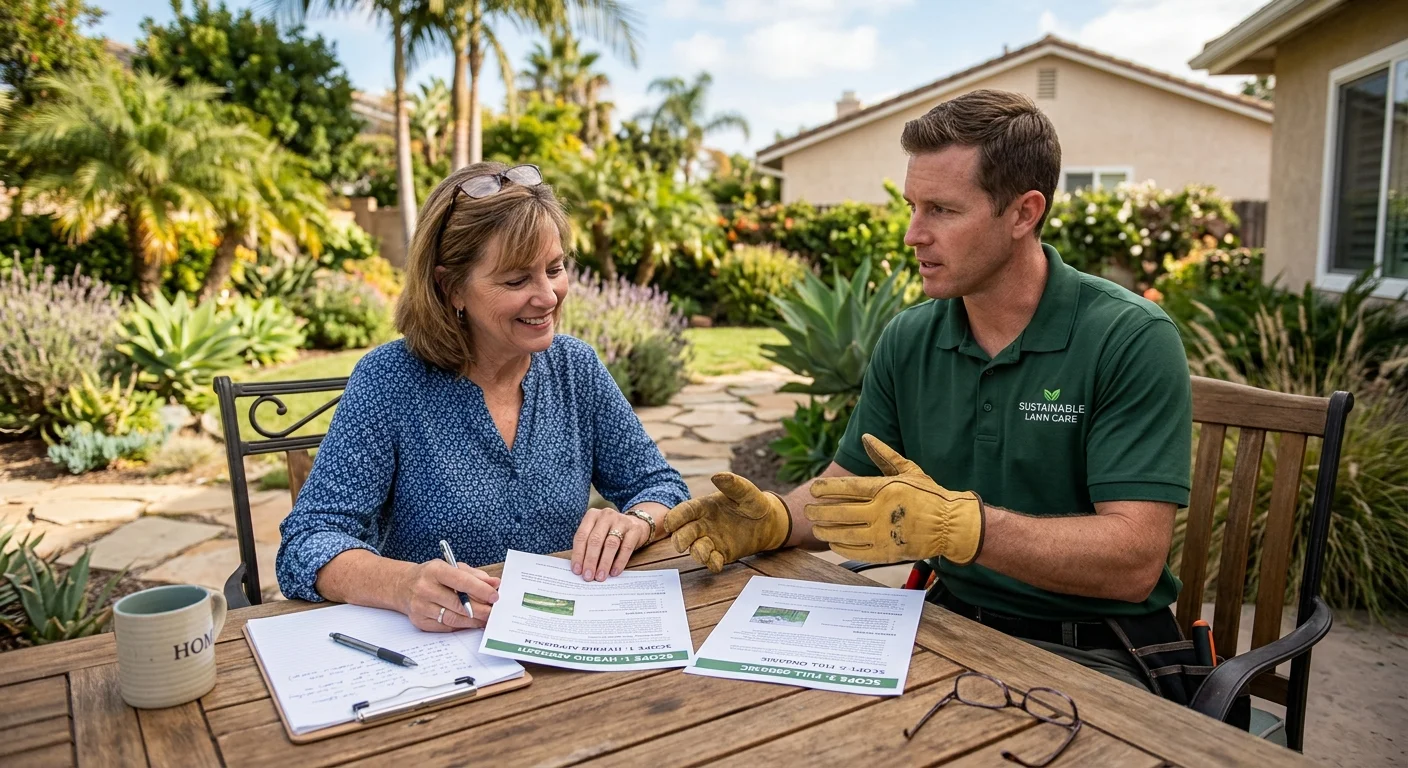
What routine lawn care should cover
Routine lawn care usually means recurring work on an established yard. Still, there’s no universal package. Ask each provider to name every task included in a normal visit.
The written scope should address mowing, edging, and cleanup. It should identify which lawn areas and hard edges are covered. It should also say whether the provider removes clippings and loose green debris. Don’t assume flower beds, hedges, weeds, or fallen leaves are included.
Our lawn maintenance service connects homeowners with independent local pros for recurring yard care. Before choosing one, compare the proposed work with a detailed weekly lawn maintenance scope. That guide helps separate standard visit tasks from work that may need separate approval.
Ask how the provider handles these details:
- Grass growing beside fences, walls, and irrigation heads
- Narrow strips along sidewalks and driveways
- Clippings that enter beds, patios, or pool areas
- Gates, pets, parked vehicles, and locked access points
- Extra growth after a postponed or interrupted visit
- Weeds growing inside turf versus weeds in planting beds
Keep maintenance separate from repair and construction. A provider may notice a broken sprinkler head without including repairs in the recurring scope. The same distinction applies to sod replacement, grading, drainage work, and new planting.
If fertilizer or weed treatment is offered, ask for a separate description. It should identify the treated areas and approval process. You should know whether that work is part of recurring care or an added service before it begins.
How to compare written scopes and exclusions
Put every proposal beside the same checklist. Comparing only the headline price can hide major differences in the work. One lawn care company may include edging and debris removal. Another may list those tasks separately.
Each written scope should make these points clear:
- Tasks included during a regular visit
- Yard areas included and excluded
- Requested visit cadence
- Cleanup and debris handling
- Tasks that need separate approval
- Payment terms and accepted methods
- The process for changing or ending service
- The person to contact about missed details
Mark each item as included, excluded, or available by approval. Don’t leave blank spaces for either side to interpret later. The contractor should confirm the price with you before any work starts.
Visit frequency also changes the expected result. Compare weekly and biweekly lawn service before selecting a cadence. Discuss how growth, edging, cleanup, and access will be handled under the proposed schedule. The provider should confirm what’s workable for your property.
Watering responsibilities deserve their own line. Don’t assume mowing service includes controller adjustments, leak diagnosis, or sprinkler repairs. If the provider will touch the irrigation controller, ask what changes are authorized.
Properties inside the City of San Diego Public Utilities service area have permanent watering restrictions. Potable outdoor irrigation is allowed only before 10 a.m. or after 6 p.m. It’s also prohibited during measurable rainfall and for 48 hours afterward. Review the City’s current water-use restrictions before approving controller changes. Other parts of San Diego County may follow different water-agency rules, so confirm them with the agency serving your address.
Which yard details change the contractor match
A good contractor match depends on the actual yard, not only the ZIP code. An Encinitas property might receive salt spray or have a narrow side gate. An El Cajon lawn might sit in full afternoon sun or beneath mature shade. Share the conditions you see instead of relying on assumptions about the neighborhood.
Start with the lawn itself. Tell us the turf type if you know it. Note thin sections, brown patches, weeds, mushrooms, bare soil, or mixed grasses. Photos help show the lawn’s shape and borders. They can also reveal slopes, tight corners, and obstacles that affect the scope.
Access matters just as much. Mention these details during intake:
- Gate width and lock instructions
- Stairs, slopes, retaining walls, and raised areas
- Pets that use the yard
- Play equipment, furniture, or movable planters
- Street access and legal parking limitations
- Pool decks, gravel paths, and delicate planting beds
- Green-waste bins available at the property
- HOA or property-manager instructions you already have
Describe irrigation symptoms without trying to diagnose them. Standing water, dry zones, broken heads, and controller problems should be named separately. This helps avoid burying a repair request inside a mowing request.
Be clear about the desired boundary of work. A grass-only yard needs a different scope than a mixed property with hedges, mulch beds, weeds, and irrigation concerns. Likewise, a compact City Heights yard can present different access needs than a larger property in Lakeside.
Finally, say whether you want ongoing care or a one-time cleanup before recurring service. Overgrown vegetation and accumulated debris can change the first scope. The contractor can then explain what’s included, what’s separate, and what needs approval.
How to verify credentials and insurance claims
Bloom Pro SD matches homeowners with licensed, independent local landscaping professionals. You should still verify the specific contractor before signing an agreement or approving work. A referral doesn’t replace your own review.
Use the official California Contractors State License Board lookup. You can search by license number, business name, or personnel name. The database shows license status, classification, expiration date, bond status, workers’ compensation information, and disciplinary actions.
Check that the displayed business matches the name on the proposal. Confirm that the license status is current and the classification fits the proposed work. Save a copy of the result with the written scope. If the project changes, check again before approving added work.
Insurance claims need separate confirmation. Ask the contractor what coverage is being claimed and request current proof. Check the insured business name and coverage dates. If something doesn’t match, contact the listed insurer or agent through independently verified contact information. Don’t treat a verbal statement as proof.
Keep routine maintenance and landscape construction clearly separated. Mowing an established lawn isn’t the same scope as installing irrigation, grading land, building a retaining wall, or redesigning a yard. A change in scope should trigger a fresh review of credentials, permits, exclusions, and payment terms.
For broader projects, use our guide to the questions to ask before hiring a landscape contractor. It covers written scopes, change approvals, project responsibilities, and records worth keeping. Save proposals, approved changes, invoices, and relevant messages in one place.
What Bloom Pro SD handles during intake
Bloom Pro SD is a referral service serving San Diego County. You call one number, we gather the job details, and we match homeowners with licensed, independent local landscaping professionals. We don’t mow, install, repair, prune, design, or provide crews.
During intake, we’ll ask about the property and requested work. Useful details include the lawn area, preferred cadence, turf condition, access limits, pets, slopes, irrigation concerns, and debris. Tell us whether the request covers grass alone or other yard areas.
We also need to know when maintenance crosses into another service. Sod replacement, irrigation changes, grading, drainage work, hardscaping, and landscape installation shouldn’t be hidden inside a general lawn-care request. Clear details help us seek a contractor suited to the actual scope.
We don’t set the contractor’s prices or schedule. The independent professional discusses availability, scope, exclusions, and payment terms with you. That contractor confirms the price before work starts. You contract with and pay the professional directly.
Ask the contractor about any warranty or insurance claim that matters to your decision. Bloom Pro SD doesn’t provide warranties and doesn’t perform the work. Keep the final agreement between you and the independent contractor in writing.
From Oceanside to San Ysidro, and La Mesa to Lakeside, property details can differ. Good intake keeps the match grounded in your yard instead of a generic service label.
When to call us
A licensed Landscaping pro is the right call when recurring care expands into irrigation changes, grading, retaining walls, sod installation, or broader landscape construction. Describe the full scope so the contractor match reflects the work involved. Call us at (760) 400-6355 and we’ll match you with a licensed local pro.