A DIY paver patio looks simple on paper: base, pavers, joint sand. Most failures are not about laying the pattern. They start with the base, slope, joint sand, or missing edge restraint. Bloom Pro SD matches homeowners with licensed independent hardscape contractors. We do not repair patios ourselves.
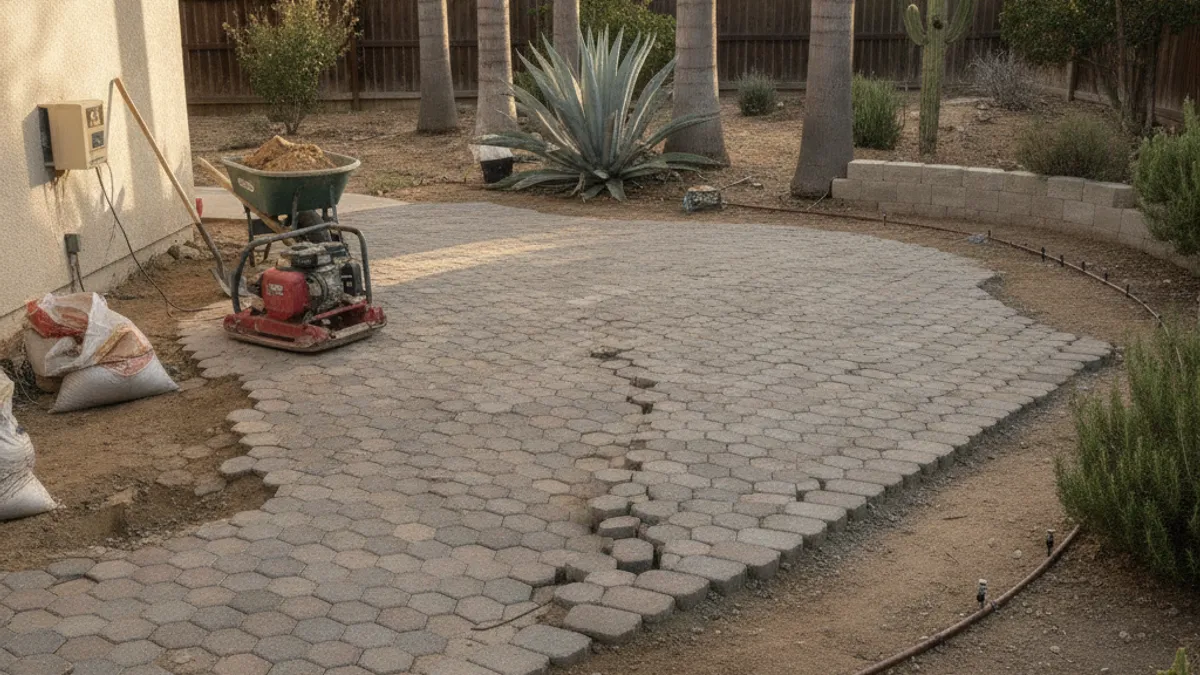
The base is where DIY patios fail, not the pavers
Insufficient base depth and compaction is a common DIY failure. Online tutorials often show a shallow gravel layer tamped once. Paver manufacturers specify excavation, base material, lift thickness, and compaction for each product. Use that system for the pavers you bought. Do not treat a blog’s inch count as the spec.
A thin or under-compacted base can settle later, especially at edges and in traffic paths. Seasonal moisture in expansive soil can add movement. Once a section sinks, the repair is usually lift the pavers, correct the base and grade, and reset. That is a different job from the original weekend install.
Drainage gets skipped, then it shows up
A patio needs a planned slope that moves water away from the house and toward a drainage path. The exact fall belongs in the manufacturer’s details and the site design, not a one-size slope copied from a forum. A flat or reversed patio can hold irrigation overspray or rain, which can erode the bedding and base.
If water ponds in a corner after rain, do not assume only the visible low pavers are the problem. The contractor should check grade, base, and where the water is supposed to go.
Paver bedding sand is not polymeric jointing sand
Two different materials are involved. A bedding layer sits on the compacted base so pavers can be set level. Jointing sand or polymeric joint sand goes in the gaps after the field is set. Mixing them up, or substituting loose play sand in joints, can lead to washout, rocking pavers, and weeds in the joints.
Use the joint product named by the paver manufacturer, and follow its activation instructions. Irrigation overspray on a patio edge can wash untreated sand out faster than a sheltered courtyard.
Edge restraint gets left out
Perimeter pavers need a restraint designed for that system, typically spiked edging or a soldier course detailed by the manufacturer. Without it, the field can creep and gaps can widen. It is easy to skip because it is not the pretty part of the photo.
What a repair quote should include versus a first-time install
A failed DIY patio is not automatically cheaper to patch than a professional install would have been. Demolition, regrading, drainage correction, and reset labor can exceed the original materials. Bloom Pro SD does not publish a per-square-foot price. Compare our paver patio cost guide for the bid fields to request, then get itemized numbers from the contractor who sees the yard.
When DIY can make sense
A small, flat, well-draining area with manufacturer-compliant base work and a rented plate compactor is the realistic DIY case. A larger patio, a slope, known drainage problems, or soil that the contractor flags as expansive is where the margin for error gets thin. Hardscaping contractors can combine grading, base, pavers, and drainage in one written scope.
Frequently asked questions
Why did my DIY paver patio start sinking? Often the base was too thin, poorly compacted, or wet from poor drainage. Confirm the manufacturer’s required base and look for ponding. Expansive soil can contribute, but it is not the only cause.
Can I use regular sand instead of polymeric sand for paver joints? Only if the paver manufacturer allows it. Many systems specify polymeric or another joint product because loose sand can wash out. Follow the product you installed.
Do I need edge restraint on a DIY paver patio? Usually yes, unless the manufacturer details a different edge. Without restraint, outer rows can migrate.
Is it cheaper to fix a failed DIY patio or start over? It depends on how much of the field failed and whether the grade and drainage are wrong. Ask for a repair scope and a reset scope before choosing.
When to call us
If a DIY patio is sinking, ponding, or shifting, call (760) 400-6355 for a match with a licensed local pro who can say whether a spot repair or a larger reset is the honest scope.