Lawn care focuses on turf. Landscape maintenance covers the wider planted property and may include that lawn. The right service depends on which areas need attention, not the label used in a search result.
What lawn care usually covers
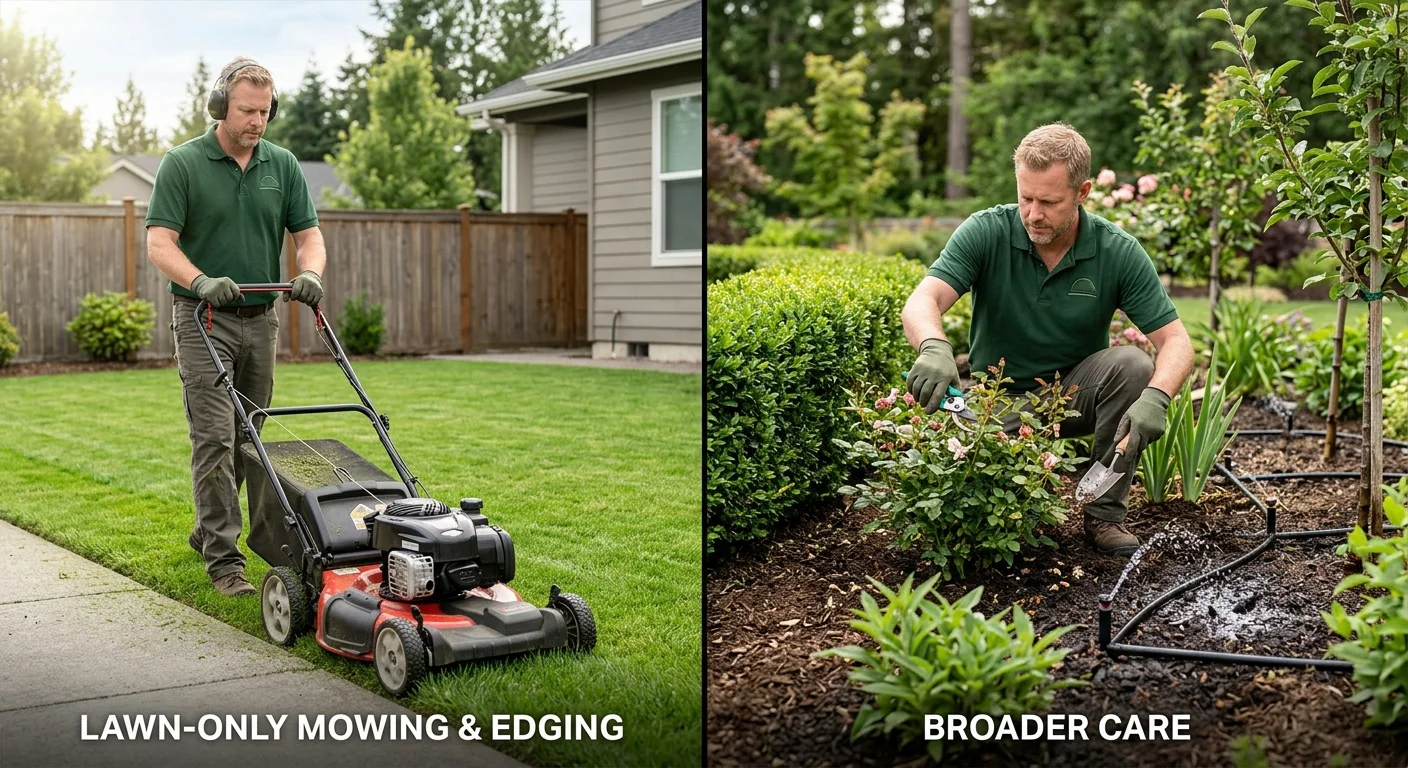
Lawn care centers on keeping grass managed. A basic scope may include mowing, edging along hard surfaces, and clearing loose clippings from the serviced area. Every contractor defines the task list differently, so those items still need written confirmation.
Grass type, current condition, and the homeowner’s preferred appearance shape the work. Cutting height isn’t one fixed setting for every lawn. The UC turf guidance says no more than one-third of the grass blade should be removed during one mowing. Removing more can stress the plant and reduce root reserves.
Other turf tasks aren’t automatically part of mowing. Fertilization, weed treatment, aeration, dethatching, overseeding, and brown-patch diagnosis may require separate discussion. The same applies to repairing bare areas or replacing damaged sod.
Our weekly lawn maintenance service is the closer fit when grass is the main concern. Before accepting a proposal, compare its wording with this guide to a weekly lawn maintenance scope. Look for the exact lawn areas, edges, cleanup duties, and recurring tasks listed.
A lawn-focused service may ignore ornamental beds, hedges, irrigation problems, and trees unless the proposal names them. That doesn’t make the service incomplete. It means the contractor is defining a narrower job around the turf.
Search listings for “lawn care maintenance near me” often mix mowing services with broader property care. Read the task list before comparing contractors. The category name alone doesn’t tell you what’s included.
What broader landscape maintenance may include
Landscape maintenance looks beyond the lawn. It can combine care for grass, shrubs, hedges, planting beds, ground cover, and planted common areas. Some properties have no turf at all but still need ongoing landscape work.
A broader proposal may address tasks such as:
- Mowing and edging where turf is present
- Trimming specified shrubs or hedges
- Removing weeds from named planting beds
- Clearing leaves and loose landscape debris
- Managing spent growth or dead plant material
- Redistributing or refreshing mulch when requested
- Checking visible irrigation performance during a visit
- Handling seasonal cleanup identified in the scope
That list describes possible work, not a standard package. One contractor may combine several tasks. Another may separate lawn care, hedge trimming, irrigation repair, and cleanup. The contractor should identify what’s included before work begins.
Maintenance also differs from a landscape improvement project. Installing new irrigation, changing drainage, grading soil, rebuilding beds, adding hardscape, or redesigning planting areas can require a separate project scope. Plant replacement isn’t necessarily included simply because routine bed care is listed.
This distinction matters in San Diego County, where one property might combine a small lawn, ornamental shrubs, succulents, and unplanted areas. Saying “maintain the yard” leaves too much open to interpretation. Name each area and the result you want.
If you search for “landscape maintenance services near me,” compare the actual boundaries of each proposal. Confirm whether service covers the front yard, backyard, side yards, slopes, parkways, or shared areas. Also identify anything that should remain untouched.
The broadest label isn’t always the best choice. A focused lawn service may suit a turf-only property. Mixed planting and several maintenance concerns usually call for a wider conversation.
Where irrigation, hedges, and beds fit
Irrigation sits between routine observation and skilled repair. A maintenance scope might include watching for obvious overspray, blocked heads, dry-looking zones, or damaged components. That doesn’t mean diagnosis, controller work, or repairs are included.
Ask the contractor to separate routine irrigation checks from repair work. Describe what you’ve noticed without guessing at the cause. Useful details include pooling water, a valve box filling with water, uneven coverage, or a controller running at an unexpected time.
Within the City of San Diego Public Utilities service area, year-round water-use restrictions allow potable-water landscape irrigation only before 10 a.m. or after 6 p.m. Watering is also prohibited during and within 48 hours after measurable rainfall. Other San Diego County water agencies may have different rules, so confirm the current requirements for the property’s provider.
Hedges also need a defined scope. A light exterior trim differs from reducing height, restoring an overgrown shape, or addressing individual shrubs within a mixed border. Confirm which plants are included and how much material should be removed. Our hedge and shrub trimming service is the better starting point when that work is the main need.
Planting beds can involve weed removal, loose debris, spent growth, edging, and mulch work. Those tasks shouldn’t be assumed from the phrase “bed maintenance.” Ask whether the crew removes pulled weeds and trimmings from the property. Also identify plants that shouldn’t be cut back.
A written scope keeps these categories clear. It helps prevent lawn mowing from being mistaken for full-property care. It also prevents irrigation repair or major pruning from being treated as an unnamed extra.
How property type changes the scope
Property type affects how landscape maintenance should be described. A compact City Heights courtyard, a Chula Vista family yard, and a larger Rancho Santa Fe property can all need maintenance. Their task lists won’t look the same.
A small residential lot may have turf, a short hedge, and several beds. The main questions concern which areas are included and how gates, pets, or parked vehicles affect access. A corner property may also have planted areas outside the main fence.
Multi-unit and rental properties need clear boundaries between private areas and common landscaping. The owner, manager, or association may already have written appearance standards. Share those instructions before requesting a match. Don’t assume a contractor has access to association rules or previous maintenance records.
Larger properties can contain several irrigation zones, long hedges, multiple lawn areas, slopes, or distant planting beds. Our guide to estate landscape maintenance in San Diego explains why those areas should be separated during scope planning.
Location adds another layer. For a coastal Encinitas or Oceanside property, mention direct ocean exposure if it affects the plants. For a home in El Cajon or another East County community, identify full-sun areas and slopes. South Bay, central San Diego, and inland North County properties should be described by their actual conditions, not regional assumptions.
Access matters as much as planted area. Tell us about narrow gates, stairs, locked courtyards, steep paths, pool decks, or limited debris-removal routes. Those details help us match the job with an appropriate licensed independent contractor. The contractor can then review the site-specific scope with you.
What to share before requesting a match
Start with the property address and the areas needing attention. State whether the job concerns only the lawn or the whole landscape. If it’s mixed, separate the turf, hedges, beds, irrigation, slopes, and cleanup areas.
Photos help show layout and current condition. Include wide views of each service area, plus closer images of specific trouble spots. Photos don’t replace the contractor’s review, but they give us a clearer intake description.
Tell us whether you want recurring upkeep or a one-time cleanup. If you have a preferred visit pattern, share it as a request. The matched contractor confirms availability and defines any proposed cadence directly with you.
A useful intake summary should cover:
- Property type and city
- Front, back, side, and shared areas involved
- Approximate lawn or bed dimensions
- Grass, hedge, and planting areas needing care
- Visible irrigation symptoms
- Gates, stairs, slopes, pets, and access limits
- Priority tasks and areas that shouldn’t be touched
- HOA or property-manager instructions, when applicable
You can also describe the result you want. “Keep the turf cut and edges clean” points toward lawn care. “Manage the lawn, beds, hedges, and visible irrigation concerns” signals broader landscape maintenance.
Bloom Pro SD answers the line and matches San Diego County homeowners with licensed independent landscaping pros. We don’t perform the maintenance or set its price. The homeowner contracts with and pays the contractor directly.
Before work begins, ask the contractor to confirm the service areas, task list, debris handling, visit pattern, exclusions, and price. You can also verify a contractor through the official CSLB license check.
When to call us
Call when your property needs more than basic mowing, or when the scope crosses lawns, hedges, beds, and irrigation. We’ll take the job details and refer you to a licensed independent landscaping professional. Call us at (760) 400-6355 and we’ll match you with a licensed local pro.