That tell-tale geyser shooting up next to your driveway. The soggy patch of lawn that never seems to dry out. The brown, crispy edges of your garden beds despite a high water bill. In Encinitas, a broken sprinkler isn’t just an annoyance; it’s a specific set of problems often caused by our unique coastal environment.
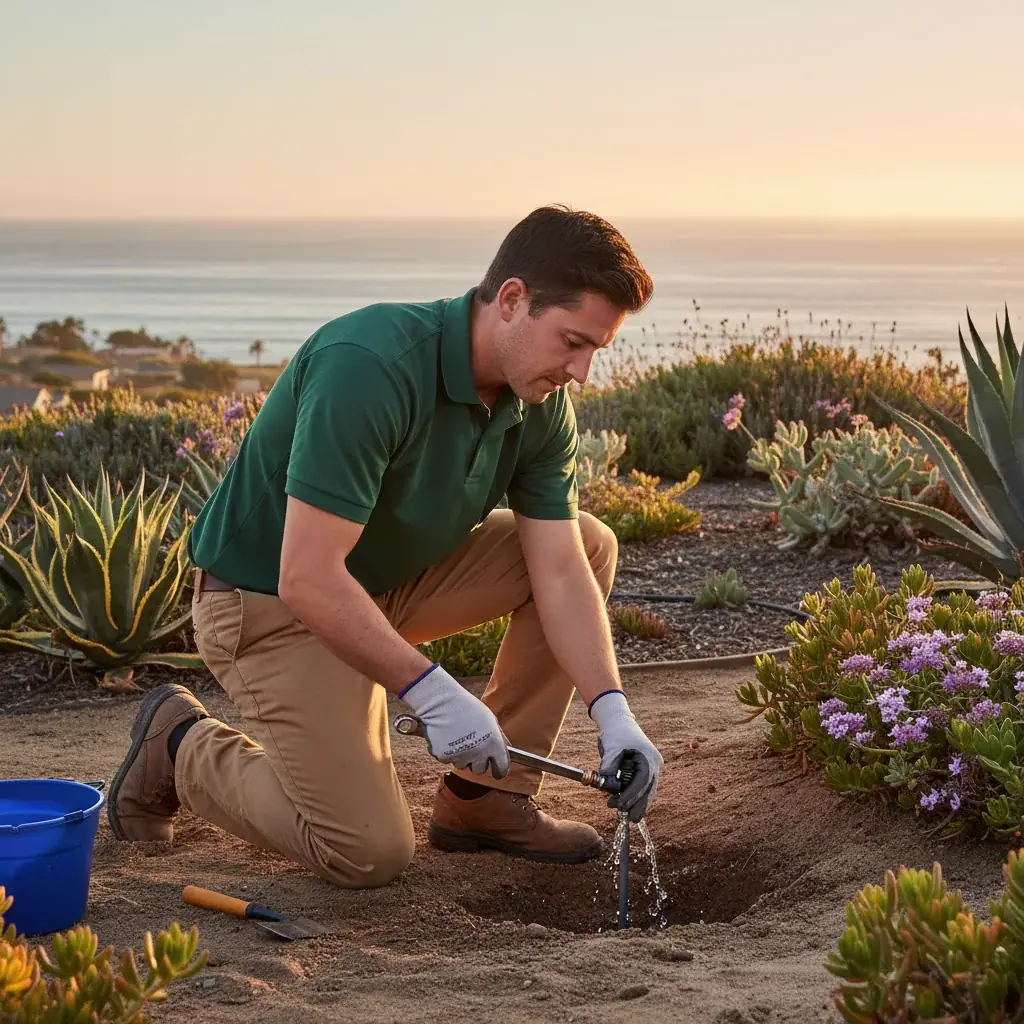
Unlike inland San Diego, where extreme heat is the main enemy, here in the 92024, it’s the salt, sand, and slopes that wear down your irrigation system. Getting it fixed means understanding what breaks first. At Bloom Pro SD, we match homeowners with licensed independent landscapers. Those contractors quote sprinkler and irrigation repair after they see Encinitas salt, sand, and slope conditions.
Why Encinitas sprinkler systems fail differently than inland
An irrigation system in Rancho Bernardo bakes under a dry, relentless sun. An irrigation system in Leucadia or Cardiff is exposed to a completely different set of elements. The persistent marine layer, salty air, and unique soil composition create failure points that inland systems rarely experience.
First, there’s the salt. Salt spray, carried on the ocean breeze, is corrosive. It settles on every surface, including the metal and plastic components of your sprinkler system. Brass valves, copper wiring, and even the springs inside pop-up heads can corrode and fail prematurely. This salty moisture also encourages mineral buildup, calcium and other deposits, that clog nozzles and jam moving parts.
Second, our soil is often a mix of sand and clay. Sandy soil drains quickly, which can be good, but it also shifts and settles, putting stress on underground PVC pipes and fittings. This can lead to hairline cracks or joint failures that create slow, hard-to-detect leaks. These underground leaks not only waste a tremendous amount of water but can also destabilize soil on our many hillsides.
Finally, the milder, more humid coastal climate means valve boxes stay damp longer. This constant moisture is tough on electrical components like solenoids and wire connections, leading to short circuits and zones that won’t turn on or, worse, won’t turn off.
Common Encinitas sprinkler repairs
When the independent professional walks an Encinitas yard, these five issues come up often. This page is not a service-mix statistic.
1. Corroded or Clogged Sprinkler Heads
Salt air and hard water minerals create a crusty buildup on nozzles, disrupting the spray pattern. Instead of a fine, even mist, you get sputtering jets and dry spots. Sometimes the heads get so clogged they don’t pop up at all.
2. Leaking or Stuck-Open Valves
Your system’s valves are like faucets for each zone. The rubber diaphragm inside can degrade from age and chemicals in the water, causing persistent leaks. More common here, the solenoid (the electronic part that opens the valve) corrodes from the damp, salty air in the valve box, causing it to stick open or fail completely.
3. Cracked PVC Lateral Lines
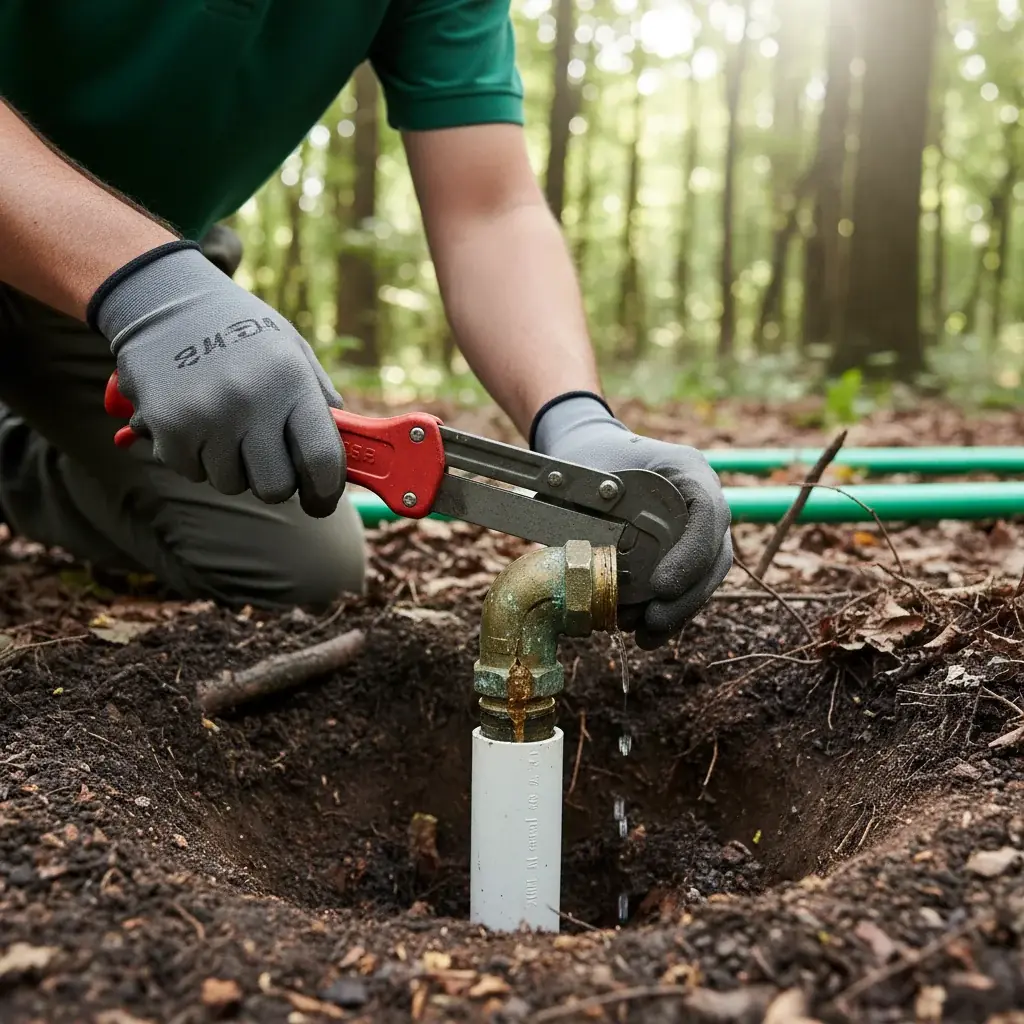
A single shovel strike during a garden project can crack a pipe, but often these leaks develop slowly. Shifting sandy soil or invasive tree roots put pressure on the lines until a fitting gives way or a pipe splits. You’ll notice this as an unusually green, marshy area in your lawn or planter bed.
4. Low-Head Drainage
If your property has any slope at all, you’ve probably seen this. After a zone shuts off, water from the pipes drains out of the lowest sprinkler head, creating a puddle and eroding the soil. This wastes water and can lead to fungal growth. The fix is installing heads with built-in check valves to hold water in the line.
5. Faulty Wiring and Bad Solenoids
This is the most frustrating problem for homeowners to diagnose. A zone suddenly stops working for no apparent reason. Often, it’s a simple fix: a waterproof wire connector has failed due to moisture, or a solenoid has finally given up after years of exposure to the coastal air.
What an Encinitas service call quote should name
The cost of a sprinkler repair has two main parts: the initial service call and the cost of the actual repair (parts and labor).
Diagnostic time is billed by the independent contractor. Bloom Pro SD does not publish a service-call fee. You should get a written quote before repair work starts.
Common Encinitas scopes: pop-up heads, a leaking valve, a buried PVC break, or a failed solenoid. Parts and access change the hours. For the comparison checklist, see cost of sprinkler repair in San Diego.
Salt air, slopes, and pressure: the local variables
Beyond common broken parts, three environmental factors in Encinitas dictate how an irrigation system should be designed and maintained. Ignoring them leads to wasted water and a landscape that struggles to thrive.
Salt Air: We’ve mentioned corrosion, but salt also builds up in the soil. Proper irrigation helps flush these salts past the root zone. An inefficient system that applies water unevenly can lead to salt accumulation, which stresses plants and makes them more susceptible to disease. Our coastal landscaping guide for Encinitas and Carlsbad has more tips on plant selection for these conditions.
Slopes: From Olivenhain down to the coast, many properties are built on hillsides. A standard sprinkler system will cause massive runoff on a slope. Water from the upper heads runs down before it can soak in, leaving the top of the slope dry and the bottom waterlogged. This is solved with specific equipment: low-precipitation rate nozzles (like MP Rotators), heads with built-in check valves to prevent drainage, and programming the controller for “cycle and soak” watering.
Water Pressure: High municipal pressure can mist, blow seals, and stress valves. Measure it on site. Do not treat a remembered PSI band as your address. It creates a fine mist that evaporates before it hits the ground, blows seals on sprinkler heads, and puts extreme stress on every valve and fitting. A simple pressure test can determine if you need pressure-regulating sprinkler heads or a system-wide pressure regulator installed at the source.
When to repair vs upgrade to a smart controller
Is it better to patch up your old system or invest in a modern upgrade? It depends on the age and scale of your problems.
You should repair your current system if:
- The issue is isolated, like one broken head or a single leaking valve.
- Your system is still in a repairable condition, which the independent professional confirms on site.
- The current layout and watering zones still match your landscape needs.
You should consider an upgrade to a smart system if:
- You’re experiencing multiple, frequent failures in different zones.
- Your water bills seem excessively high.
- You have an old, dial-based controller that’s difficult to program.
- Your landscape has changed significantly (e.g., you replaced lawn with drought-tolerant plants).
A modern smart irrigation controller is the single best upgrade you can make. These EPA WaterSense certified devices use local weather data to adjust watering schedules automatically. They prevent watering in the rain, increase water during heatwaves, and can reduce outdoor water use. Confirm the current WaterSense listing and any local rebate rather than a remembered savings percentage. The best part is that local water agencies often provide significant financial incentives. You can learn more about how to get one in our guide to San Diego’s smart controller rebates.
Frequently asked questions
Why do Encinitas sprinkler systems fail differently than inland ones?
Salt air and slope. Corrosion attacks pot-metal sprinkler bodies, valve solenoids and hose bibs faster near the coast, causing heads to stick up or down and valve boxes to accumulate salty moisture. Encinitas terrain also creates pressure variation between the top and bottom of a slope that inland flat lots never see.
What are the most common sprinkler repairs in Encinitas?
Corroded or stuck heads, failed valve solenoids, low or uneven pressure across a sloped zone, clogged nozzles, and lateral line leaks. Age and salt load change how many of those show up together. The independent professional decides whether to bid one repair or several after they see the system.
Should I repair the system or upgrade to a smart controller?
Fix the hardware first, then upgrade the brain. A smart controller running a leaking, badly covered system just waters the problem more intelligently. Once heads and valves are sound, a WaterSense-certified controller is worth asking about. Confirm any SoCal Water$mart or retail-agency controller rebate on the current program pages rather than a remembered amount.
When to call us
Diagnosing a single broken sprinkler head is one thing. Tracing an underground leak, solving complex pressure issues, or rewiring a faulty valve requires specialized tools and knowledge. If you’re dealing with soggy spots, dead patches of grass, or zones that just won’t work, it’s time to call a professional. The landscapers in our network quote Encinitas irrigation work after they see the system. Availability and response time are theirs, not a Bloom Pro SD guarantee.
Call us at (760) 400-6355 to get matched. The independent professional quotes the work.