Fake grass for a patio works best when it solves a defined problem. You might want a softer seating edge, a play corner, or a green break between pavers. The surface underneath, drainage path, sun exposure, and intended use should shape the plan.
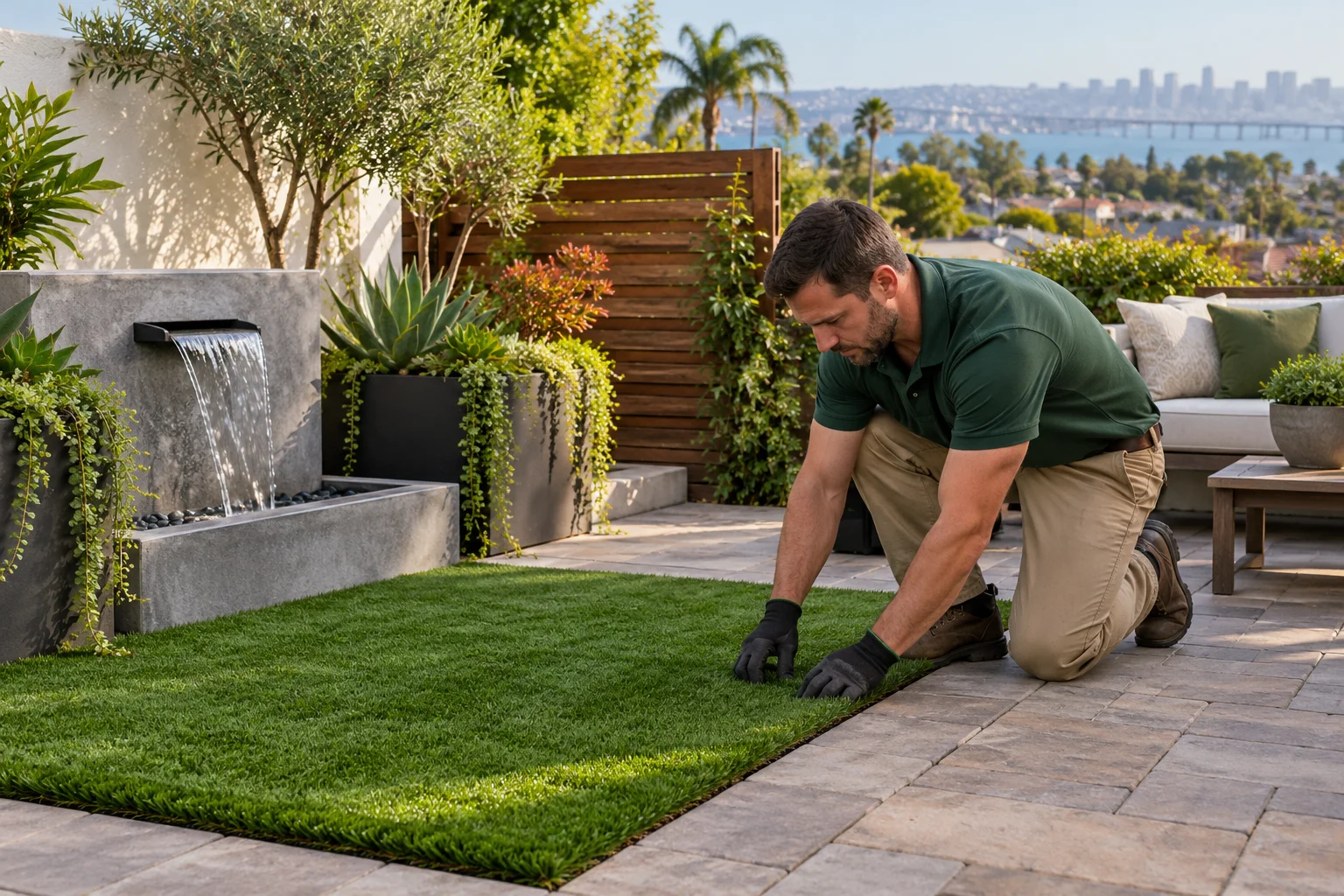
Where does artificial grass fit around a patio?
Patio turf doesn’t need to cover the entire outdoor area. A smaller section can define one activity zone while leaving dining, cooking, and walking areas on hardscape.
Start by naming the turf area’s purpose. It might sit beside outdoor chairs, fill a narrow strip between pavers, or create a separate place for children. Some homeowners use it to break up a concrete-heavy courtyard. Others want a softer transition between a patio and planting beds.
Map the normal walking routes before selecting the shape. Note every door, gate, stair, drain, planter, and utility access point. The turf shouldn’t hide anything that must remain reachable. Its edges also need to meet adjacent materials without creating an awkward transition.
Scale matters on compact patios. A turf shape that looks balanced on paper may feel crowded once furniture returns. Mark the proposed outline on the existing surface. Then walk through the space with chairs, tables, and planters in place.
This planning step is useful in courtyards, side yards, and smaller homes from City Heights to Chula Vista. The address matters less than the patio’s actual layout and exposure. Photos and measurements help a contractor understand those conditions.
A broader landscape design plan can also connect the turf with planting beds, lighting, and hardscape. That’s useful when the patio is one part of a larger backyard change.
How do drainage and the existing surface shape the plan?
The contractor should inspect what’s already beneath the proposed turf. A concrete slab, pavers, compacted soil, and an old lawn don’t call for the same written scope.
Look at the patio during or after rain. Record where water appears, which direction it travels, and whether it remains near doors or walls. Don’t assume artificial grass will correct an existing drainage problem. The approved claims ledger contains no verified drainage-rate promise for patio turf.
Ask the contractor to explain how the proposed system handles water at this property. The answer should identify the existing surface, planned preparation, drainage route, seams, edges, and connection points. If water already collects, the scope should say whether drainage correction is included or excluded.
Surface condition also matters. Cracks, loose pavers, settlement, and abrupt height changes should be documented before work begins. The contractor can then state whether the existing surface will remain, be repaired, or be removed. Avoid vague language such as “prepare as needed.”
Check finished heights around sliding doors, gates, steps, and drains. Ask how the turf edge will meet each one. If anyone using the patio has mobility needs, include that during the first conversation. The written plan should show the intended path and transitions.
No patio-turf permit rule could be confirmed from the approved ledger. Before work begins, confirm current requirements with the city or county authority serving the exact address. Ask the matched contractor to identify any approvals that apply to the proposed work.
What do heat, shade, and pet use change?
Sun exposure can vary across one patio. Watch the proposed area in the morning, midday, and evening. Buildings, walls, umbrellas, and trees may shade different sections as the day moves.
The claims ledger doesn’t contain a verified surface-temperature figure for artificial grass. It also doesn’t support a cooling promise. If surface heat matters, ask for a product sample and place it in the intended location. Check it under the conditions when you expect to use the patio.
Shade deserves the same direct test. View the sample beside the existing pavers, walls, and furniture. Color and texture can look different once they’re inside the actual space. Confirm the selected product by its written name or model before installation.
Pet use changes the questions, but it doesn’t justify an odor-control promise. Tell the contractor how many pets use the area, where they enter, and how the patio is cleaned now. Ask the scope to identify the proposed materials, drainage approach, accessible cleaning areas, and any care instructions supplied for that product.
Don’t treat general pet-turf marketing as a property-specific result. Odor, cleaning, and drainage performance can’t be promised from the information in the approved ledger. Get product claims and exclusions in writing from the contractor or manufacturer.
For ongoing care, see our artificial turf maintenance guide. It covers the broader upkeep questions without replacing product-specific instructions.
How does patio turf differ from a full artificial lawn?
A patio installation is usually shaped by hard edges and existing features. Doors, drains, pavers, walls, planters, furniture, and narrow access routes can influence nearly every detail. A full lawn conversion starts with a different site and shouldn’t be used as the automatic template.
Ask the contractor to measure the turf area separately from the entire patio. The drawing should show seams, borders, penetrations, curves, and transitions. Small areas still need a complete scope. Their compact size doesn’t remove the need to define preparation and drainage.
Decide which existing elements stay. That list may include concrete, pavers, irrigation components, planting beds, or container plants. Any removal should appear as its own scope item. So should disposal, if it’s part of the contractor’s proposal.
Artificial turf also shouldn’t be confused with a qualifying turf-rebate conversion. SoCal Water$mart states that synthetic turf isn’t an approved conversion option. Its turf replacement program requires qualifying projects to remain permeable, include planting and a stormwater feature, and meet the program’s other conditions. Approval must come before qualifying lawn removal.
If you’re choosing between synthetic turf and planted alternatives, review artificial turf versus drought-tolerant landscaping. Our drought-tolerant landscaping service is another route when living plants better match the space.
Keep the decisions separate. Patio turf may suit one zone while planting or hardscape suits another. The plan should follow how you’ll use each part.
What should a contractor’s written scope confirm?
A good scope turns the patio plan into specific responsibilities. It should name the work included, the materials selected, and the conditions that could change the proposal.
Ask for these items in writing:
- The exact turf area and its measured boundaries
- The existing surface beneath each section
- Removal, repair, or preparation work
- The intended drainage route
- Seam locations and edge treatments
- Transitions at doors, gates, pavers, and steps
- Access needed through the home or side yard
- Protection or relocation of planters and furniture
- Treatment of drains, utilities, and irrigation components
- Cleanup and disposal responsibilities
- Product care instructions
- Written exclusions and change-order handling
Warranty terms aren’t verified in the claims ledger. Don’t assume that the contractor and product manufacturer provide identical coverage. Request each written warranty before agreeing to the work. Check what it covers, who administers it, and which maintenance conditions apply.
Ask the contractor to identify the turf product in the final scope. Color, pile, backing, infill, and installation details shouldn’t be left as verbal choices. If substitutions are allowed, the document should explain how you’ll approve them.
The contractor should also confirm the price before work starts. Bloom Pro SD doesn’t set prices, issue warranties, or perform the installation. We take your project details and match you with an independent local landscaping professional.
You can check a contractor through the California Contractors State License Board. Search the current record and compare it with the information on the proposal.
When to call us
Call when the patio needs surface preparation, drainage planning, detailed transitions, or coordination with a larger landscape design. Call us at (760) 400-6355 and we’ll match you with a licensed local pro.