Rubber mulch is shredded recycled tire, not a wood chip with a longer warranty. The CPSC treats loose-fill rubber as a playground-surfacing class, and it says bags sold for landscaping or gardening may not be appropriate under play equipment. A San Diego front-yard bed, a toddler swing set, and the first five feet of a hillside house are three different jobs. This page is the product decision. Mulch types still covers bark, gorilla hair, arborist chips, and DG.
Bloom Pro SD matches homeowners with licensed independent landscaping contractors. We do not install mulch, rate playgrounds, or sell bagged product.
What is rubber mulch actually made of?
Loose-fill rubber is nuggets or buffings, typically from recycled tires. The CPSC groups playground/mulch/animal-bedding as one crumb-rubber market. That is a manufacturing category, not a blessing for every yard use. Color-coated red or brown bags are still rubber. They do not become bark because the dye looks like cedar.
Organic mulch (bark, chips, gorilla hair) breaks down and can feed the soil under it. Rubber does not compost into native soil. If the bed is meant to improve clay in El Cajon or sandy fill in Pacific Beach, rubber is the wrong material class. If the bed is a contained play pit that must stay in place through Santa Ana winds, rubber is at least a candidate, and only if the label matches that use.
Is landscaping rubber the same as playground surfacing?
No. The CPSC is explicit: rubber mulch intended or marketed for landscaping or gardening may not be appropriate as playground surfacing. Read the packaging. Look for the playground rating the product actually carries, not a store aisle name. ASTM has playground-surface standards (impact attenuation is the CPSC’s referenced class). This site does not invent a pass/fail for a bag you have not shown a contractor.
The CPSC’s Public Playground Safety Handbook also notes that loose-fill systems should be avoided for playgrounds intended for toddlers. A backyard toddler set in Clairemont is not “close enough” to a commercial poured-in-place pad. If the job is fall protection, the contractor and the product sheet have to name that job. If the job is a decorative bed, do not buy playground depth as a substitute for bark.
CPSC states that no specific chemical hazards from recycled tires in playground surfacing are known by the CPSC at this time. It still lists practical precautions: no mouthing the material, no eating on the surface, wash hands, and limit time on extremely hot days. Those are exposure habits, not a toxicity ranking. This page will not invent a zinc, lead, or cancer figure. If you want a health ruling, use the CPSC crumb-rubber center and your county public-health site, not a landscaping blog.
Why does rubber behave differently in this climate?
San Diego sun cooks dark surfaces. CPSC’s own hot-day caution is about playgrounds. A west-facing rubber bed in Escondido or Santee in August is a heat surface, especially for paws and bare feet. Lighter coatings change the look. They do not turn the product into a living mulch that cools by evapotranspiration.
Wind is the other local test. Fine bark blows off a canyon lot. Rubber nuggets are heavier and tend to stay. That is the sales pitch, and it is a real mechanical difference. It is also why rubber against a foundation can sit there for years without the “refresh” cycle that wood needs. Staying put is not the same as belonging in Zone 0.
Rubber does not wick and break down the way a 3-inch chip layer does. Irrigation still has to reach plant roots. If the nuggets are piled against stems, you get a dry collar and a wet or dry root zone that the contractor cannot see. Pull it back from trunks the same way you would any mulch volcano. See the trunk-clearance note on mulch types.
Does rubber mulch belong in Zone 0 or a vegetable bed?
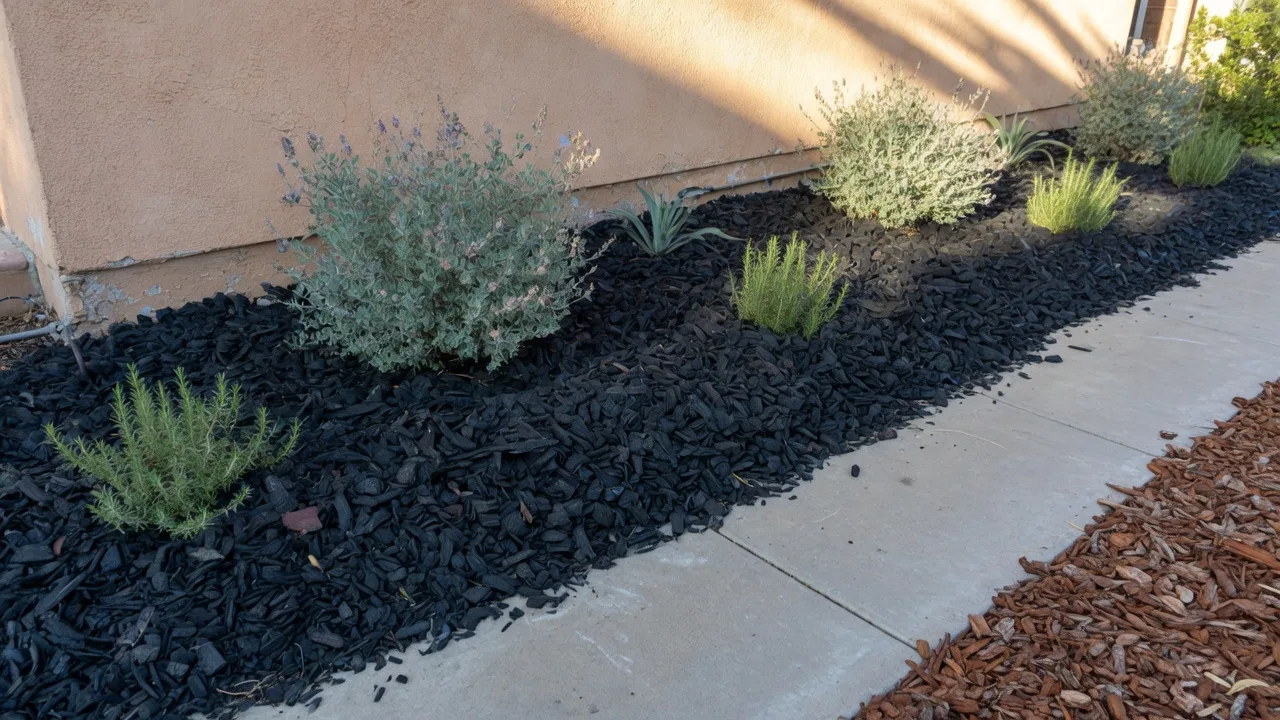
Zone 0 is the first 5 feet from structures. CAL FIRE describes it as the ember-resistant zone. Wood mulch in that band is already treated as a problem in the agency materials this site cites. Rubber is a petroleum-based landscape product, not gravel or pavers. Do not treat it as a listed noncombustible. Confirm the current diagram and any local fire-district overlay for the address before anyone dumps rubber against stucco in Alpine, Ramona, or a mapped hazard area. Gravel, crushed rock, DG, and pavers are the noncombustible ground covers this site already names for that band. Decomposed granite patio is the walkable inorganic option.
Vegetable and edible beds are a label question, not a blog recipe. CPSC’s playground precautions include keeping the material out of mouths. A kitchen garden is a different exposure path. Ask the manufacturer whether the product is rated for edible planting. If the sheet is silent, do not assume “inert” means food-safe. Use a named organic mulch, or skip mulch and use a contractor-specified inorganic that the fire authority accepts.
SoCal Water$mart turf replacement requires a planted, permeable conversion. Synthetic turf is ineligible. Rubber mulch is not synthetic turf, and this site will not invent a rebate ruling for it. If the conversion is aiming at that rebate, the living plant count, stormwater feature, and irrigation change still have to match the program. Confirm with the estimator for your water agency.
When is rubber the wrong material for a San Diego bed?
It is the wrong material when you need soil building, a rebate-ready planted conversion, or a noncombustible strip against the house. It is the wrong material when a toddler play set needs a playground-rated surface and the bag only says “landscape.” It is a possible material when a contained, non-edible bed must stay put in wind, the label matches the use, and the fire authority is not asking for mineral cover in that spot.
Compare it against bark, gorilla hair, chips, and DG on the mulch types page, and against fabric on weed barrier under mulch. Fabric under rubber is a different stack than fabric under wood. Ask the contractor to name the product, the depth, the edge, and the disposal plan. Rubber does not disappear into the soil at refresh time. Someone has to haul it.
Frequently asked questions
Is rubber mulch safe for kids?
CPSC has not named a specific chemical hazard from recycled-tire playground surfacing at this time. It still tells caregivers not to mouth the material, not to eat on it, to wash hands, and to limit time on hot days. Landscaping bags may not be playground-rated. Toddler play areas should avoid loose-fill systems per the handbook note. Read the bag. Do not treat this paragraph as a playground inspection.
Does rubber mulch stop weeds?
Any opaque layer that stays thick enough blocks light. Gaps, wind-blown fines, and soil on top of the nuggets still germinate seed, the same physics as fabric-plus-mulch. Rubber does not kill nutsedge tubers. See nutsedge if that is the plant.
Can I put rubber mulch next to the house?
Zone 0 is 5 feet. Confirm with the fire authority for the address. Do not treat rubber as gravel.
When to call us
If you are choosing between a play surface, a planted bed, and a fire-zone strip, get the product named in writing before anyone dumps a truck. Call (760) 400-6355 and we will match you with a licensed local pro. The independent contractor quotes the work.