A decomposed granite patio in San Diego is a paved walking surface with a compacted base and a hard edge. Loose DG dumped on dirt is mulch, and it will track into the house. The decision that actually changes the job is stabilizer versus none, plus how water leaves the pad. SoCal Water$mart wants conversions to stay permeable. Concrete replacing turf fails that rule. A DG patio can stay permeable if the section is built for it. It can also crust, wash, and migrate if it is not.
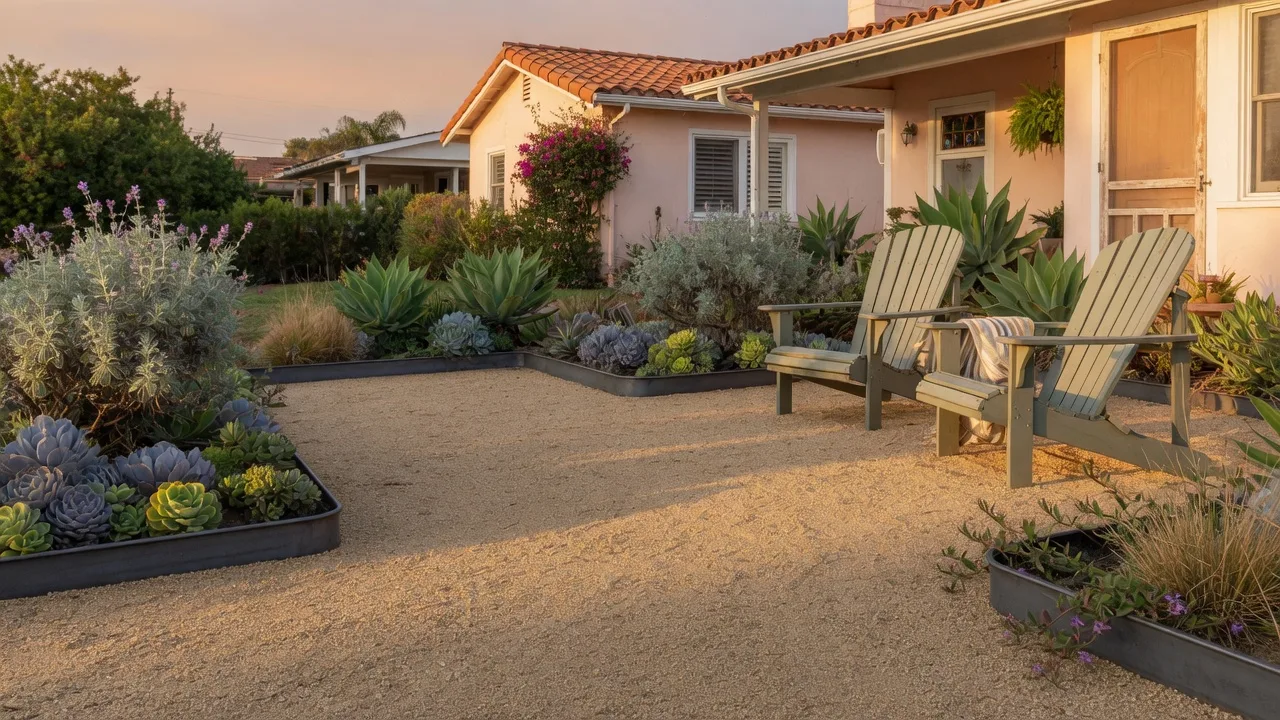
Mulch types already treats DG as an inorganic bed cover. This page is the patio: furniture, foot traffic, and winter rain. Paver patio cost is the interlocking-unit alternative, not a second DG article. Gravel vs pavers is the looser-stone versus locked-paver system choice.
What is decomposed granite, and what is a patio section?
Decomposed granite is crushed weathered granite fines, usually sold in tan, gold, or reddish loads at San Diego yards. Fines are the point. They lock when compacted. They also dust when dry and smear when soaked.
A patio section is more than the color bag. Typical layers, named by the contractor rather than invented here, include subgrade, compacted base rock, the DG wearing course, an edge restraint (steel, bender board, concrete curb, or stone), and optional stabilizer mixed into the DG or applied as a liquid. Depths are a site and product decision. This page will not invent a countywide inch rule.
Unstabilized DG stays looser. It belongs in planting beds and informal paths where you expect to rake it. Stabilized DG is meant to take chairs and foot traffic without moving an inch per step. Stabilizer is a polymer or resin product. Performance depends on mix rate, compaction, and drainage. Ask for the product data sheet. Do not treat a brand video as a San Diego soil test.
How does San Diego weather punish a weak DG pad?
Winter rain. A short, hard storm on a 2% slope with no edge will cut rills in unstabilized DG and fan fines onto the lawn or the neighbor. City of San Diego grading rules treat a change in drainage to adjacent property as a permit trigger. A patio that sheds onto the downhill lot is not “just landscaping.”
Inland heat. El Cajon and Lakeside cook the surface. Stabilized DG can bleach. Unstabilized DG dusts into the house on Santa Ana days. Light-colored fines stay cooler than dark gravel. Dark gravel as a companion mulch can heat succulent crowns. That is a planting issue, covered on the succulent and drought pages.
Coastal moisture. Encinitas and Imperial Beach add salt and frequent damp nights. Stabilizer cure times follow the product, not a blog. Fog does not replace a compaction pass.
Clay versus sand. South Bay clay pumps water sideways. If the pad is a bathtub, stabilizer will not save it. Coastal sand wants a geotextile or another separator so DG does not vanish into the subgrade. UC IPM recommends fabric under rock mulch so soil and stone do not mix. A patio base is the same mixing problem at a larger scale. See weed barrier under mulch for the fabric debate in beds. Under a patio, the separator is structural.
Where does a DG patio fit a rebate or a planted yard?
SoCal Water$mart: the converted area must remain permeable to air and water. Concrete cannot replace turf. Broken concrete pathways with sand filler are acceptable. A DG patio is closer to that permeable-path idea than a poured slab. It still has to sit inside a planted conversion if you want the rebate: at least three plants per 100 square feet, a stormwater feature, no invasive plants, overhead spray converted to drip or capped, approval before turf comes out.
Do not pave the whole former lawn in DG and call it a garden. The program is a planting program with a walking surface allowed. Pair the patio with drought-tolerant landscaping and, where roof runoff needs a place to go, a rain garden.
Zone 0, the first 5 feet from the structure, is a better home for inorganic surfacing than for shredded bark. CAL FIRE’s ember-resistant zone is 5 feet. Confirm current defensible-space rules. DG against siding still needs a gap at weep screeds and a plan so fines do not bury the stucco weep.
What should you ask a hardscape crew to put in writing?
Bloom Pro SD is a referral service. We match you with licensed, independent landscaping professionals. The crews we send install the patio. We do not. There is no DG-patio price on this site.
A useful scope names: square footage, DG color and source, stabilizer product and mix, base material and compaction standard, edge type, slope and drain path, separator fabric if used, demolition, disposal, and whether a grading or building permit is in the contractor’s lane. Furniture pads and fire-pit setbacks are separate. City of San Diego recreational fire rules and fireplace bulletin 201 are already in the claims ledger if a fire feature shares the pad.
Call (760) 400-6355 with a measured sketch and photos of the slope and the downspouts. The independent professional quotes the section.
Frequently asked questions
Does a DG patio crack like concrete?
It does not crack as a slab. It can crust, ravel, and wash. Stabilizer reduces movement. Poor drainage still ruins the wearing course. Think of it as a compacted gravel pavement, not as stone tile.
Can I put DG over an old concrete patio?
Sometimes, as a thin overlay, if the slab drains and the edge can hold the fines. You inherit every crack as a reflection line and you may lose permeability. Many crews remove the slab or build a true base beside it. Get that choice in the bid.
Is DG allowed in a turf rebate project?
Permeable surfacing can be part of a qualifying conversion. The project still needs plants, a stormwater feature, and no synthetic turf. Confirm the live SoCal Water$mart rules for the address before you demolish lawn.
How is a DG patio different from a paver patio?
Pavers are units on bedding sand with joints. DG is a continuous compacted surface. Joint weeds are a paver problem, covered on weeds between pavers. DG’s problems are dust, raveling, and wash. Price and maintenance are not the same job.