A boxwood hedge that looked full last spring can turn patchy and hollow within a season. At some point the question shifts from “how should this be trimmed” to “should this stay in the ground at all.” That’s a different conversation, and it’s worth having before another round of shearing hides the real problem.
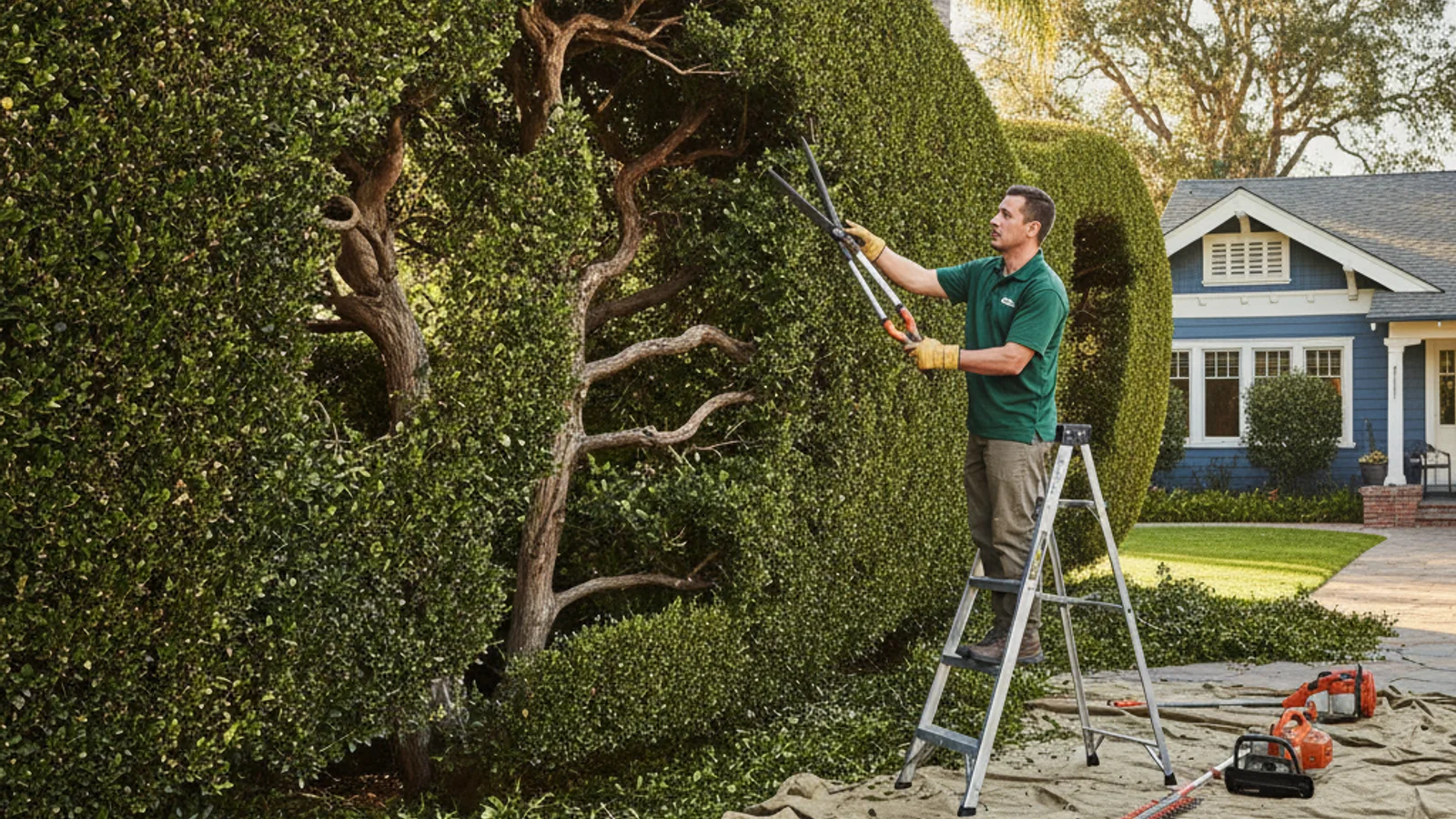
Signs the problem is more than uneven growth
Boxwood naturally grows unevenly when one side gets more sun, more water, or more wind than the other. A pro can usually correct that with shaping over a season or two. A few signs point past a shaping issue and toward something structural.
A hollow, twiggy center is the biggest one. If you can see through the middle of the hedge or push a hand into open space where dense foliage used to be, the plant has lost interior growth that shearing alone won’t bring back. Boxwood only produces new leaves near the outer surface of the plant, so once the interior goes bare, it tends to stay bare unless the outer growth is cut back hard enough to force new shoots from older wood.
Leaf color and drop matter too. Straw-colored or bronze patches that don’t green back up after winter, foliage that thins from the bottom up, or branches that drop leaves while nearby sections stay full are all signs worth noting and describing to whoever inspects the hedge. So is dieback that starts at the tips and works inward, since that pattern often means the plant is struggling to move water through part of its structure.
Gaps that keep reappearing in the same spot after trimming are another flag. A one-time thin patch can be a pruning fix. A patch that returns in the same location visit after visit usually has a cause underneath the foliage, whether that’s soil, drainage, sun exposure, or something happening at the root.
We can’t diagnose a specific plant disease or pest from a description alone, and neither should a written estimate that hasn’t inspected the hedge in person. What we can do is help you describe what you’re seeing clearly enough that the professional who visits knows exactly where to look first.
When selective pruning may preserve the hedge
Not every rough-looking boxwood needs to come out. A licensed hedge and shrub trimming professional can often assess whether hard, selective pruning will bring an overgrown or unevenly grown hedge back into shape rather than replacing it outright.
Selective pruning is different from a routine shear. Instead of trimming the outer surface, a pro may cut specific branches back into older wood to open the canopy, let light reach the interior, and encourage new growth from lower on the plant. This works best when the plant’s overall structure is intact and the decline looks tied to light, shape, or years of only ever being sheared on the surface, never opened up underneath.
Timing affects the outcome. Hard pruning stresses a plant, so a professional will generally time it around the boxwood’s growth cycle rather than doing it during active summer heat or right before a cold snap. The plan should also account for how the hedge will look during recovery, since a hard-pruned boxwood can look sparse and unfinished for a full season or more before it fills back in.
A pro should also be honest about uncertainty. If part of the hedge is healthy and part shows more advanced decline, mixed results are possible: some sections recover, others don’t. That’s a legitimate outcome of a pruning attempt, not a guarantee either way, and it’s worth asking about before work starts rather than after.
When replacement becomes part of the conversation
Replacement usually enters the conversation when the decline is spread across most of the hedge rather than isolated to a section, or when the same dieback keeps returning after pruning attempts. A hedge that’s lost significant interior structure across its length is harder to bring back than one with a single weak spot.
Age plays a role too. A boxwood hedge planted decades ago has had a long time to develop woody, congested growth that responds less predictably to hard pruning than a younger plant. That doesn’t automatically mean it needs to go, but it’s a factor a professional should weigh alongside what they see in the foliage and stems.
Cost and time are part of this decision as well, even without attaching a number to it here. Selective pruning followed by a season or more of recovery is one path. Removal and replanting is another, with its own labor, disposal, and new-plant costs that a contractor should walk through with you directly. There isn’t a single right answer that applies to every yard. The right call depends on how much of the hedge is affected, how it’s being used (privacy, a formal border, a foundation planting), and how much recovery time you’re willing to live with.
If you’re weighing a full redesign rather than a like-for-like replacement, a landscape design professional can help you look at the space as a whole instead of one hedge at a time.
Alternatives for privacy and formal borders
If a boxwood hedge is coming out, the replacement doesn’t have to be another boxwood. Our guide to privacy hedges for San Diego yards covers faster-growing screening options and how their root behavior and water needs compare, which matters more once you’re planning around an existing walkway, foundation, or irrigation line rather than starting from bare soil.
For a formal, low border rather than a tall privacy screen, other clipped evergreen shrubs can fill a similar role while giving you a break from whatever conditions affected the original planting. If flowering structure is more the goal than a strict formal line, our flowering shrubs for San Diego yards guide covers options that hold a shape without needing the same tight, frequent shearing boxwood is known for.
Whatever you choose, match the new plant to the same conditions that affected the old hedge; sun exposure, drainage, soil, and irrigation pattern along that bed. Swapping in a new hedge without addressing an underlying drainage or watering issue tends to produce the same decline over again, just on a longer timeline.
What to share before we match you with a pro
Before we connect you with a local landscaping professional, a few details help them show up prepared. Note which sections of the hedge look affected and which look healthy, whether the problem has spread or stayed in one spot, and roughly how long you’ve noticed the decline. Mention whether irrigation reaches that bed directly or by overspray, and whether drainage tends to pool nearby after rain.
Photos help more than a description alone, especially close-up shots of the interior of the hedge and any bare or discolored branches. If you already know whether you’d rather try to save the hedge or replace it, say so. If you’re undecided, that’s fine too. A professional can walk the site and lay out both paths with what recovery or replacement would realistically involve.
You can confirm any contractor’s license status directly through the CSLB license lookup before work begins. Bloom Pro SD doesn’t inspect, diagnose, or perform the pruning or removal itself. We take the details of your job and match you with a licensed, independent local pro who does.
When to call us
Call when a boxwood hedge has a hollow center, spreading dieback, or decline that keeps returning after trimming, and you need someone to assess whether it can be pruned back or should be replaced. Call us at (760) 400-6355 and we’ll match you with a licensed local pro.