A drip kit can be a reasonable weekend project for a single garden bed or a few pots on a hose bib. It gets harder when you tie into an existing sprinkler valve, convert several zones, or skip pressure regulation and filtration. Bloom Pro SD matches homeowners with licensed independent irrigation contractors. We do not install systems or diagnose a DIY layout from a phone call.
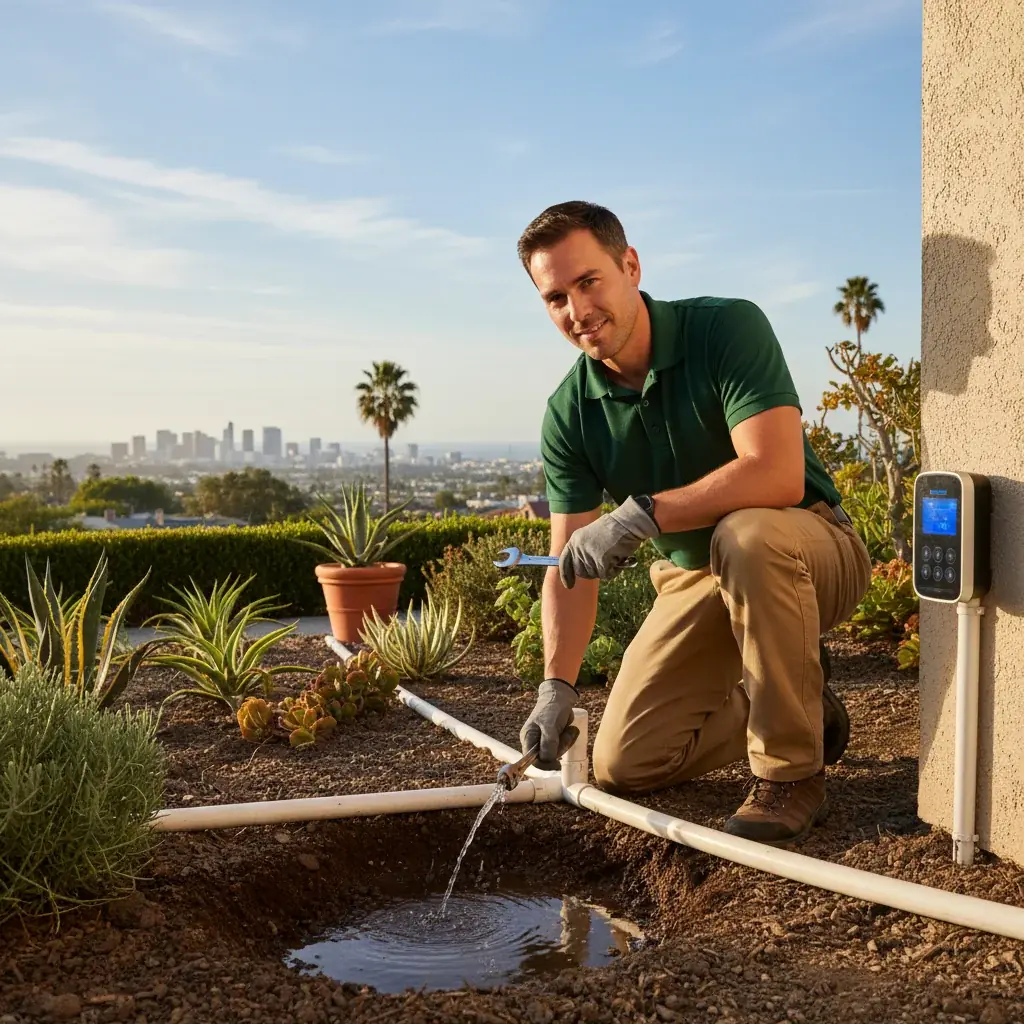
What DIY drip irrigation can handle
A standalone drip zone for one bed, a row of pots, or a small new planting area is the realistic DIY case. Many kits include tubing, a pressure regulator, a filter, and emitters. Connecting that to an outdoor hose bib with a timer is the usual starting point.
Follow the kit and emitter manufacturer for operating pressure, filter mesh, and emitter flow. Do not treat a blog as a substitute for those ratings. Household hose pressure is often higher than drip tubing is designed to run, which is why kits include a regulator. A mature shrub and a small perennial usually need different emitter flows. Match emitters to the plants you actually have.
UC IPM’s lawn-watering guidance is about turf, not drip kits, but the same observation habit helps: check that water is reaching the root zone and is not running off. Deeper, less frequent watering is the general UC IPM turf rule. Drip run times still belong to the product instructions and the soil on that bed.
Where DIY drip irrigation runs into trouble
Converting an existing spray-zone valve to drip is where many home installs fail. Spray heads and drip emitters are designed for different flow and pressure. Swapping heads for drip tubing on the same valve without regulation often means the far end of the run gets less water than the start.
Loading too much tubing on one valve can also starve the zone. Each valve has a flow limit. The manufacturer’s valve and emitter data, not a rule of thumb, decide how much line that valve can support.
Filters get skipped. Sediment and mineral scale can clog small openings. If emitters clog, plants dry unevenly. Diagnosing a long buried run is slow work.
Testing before you bury anything
Run a full cycle before backfilling trenches or covering tubing with mulch. Walk the run and confirm each emitter is discharging. A kink or a loose fitting often shows up as a dry end rather than a leak at the valve.
Watch fittings for weeps while the zone is pressurized. Catching a leak during setup is cheaper than digging a finished bed. This is a checkout step, not a guarantee that the system will stay leak-free.
How to compare DIY materials with a professional conversion
Skip invented per-zone prices. For a small hose-bib bed, compare the kit contents with the plants you need to water. For a valve conversion or a multi-zone yard, ask an independent contractor to itemize:
- Which valves stay and which are converted
- Pressure regulation and filtration at each converted zone
- Emitter type and flow by plant group
- Controller programming for drip versus spray
- Trenching, restoration, and whether existing leaks will be repaired first
Our drip irrigation conversion guide covers that professional scope without treating a national average as your bid.
Signs the project needs a professional look
If plants on the same drip line look very different, that can be pressure, clogging, mixed plant water needs, or a schedule problem. Treat those as hypotheses. If water pools at the valve box or pressure drops suddenly, stop and inspect rather than adding more runtime. A whole-yard spray-to-drip conversion that must match existing valves and a controller is usually a contractor job.
What a professional conversion should include
Irrigation repair contractors can convert lawn valves to pressure-regulated, filtered drip, size emitters to the plants, and reprogram the controller. Drip cycles are often longer and less frequent than spray cycles, but the exact minutes belong to the design, soil, and plant hydrozones. Ask the contractor to check valve flow against the planned drip load before installation.
Frequently asked questions
Can I install drip irrigation myself in San Diego? For a single bed or small planting area on a hose bib, that can be a reasonable DIY project if you follow the kit instructions. Converting an existing sprinkler valve, or converting a whole yard, involves pressure regulation and zone flow that are easy to get wrong.
Why is my DIY drip system watering some plants more than others? Common causes include missing pressure regulation after a spray conversion, too much tubing on one valve, clogged emitters, or mixed plant types on one line. Confirm with a walk-through while the zone runs.
Do I need a filter for a DIY drip system? Most drip manufacturers require filtration because emitter openings are small. Use the filter specified for that product.
Is it cheaper to DIY a whole-yard drip conversion? Materials can cost less than a contractor visit, but a failed conversion can require a redo. Compare a written professional scope with your actual time and risk rather than assuming DIY always wins.
When to call us
If a DIY drip project is not watering evenly, or you want a full-yard conversion quoted, call (760) 400-6355. We will match you with a licensed local pro.