Fresh mulch can help suppress weeds, but it doesn’t eliminate them. Effective mulch weed control depends on bed preparation, consistent coverage, irrigation, and follow-up care.
What can mulch do, and what can’t it do?
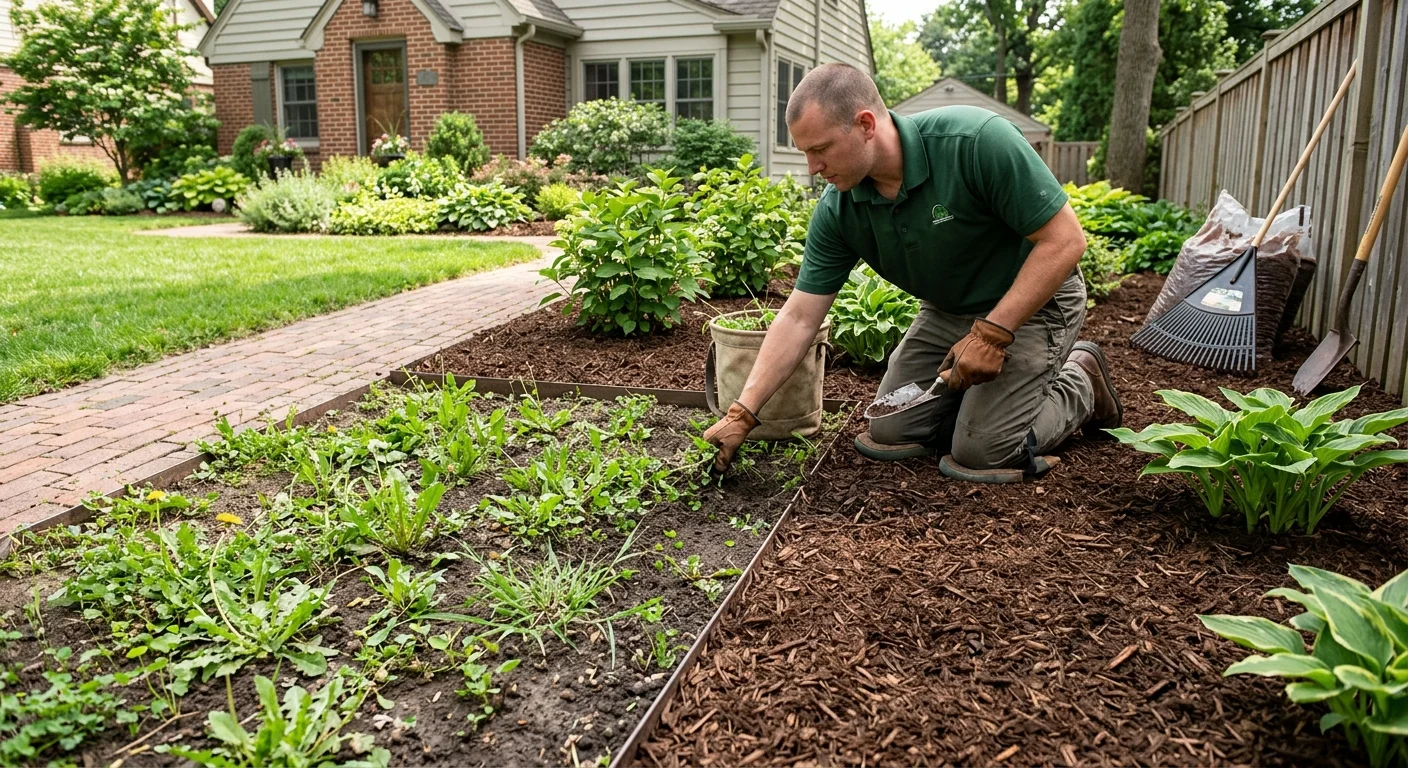
Mulch is a surface cover, not a permanent weed treatment. It covers open soil and can make emerging growth easier to spot. It also gives planting beds a cleaner, more finished appearance.
The distinction between suppression and elimination matters. Suppression means fewer visible weeds and less exposed soil to manage. Elimination would mean weeds never return. Landscape mulch shouldn’t be treated as that kind of guarantee.
Growth may appear around plant stems, irrigation components, bed edges, and disturbed areas. Weeds can also remain where coverage becomes uneven. Existing growth beneath a new layer may need separate attention.
Start by identifying what is already in the bed. A plant that returns after its top growth is removed may need a different plan from scattered new growth. Our San Diego weed identification guide can help you compare common weeds before discussing the work with a contractor.
Mulch also can’t correct every underlying bed problem. It won’t repair leaking irrigation, rebuild a damaged border, or settle a disagreement about which plants should remain. Those issues should be identified before the refresh begins.
The practical goal is a bed that’s easier to observe and maintain. Expect some follow-up work instead of assuming one installation ends weed pressure. If unwanted growth is already widespread, compare a bed refresh with professional weed control and prevention before choosing the scope.
No universal suppression percentage has been confirmed in this site’s approved claims ledger. Results depend on the actual bed, so a contractor should assess the property before discussing likely outcomes.
How does material choice change weed pressure?
Material choice affects how the finished surface behaves on your property. The useful question isn’t simply whether one mulch is “best.” It’s whether the material suits the bed, plants, irrigation, edges, and expected maintenance.
Look at how evenly a material covers the visible soil. Notice whether it stays inside the border after watering, wind, foot traffic, or routine plant care. Material that repeatedly shifts may leave openings that need to be corrected.
Also consider how the bed will be used. A narrow planting strip beside a walkway faces different movement than a broad bed around established shrubs. A sloped area should be judged on site rather than treated like a level planter.
Appearance matters, but it shouldn’t be the only factor. Color, texture, and particle size change the look of a property. They also affect how easily you can notice exposed areas, fallen leaves, and new growth during routine checks.
San Diego County properties don’t share one bed design. A front planting strip in Oceanside may need a different material decision than an enclosed courtyard in Chula Vista or an inland yard in El Cajon. The contractor should base the recommendation on conditions visible at that address.
Our guide to mulch types for San Diego bed refreshes explains the main selection questions without promising one material will stop every weed. For property-specific guidance, ask the contractor why a recommended material fits that particular bed.
This site’s claims ledger doesn’t contain a verified application depth or a weed-control comparison between mulch materials. Confirm those details with the contractor before approving the work. You can also seek local horticultural guidance from the UC Master Gardener Program of San Diego County.
Why does bed preparation matter before mulch arrives?
New mulch shouldn’t hide unanswered questions about the soil below it. Before delivery, decide what will be removed, what will remain, and how the finished bed edge should look.
Walk the entire bed while the soil is still visible. Mark wanted plants so they aren’t mistaken for weeds. Identify volunteer growth, fallen debris, exposed irrigation parts, damaged edging, and areas where water appears to collect or escape.
Ask how existing weeds will be handled. Cutting visible growth at the surface isn’t the same scope as removing growth from below. The appropriate method depends on what is present, so identification should come before treatment.
Chemical guidance isn’t included in this article because the approved claims ledger doesn’t provide verified product, application, or safety instructions. If a chemical treatment is proposed, ask the contractor to identify the product and explain the label-directed process. Don’t accept a vague promise that one treatment will prevent all future weeds.
Preparation should also define the boundaries of the work. Confirm whether the contractor will address only the planting bed or also nearby joints, gravel, turf edges, and hardscape cracks. Similar-looking growth in different surfaces may require separate work.
Keep plant crowns, stems, irrigation outlets, drains, and structural edges visible during the discussion. Ask the contractor how the finished placement will account for each feature. This prevents the crew’s scope from becoming a guess after material arrives.
The same care applies to old mulch. Ask whether it will remain, be redistributed, or be removed by the contractor. Don’t assume removal or disposal is included unless the contractor confirms it.
For a larger project, a mulching and bed refresh contractor can evaluate preparation and installation together. Bloom Pro SD makes the referral. The homeowner contracts with and pays the independent contractor directly.
How do irrigation and drifting mulch expose soil?
Irrigation and mulch coverage should be reviewed together. A bed can look even immediately after installation, then develop exposed spots as water moves across the surface or maintenance disturbs the material.
Watch the bed during a normal irrigation cycle. Look for mulch moving away from emitters, water leaving the planted area, buried outlets, dry-looking gaps, or puddling. These observations give the contractor something specific to inspect.
Don’t cover a suspected irrigation problem and hope it disappears. Ask whether a leak, damaged component, poor placement, or another issue needs separate attention. The contractor should explain what belongs in the bed-refresh scope and what requires irrigation work.
Inside the City of San Diego Public Utilities service area, potable landscape watering is allowed only before 10 a.m. or after 6 p.m. Watering is also prohibited during and within 48 hours after measurable rainfall. Potable irrigation can’t create runoff onto walkways, roads, structures, or other listed areas. These rules come from the city’s year-round water-use restrictions.
Those City of San Diego rules don’t automatically describe every property in the county. Homes served by another water agency should confirm current restrictions with that agency.
After the refresh, inspect the bed from several angles. Pay attention to edges beside driveways, sidewalks, walls, slopes, and downspouts. These are practical checkpoints because displaced material and open soil are easy to miss from the street.
Take photos of recurring bare spots before moving material back. A contractor can use that record to separate a one-time disturbance from a repeated pattern. No standard inspection schedule is verified in the claims ledger, so ask the contractor what follow-up makes sense for the specific bed.
What should you ask before a bed refresh?
A clear scope matters more than broad promises. Before agreeing to the work, ask the contractor to walk the property and describe exactly what the refresh includes.
Start with the existing weeds. Ask which growth will be removed and which plants will remain. If identification is uncertain, pause that part of the work until someone can confirm it. Removing a wanted plant creates a problem that fresh mulch can’t solve.
Next, discuss the material. Ask why it fits the bed, how it should behave around irrigation, and what may cause it to shift. Request a clear description of the finished boundaries instead of relying on a general phrase like “clean up the beds.”
Confirm these points during the walkthrough:
- Which planting beds are included?
- How will visible weeds and old material be handled?
- Are bed edges part of the scope?
- Will irrigation concerns be inspected separately?
- Who moves pots, decorations, or landscape fabric?
- How will the crew protect plants that remain?
- What cleanup and material removal are included?
- What upkeep should the homeowner expect afterward?
Don’t assume chemical treatment, hauling, edging, irrigation repair, or follow-up visits are included. Each item should be discussed directly with the independent contractor.
Ask the contractor to confirm the price before work starts. Bloom Pro SD doesn’t set contractor prices or publish a rate for mulch installation. The contractor should base the quote on the actual property and agreed scope.
For broader weed pressure, ask whether the project should combine a bed refresh with dedicated weed-control work. That decision should follow an inspection, not a blanket promise about mulch.
Finally, verify the contractor independently when appropriate. California homeowners can use the official CSLB license check to review current license information. Bloom Pro SD connects homeowners with licensed, independent local landscaping professionals, but the homeowner contracts with the matched professional directly.
When to call us
Call when recurring weeds, uneven mulch, damaged bed edges, or irrigation concerns make the project larger than a simple touch-up. Call us at (760) 400-6355 and we’ll match you with a licensed local pro.