A hedge can look simple from the street and complicated from the yard. Before requesting hedge trimming in Chula Vista, define the access, boundaries, desired shape, and cleanup needs.
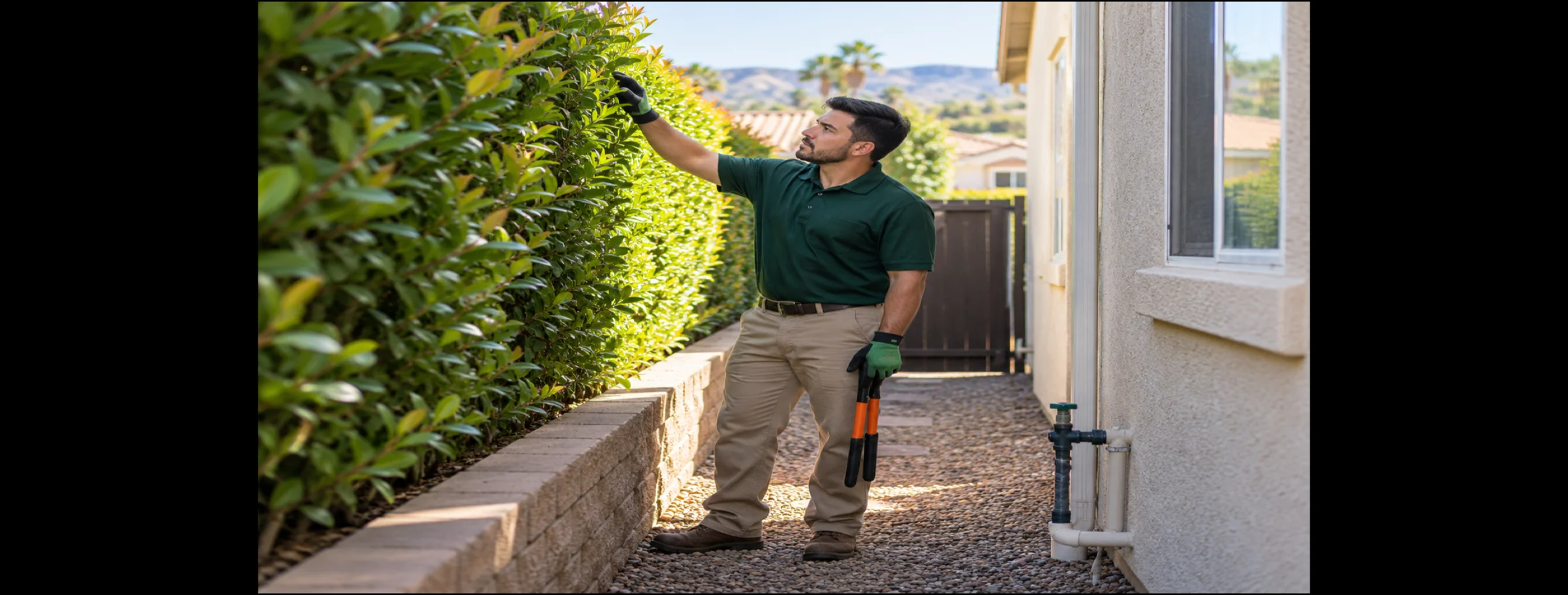
Those details help a contractor understand what’s actually included. They also reduce confusion about areas that can’t be reached from your property.
How do Chula Vista lots change hedge access?
Access starts at the curb, but it doesn’t end there. A contractor needs to understand how people and equipment can reach each hedge. The path might run through a driveway, side gate, patio, or planted bed.
Walk the route before requesting a contractor match. Note locked gates, steps, narrow turns, low branches, parked vehicles, and delicate surfaces. Mention anything that could restrict movement around the hedge. Photos should show both the hedge and the path leading to it.
Access can change from one side of the property to another. A front hedge may be open from the sidewalk. A side-yard hedge may sit between a wall and the home. A backyard hedge may require moving through a gate or occupied outdoor area.
Don’t describe access as “easy” or “normal.” Those words don’t show the contractor what’s there. Give measurable details when you already know them. Otherwise, send clear photos with a familiar object visible for scale.
Also identify where clippings can be gathered. Don’t assume removal is included. The written scope should state whether the contractor will collect, remove, or leave the green material in a location you select.
Our Chula Vista landscaping guide can help you think through the rest of the property. For this request, keep the focus on the hedges and the route to them. Irrigation repairs, bed work, weeds, and unrelated cleanup should be listed separately.
What do height and neighbor lines add to the scope?
Height affects more than the finished appearance. It changes what the contractor must assess before accepting the work. Share the hedge’s current height, requested height, approximate length, and accessible sides.
Photos from the front and both ends are useful. Add a wider photo that shows nearby walls, roofs, wires, structures, gates, and planting beds. Don’t decide which equipment should be used. The independent contractor should choose the work method after reviewing the site.
Property lines require equally clear instructions. If the hedge sits beside another property, state which portions can be reached from your side. Don’t promise access through a neighbor’s yard unless you’ve confirmed that arrangement yourself.
A good scope separates three different requests:
- Reducing the top to a stated target
- Shaping the face that’s accessible from your property
- Addressing growth that extends across a known boundary
Those aren’t automatically the same task. Ask the contractor to identify any side that isn’t included. If access depends on a neighbor, keep that condition in writing.
Avoid asking a contractor to determine the legal boundary from the hedge’s location. If the line isn’t clear, confirm it through the appropriate property records or a qualified professional before authorizing boundary-sensitive work.
Height and access also affect the information needed for matching. When you contact Bloom Pro SD, we take the job details and match you with a licensed, independent local landscaping professional. The homeowner contracts with and pays that professional directly.
What should a written trimming scope name?
A written scope should describe the result without relying on vague words. “Clean it up” can mean light shaping, a major reduction, or debris removal. State the visible outcome you want and the areas that are included.
Start with the number and location of the hedges. Identify each one by its position, such as front walk, driveway side, side gate, or backyard wall. If several shrubs form one continuous screen, explain where that section starts and stops.
Then record these points:
- Current height and requested finished height
- Approximate hedge length
- Faces included in the trimming
- Top shape, such as level, rounded, or following an existing form
- Growth around gates, walkways, windows, or planted beds
- Access restrictions and protected surfaces
- Whether clippings stay or leave with the contractor
- Any section that must not be touched
- Plant condition concerns visible before work starts
The scope should also distinguish trimming from other services. Stump removal, tree work, irrigation repair, weed removal, planting, and bed cleanup aren’t automatically part of hedge and shrub trimming. If you need several tasks, list each one for the contractor to review.
Our hedge and shrub trimming service page explains how the referral process works. You can also review this detailed hedge trimming quote scope before speaking with a contractor.
Bloom Pro SD doesn’t set the contractor’s price. The contractor confirms the price with you before any work starts. Ask for the scope and exclusions to appear in the same written document.
When does plant condition change the conversation?
Trimming is an appearance request. Plant condition can turn it into an assessment request. Tell the contractor when the hedge has bare sections, dead-looking growth, broken limbs, uneven color, visible pests, or a noticeable lean.
Don’t ask for a healthy appearance to be guaranteed. A contractor can describe the proposed work, but the future condition of living plants depends on factors beyond trimming alone. The written scope should separate the requested cut from any discussion about plant health.
Photograph questionable areas before the visit. Include close views of leaves and branches, plus wider views of the whole plant. If symptoms appear only on one side, show that side and its surroundings. Don’t remove the affected material before the contractor reviews it unless immediate site conditions require you to act.
The requested reduction matters too. If you want a large change, state the target rather than saying “cut it way back.” The contractor can then explain what work they’re willing to perform after seeing the plant.
A trimming request also shouldn’t assume every shrub should receive the same treatment. Separate distinct plants in your notes. Labeling photos as front hedge, gate hedge, and rear hedge keeps the conversation organized.
For a broader look at what may fall within this type of visit, read our guide to shrub trimming service in San Diego. If you don’t know the plant type, say that plainly. A clear photo is more useful than a guessed name.
What should you share before requesting a contractor match?
Begin with the Chula Vista service address and your preferred contact details. Then describe the hedges by location, approximate size, desired result, and accessible sides. Mention whether the property is occupied, vacant, rented, or managed by someone else when that affects authorization or access.
Send current photos taken in daylight. Include the street-facing view only when it helps explain access. Avoid sending images that hide the hedge behind vehicles, bins, or closed gates. A short video can help show a long hedge or a route with several turns.
Tell us about:
- Gate locations and any access instructions
- Steps, slopes, narrow passages, and low clearances
- Nearby vehicles, furniture, lighting, or irrigation parts
- Neighbor-side access that hasn’t been confirmed
- Areas where clippings may or may not be placed
- Visible plant damage or sections you want left alone
- Written property or community rules you already possess
If an HOA or property manager has given you written requirements, share the actual document. Don’t rely on a remembered summary. Bloom Pro SD doesn’t interpret community rules or approve the work. The contractor can review the requested scope, while you remain responsible for securing any necessary property authorization.
Homeowners can check a contractor through the official CSLB license lookup. Search using the identifying information provided by the contractor.
If you searched for a “shrub and hedge trimming service near me,” the fastest way to improve the conversation is better job detail. Clear photos and boundaries help us match the request accurately. They also help the contractor identify questions before you approve any work.
When to call us
Call when access, height, boundaries, or plant condition make the trimming scope hard to define. We’ll take the details and match you with a licensed, independent local landscaping pro. Call us at (760) 400-6355 and we’ll match you with a licensed local pro.