The search for a shrub and hedge trimming service near me should end in a written scope, not a vague “we’ll tidy the yard” line. Two San Diego County quotes can describe different jobs with the same words. A salt-pruned eugenia wall in Encinitas is not the same visit as a fire-adjacent oleander screen in Lakeside.
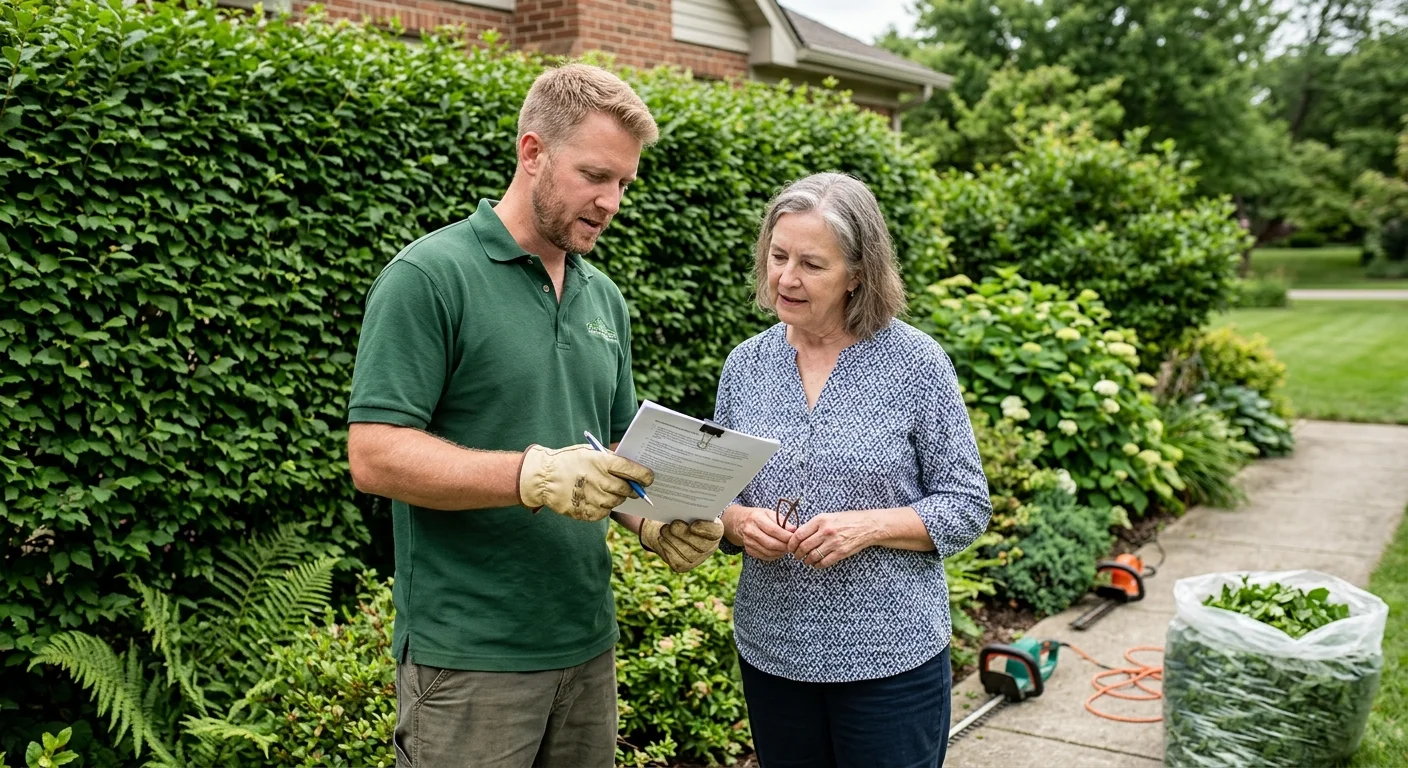
Which hedges and shrubs belong in the quote?
If the hedge trimming quote doesn’t name plants, you’re comparing guesses. Ask the contractor to list every hedge and shrub by location, not as a lump “front yard” line.
Coastal north county lots in Carlsbad, Encinitas, and Solana Beach often run eugenia, ficus, and pittosporum along the street. Those plants take salt air and grow hard through the warm months. Inland north county in San Marcos, Vista, and Escondido runs hotter. Photinia and xylosma flush after wind, so a “light trim” there can mean a taller pile than the same words on the coast.
East County yards in El Cajon, Santee, and Alpine often mix oleander and rosemary on slopes. South Bay lots in Chula Vista, National City, and Imperial Beach sit tighter against stucco and side-yard fences. North Park and City Heights add parkway strips and alley gates.
Name the plant, or describe it. Count plants or linear feet. Say where each run sits, the size it is, and the size you want left. Say whether foundation shrubs are in, not only the privacy wall. A hedge and shrub trimming visit that lists eight street-front eugenia panels is not the same job as one that also takes every patio shrub.
Don’t accept “all hedges” as a plant list. If you have HOA frontage rules, put those in the scope. We couldn’t confirm a countywide hedge-height cap that applies in every city. Your HOA packet, or the city that has your address, is the place to check that number before the cut.
How do you separate trimming, reduction, shaping, and removal?
These four words get used as if they mean the same cut. They don’t. Mixing them without labels is how two quotes drift apart.
Trimming keeps a hedge at the size it already holds. The crew takes this season’s growth and leaves the woody frame. That’s the maintenance visit most people picture.
Reduction takes height or width down in a real way. A photinia brought from above the fence to fence height is not a trim. It can expose bare wood, especially on plants sheared for years. The quote should say the start height, the finish height, and whether brown interior wood may show after the cut.
Shaping is geometry: a flat top, a tight face, a radius on a corner. Formal boxwood in Rancho Santa Fe is a different labor pattern than a loose bottlebrush in Oceanside. If you want a shape, write the shape. “Make it look neat” is not a scope line.
Removal means the plant comes out. Say whether the stump stays, gets ground, or gets dug. Say whether the hole gets backfilled, and with what. Removal is not trimming. It should not hide inside a hedge line item.
If one quote is a maintenance trim and the other is a reduction plus two removals, you’re not looking at the same service. Ask each contractor to label every plant with one of those four words. Then a talk about what hedge trimming costs in San Diego has something real to sit on. Bloom Pro SD doesn’t set prices. The contractor you hire confirms the price with you before any work starts. What you can compare is the labeled work.
What should the quote say about access, cleanup, and debris?
The cut is only part of the visit. Access and haul-away change the job as much as the plants.
Write down how the crew reaches each hedge. A Coronado walk-street with no driveway is not a Lakeside lot with a truck at the side gate. Canyon edges in La Mesa and Mount Helix mean slope and nowhere to stage a pile. South Bay side yards can be one person wide. Coastal bluff lots in Encinitas add wind and tight staging. If the quote is silent on access, ask.
Cleanup should name the surfaces. Clippings on decomposing granite don’t sweep like clippings on a Chula Vista patio. Ask whether beds get blown or raked, and whether cuttings stay out of irrigation heads.
Don’t assume a hose-down of the sidewalk is included, or even allowed the way you picture it. Inside the City of San Diego Public Utilities service area, potable water can’t run off onto walkways and roadways. Paved areas can’t be washed down except with a pressure washer or a hose with a shutoff nozzle. That wash is only for safety or sanitation. Other water agencies in the county set their own rules. Confirm the cleanup method in the scope.
Debris handling needs its own lines. Name who owns the cuttings, and whether chips can stay as mulch. Say whether green waste is bagged, trucked, or left for your city’s collection. We couldn’t confirm a single countywide dump fee or green-waste rate that every yard charges. Cities and haulers set those numbers, and they move. The useful quote says “hauled by the contractor” or “left bagged at the curb.” If a disposal charge is part of the contractor’s price, they should show it before you pay. Confirm the current rate with the disposal site they name.
A shrub trimming service scope that includes haul-away is not the same visit as one that leaves a pile by the garage.
How does plant condition change the scope?
A healthy pittosporum and a hollow eugenia full of dead wood are not the same afternoon of work. The quote should say what the contractor saw. Note dead wood, bare legs from years of shearing, and pests or sooty mold. Note drought stress, and plants grown into fences, meters, or eaves.
Hedges against the house in fire country are a separate note. CAL FIRE names Zone 0 as the ember-resistant zone, 5 feet from structures. Zone 1, lean, clean and green, extends 30 feet. Zone 2, reduce fuel, runs from 30 feet to 100 feet. Zones 1 and 2 make up the 100 feet of defensible space required by law. Zone 0 was added by AB 3074. Confirm with your local fire agency whether those zones apply at your address. Unincorporated East County and Alpine lots are where a hedge against stucco often stops being a cosmetic trim. For the wider brush picture, see defensible space and brush clearance in San Diego.
The crews we match you with work to the written scope. Bloom Pro SD doesn’t diagnose plants or warrant them. If a shrub looks sick, get that in writing as a condition note, not as a promised recovery. For identification help, UC Master Gardeners of San Diego County is the local educational desk. A first cut after years of skip is usually reduction plus cleanup, not a routine trim. Say that in the quote so you’re not surprised by the pile or the interior wood.
Which exclusions should you compare before you choose?
The shortest quote often dropped the work you still need. Compare exclusions before you pick a contractor, not after the truck is gone.
Line the written carve-outs next to each other. Hunt for plants left off the list, tree work treated as shrub work, and irrigation lines nicked during the cut. Hunt for extra debris from other beds, and for fence or stucco protection. If that contractor uses a height cutoff, get the number from them in writing. We couldn’t verify a universal cutoff that every crew in the county uses.
Bloom Pro SD is a referral service. We match you with licensed, independent local landscaping professionals. We don’t hold a contractor license, and we don’t perform the cut. The pros we connect you with are licensed and insured. Before you sign, check the license yourself on the CSLB license lookup. Search by name or license number. Confirm the status is current.
If a related item needs a permit, the pro we match you with handles that paperwork. Don’t assume a hedge trim needs a building permit. Don’t assume it never does when the work sits next to a wall, a slope, or a fire-zone structure. When it’s unclear, the contractor checks with the city or county that has your address.
Use the same questions you’d ask before hiring a landscape contractor on this visit. Who is on site. What the written scope includes. What it leaves out. How debris leaves the lot. The contractor confirms the price with you before any work starts. A complete hedge trimming quote beats a short one that hides the reduction, the haul-away, or the dead-wood note.
When to call us
When the hedges need a licensed landscaping pro, not a pair of shears, call us. That’s the case for tall reductions, tight side yards, fire-zone plants against the house, and quotes that don’t match. Call us at (760) 400-6355 and we’ll match you with a licensed local pro.