A Kentucky bluegrass lawn isn’t an automatic yes for San Diego. The right answer depends on the exact product, your property, irrigation, and the care you’re prepared to provide.
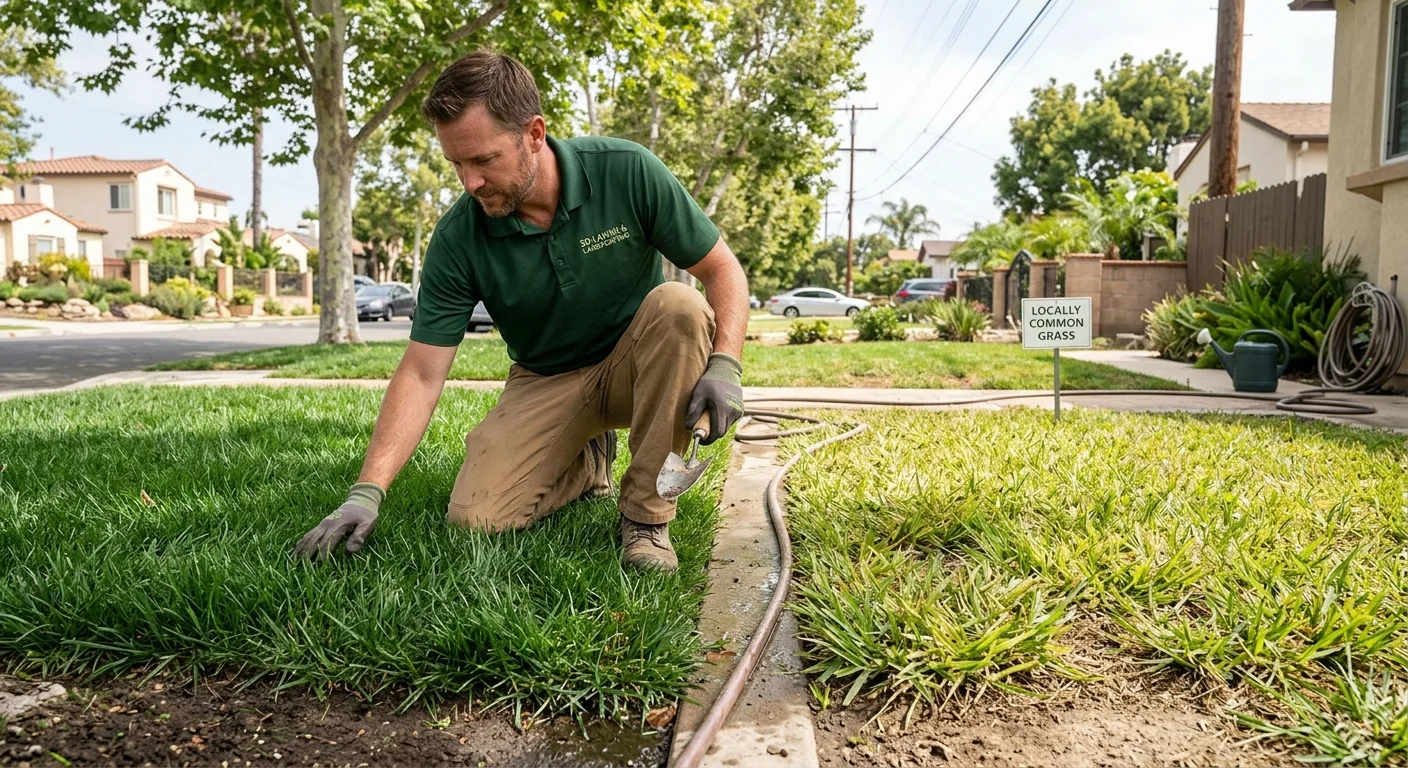
Our approved local research doesn’t confirm a San Diego-wide recommendation for this species. It also doesn’t establish local mowing heights, watering amounts, disease risks, dormancy patterns, or performance claims for Kentucky bluegrass. Confirm those details with the seed producer, sod grower, and licensed contractor before choosing it.
How does Kentucky bluegrass differ from local lawn staples?
Start by comparing verified products, not grass names alone. “Kentucky bluegrass” on a search page may refer to seed, sod, a blend, or a specific cultivar. Those choices shouldn’t be treated as interchangeable without documentation from the producer.
The available product label should identify what you’re buying. Ask the supplier for the cultivar or blend name, intended growing conditions, maintenance guidance, and any regional limitations. If those details aren’t available, the fit can’t be confirmed from the name alone.
Water demand deserves special attention. The UC Master Gardener Program of San Diego County reports that warm-season grasses, including Bermuda and zoysia, need 25% less water than cool-season varieties. Before comparing that finding with Kentucky bluegrass, confirm how the exact product is classified by its grower.
Appearance matters, but it shouldn’t settle the decision. A sample photographed under ideal conditions doesn’t describe how the same product will respond in your yard. Compare the lawn’s purpose, sunlight, irrigation coverage, foot traffic, and acceptable maintenance level.
Our guide to the best grass types for San Diego lawns provides a broader comparison. Use it to create a shortlist, then verify each candidate against your property.
If you already have Kentucky bluegrass, don’t replace it based only on its name. Document the areas that stay healthy, the sections that decline, and when those changes happen. That evidence gives a contractor something useful to assess.
Where do coastal and inland conditions change the fit?
San Diego County can’t be evaluated as one uniform lawn site. A shaded yard in Encinitas, an exposed lawn in El Cajon, and a small South Bay front yard may present different conditions. The property itself matters more than a countywide label.
Begin with direct observations. Track when sunlight reaches the lawn and when shade returns. Note reflected heat from walls, paving, fences, and windows. Mark slopes, low spots, compacted paths, and places where water leaves the turf.
Coastal and inland labels are useful starting points, not diagnoses. Two homes in Oceanside can have different exposures. The same is true in Chula Vista, Santee, La Mesa, and San Diego. Measure the lawn rather than deciding from the ZIP code.
Irrigation authority also changes by address. City of San Diego Public Utilities rules apply within that department’s service area. Properties served by other water agencies may have different restrictions. Confirm the serving agency shown on your water bill before planning irrigation.
For properties inside the City of San Diego Public Utilities service area, potable landscape watering is allowed only before 10 a.m. or after 6 p.m. Watering is also prohibited during measurable rain and for 48 hours afterward. Irrigation can’t create runoff onto neighboring property, walkways, roads, parking areas, or structures.
Those rules don’t prove whether Kentucky bluegrass will succeed. They define part of the operating environment. Your supplier and contractor still need to explain how the proposed lawn can be managed within the rules covering your address.
How do sun, summer stress, and irrigation affect the choice?
Sun and summer performance should be checked at the site. The approved research doesn’t establish a universal sunlight target or heat limit for Kentucky bluegrass in San Diego. Don’t accept an unsupported number copied from a generic planting guide.
Instead, record what happens in the proposed lawn area. Take photos in the morning, midday, and late afternoon. Identify tree shade, building shade, and reflected exposure. Explain whether the site changes sharply between winter and summer.
Existing irrigation provides another source of evidence. Run each zone while watching the full lawn. Look for blocked spray, overspray, runoff, dry edges, and water reaching pavement. A lawn choice shouldn’t be used to hide a damaged or poorly arranged irrigation system.
Within the City of San Diego Public Utilities service area, known leaks must be repaired or stopped within 72 hours of discovery or notification. Other agencies may set different requirements. Confirm current rules with the agency serving the property.
The EPA WaterSense program is a useful authority for current irrigation-efficiency information. A licensed local contractor can assess whether the existing layout suits the lawn under consideration. Bloom Pro SD makes the referral, while the homeowner hires and pays that contractor directly.
Maintenance also affects summer appearance. The verified mowing rule is simple: remove no more than one-third of the grass blade during one mowing. Removing more stresses the plant and depletes root reserves. The correct finished height for Kentucky bluegrass wasn’t confirmed in the approved research, so check the product instructions.
Disease and dormancy claims also need caution. No approved local source in the supplied research confirms a San Diego-specific disease schedule or dormancy pattern for Kentucky bluegrass. Ask the grower for written regional guidance. The UC Master Gardener Program of San Diego County is another local authority to consult when symptoms or product claims are unclear.
When do seed, sod, or another grass make more sense?
Choose between seed and sod only after identifying the actual product. Availability, cultivar, blend, and supplier instructions can change the decision. The approved research doesn’t confirm universal establishment times, seasonal windows, or success rates for Kentucky bluegrass seed or sod in San Diego.
Seed deserves consideration when a reputable supplier can identify every component and provide guidance for your address. Ask to see the label before buying. Confirm preparation, coverage, irrigation, mowing, and repair instructions in writing.
Kentucky bluegrass sod deserves the same scrutiny. Ask the grower to identify the grass or blend rather than relying on a salesperson’s shorthand. Confirm whether it’s currently produced for San Diego County properties. If that information can’t be verified, don’t assume the delivered sod matches an online description.
The practical comparison includes more than the surface material. A contractor should assess the soil, grade, irrigation, access, existing vegetation, and intended use. Our sod versus seed guide explains the broader decision, while the sod installation service page describes how we connect homeowners with local pros.
Another grass may make more sense when Kentucky bluegrass guidance conflicts with the site. That could mean the available product lacks clear regional documentation. It could also mean the expected irrigation or maintenance doesn’t match the homeowner’s plan.
A non-lawn conversion is another possible path. SoCal Water$mart lists a residential turf replacement rebate of the current estimator amount per square foot for up to 5,000 square feet per year. The amount and availability can change, and local agencies may offer added incentives. Approval is required before turf removal, and synthetic turf isn’t eligible. Check the program’s address-based estimator before making plans.
What should you share before requesting a contractor match?
A useful contractor match begins with specific property details. Start with the address and the water agency shown on the bill. Include the approximate lawn dimensions, but let the contractor confirm measurements on site.
Describe what exists now. Is the area bare, seeded, sodded, mixed, or partly covered by another material? Mention visible weeds, thin sections, standing water, runoff, broken heads, and uneven grades. Don’t diagnose the cause if it hasn’t been confirmed.
Share how the lawn will be used. A front lawn viewed from the street has different priorities from a backyard used by children or pets. Note gates, stairs, narrow side yards, slopes, and access limitations that could affect the contractor’s plan.
Photos help define exposure and condition. Include wide views from several directions, close views of damaged areas, and pictures of the irrigation equipment. Morning and afternoon images can show how shade moves across the property.
If you’re considering Kentucky bluegrass seed or sod, send the product information. Include the manufacturer, grower, cultivar or blend, label, and written regional guidance. A screenshot of a generic product listing isn’t enough when the actual material hasn’t been identified.
Also explain the maintenance level you’ll accept. The approved research doesn’t confirm a Kentucky bluegrass schedule for San Diego, so avoid guessing at watering, mowing, fertilization, or treatment frequency. Ask the matched contractor to explain the proposed plan for the actual product and site.
For ongoing care, our lawn maintenance service connects homeowners with licensed independent local pros. The contractor confirms the scope and price before work starts.
When to call us
Call when you need a licensed landscaping pro to assess the site, irrigation, and verified grass options. Bloom Pro SD will take your project details and refer you to an independent local contractor.
Call us at (760) 400-6355 and we’ll match you with a licensed local pro.