For landscaping in La Mesa, the right plan begins with the property itself. Afternoon sun, changing grades, existing trees, drainage, and irrigation can matter more than a plant list copied from another yard.
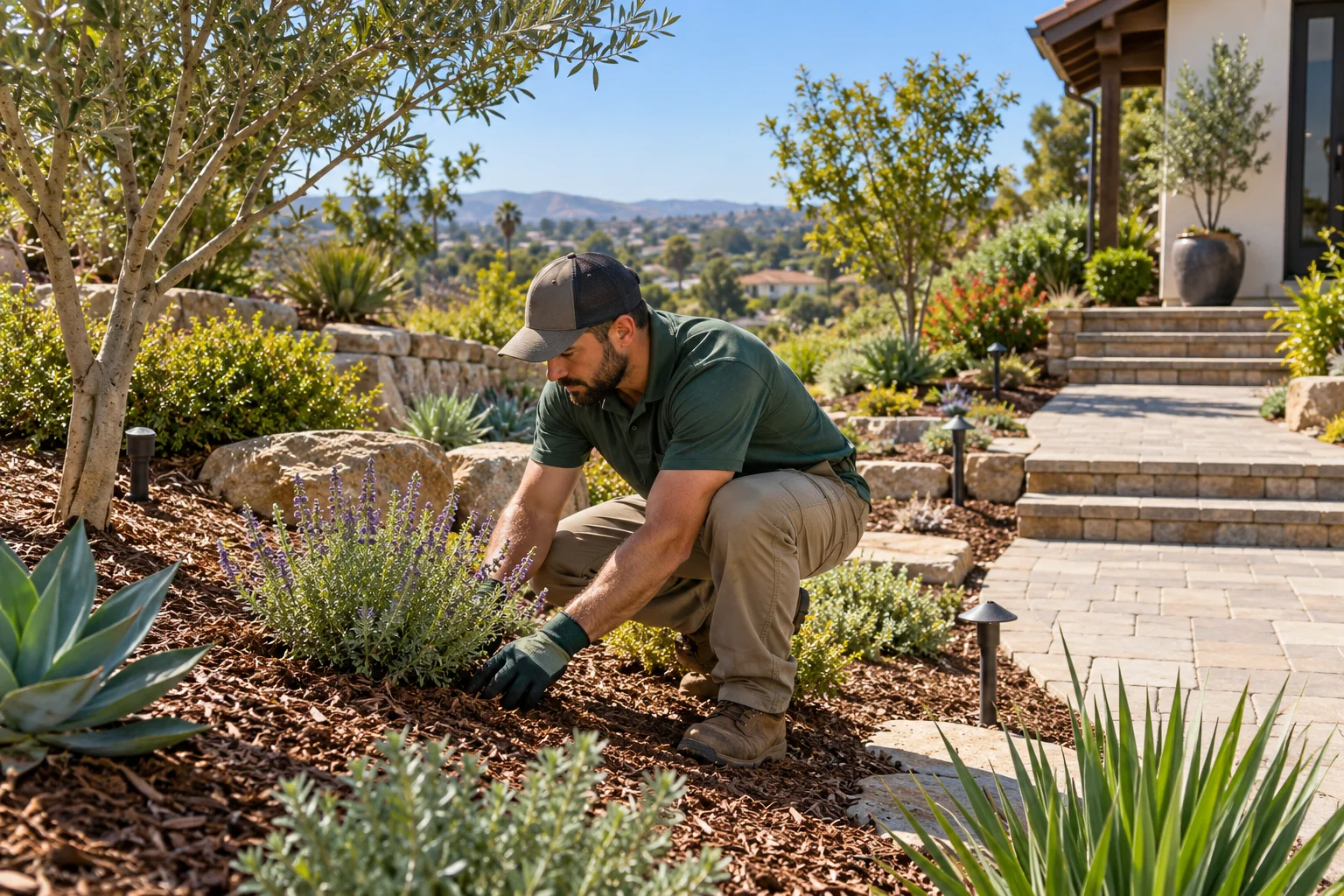
How does La Mesa exposure differ from the coast?
A coastal design brief shouldn’t be reused in La Mesa without checking the site. The approved claims ledger doesn’t include a verified La Mesa temperature range, soil profile, or citywide climate figure. Those details need to come from observations at the property and current local sources.
Start by mapping direct sun across the yard. Note which beds receive morning light and which face afternoon exposure. Record reflected heat near paving, walls, and fences. Also identify shaded areas beneath mature trees or beside the house. These conditions can change within a short distance.
Wind exposure deserves the same attention. A protected courtyard and an open slope may need different planting and irrigation plans. Don’t label the whole property with one broad exposure category.
Take photos at several points during the day. Include the front yard, side access, rear boundary, and any slope. If plants are struggling, photograph the whole bed and close details. These images give a landscape designer more context than a single street-facing photo.
The goal isn’t to guess a La Mesa climate formula. It’s to document how this particular lot handles sun, shade, water, and heat. That approach keeps the plan grounded in visible conditions.
For ideas suited to warmer inland yards, compare the principles in this inland backyard planning guide. The nearby El Cajon landscaping guide can offer another inland reference, but its recommendations still need to be checked against your La Mesa property.
How do slopes and established lots shape the plan?
A sloped yard needs more than attractive planting zones. The designer must understand where water enters, how it moves, and where it collects. Existing walls, paving, roots, drains, and irrigation lines can limit otherwise appealing ideas.
Walk the property after irrigation or rainfall when practical. Look for runoff paths, wet low points, exposed soil, and sediment near paving. Don’t assume the lowest visible corner is the only drainage concern. Water may also move beneath mulch or along a hardscape edge.
Irrigation pressure changes with elevation. A change of 2.3 feet produces a pressure change of 1 psi in a drip line. Water remaining in lines can also drain toward the lower end after irrigation stops. That can leave the bottom of a slope wetter than the upper section.
A contractor may recommend pressure-compensating equipment, separate irrigation zones, or laterals following the slope contour. The right setup depends on the elevation change, emitter specifications, filtration, and existing system. Product labels and the contractor’s site findings should guide the final choice.
Established lots add another layer. Mature roots, old edging, buried irrigation, and previous grading can affect the new layout. Share any records you have, but don’t treat an old sketch as proof of current underground conditions.
If a wall, raised area, or major earthwork is being considered, include it during the first design conversation. Don’t separate structural-looking work from the planting plan. For deeper background, see our guide to drip irrigation on slopes.
How should planting, irrigation, and hardscape fit the site?
Good La Mesa landscape design connects every major element. Planting affects irrigation. Irrigation affects drainage. Paving changes where water can soak into the ground. A useful plan treats those relationships as one system.
Divide the yard into practical zones. Group areas by observed sun, slope position, water needs, and use. A narrow side yard may need a different surface and planting approach than an open rear slope. Entry beds also need clear access and sightlines.
For planting, ask the contractor to explain why each selection fits its location. The answer should address mature size, exposure, irrigation zone, and nearby hardscape. Avoid choosing only from a nursery photo or a broad “drought-friendly” label.
California native plants are adapted to local conditions and can require little water or fertilizer. They can also support native birds, butterflies, and beneficial insects. That doesn’t remove the need to match each plant with the site or provide appropriate establishment care.
A drought-tolerant landscaping plan may combine planted beds, permeable walking areas, stormwater features, and modified irrigation. If turf removal is part of the project, check SoCal Water$mart before removing anything. Its verified program requirements include approval before turf removal, planting density, a qualifying stormwater feature, permeable replacement areas, and irrigation changes. Synthetic turf isn’t an eligible conversion option.
Hardscape should support movement without creating an unexamined drainage problem. Ask where runoff will go after paving changes. If the design includes steps, walls, grading, lighting, or utilities, those items should appear in the written scope. Our landscape design and installation page explains how we match homeowners with independent local professionals for broader projects.
Which permit and water-provider questions should you confirm?
Permit requirements for a La Mesa address couldn’t be confirmed from the approved claims ledger. The ledger contains City of San Diego rules, but those shouldn’t be applied to a property inside the City of La Mesa.
Contact the City of La Mesa before work involving grading, retaining walls, drainage changes, structures, utilities, or significant hardscape. Describe the complete project, not just one feature. Ask which department reviews it, what plans are required, and whether separate approvals apply.
Don’t rely on a contractor’s old project in another city. Permit rules can differ by jurisdiction and project conditions. If a permit is required, the matched contractor should confirm who will prepare the documents and who will pull it.
Water rules also depend on the provider serving the address. The approved ledger doesn’t identify one provider for every La Mesa property. Check a current bill or provider account before relying on watering rules, rebate terms, or equipment incentives.
SoCal Water$mart lists a residential turf replacement rebate of $2 per square foot for up to 5,000 square feet of converted yard per year. The program also states that funding and amounts can change. A local water agency may offer an additional incentive. Use the program’s address tool and confirm current eligibility before removing turf or buying materials.
If a weather-based irrigation controller is being considered, rebates start at $80 per controller for landscapes under one acre. The amount varies by water agency and funding. Only active stations physically connected to an in-use irrigation system qualify under the verified terms. Confirm the current offer for your address before selecting equipment.
Properties with an HOA should also check their own governing documents. No La Mesa-wide HOA rule was confirmed for this article. Ask for current landscape standards, required forms, and written approval conditions directly from the association.
What should you share before requesting a contractor match?
A clear intake helps us match the job with an appropriate licensed, independent landscaping professional. Start with the property address and a short description of the result you want. Then add the site details that could change the scope.
Share photos of the full yard, access points, slopes, walls, irrigation controls, and drainage concerns. Mark areas with strong afternoon sun, persistent shade, runoff, or standing water. Mention mature trees, existing turf, hardscape, and anything you want preserved.
Measurements are helpful when available. Include approximate bed sizes, pathway widths, gate clearance, and the height or length of visible slopes and walls. Label estimates as approximate. The contractor can confirm relevant dimensions during the project evaluation.
Describe the irrigation system without guessing about hidden components. Note whether it uses spray heads, drip lines, or both. Report visible leaks, uneven flow, dry zones, or low-end drainage. If you know the controller model, include a photo of its label.
Also share any city or HOA documents already received. Include known easements, utility notes, surveys, and prior landscape plans. Don’t represent an old document as current approval.
Finally, separate required items from preferences. You might require safer access, improved drainage, or a lower-water planting plan. Color, material, and plant preferences can follow. This distinction helps the contractor prepare a focused written scope and confirm the price before work starts.
If the project is mainly ongoing mowing and turf care, our La Mesa lawn-care guide covers that narrower service. Broader changes involving layout, planting, irrigation, and hardscape belong in a landscape-design conversation.
When to call us
Call when your La Mesa project combines slopes, irrigation changes, hardscape, grading, or a full planting redesign. Those conditions can benefit from a licensed landscaping professional who can evaluate the property and define the work.
Call us at (760) 400-6355 and we’ll match you with a licensed local pro.