For most San Diego homes, Rachio 3 wins on app polish and price. For large or complex properties with 12+ zones, Hydrawise wins on flow monitoring and on-unit control. Both are WiFi, weather-based, and WaterSense certified, so both qualify for a local water agency rebate. The right pick comes down to how big your system is and whether you want control from your phone or from the box in the garage.
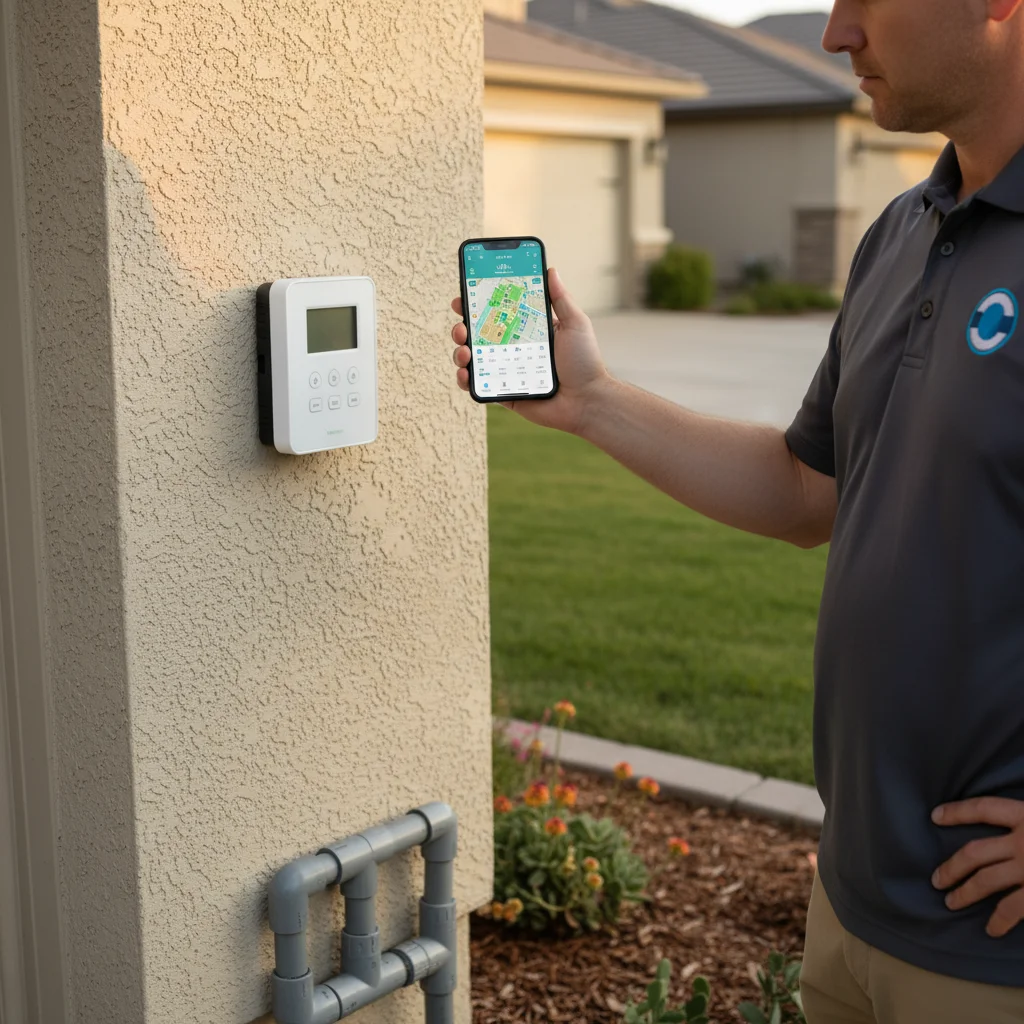
At a glance
| Rachio 3 | Hunter Hydrawise | |
|---|---|---|
| Price (8 zones) | $230-$250 | $200-$350 |
| On-unit display | No, app-only | Yes, touchscreen |
| Max flow sensor size | 1-inch | Up to 2-inch |
| HomeKit support | Yes, native | No |
| Best for | Most SD homes, simpler yards | Large or mixed-zone properties |
| Rebate eligible | Yes, WaterSense listed | Yes, WaterSense listed |
Why San Diego homeowners are even asking this question
Water rates keep climbing across the county, and the local water agencies have made smart controllers one of the easiest rebates to claim. Once you decide to upgrade from a dumb timer, the real decision isn’t “should I go smart.” It’s which smart controller actually fits your yard. We install both brands as part of our irrigation repair and installation work across the county, from small Point Loma bungalow lots to sprawling half-acre properties in Poway, and the honest answer is that the better controller depends on your setup, not on brand loyalty.
Rachio 3: the pick for most SD homes
Rachio built the more refined app of the two. Setup takes minutes, the interface is clean, and it plays well with Apple HomeKit natively, plus Alexa and Google Assistant. If you’ve got a standard 4 to 8 zone system on a Point Loma or Chula Vista lot, mixing spray heads with a few drip zones, Rachio handles it without any fuss.
Rachio also has the deepest accessory ecosystem of the two brands. You can add a cellular backup module for homes with spotty WiFi (common in older Escondido and El Cajon neighborhoods with thick stucco or metal roofing), a dedicated flow meter, or a local weather station if you want hyper-local rain skip instead of relying on the nearest airport sensor.
One tradeoff: there’s no screen on the unit itself. Everything runs through the app. If your irrigation controller lives in a garage where a family member without the app needs to run a manual cycle, that’s worth knowing before you buy.
Hydrawise: the pick for bigger or more complex systems
Hunter’s Hydrawise line adds something Rachio doesn’t: a touchscreen right on the controller. Walk into the garage, tap a zone, run it. No phone required. For rental properties, larger households in Rancho Bernardo, or HOA-managed common areas, that on-unit access matters more than it sounds.
The bigger differentiator is flow sensing. Hydrawise supports flow meters up to 2 inches, while Rachio tops out at 1 inch. On a property with 12 or more zones, that headroom matters. A cracked lateral line or a sheared-off head can waste hundreds of gallons in a single cycle before anyone notices a soggy patch. Hydrawise’s flow-based leak alerts catch that fast and shut the zone down automatically. If you’ve ever had an HOA in Rancho Bernardo or Poway ask for documented water-use compliance, that flow data is also easier to hand over from Hydrawise’s reporting.
Coastal vs inland: does the controller change what you set?
Neither brand’s hardware changes the underlying reality of San Diego’s microclimates, but both use local weather data to adjust automatically, which matters a lot here. Coastal areas like La Jolla and Encinitas run cooler with marine layer coverage most mornings, so both controllers will naturally cut back run times compared to inland zones. Inland heat pockets in El Cajon and Escondido push evapotranspiration rates much higher, and both apps will add minutes accordingly. The difference isn’t which controller reads the weather better. It’s that Hydrawise’s on-unit screen lets you glance at today’s adjustment without opening an app, which some inland homeowners running longer cycles appreciate.
Soil matters here too. San Diego’s clay-heavy inland soil (common in El Cajon and parts of Escondido) absorbs water slowly, so both brands’ cycle-and-soak scheduling features are worth turning on to prevent runoff. Sandier coastal soil near Point Loma and Encinitas drains faster and usually needs shorter, more frequent cycles, which either controller handles fine once it’s dialed in.
What actually drives the rebate
San Diego County’s water agencies offer $125 to $325 per controller for WaterSense-certified smart controllers, and both Rachio 3 and every current Hydrawise model qualify. The rebate application only cares that the controller is on the WaterSense list, not which brand you pick. We cover the full rebate process, required documentation, and current per-agency amounts in our smart controller rebate guide. If you’re weighing the upgrade purely on cost, factor the rebate in first. It often closes most of the price gap between the two brands.
If you’re also converting zones to drip
A smart controller pairs well with a drip conversion, especially in planting beds and slopes where spray heads waste water on hardscape and mulch. Both Rachio and Hydrawise handle mixed drip-and-spray zones fine, running each on its own schedule and precipitation rate. If you’re rethinking your whole system layout, read our guide on drip irrigation conversion before you commit to a controller, since the number and type of zones you end up with affects which unit makes more sense.
Frequently asked questions
Can I install a smart controller myself?
Yes, if you’re comfortable working with low-voltage wiring and already know your zone count and wire colors. Most homeowners get it running in under an hour. Where people get stuck is flow sensor installation and cellular backup wiring, which usually calls for a licensed hand.
Does either brand work with an existing dumb timer’s wiring?
Yes. Both Rachio and Hydrawise are built to replace standard irrigation timers using the same valve wiring, so in most cases there’s no new wiring involved, just swapping the controller box.
Will a smart controller actually lower my water bill?
Most homeowners see a real drop, typically in the 20 to 30 percent range, because the controller stops watering during rain and adjusts for real evapotranspiration instead of running a fixed schedule year-round. Coastal yards tend to see savings faster since the marine layer already means less watering is needed most of the year.
What’s the real difference in zone limits?
Rachio’s consumer line tops out around 16 zones on the higher-end model. Hydrawise’s HC controllers scale further, with commercial-grade options for large properties or multi-unit landscaping. If your property runs past 16 zones, Hydrawise is the more natural fit.
Do I need a flow sensor, or is the controller enough on its own?
The controller alone gives you weather-based scheduling and rain skip, which is most of the water savings. A flow sensor adds leak detection on top of that. It’s optional, but on larger San Diego properties with more line and more zones, it pays for itself the first time it catches a break before you would have noticed.
When to call us
Either controller is a solid upgrade over a standard timer, and the rebate makes the decision easier either way. If you want a straight answer on which one fits your specific system, zone count, and property, or you’d rather have it installed and programmed correctly the first time, call Bloom Pro SD at (760) 400-6355.