A mulch refresh should cover more than spreading new material. The scope should define bed preparation, material selection, edging, irrigation access, and cleanup before the contractor starts.
What bed preparation should happen first?
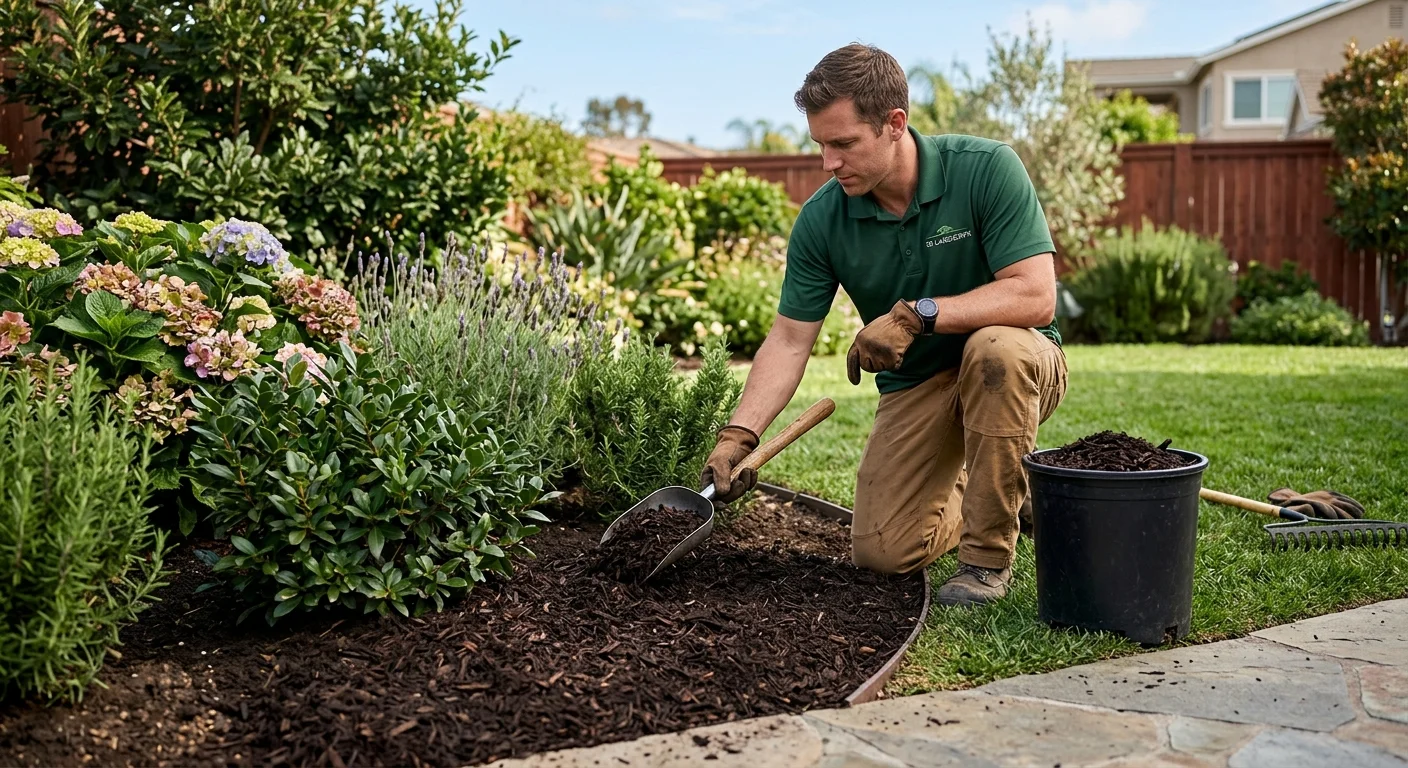
Bed preparation starts with a clear decision about what stays and what goes. The contractor should review the existing mulch, visible weeds, fallen leaves, branches, and other debris. That review creates the working scope for the refresh.
Old mulch doesn’t always receive the same treatment. A contractor might propose leaving it, moving it within the bed, or removing part of it. The right approach depends on its condition and the finished appearance you want. Ask the contractor to state that approach before work begins.
Weed removal also needs a defined boundary. Confirm whether the scope includes visible weeds throughout each bed, growth along the edging, and weeds around shrubs. If treatment beyond manual removal is proposed, ask which product the contractor plans to use and where. Our guide to common San Diego weeds can help you describe what you’re seeing. For a larger weed problem, request a separate weed control and prevention scope.
The contractor should also identify anything that must remain accessible. That may include irrigation parts, drains, lighting, plant labels, utility covers, or stepping areas. Point these out during the property review.
Photos are useful when beds sit in several parts of the yard. Show wide views and close views of problem areas. Include side yards, raised beds, and planting strips near sidewalks. A complete visual record helps the contractor separate routine preparation from extra cleanup.
The written scope should end this stage with clear bed boundaries. It should name the areas included, excluded, or awaiting a decision. That prevents a front entry bed from being handled differently than a side yard or backyard planter.
How does material choice change the scope?
Material choice changes purchasing, delivery, handling, placement, and cleanup. A landscape mulch refresh isn’t fully defined until the contractor confirms the exact material with you.
Start with the product name and appearance. Color descriptions can vary between suppliers, so ask whether a sample or current product photo is available. Also confirm the particle size and whether the new material will match what’s already present. If you’re still comparing options, our guide to mulch types for San Diego bed refreshes explains the selection process.
Don’t assume a top-up means the same material will be added everywhere. A front walkway bed may have one finish, while a backyard planting area has another. Some properties also combine bark, wood chips, gravel, or decorative rock across separate zones. List each area and its selected material independently.
The contractor should calculate the material amount from the actual beds and proposed finished profile. Bloom Pro SD doesn’t set a standard depth or sell material. The independent contractor confirms how much is needed after reviewing the property. Ask how the existing layer affects that calculation.
Delivery access belongs in the material discussion. Tell the contractor where material may be staged and how it reaches each bed. Mention gates, steps, narrow passages, occupied driveways, and surfaces that need protection. A North Park side yard and a Clairemont driveway may require different carrying and staging plans.
Finally, confirm the stopping points around plants, trunks, walls, drains, and paved edges. The scope should describe the intended finished line without relying on a vague phrase such as “spread as needed.” That gives you and the contractor the same picture before placement begins.
Where do edging and irrigation need attention?
Edging and irrigation should be reviewed before fresh material covers the bed surface. Both can change the amount of preparation and the final placement plan.
First, identify the existing bed edge. It may be a cut soil line, metal or plastic edging, masonry, a curb, or a border beside paving. Ask whether the contractor will clean that line, reset loose pieces, remove damaged sections, or leave the border untouched. New edging should be listed separately from ordinary bed preparation.
The scope should also say where mulch ends beside lawns, patios, walkways, and driveways. This matters around curved beds and narrow planting strips. Walk the boundary with the contractor if the intended line isn’t obvious. Photos marked with simple notes can help when several areas look similar.
Next, locate irrigation components before placement. Show the contractor visible emitters, sprinkler heads, valve boxes, exposed tubing, and any area where water collects. Ask how those parts will remain identifiable and accessible after the refresh. If something appears damaged, request a separate assessment instead of treating it as part of mulch placement.
Within the City of San Diego Public Utilities service area, city rules for potable-water irrigation allow outdoor watering only before 10 a.m. or after 6 p.m. They also prohibit watering during and within 48 hours after measurable rainfall. Other San Diego County water agencies may set different rules, so confirm the current requirements for the property address.
A mulch refresh scope shouldn’t quietly become an irrigation repair order. The contractor should describe any proposed adjustment and confirm it with you first. That keeps material placement, system changes, and their associated pricing separate.
Which debris and haul-away details should you confirm?
Cleanup language should identify the debris involved and where it will go. “Haul away included” can be too broad when the starting condition hasn’t been documented.
List the material that may leave the property. That could include loose leaves, branches, weeds, damaged edging, unwanted mulch, empty product packaging, or unrelated yard debris. Ask the contractor to confirm which categories are included. Items outside the planting beds should be discussed separately.
Existing landscape mulch needs its own decision. Confirm whether it will remain in place, be redistributed, or be removed. If removal is proposed, ask the contractor how that affects the job scope. Don’t assume all old material will leave merely because new material is arriving.
Access affects cleanup as much as installation. Tell the contractor whether debris must travel through a gate, down steps, across a patio, or through a shared area. If your property has parking rules, association requirements, or protected common spaces, share the relevant instructions before the work is scheduled.
The contractor should also confirm the final cleanup boundary. Ask whether the scope covers loose material on nearby paving, debris created during bed preparation, and the staging area used for supplies. Existing clutter that wasn’t created by the refresh should be named if you want it addressed.
Avoid agreeing to an estimated load count that hasn’t been confirmed at the property. Bloom Pro SD doesn’t choose disposal methods or set haul-away charges. The independent contractor reviews the debris, confirms the proposed handling, and gives you the price before any work starts.
Good annual mulch refresh services separate placement from cleanup in writing. You should be able to see what enters the beds, what leaves the property, and what remains outside the agreement.
What should you share before we match you with a pro?
Start with the property location and a short description of the beds. Tell us whether the work covers a front yard, backyard, side yard, slope, courtyard, or several separate areas. Mention places such as Chula Vista, La Mesa, Point Loma, or Encinitas so we can match the request within San Diego County.
Share recent photos when possible. Wide photos show the bed layout and access route. Close photos show existing material, weeds, edging, irrigation parts, and debris. Include any area that may require a separate decision.
Tell us what result you’re requesting in plain terms. You might want the existing material refreshed, a different material installed, bed lines cleaned, visible weeds addressed, or debris removed. If you don’t know the material name, describe its color and texture. The contractor can review the options with you.
Mention these details during intake:
- Which planting beds are included
- Whether existing mulch should stay or be removed
- Your preferred material, color, and appearance
- Visible weeds or unrelated cleanup
- Broken, buried, or exposed irrigation parts
- Gates, stairs, parking limits, and staging restrictions
- Edging that may need separate work
- Any property or association instructions you’ve received
Our mulching and bed refresh matching service connects homeowners with licensed, independent local landscaping professionals. We take the job details, then match the request with a pro. You contract with and pay that contractor directly.
Before accepting the scope, confirm the selected material, preparation, bed boundaries, edging, irrigation work, debris handling, and price. You can also check the contractor’s current status through the official CSLB license lookup.
When to call us
Call when the refresh involves several beds, material changes, irrigation conflicts, edging repairs, or substantial cleanup. A licensed landscaping pro can review those items and confirm the complete scope with you.
Call us at (760) 400-6355 and we’ll match you with a licensed local pro.